
Reviewed · VENICE HIDDEN GEMS WALKS
Secret Gardens of Venice Walking Tour
Venice keeps some of its best green spaces behind walls. On this two-hour walk, guide Valerio Coppo leads you from Cannaregio toward Castello, with access to a convent garden normally closed to the public. You also visit quiet parks, a plant center, and a lagoon-side art site.
I like the mix of private gardens and public parks. The stops feel varied rather than repeated, and the walk takes you through parts of Venice you might otherwise skip. I also like the small group, capped at 15 people, which suits a relaxed pace and makes it easier to ask Valerio about local life.
The main drawback is the price, $111.03 per person, for a tour lasting about two hours. You should also expect steady walking and an outdoor schedule that depends on good weather. Not every stop is a private garden, so book this for access and local context, not for a long garden visit.
Key points to know before booking
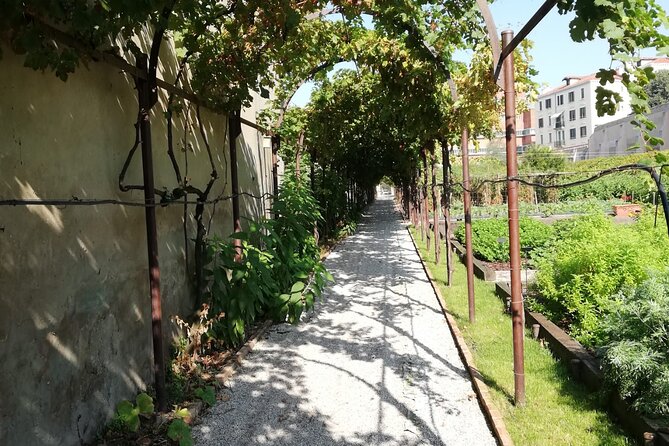
- A convent garden opens its doors: The first stop in Cannaregio includes fruit trees, flowering pergolas, and unusual plants.
- Six stops create a changing route: You move from private religious grounds to public parks, a plant center, modern sculpture, and the Arsenale area.
- Valerio Coppo leads the walk: He is a Venetian guide who adds local history and answers questions about the city.
- The group stays small: The maximum is 15 people, helpful in narrow lanes and quiet garden spaces.
- The tour ends near Santa Lucia Station: This makes it useful on your arrival day, departure day, or as a gentle way to get oriented.
- The cost pays for access as much as sightseeing: The private garden entry is the feature that separates this walk from a normal city stroll.
Why Venice’s gardens are worth your time
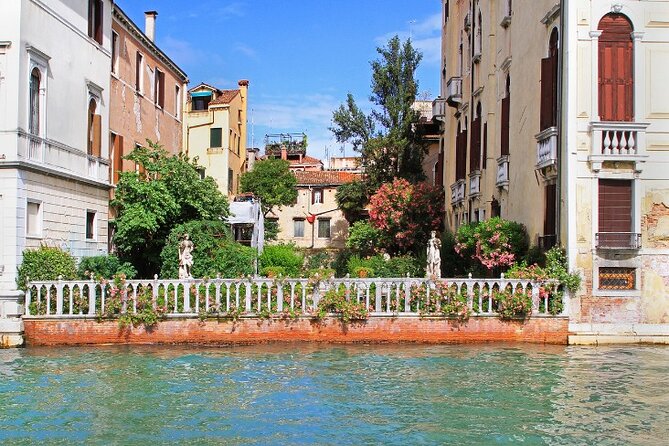
Venice is famous for stone, water, churches, and crowded lanes. Greenery is less obvious. Many gardens sit behind convent walls, palazzi, community buildings, and private homes, so you can walk through the city without realizing how much plant life is just out of sight.
That is the appeal here. You are not simply stopping for photographs. You are seeing how gardens fit into Venetian daily life, from a religious community’s enclosed grounds to the geraniums and surfinias sold for local balconies.
The route also gives you a different sense of Venice’s historic districts, known as sestieri. Cannaregio and Castello are not just passages between major sights. They contain residential corners, old walls, small cultural venues, and open spaces that many first-time visitors miss while heading toward St. Mark’s Square.
You should not expect a botanical tour with long explanations about every plant. The focus is a combination of local history, garden access, and the pleasure of walking somewhere quiet. That balance works well if you want a break from churches and museums.
More quiet corners of Venice:
- Venice: Rialto Bridge & Offbeat Unusual Venice Walking Tour
★ 4.2 · 3,538 reviews - Tour of The Real Hidden Venice
★ 5.0 · 2,006 reviews - Venice: Off the Beaten Path Private Gondola Ride
★ 4.3 · 703 reviews
Starting in Cannaregio with a private convent garden
The tour begins at Casa di Riposo Cottolengo in Cannaregio. The first garden is connected with a community of nuns, who may open the doors for the group. This is the most special access on the route because it is not a public park you could simply find and enter on your own.
You have about 30 minutes here, the longest stop of the tour. Expect fruit trees, pergolas covered with flowers, and unusual plants described as having a mystical quality. The setting offers a glimpse of a quieter, more enclosed side of Venice, where a garden serves the community rather than tourism.
I would pay close attention to the guide’s explanation at this stop. The garden matters not only because it is pretty, but because access depends on permission and local relationships. Without Valerio, you might pass nearby and never know what is behind the doors.
The timing is still limited. Thirty minutes is enough to enjoy the space, but not enough for a slow private-garden visit with extensive photography. If you like gardens mainly for sitting and lingering, the schedule may feel brisk. If you want unusual access while keeping the day moving, it is a good fit.
Villa Groggia and one of Venice’s quieter parks
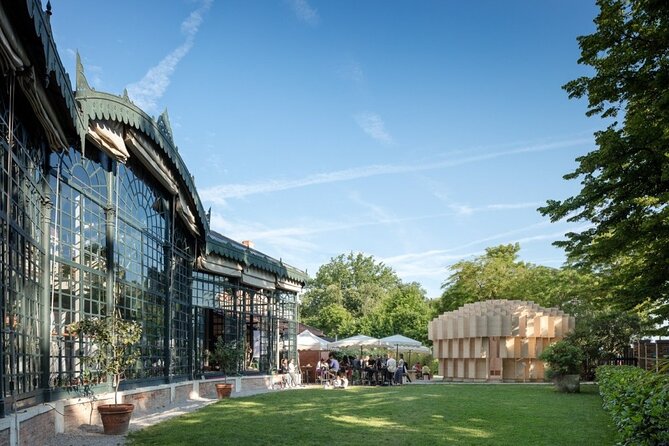
Next comes Parco Villa Groggia, one of the less visited green areas in the city. The park sits beside a charming villa and a theater used for dance, music, and performances.
The stop lasts about 15 minutes, so think of it as a short stroll and orientation rather than a full visit to the theater. The value is the change of mood. After the private convent garden, you enter a public green space with a cultural venue and a more open feel.
This is a useful stop for anyone who wants to see that Venice has ordinary public places, not only grand monuments. You may find the park more interesting as a local setting than as a major attraction in its own right.
The short visit also keeps expectations in check. You are not buying a ticket to a performance, and there is no promise of a full tour of Villa Groggia. The stop is about seeing a peaceful corner and understanding how residents use the city.
Giardini Savorgnan and the old noble garden tradition
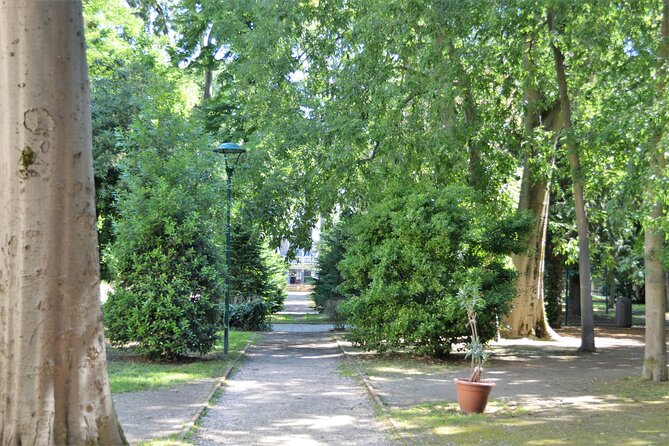
Giardini Savorgnan sits in Cannaregio and once served as a private garden for noble families living in nearby houses. Today, it offers another chance to see open space in a district better known for canals and masonry.
This stop helps explain how Venice’s wealthy households created private retreats within a dense island city. A garden here was not just decoration. It offered shade, fruit, plants, and a little distance from the street.
You spend about 15 minutes at Giardini Savorgnan. That is enough for a walk through the park and some historical context, but not enough to explore every corner. I would treat it as part of the larger story rather than a stand-alone attraction.
The contrast with the convent garden is important. One space remains tied to a religious community, while this one reflects the older domestic world of Venetian nobility. The tour works best when you notice those differences.
More walking tours in Venice:
- Venice Walking Tour and Gondola Ride
★ 3.5 · 3,630 reviews - Private 3 hrs Venice Tour: St Mark’s, Walking tour & Boat tour
★ 4.0 · 3,372 reviews - Venice: City Center Historical Guided Walking Tour
★ 4.2 · 1,873 reviews - Private Best of Venice Walking Tour with St Mark’s Basilica
★ 4.0 · 1,063 reviews
Rio della Misericordia and Venice’s plant life
At Rio della Misericordia, the route reaches a garden center tucked into a less obvious part of the city. This is where Venetians choose plants such as geraniums and surfinias for summer, along with cyclamen to brighten the winter months.
It is a small but telling stop. You get a look at the practical side of keeping Venice colorful when homes have limited outdoor space. Balconies, window boxes, courtyards, and small terraces depend on plants that can bring life to a city built largely from brick and stone.
The stop lasts about 15 minutes and admission is included at no extra cost. Do not expect a major nursery visit or time set aside for shopping. The point is to see the plant center as part of everyday Venetian life.
I like this part because it connects the gardens to residents rather than treating them as historic displays. It also gives the walk a seasonal angle. Summer flowers and winter cyclamen show how the city’s appearance changes throughout the year.
Spazio Thetis beside the northern lagoon
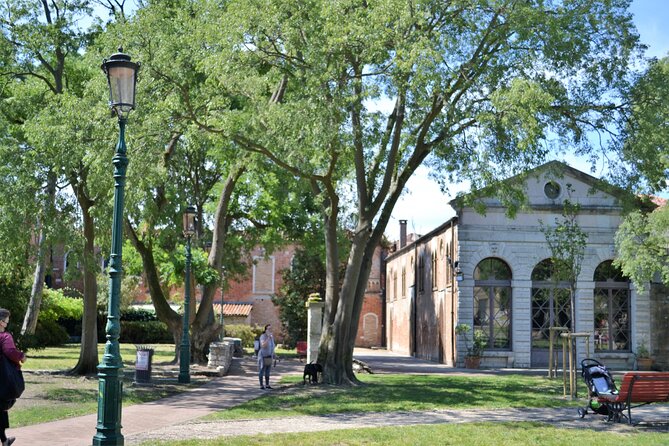
The route then moves toward Spazio Thetis, a green area facing the northern lagoon. Modern sculptures sit among the planting, creating a different setting from the old parks in Cannaregio.
This is the most contemporary stop. Instead of looking at a traditional garden tied to a palace or convent, you see greenery used alongside modern art in an area away from the usual sightseeing circuit. The lagoon setting adds a sense of space after the narrow streets and enclosed gardens.
You spend about 15 minutes here. The tour does not present Spazio Thetis as a full museum visit, so your time is best used to take in the combination of sculpture, plants, and water views.
This stop may appeal especially to you if you like art but do not want to spend the whole day in galleries. If your main interest is historic architecture, the modern sculptures may feel less essential. Still, the change of style keeps the tour from becoming a series of similar courtyards.
Giardino delle Vergini and the Arsenale walls
The final garden stop is Giardino delle Vergini all’Arsenale. It offers views toward the Arsenale docks and walls, one of the most evocative parts of the route.
The garden is described as poetic, and the phrase fits the setting. You see greenery beside old industrial and maritime structures, with the Arsenale providing a strong sense of Venice as a naval and shipbuilding power. It is a quiet ending with a distinctly Venetian backdrop.
Again, the visit lasts about 15 minutes. You should expect a brief walk and time to look across the docks and walls, not a long tour of the Arsenale itself. The garden is valuable because of its position and atmosphere.
This is also where the route feels most different from the opening stop. The convent garden is enclosed and intimate. The Arsenale garden looks outward, toward water, walls, and the working history of the city.
What the two-hour format really gives you
Two hours is enough to sample several places, but it requires a steady rhythm. The listed stops add up to about 105 minutes, leaving roughly 15 minutes for walking between them, transitions, and explanations. That means you will not linger for long at each location.
The format suits you if you prefer variety. You see six distinct settings, and the route keeps moving through Cannaregio and toward Castello. You also get a better sense of the city’s layout than you would from visiting one isolated garden.
It may disappoint you if you want a slow botanical walk. The first garden receives the most time, while the other stops are short. Bring realistic expectations and enjoy the route as a guided introduction to Venice’s green corners.
The small-group limit helps. With no more than 15 people, the guide can speak without shouting, and the group is less likely to overwhelm a quiet public space. A small group also matters at the private garden, where courtesy and calm behavior are especially important.
Valerio Coppo’s role in the experience
Valerio Coppo leads the tour and is described as a local Venetian who can answer questions about the city. His role is central because several places are not obvious sights with large signs or standard visitor facilities.
You should use the walk to ask about the districts you pass through, not just the plants. Questions about local customs, the private gardens, the Arsenale area, and the way Venetians use small green spaces can make the route more rewarding.
The strongest praise for Valerio focuses on his friendly manner, local background, and ability to explain the gardens and nearby history. That matters on a tour with short stops. Clear storytelling helps each place feel connected to the next rather than like a random collection of parks.
The experience is offered in English. At present, English is the stated tour language, so check carefully if you need another language.
Price, walking, and practical value
At $111.03 per person, this is not a bargain city walk. A standard self-guided stroll through public parks would cost much less. The price makes more sense if you place real value on entry to private gardens and on having a local guide arrange a route you would struggle to create yourself.
The convent garden is the key value. You cannot count on entering it independently, and the tour brings together several lesser-known spaces in one compact outing. You are paying for access, organization, and interpretation as much as for the gardens themselves.
The meeting point is Casa di Riposo Cottolengo in Cannaregio, at C. del Magazzen, 3539. The walk ends near Venezia Santa Lucia railway station, which is convenient if you are leaving Venice afterward or want to finish near a major transport point.
Most people can participate, and service animals are allowed. The tour is near public transportation, though the route itself involves walking through Venice’s streets. Wear comfortable shoes and allow time to reach the starting point.
The tour requires good weather. If poor weather cancels it, you can receive a full refund or choose another date. You can also cancel for a full refund up to 24 hours before the start time. On certain dates, day visitors staying outside Venice may need to pay a separate €5 access fee, so check the official Venice access-fee site before booking.
Who should book this garden walk
I would recommend it to you if you have already seen the main sights, or if you want to begin your Venice visit with a calmer view of the city. It also suits anyone who likes gardens, local neighborhoods, small cultural sites, and access that is not normally available to the public.
It works well for couples, solo visitors, and small groups who enjoy asking questions. The relaxed pace and 15-person limit are useful if you dislike large sightseeing groups.
You may want to skip it if your time in Venice is very short and you need to focus on St. Mark’s Basilica, the Doge’s Palace, or the major art museums. You should also think twice if $111.03 feels high for a two-hour walk or if you want long, unhurried visits at each garden.
The best booking strategy is to place it early in your stay if you want local orientation, or near the end if you have already seen the major monuments. Since the route finishes near Santa Lucia Station, it can also fit neatly into a departure-day plan, provided your luggage and train schedule allow enough time.
Should you book the Secret Gardens of Venice walk?
Book it if private access, local stories, and quiet corners matter more to you than ticking off famous sights. The convent garden, the Arsenale view, and the mix of public and private spaces give the walk a clear purpose.
Skip it if you expect a long garden tour or a large number of fully private gardens. Several stops are public or cultural spaces, and the schedule moves quickly. For the right visitor, though, this is a thoughtful way to see Venice beyond its grand squares and crowded routes.
FAQ
How long does the Secret Gardens of Venice tour last?
The tour lasts approximately two hours.
How much does the tour cost?
The listed price is $111.03 per person.
What language is the tour offered in?
The tour is offered in English.
How many people can join the tour?
The maximum group size is 15 travelers.
Where does the tour begin?
The tour begins at Casa di Riposo Cottolengo, C. del Magazzen, 3539, 30121 Venezia VE, Italy.
Where does the tour end?
The tour ends near Venezia Santa Lucia railway station.
Are private gardens included?
Yes. The tour includes entrance and access to private gardens, including a garden belonging to a community of nuns.
Can I cancel for a refund?
Yes. You can cancel at least 24 hours before the start time for a full refund. Cancellations made less than 24 hours before the start time are not refunded.
Recently added around Venice
- Your evening in Venice – Legends&Ghosts&Aperitif★ 4.7 · 79 reviews
- Venice: City Tour & Skip the Line for St. Mark’s Basilica★ 4.1 · 84 reviews
- Walking Tour to Uncover the Hidden Venice★ 4.4 · 34 reviews
- Wine Tasting in Venice★ 4.6 · 42 reviews
- Venice: Walking Tour & Gondola Ride★ 4.4 · 22 reviews
- Venice: Watercolor Painting Class at the Prisons Palace★ 4.7 · 27 reviews
- VIRTUAL MUSEUM: Creature di Gomma – Venice Vintage Toys★ 4.7 · 3 reviews
- Venice Walking Tour from St. Mark’s to Rialto Bridge★ 4.5 · 12 reviews
Venice Hidden Gems Walks, compared.
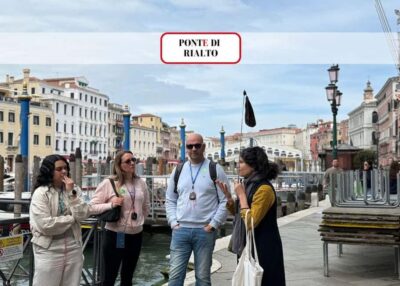
Rialto Bridge & Offbeat Unusual Venice Walking Tour
Read our review →

Venice 3,5 hrs tour: Doge’s Palace, St Mark’s and Hidden Gems
Read our review →
Private Secret Venice Tour; Rialto Market, San Polo & Food and Wine tasting
Read our review →
Unusual Venice Walking Tour through Rialto & Gondola Experience
Read our review →Browse the lists this tour appears in