
Reviewed · VENICE GHOST AND LEGEND TOURS
New – Maleficia: Inquisition, Torture and Witchcraft between the centuries
Venice’s Maleficia exhibition takes you into the old Prisons’ Palace, where the Venetian Republic once held people accused of witchcraft, magic, and other crimes. Original documents, reproduced records, and justice tools show how the Inquisition turned fear and suspicion into punishment.
I like the compact one-hour format and the chance to see a less polished side of Venice, far from canals and palaces dressed for postcards. I also like the connection to famous names such as Giacomo Casanova, who was accused of dabbling in magic and the occult. The main drawback is that the display is small, and the witchcraft material may receive less attention than the broader story of imprisonment and torture.
Key points to know before you go
- The setting is part of the experience: You visit the historic Palazzo delle Prigioni, not a modern museum detached from the subject.
- The focus is Inquisition justice: Expect documents, objects, and reproductions linked to witchcraft accusations, interrogation, punishment, and imprisonment.
- The visit lasts about one hour: It fits neatly into a Venice sightseeing day, but it will not fill an entire afternoon.
- A guide can change the experience: The objects are easier to understand when someone explains the people and events connected to them.
- The meeting point needs care: Look for Circolo Artistico, Palazzo delle Prigioni, at Riva degli Schiavoni 4209.
- The subject is grim: This is better for adults and older children who can handle torture, executions, and historical suffering.
Inside the Prisons’ Palace at Riva degli Schiavoni
The attraction begins at Circolo Artistico, Palazzo delle Prigioni, on Riva degli Schiavoni. The address is 4209, 30122 Venezia VE, Italy, and the visit finishes at the same place.
That sounds simple, but the meeting point deserves attention. Building signs can point to a different exhibition, and the operator may not always have a large flag or obvious company sign outside. I would arrive a little early, read the full voucher carefully, and ask staff inside for the Maleficia entrance if the exterior signage leaves you unsure.
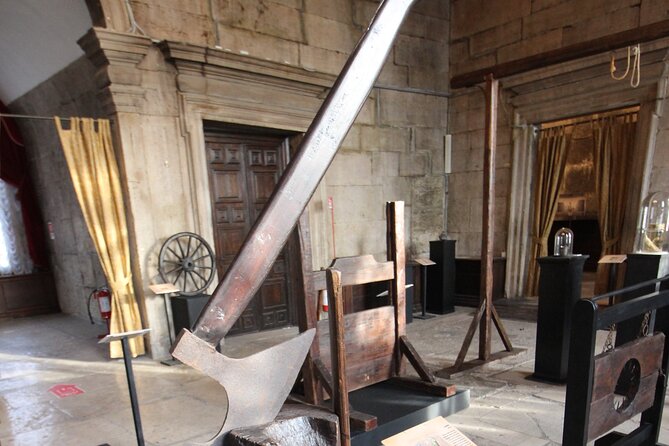
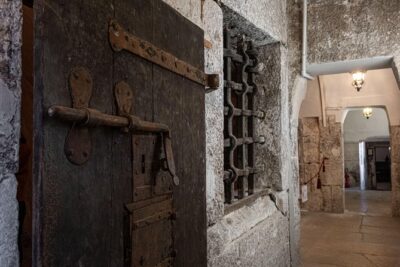
The setting gives the visit much of its force. You are not simply looking at a torture display in a neutral room. The Prisons’ Palace was tied to Venetian justice between the 15th and 18th centuries, when courts dealt with accusations of witchcraft, magical practices, and other offenses.
That historical setting also keeps the subject grounded. The exhibition is not only about strange legends or dramatic devices. It asks you to think about real people who were investigated, imprisoned, tortured, and sometimes condemned to death because authorities believed they had used evil spells or magical arts.
The subject can feel theatrical at first, especially when instruments of punishment are displayed. The strongest part of the visit comes when you stop treating these objects as curiosities and consider how they were used to obtain confessions or frighten people into submission.
More ghost and legend walks in Venice:
- Venice Ghost Stories, Legends and Anecdotes Tour
★ 4.0 · 846 reviews - Venice: Ghost Tour to Rialto and San Marco Square
★ 3.8 · 659 reviews - Venice: Mysterious Tales of Ghosts and Murders
★ 4.9 · 636 reviews
What the one-hour visit actually covers
The route is a single stop inside the Prisons’ Palace. You examine original artifacts and reproductions, along with documents connected to the Holy Office and the Venetian Republic’s system of justice.
The material covers several linked themes:
- Accusations of witchcraft and magical practices
- Documents used in Inquisition investigations
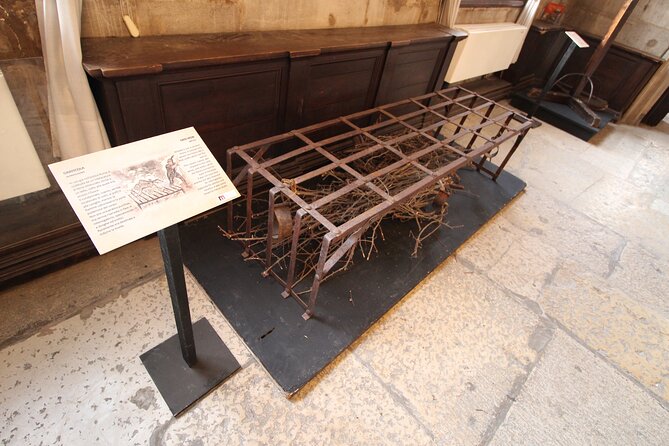
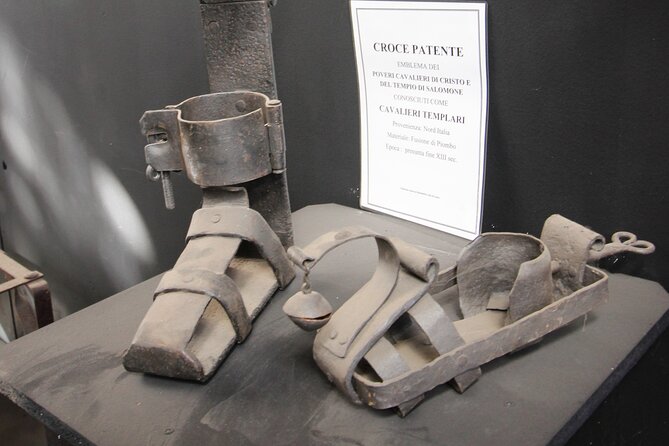
- Instruments connected with interrogation and punishment
- Imprisonment between the 15th and 18th centuries
- The treatment of people condemned for alleged crimes
- Famous cases connected to Venice, including Casanova
You should expect a short introduction to the age of the Inquisition, followed by objects and records that explain how officials pursued suspected witches and other accused people. The focus is not a long academic course. It is a concise museum visit that uses physical evidence to make a harsh period easier to picture.
The exhibition may devote more time to torture methods and judicial punishment than to witchcraft itself. If witch trials are your main interest, keep that in mind. The title suggests a strong focus on witchcraft, but the actual visit also deals broadly with Venetian prisons, interrogation, and the machinery of justice.
That wider focus is not necessarily a weakness. Witchcraft accusations make more sense when you see the legal system around them. The tools and records show how an accusation could become an official case, and how the court used fear, confinement, or torture to press for a confession.
Why a guide matters here
The most important choice is how much interpretation you receive. A self-guided visit lets you move at your own pace, but the documents and objects may not explain themselves clearly. Historical records can be hard to follow when you do not already know the people, institutions, or legal terms involved.
A guided visit can connect the objects to the rooms and to the people who passed through them. One particularly strong guide was described as engaging and informative, which is exactly the sort of help this subject needs. A good guide can explain why a device mattered, how accusations were handled, and where imprisonment or torture fitted into the process.
The available information does not identify the guide by name, so you should not book expecting a particular person. Guide quality can vary, but the difference between a bare display and a well-told explanation may be considerable.
An audio guide is also not guaranteed to be part of the experience. If you prefer to explore independently, ask at the entrance whether one is available and included on your date. Without extra explanation, the exhibition may feel brief and somewhat thin, especially if you are expecting a large museum with extensive labels.
The objects, documents, and instruments
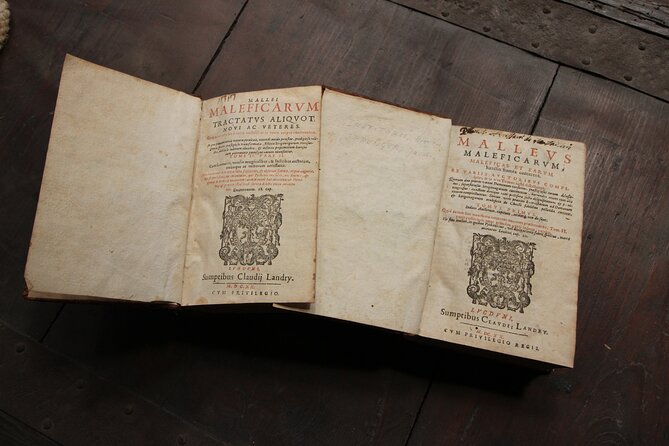
The display combines original artifacts with reproductions. That distinction matters. Original documents give you a direct link to the period, while reproductions allow the exhibition to show objects or records that may be too fragile, rare, or difficult to present in their original form.
The documents associated with the Holy Office are especially useful because they show how suspicion entered the official record. They are not just stories about witches passed down through folklore. They reflect the language and procedures used by authorities who believed they were defending society from magical harm.
The instruments of justice provide the most immediate visual impact. You might find yourself looking first at the shape and construction of a device, but the more important question is what it tells you about the court system. Torture was not random cruelty in the eyes of the officials who authorized it. It was treated as a tool for investigation and confession, which makes the subject even more disturbing.
The exhibit also encourages a sober view of historical justice. People accused of witchcraft could face punishment based on fear, rumor, and pressure rather than reliable proof. The final message is less about sensational machinery and more about the suffering caused when a legal system accepts an accusation as a reason to inflict pain.
A different way to spend a morning on the water:
- Venice: Doge’s Palace Reserved Entry Ticket
★ 4.6 · 42,716 reviews - Venice: Grand Canal Gondola Ride with App Commentary
★ 4.1 · 18,908 reviews - Boat Trip: Glimpse of Murano, Torcello & Burano Islands
★ 4.3 · 15,699 reviews - Venice: Grand Canal by Gondola with Live Commentary
★ 4.1 · 13,681 reviews
Casanova and the human stories behind the display
The mention of Giacomo Casanova gives the exhibition a familiar name, but the broader lesson is more important. Casanova was accused of dabbling in magic and the occult, showing that suspicion could touch famous and socially prominent people as well as women accused of spells.
The exhibition also refers to many women condemned for alleged magical arts. That detail helps correct a common mistake: treating witchcraft trials as a collection of colorful legends. These accusations had real consequences, especially for women who were blamed for supernatural harm or placed outside accepted social behavior.
You may find that the famous-name connection catches your attention, but the unnamed defendants are the people worth remembering. They left fewer dramatic stories behind, yet they faced the same machinery of accusation, interrogation, confinement, and punishment.
This is where the visit asks for a little patience. The display is compact, and it may not give every person a full biography. Still, even a short account can shift your view from old torture tools to the human cost of a court that used them.
How the setting changes the mood
Venice can sometimes feel like a series of beautiful surfaces: water, stone, painted ceilings, and crowded lanes. This exhibition gives you a look at the city’s harder side.
The Prisons’ Palace connects the objects to a place where people were held and judged. The rooms do not need dramatic decoration to make the point. Their association with confinement and justice gives the material more weight than it would have in a standard display hall.
That atmosphere may not suit every visitor. If you want light entertainment between major sights, the subject could feel too bleak. If you enjoy social history, old legal systems, and the stories beneath Venice’s grand image, the setting adds real value.
The visit is also a useful change of pace after churches and art collections. You are not looking at another collection of paintings or ornate furniture. Instead, you are considering how the republic dealt with fear, alleged supernatural crimes, and people accused of stepping outside accepted rules.
Price, timing, and practical value
At about $11.56 per person, this is a low-cost attraction by Venice standards. The price is easiest to justify if you want a focused historical stop and appreciate the setting. It is less compelling if you expect a large exhibition, a long guided tour, or a full-day experience.
The one-hour duration is both a strength and a limit. I like it as a filler between nearby sights because it does not take over your schedule. You can give the subject proper attention without sacrificing half a day.
You should not expect the ticket to provide a complete education about the Inquisition or witchcraft in Europe. Think of it as a concentrated introduction to Venetian justice, supported by objects and documents. The value improves when you treat it as one part of a wider visit to Venice rather than the main attraction of your trip.
The maximum group size is 15 people. That is small enough for a guide to address the group without the visit feeling like a mass tour, though the actual experience can still depend on how clearly the meeting arrangements are handled.
The ticket is mobile, and confirmation is received when you book. The activity operates near public transportation, which makes the location practical for a day of sightseeing. Most people can take part, and the experience runs with cleaning procedures and small groups under the stated health measures.
For cancellations, you receive a full refund if you cancel at least 24 hours before the start time. Cancellations or changes made within 24 hours are not accepted for a refund. The cut-off follows local Venice time.
Who will enjoy Maleficia most
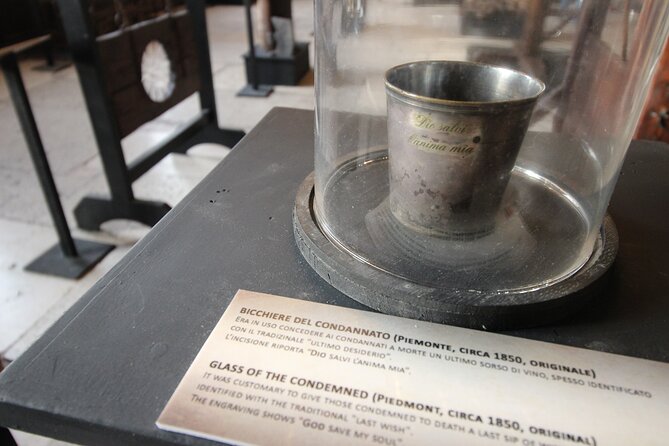
I would choose this for someone who likes the darker side of European history. It suits you if you want to understand how institutions handled accusations, how witchcraft entered court records, and how punishment worked in practice.
It is also a good match for fans of Casanova, Venetian political history, or old prisons. The museum setting adds a layer that a general walking tour may not provide.
Families should make an individual judgment. Most people can participate, but the material includes torture, execution, and suffering. Younger children may find the subject upsetting or may not understand why the objects matter. Older children who have studied medieval or early modern history may find it useful, provided you prepare them for the grim content.
I would be more cautious if you are looking specifically for a major witchcraft museum. The exhibition includes witchcraft accusations, but it also covers torture and Inquisition justice in broader terms. It may leave you wanting more detail about individual trials, beliefs, and the social causes of witch hunts.
Getting the most from your visit
Read the meeting instructions before leaving your hotel. The location is clear on paper, but signs at the building can be confusing. Allow a few extra minutes so you are not trying to find the correct entrance at the last moment.
At the start, listen for the difference between historical fact, accusation, and legend. The period produced many stories about magic, but the documents show how authorities recorded and acted on those claims.
Give the written records time. The instruments are likely to attract your eye first, but the documents explain how suspicion became a case. If a guide is present, ask about the legal process and the people accused, not only how each device worked.
If you have another Venice sight scheduled immediately afterward, leave a little breathing room. The formal duration is about one hour, but finding the entrance and moving through Venice can take longer than expected.
Should you book this Venice exhibition?
Book Maleficia if you want a short, inexpensive look at Venice’s prison system, Inquisition practices, witchcraft accusations, and torture instruments in their historical setting. The guide can make a major difference, so I would favor a guided visit or confirm whether an audio guide is available.
Skip it if you want a large museum, extensive witch-trial records, or a long tour with detailed biographies. The exhibition is compact and sometimes more focused on torture and justice than its title may suggest.
For the price and one-hour commitment, it is a sensible choice for curious history-minded visitors. Just arrive prepared for confusing exterior signage, a serious subject, and a display whose value comes more from its setting and explanation than from its size.
FAQ
Where does the Maleficia experience begin?
It begins at Circolo Artistico, Palazzo delle Prigioni, Riva degli Schiavoni 4209, 30122 Venezia VE, Italy.
Where does the experience finish?
The activity ends back at the meeting point inside or at the Palazzo delle Prigioni location.
How long does the visit last?
The visit lasts approximately one hour.
What does the exhibition focus on?
It covers Inquisition records, witchcraft accusations, magical practices, imprisonment, torture, and justice in the Venetian Republic between the 15th and 18th centuries.
Are admission tickets included?
Yes. Admission to the exhibition is included.
Is the ticket available on a mobile device?
Yes. The experience provides a mobile ticket.
How many people can join the activity?
The maximum group size is 15 people.
Can I cancel for a full refund?
Yes, if you cancel at least 24 hours before the experience start time. Cancellations or changes made less than 24 hours before the start are not refundable.
Recently added around Venice
- Your evening in Venice – Legends&Ghosts&Aperitif★ 4.7 · 79 reviews
- Venice: City Tour & Skip the Line for St. Mark’s Basilica★ 4.1 · 84 reviews
- Walking Tour to Uncover the Hidden Venice★ 4.4 · 34 reviews
- Wine Tasting in Venice★ 4.6 · 42 reviews
- Venice: Walking Tour & Gondola Ride★ 4.4 · 22 reviews
- Venice: Watercolor Painting Class at the Prisons Palace★ 4.7 · 27 reviews
- VIRTUAL MUSEUM: Creature di Gomma – Venice Vintage Toys★ 4.7 · 3 reviews
- Venice Walking Tour from St. Mark’s to Rialto Bridge★ 4.5 · 12 reviews
Venice Ghost and Legend Tours, compared.
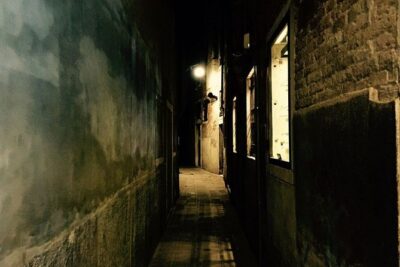
Venice Ghost Stories, Legends and Anecdotes Tour
Read our review →

Lords of the Night Prisons Palace: Cells & Torture Tools Visit
Read our review →
Legends, Anecdotes and Ghost Stories Walking Tour
Read our review →
Browse the lists this tour appears in