Reviewed · TOURS
Venice’s Cemetery on San Michele Island Tour
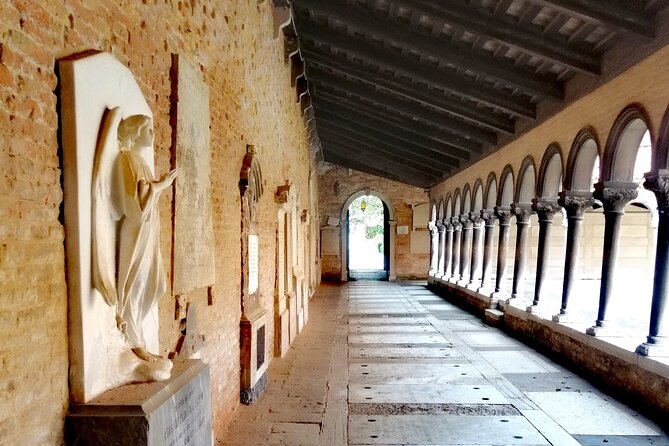
San Michele is Venice’s island of the dead, a short water-bus ride from the city but a world away from its crowded lanes. You’ll walk among cemetery walls, flower-covered niches, quiet paths, and graves linked to artists, writers, musicians, soldiers, monks, and nuns.
I like two things right away: local guide Valerio Coppo brings useful cultural detail, and the small group gives you room to ask questions rather than trail behind a flag. I also like that the walk includes both famous names and ordinary Venetian burial sections.
The main drawback is practical: the $185.03 price is high for about two hours, and your water-bus ticket is extra. This is best for curious visitors who want an unusual side of Venice, not for anyone seeking a classic gondola-style sightseeing tour.
Key points at a glance
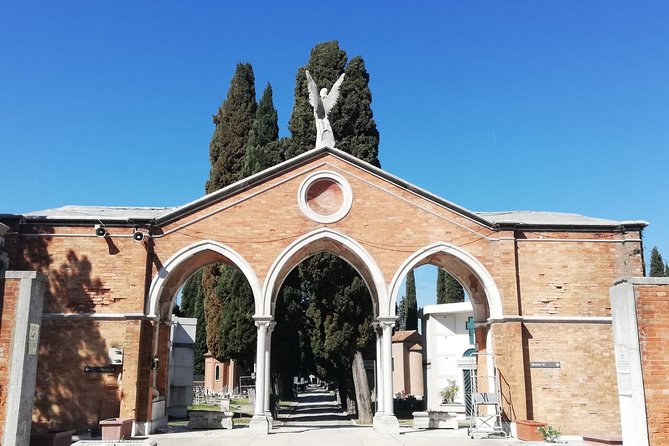
- San Michele is a real island cemetery: You reach it by water bus, then explore its church, burial fields, and memorial sections on foot.
- Famous graves add a literary and musical thread: Look for Igor Stravinsky, Ezra Pound, Joseph Brodsky, Sergei Diaghilev, Luigi Nono, and others.
- Valerio Coppo leads the walk: His local perspective adds context about Venetian customs, the island, and its changing role.
- The tour covers more than the postcard sights: You visit Evangelical and Orthodox areas, older nineteenth-century sections, and areas for religious communities and military personnel.
- David Chipperfield’s extension creates a sharp contrast: Modern architecture sits beside the Renaissance church of San Michele.
- Plan for a quiet, reflective visit: This is a cemetery, not a showy attraction, and the mood is calm and sometimes solemn.
Why San Michele makes a memorable Venice outing
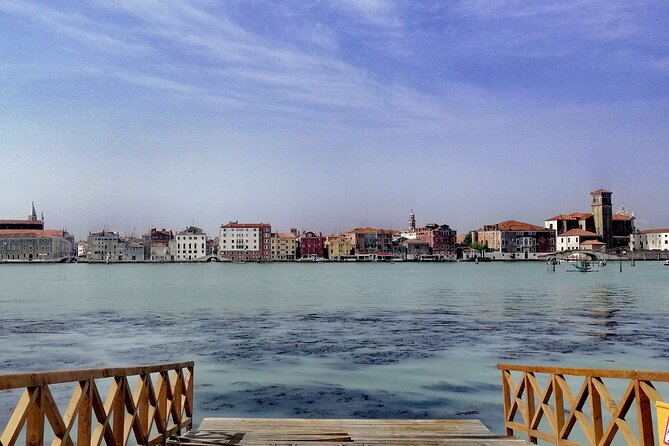
Venice usually grabs your attention with grand churches, busy squares, and canals packed with boats. San Michele asks for a slower pace. Its paths lead past rows of graves and wall crypts, many marked with flowers beside the names. The setting feels peaceful, but it is not merely decorative. This is an active place of remembrance and an important part of how Venice deals with death.
The island became Venice’s cemetery after the French occupation decreed in 1807 that burying corpses on the main islands was unhealthy. Coffins had to be carried across the lagoon by boat. That practical decision changed San Michele from a religious island into the city’s main burial ground.
I find that context gives the visit more weight. You are not simply touring an old cemetery because it looks atmospheric. You are seeing a direct result of Venice’s crowded, watery geography and its long struggle to balance daily life with limited space.
The island also offers a different view of Venetian society. Burial areas are arranged in distinct sections, including Orthodox and Evangelical grounds, areas connected with religious communities, and sections for people who served in the army. You might notice how the layout reflects faith, occupation, and community. It is a quiet social record written in stone.
Other Venice outings people book alongside this one:
- Venice: Doge’s Palace Reserved Entry Ticket
★ 4.6 · 42,716 reviews - Venice: Grand Canal Gondola Ride with App Commentary
★ 4.1 · 18,908 reviews - Boat Trip: Glimpse of Murano, Torcello & Burano Islands
★ 4.3 · 15,699 reviews
Meeting Valerio at Campo dei Gesuiti
The tour begins at Combo in Campo dei Gesuiti, at 2:30 pm. This starting point is in the Cannaregio area, near public transportation and close to the water route toward San Michele.
Valerio Coppo leads the walk. His role matters here because San Michele is not a place where every detail explains itself. A name on a wall, a section reserved for a certain religious group, or a small architectural change can mean little without context. Valerio’s local connection helps turn those details into a coherent story about Venice.
The group is designed to stay small. The highlights describe a limit of eight, while the additional information gives a maximum of ten, so you should expect a small-group format rather than a large tour. Either way, this is a useful feature. In a cemetery, being able to hear clearly and stop for a question makes a real difference.
Wear shoes suited to walking. The tour lasts about two hours overall, and the main cemetery visit is listed at roughly one hour. The exact time spent in each area can vary, but you should expect a walking experience rather than a quick photo stop.
Taking the water bus to the cemetery island
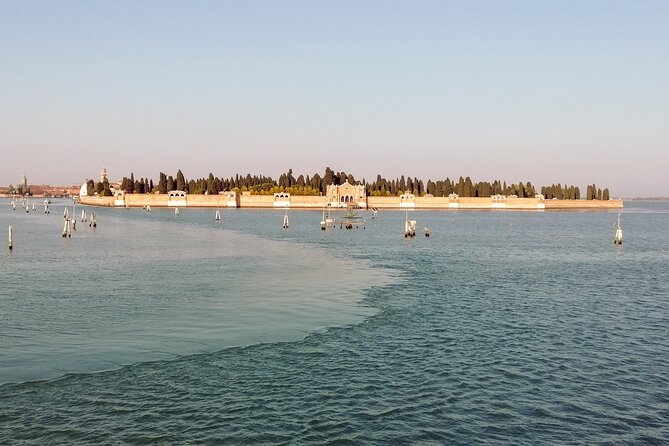
The water-bus ticket is not included. You buy it onboard, so remember to allow for that extra cost when comparing the tour with other Venice activities.
The ride is short, described in one account as about five minutes and one stop from Venice. That makes San Michele easy to add to a day in the city. It can also work as part of a route toward Murano or Burano, since the tour ends at the cemetery’s water-bus stop and you can choose to continue toward Murano or return toward Venice.
That flexibility is useful, but pay attention to direction. Venice’s water-bus routes can be confusing, and the two onward options are in opposite directions. Ask Valerio to confirm which platform or route fits your plans before you leave the group.
The boat crossing also helps explain San Michele’s identity. Funeral processions still cross the lagoon by boat, a sight that connects the island’s present-day role with the decision that created it in the first place. You may see such a procession, but it should be treated with respect rather than as a sightseeing event.
Inside the Renaissance church of San Michele
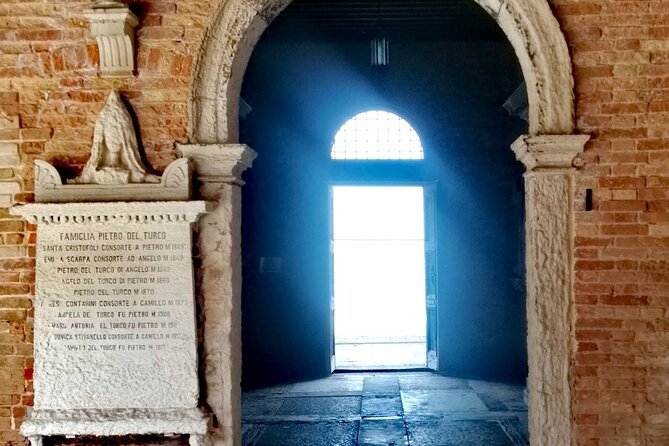
The church of San Michele in Isola is the first architectural anchor of the visit. It gives the cemetery a clear sense of place and helps you understand that San Michele was a religious site before it became Venice’s principal cemetery island.
The church belongs to the Renaissance setting of the island, while the surrounding cemetery has grown and changed over many years. That mix is one of the tour’s strengths. You are not walking through a single uniform memorial park. You are moving through layers of Venetian religious, civic, and architectural life.
The church visit is included, with no separate admission charge. The walk through the cemetery fields is also included. You should not expect a formal museum display or a long indoor program. The interest comes from the setting, the arrangement of graves, and the stories attached to the people and communities represented there.
A different way to spend a morning on the water:
- Venice: Grand Canal by Gondola with Live Commentary
★ 4.1 · 13,681 reviews - Venice: La Fenice Opera House Entry Ticket with Audio Guide
★ 4.6 · 11,742 reviews - Doge’s Palace & St. Mark’s Basilica with Terrace Access Tour
★ 4.7 · 10,697 reviews - Venice: Burano, Torcello & Murano Boat Tour w/Glassblowing
★ 4.4 · 10,245 reviews
From famous names to ordinary Venetian graves
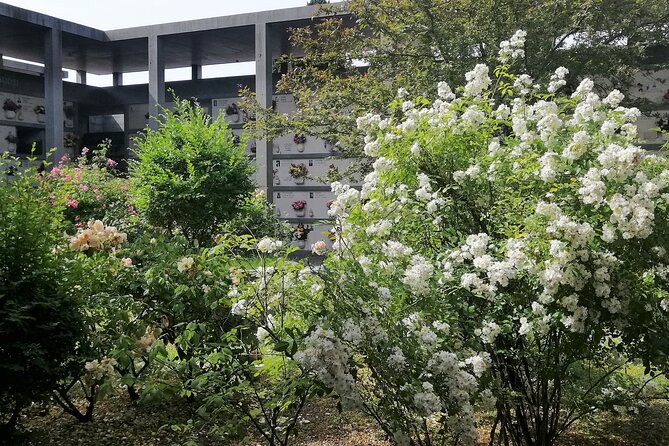
San Michele’s famous tombs provide easy landmarks, but they are only part of the experience. The island is associated with poet Ezra Pound, composer Igor Stravinsky, poet Joseph Brodsky, ballet figure Sergei Diaghilev, composer Luigi Nono, scientist Christian Andreas Doppler, psychiatrist Franco Basaglia, and artist Zoran Mušič.
These names give the tour a clear international reach. You can connect the island with literature, music, science, art, and cultural life far beyond Venice. If you have a particular interest in Stravinsky or Pound, tell Valerio early in the walk so you can understand where their graves fit into the wider cemetery.
Still, I would not book this only to collect a list of celebrated burials. The more revealing part is the contrast between these well-known names and the many ordinary wall crypts around them. Most graves are not grand monuments. Many have flowers beside the name, a small but personal sign that the island remains part of living families’ routines.
The arrangement by trades and communities adds another layer. You might find sections shaped by religious affiliation, military service, or professional connections. The cemetery becomes less like a collection of isolated graves and more like a map of the city’s people.
Orthodox, Evangelical, religious, and military sections
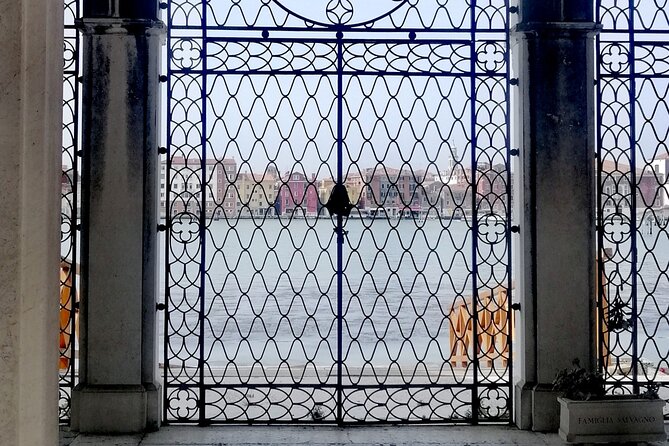
The walk includes the Evangelical and Orthodox sections, which are especially useful for understanding Venice as a place of exchange. The city’s history is not only Catholic, and San Michele’s burial grounds make that visible in a direct way.
You also pass areas associated with nuns and monks. These sections can feel more restrained than the monumental parts of the cemetery, but they help show how different communities were given their own place within the island.
The military section adds another perspective. It points to the civic side of San Michele, where the island records service and sacrifice as well as family life and religious belief.
The tour does not reduce these sections to a list of labels. Valerio’s explanations are intended to connect them with Venetian customs and local culture. That is where a guide adds real value. Without context, the divisions could look like simple blocks of graves. With explanation, they show how the city organized memory.
David Chipperfield’s modern extension
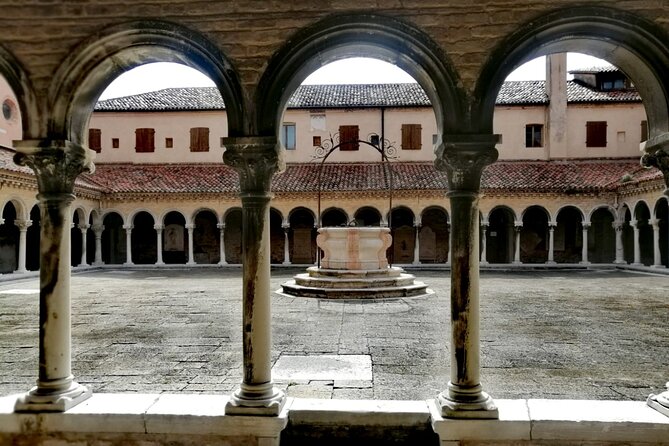
One of the most striking contrasts on San Michele is the newer extension designed by David Chipperfield. Its modern lines differ from the Renaissance church and the older cemetery areas, giving the visit an architectural edge.
You do not need to be an architecture specialist to appreciate the change in mood. The older parts of the island are shaped by tradition, worn stone, and established burial patterns. Chipperfield’s extension brings a cleaner, more recent design language into the same setting.
That contrast is valuable because it shows that San Michele is not frozen in the past. Venice continues to need burial space, and the cemetery has to adapt. The extension is therefore more than a modern object placed beside an old church. It represents the island’s continuing role in the city.
For visitors who spend most of their time admiring medieval and Renaissance Venice, this may be an unexpected highlight. It gives you a chance to see how modern architecture can respond to a historic site without turning the cemetery into a theme park.
The mood: peaceful, reflective, and weather dependent
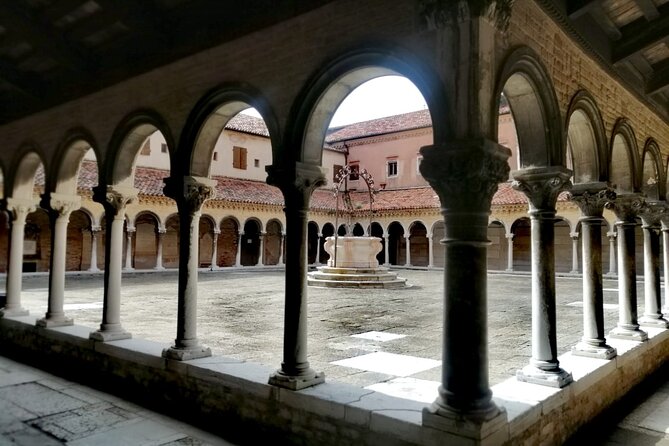
San Michele has a calm atmosphere that can feel almost refreshing after busy Venice. Paths, walls, flowers, and open cemetery fields create a quieter setting. The experience is spiritual for some people, while others will appreciate it mainly as an unusual historical and architectural visit.
Weather matters. The experience requires good weather, and poor conditions can lead to a different date or a full refund. Clear weather makes walking more pleasant, but mist can also change the character of the island. The practical advice is simple: choose a day when you will be comfortable outside, and do not treat this as a reliable rainy-day backup.
Because this is a cemetery, you should also bring the right attitude. Keep your voice low, avoid treating private graves as props, and be careful with photography around mourners or ceremonies. The tour is accessible to most participants, and service animals are allowed, but it is still a walking visit through an active place of remembrance.
Is $185.03 a fair price?
At $185.03 per person, this is not a budget outing. You also pay separately for the water bus, which means the total cost is higher than the headline price.
The value depends on what you want from a guide. If your plan is simply to ride to San Michele, walk around for a short time, and find a few famous graves, you can likely see the island without paying for a guided experience. The tour price makes more sense if you want the cemetery’s sections explained, the history put into context, and time to ask questions in a small group.
Valerio’s local knowledge is the main reason to consider paying for guidance. San Michele does not present its story as clearly as a major museum. The difference between Orthodox, Evangelical, religious, military, and older nineteenth-century areas is easier to understand with someone who knows what you are seeing.
The price may also feel more reasonable if you use the ending strategically. You can return toward Venice or continue toward Murano, and the island’s location makes it possible to connect the visit with a wider lagoon itinerary. Just remember that the onward water-bus ticket remains your responsibility.
Who should book this San Michele tour?
I would recommend it most strongly if you enjoy cemeteries, architecture, local customs, literature, or places that sit outside Venice’s standard sightseeing circuit. It also suits repeat visitors who have already seen St. Mark’s Square and want a quieter look at the city.
It is a good match for people who enjoy asking questions. The smaller group means you are less likely to feel anonymous, and Valerio’s local perspective is particularly useful when you want more than dates and names.
Families can participate if children are comfortable with a quiet cemetery setting. The experience is not built around entertainment, interactive displays, or fast movement. Young visitors who like stories about writers, musicians, artists, or unusual places may enjoy it, while children expecting a lively attraction may not.
You should think twice if your Venice schedule is already packed or if you dislike solemn places. Two hours, plus transport planning, is a meaningful part of a short visit. The tour is also a poor fit if you want panoramic views, lavish interiors, or a classic canal experience.
Booking, cancellation, and practical details
Confirmation is provided at booking. The tour is offered in English and can be booked with group discounts. It is listed as suitable for most participants and is near public transportation.
Free cancellation is available up to 24 hours before the start time. Changes or cancellations inside that 24-hour window are not accepted for a refund. Since the walk depends on good weather and a minimum number of participants, a cancellation by the operator can result in another date, another experience, or a full refund.
The stated start time is 2:30 pm at Combo, Campo dei Gesuiti. The end point is San Michele’s water-bus stop, not the original meeting point. Plan your next move before the tour ends, especially if you want to continue to Murano or return to Venice.
Should you book it?
Book this tour if you want a thoughtful, unusual side of Venice and are willing to pay for a guide who can explain what you are seeing. The famous graves are appealing, but the stronger reason to go is the full picture: a cemetery shaped by Venetian geography, divided by faith and community, and updated with modern architecture.
Skip it if your main goal is a low-cost activity or if you have little interest in cemeteries. For the right visitor, San Michele offers quiet paths, serious stories, and a welcome pause from Venice’s crowded center. Valerio’s small-group walk makes that experience easier to understand and more rewarding than a quick, unguided stop.
FAQ
How long does the San Michele cemetery tour last?
The experience lasts approximately two hours. The cemetery and church visit itself is listed at about one hour, with the rest of the timing connected to the guided outing and transfer.
Where does the tour start?
The tour starts at Combo, Campo dei Gesuiti, 4878, 30121 Venice. The scheduled start time is 2:30 pm.
Is the water-bus ticket included?
No. The water-bus ticket to San Michele is not included and is purchased onboard.
Where does the tour end?
The tour ends at the water-bus stop on San Michele Island. From there, you can take a water bus back toward Venice or continue toward Murano, with the two directions being opposite from one another.
Which famous people are buried on San Michele?
The cemetery includes the graves of Igor Stravinsky, Ezra Pound, Joseph Brodsky, Sergei Diaghilev, Luigi Nono, Christian Andreas Doppler, Franco Basaglia, and Zoran Mušič.
What happens if the weather is poor?
The experience requires good weather. If it is canceled because of poor conditions, you will be offered a different date or a full refund.
Recently added around Venice
- Your evening in Venice – Legends&Ghosts&Aperitif★ 4.7 · 79 reviews
- Venice: City Tour & Skip the Line for St. Mark’s Basilica★ 4.1 · 84 reviews
- Walking Tour to Uncover the Hidden Venice★ 4.4 · 34 reviews
- Wine Tasting in Venice★ 4.6 · 42 reviews
- Venice: Walking Tour & Gondola Ride★ 4.4 · 22 reviews
- Venice: Watercolor Painting Class at the Prisons Palace★ 4.7 · 27 reviews
- VIRTUAL MUSEUM: Creature di Gomma – Venice Vintage Toys★ 4.7 · 3 reviews
- Venice Walking Tour from St. Mark’s to Rialto Bridge★ 4.5 · 12 reviews
Tours, compared.
Doge’s Palace & St. Mark’s Basilica with Terrace Access Tour
Read our review →
Burano, Torcello & Murano Boat Tour w/Glassblowing
Read our review →
Murano and Burano Boat Tour with Glass Factory Visit
Read our review →
Murano, Burano and Torcello Half-Day Sightseeing Tour
Read our review →
Murano & Burano Islands Guided Small-Group Tour by Private Boat
Read our review →
Murano & Burano Panoramic Boat Tour w/ Glassblowing
Read our review →