Reviewed · PRIVATE
The Secrets of Venice – Private Tour
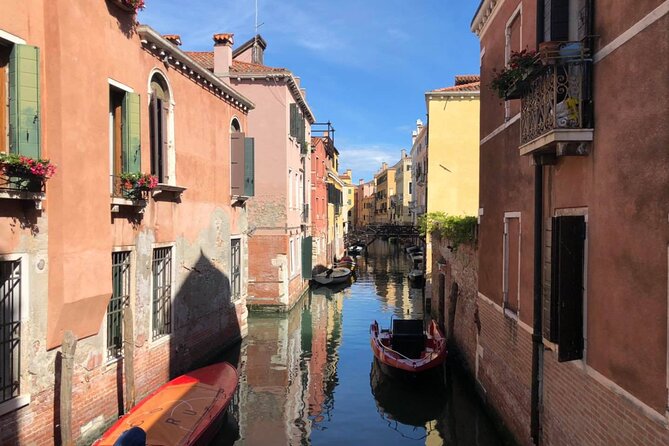
Venice makes more sense when someone who grew up there shows you the back streets, working market, old boat yard, and small churches between the famous sights. This private walk with Nico moves from the Jewish Ghetto and Cannaregio to Rialto, then on to St. Mark’s Square and the city’s grand political center. The contrast between everyday Venice and postcard Venice is the real point.
I like the small-group format, since Nico can adjust the pace and explain the parts of the city that catch your eye. I also like the local focus: the fish market, Venetian food tips, the meaning of a fondaco, and the story behind the word ghetto give you useful context for the rest of your stay. The main drawback is time. Two hours is enough for an overview, not enough to explore interiors or linger at every stop. Expect a brisk walk over bridges and uneven lanes.
Key points at a glance
- A native Venetian guide: Nico leads the walk in English and can tailor the route to your interests.
- Quiet Venice before grand Venice: The tour visits the Jewish Ghetto, small churches, Tintoretto’s home, and an old gondola factory.
- A useful first-day orientation: The route helps you understand Venice’s confusing lanes, bridges, canals, and central landmarks.
- Market and food context: Rialto offers a look at the city’s traditional commercial life, with dining recommendations along the way.
- Private and flexible: Only your group takes part, with pickup offered and the meeting point at St. Mark’s.
- A gondola note: Some bookings include a very short gondola crossing, not a classic 30-minute canal ride.
Why the quieter side of Venice matters
Most first-time visits to Venice begin at St. Mark’s Square. That makes sense, but it can also leave you with a narrow picture of the city: grand façades, packed walkways, and a long list of monuments. This tour works better as a wider introduction.
You begin with the Jewish Ghetto, where the Venetian Republic once confined and organized its Jewish community. The word ghetto itself comes from Venice, and Nico explains how the Venetian use of the term differs from the way people use it today. That small piece of language opens a much larger subject: how the Serenissima Republic managed different communities, trades, and religious groups.
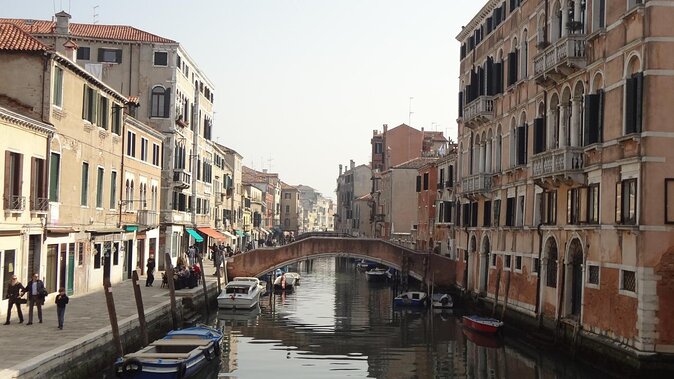
From there, the route turns toward less obvious corners of Cannaregio. You get a look at places that are easy to miss when you are following a map from one major sight to the next. I find this especially useful in Venice, where a lane that looks unimportant can lead to a church, a canal view, or a square where locals spend time.
The tour is not just a list of dates. It connects buildings to the way Venice functioned. You hear about religion, art, boatbuilding, commerce, food, and political power in one compact walk.
A few more Venice outings worth comparing
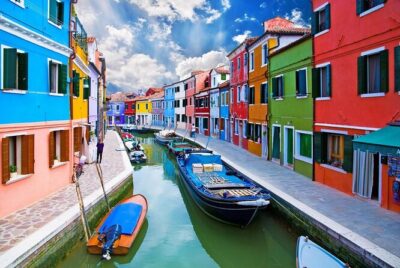
- Murano & Burano Islands Guided Small-Group Tour by Private Boat
★ 4.5 · 7,580 reviews - From Venice: Murano & Burano Guided Tour by Private Boat
★ 4.7 · 4,170 reviews - Private 3 hrs Venice Tour: St Mark’s, Walking tour & Boat tour
★ 4.0 · 3,372 reviews
Starting near St. Mark’s, then leaving the crowds behind
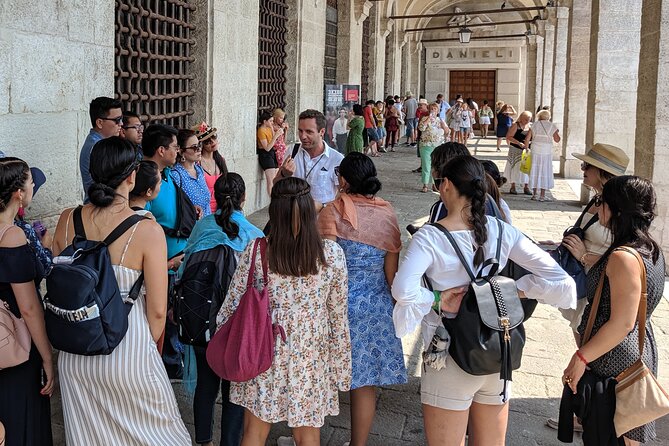
The listed starting point is P.zt San Marco, 90, near St. Mark’s Square. Pickup is offered, and previous bookings have included hotel pickup, so confirm the exact meeting arrangement when you book. The tour ends back at the meeting point.
The route may sound backward at first because it covers quieter northern districts before returning to the major sights. That is actually a smart way to see Venice. You get your bearings in the less hectic lanes, then arrive at Rialto and St. Mark’s with a better sense of why those places became so important.
Nico’s role matters here. Venice is notoriously easy to misread on a phone map. You can be close to a famous sight and still lose time in a maze of alleys and bridges. A local guide helps turn the city into a set of understandable neighborhoods rather than a collection of disconnected photo stops.
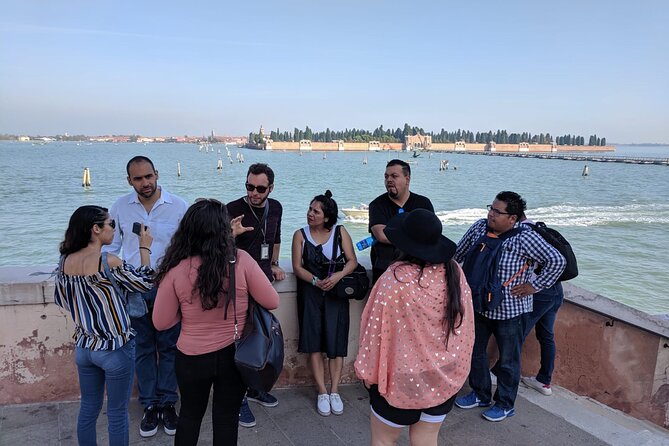
The walk is offered in English and lasts about two hours. Since it is private, you are not tied to the pace of a large group. Families can ask for simpler explanations or more stops for photos, while adults interested in architecture or Venetian politics can spend more time on those subjects.
Jewish Ghetto and the meaning of a Venetian word
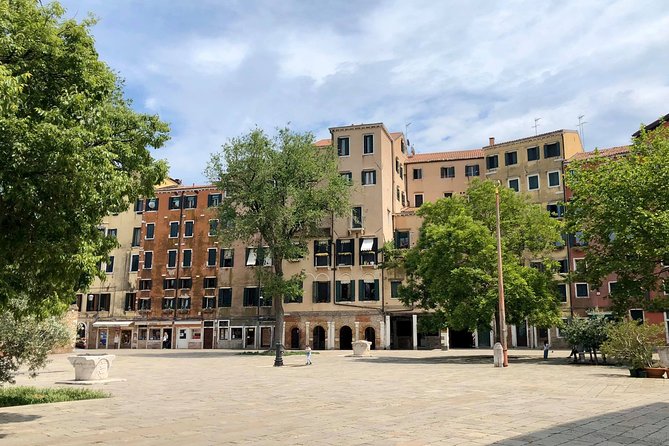
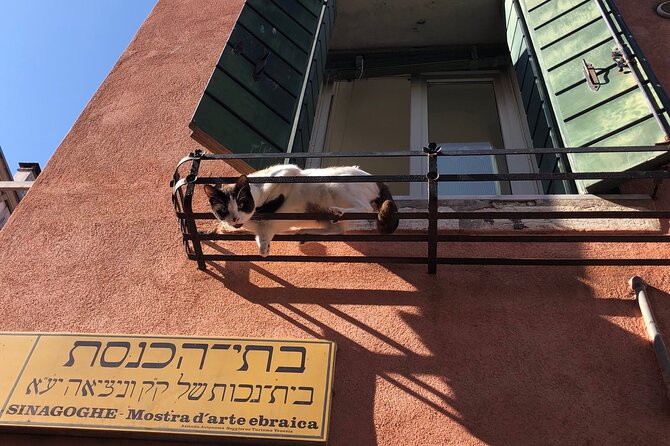
The first major stop is the Ghetto Ebraico, or Jewish Ghetto. You have about 15 minutes here, with no separate admission charge listed.
This is one of the strongest parts of the route because it gives you social and political context before the tour reaches the grand monuments. The Jewish community lived here during the Serenissima Republic, and the area’s history shows how Venice regulated urban life. Nico explains the Venetian origin of the word ghetto, a detail that is both specific to the city and useful far beyond a sightseeing checklist.
Do not expect a long museum visit at this point. The value is in the setting and the explanation. You are walking through an actual neighborhood while learning how the republic shaped it. That makes this a good stop for anyone who wants Venice to be more than architecture.
The area also helps set the tone for the rest of the walk. You begin with the lives of residents and communities, rather than with palaces alone.
Cannaregio corners, a Gothic church, and Tintoretto
The next stretch includes one of the places most commonly used as a local meeting spot. The exact stop is not named in the tour details, but the purpose is clear: Nico uses the area to explain why Venetians gather there and what daily life looks like away from the main tourist route.
You then reach the Chiesa della Madonna dell’Orto, a Gothic church visited for about five minutes. Its short stop suggests an exterior look and a concise explanation rather than a full interior tour. It is described as a wonderful, tucked-away church, and that is precisely why it earns a place here. You see a quieter piece of Venetian religious architecture without spending half your day in church queues.
Nearby is Casa del Tintoretto, identified as the birthplace of Jacopo Tintoretto. The stop lasts about five minutes. Again, this is not an art museum visit. It is a chance to connect a famous Venetian painter to an actual house and neighborhood.
I like these brief stops because they reward attention. You are not simply told that Venice produced important artists. You are shown where one of them lived and worked. If Tintoretto interests you, ask Nico for more context, since the private format allows the conversation to move beyond the standard script.
A different way to spend a morning on the water:
- Venice: Doge’s Palace Reserved Entry Ticket
★ 4.6 · 42,716 reviews - Venice: Grand Canal Gondola Ride with App Commentary
★ 4.1 · 18,908 reviews - Boat Trip: Glimpse of Murano, Torcello & Burano Islands
★ 4.3 · 15,699 reviews - Venice: Grand Canal by Gondola with Live Commentary
★ 4.1 · 13,681 reviews
Squero dei Muti and an old working tradition
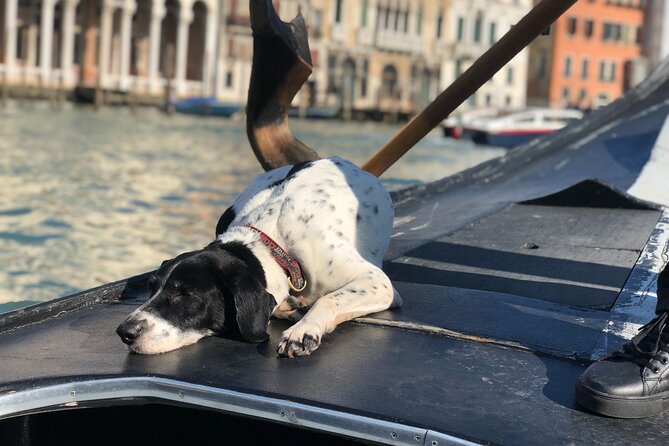
Squero dei Muti is described as an old gondola factory, with about five minutes assigned to the stop. This is one of the tour’s most useful corrections to the polished image of Venice.
A gondola is not just a romantic prop. It is a working boat with a local craft tradition behind it. A visit to an old squero gives you a glimpse of the practical side of the city, where boats are built or maintained to keep Venice moving through its canals.
The stop is short, so you should not expect a workshop tour or a lengthy demonstration unless Nico arranges otherwise. Still, it adds variety. You move from religious history and art to the physical skills that support Venetian life.
The city’s canals can seem decorative when you first arrive. A boatyard helps you see them as part of the city’s transport system and working culture.
Misericordia and the character of old Venice
The Chiesetta dell’Abbazia della Misericordia receives about ten minutes. It is presented as an ancient and beautiful corner of Venice, another place that can slip past you if you are focused only on major landmarks.
This stop works as a pause in the route. You get a small-scale view of Venice, with the kind of church and surrounding setting that rewards a slower eye. It also reinforces the tour’s theme: the city’s character is found in its minor buildings as much as in its famous palaces.
Because admission is listed as free, there is no separate ticket to manage for the stops. Keep in mind that short visits can depend on opening conditions, services, or access. The tour gives you the setting and explanation, but it is not designed as a church-interior marathon.
Rialto Market and the commercial heart of Venice
The Mercati di Rialto is one of the best stops for understanding how Venice worked. You have about 15 minutes at the traditional local market, where the city’s commercial life is easier to picture than it is from a palace balcony.
Rialto was not important simply because it offered a pretty bridge view. It was a center of buying, selling, shipping, and finance. The market helps explain why this part of the Grand Canal became so valuable.
The timing is enough for an orientation and a look around, but it is not a full market shopping session. If you want to buy food or spend time taking photos, you may need to return on your own. Nico can also point you toward Venetian dining, drinks, and local food choices. That practical advice may be one of the most useful souvenirs from the walk.
The tour also introduces the idea of a fondaco, a term tied to Venice’s commercial past. Understanding what a fondaco was helps you read the city’s old warehouses and merchant buildings with more purpose. Instead of seeing another elegant façade, you begin to ask what was stored there, who used it, and how goods moved through the republic.
Palazzo dei Camerlenghi and the first Rialto bridge
At Palazzo dei Camerlenghi, the focus shifts to Venice’s financial and administrative power. The stop lasts about five minutes and centers on the commercial importance of the city.
The building is part of the Rialto story because Venice depended on trade, taxes, and careful management of money. You do not need a long lecture to understand the basic point: the city’s beauty was supported by a serious commercial machine.
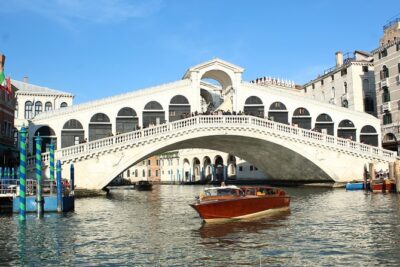
Then comes the Ponte di Rialto, the first bridge over the Grand Canal, with about 15 minutes planned here. This is one of the tour’s major photo and orientation points. The bridge sits at a crucial place in Venice, connecting the market and commercial district across the Grand Canal.
I like having the market and the bridge explained together. The bridge is not just a famous arch for photographs. Its location makes sense once you see the market, the canals, and the old movement of goods and people around it.
The bridge can be crowded, so do not expect a quiet private viewpoint at all times. The advantage of having Nico with you is that he can explain what you are seeing and help you understand the city around the crowd.
St. Mark’s Square and the city’s public face
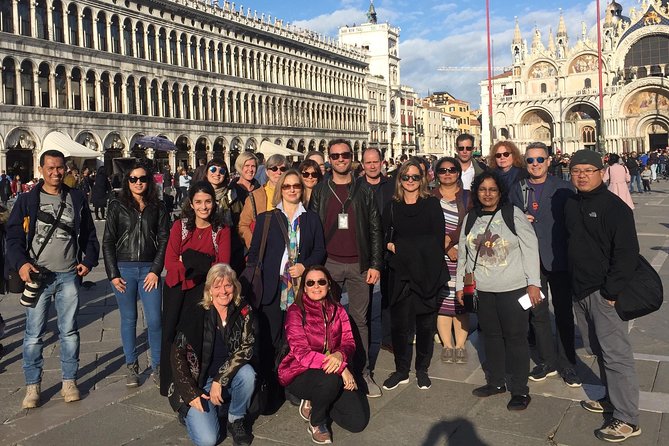
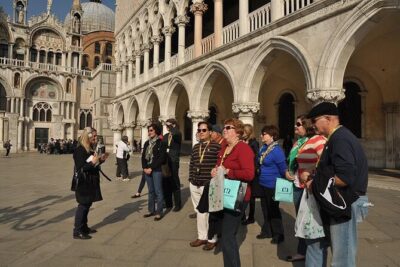
The route then reaches the square often described as the most beautiful in the world. This is the moment when the tour moves from neighborhood Venice to ceremonial Venice.
St. Mark’s Square is the city’s public stage. Its scale, surrounding buildings, and open space feel very different from the narrow lanes you have just walked. After hearing about communities, markets, crafts, and local meeting places, you can better appreciate why Venice needed such a grand center.
The tour allocates about 15 minutes to the Basilica di San Marco, described as the resting place of Saint Mark. This is an exterior-focused stop based on the time allowed and the fact that no admission ticket is included. If you want to go inside the basilica, plan a separate visit and check its entry rules.
A short explanation here is valuable because the basilica can overwhelm you with decoration. Nico can place it in the story of Venetian power and religious identity, then let you continue rather than turning the whole afternoon into a queue.
Doge’s Palace and the Bridge of Sighs
The Doge’s Palace receives another 15 minutes. This was the palace of Venetian political power, and it gives the tour a strong final chapter.
By this stage, you have seen how Venice organized communities, traded goods, supported boatbuilding, and managed money. The palace represents the ruling system that held those parts together. A short stop cannot replace a full palace visit, but it can help you decide if the interior deserves more of your time.
The final major stop is the Ponte dei Sospiri, or Bridge of Sighs, with about 15 minutes. Its common English name points to its role as the prison bridge. The covered passage connected the Doge’s Palace with the prison, giving the bridge a very different meaning from the romantic image often attached to it.
This is a good place to finish because it ties beauty and control together. Venice could be graceful, wealthy, and theatrical, but it was also a tightly governed republic with courts and prisons.
What the private format adds
A private tour is most valuable here because Venice rewards questions. You can ask about a building, stop for a photo, or request more food advice without waiting for a group of strangers.
Nico is described as an enthusiastic Venetian who speaks clear English and adjusts the route to your interests. His local knowledge is especially useful for restaurant suggestions, shopping tips, photo locations, and small details about city life. Families with children have found the pace workable, although everyone should be ready for plenty of walking.
The walk is also a good first activity in Venice. It helps you get your bearings before you tackle the city alone. After two hours, you should know where Rialto and St. Mark’s fit into the wider map, and you will have a better sense of which corners deserve a return visit.
One point needs clear explanation: a quick gondola crossing may be included in some versions of the experience. That is not the same as a traditional 30-minute gondola ride. If you are booking mainly for a romantic canal trip, ask exactly what is included before paying.
Price, timing, and who gets good value
The price is $171.92 per person. That is a serious charge for a two-hour walk, especially for a couple or family, so the value depends on how much you use the private format.
For one person or a large family group, the cost may feel high. For a group that would otherwise book several separate activities, the private guide and flexible route can make more sense. You are paying for local explanation, navigation help, and the ability to shape the conversation, not for paid entry to major monuments.
The tour is booked an average of 63 days ahead, so planning early is sensible if your dates are fixed. It runs daily from 9 a.m. to 8 p.m., subject to availability, and confirmation is sent within 48 hours of booking.
Choose comfortable shoes. You will cross bridges and walk through winding lanes, and the tour is not a sit-down sightseeing activity. Service animals are allowed, the meeting point is near public transportation, and most people can take part.
Day visitors staying outside Venice may need to pay a €5 access fee on certain dates. Check the official Venice access-fee site before your visit, since the rule depends on the date and exemptions.
Free cancellation is available up to 24 hours before the start time. The experience requires good weather, and a weather cancellation brings the choice of another date or a full refund.
Should you book The Secrets of Venice?
Book this tour if you want a strong orientation with local character, especially on your first day. It suits couples, families, and small groups who prefer a private conversation to a large scheduled walk. The Jewish Ghetto, Tintoretto’s home, the gondola factory, Rialto Market, and the political center give you a much wider view of Venice than St. Mark’s alone.
Think twice if your main goal is a long gondola ride or full interior visits to the basilica and Doge’s Palace. This is a fast-moving walking introduction, not a monument-entry tour.
For the best value, use the walk to gather ideas for the rest of your stay. Ask Nico where to eat, which market details to revisit, and which landmarks deserve a longer visit. If that sounds like your kind of Venice, this private route is a sensible way to begin.
FAQ
Where does the tour start?
The listed starting point is P.zt San Marco, 90, 30124 Venezia VE, Italy.
Where does the tour end?
The activity ends back at the meeting point.
How long does the tour last?
The tour lasts approximately two hours.
Is the tour private?
Yes. Only your group participates in the private activity.
Is pickup available?
Pickup is offered. Confirm the exact pickup details when booking.
What language is the tour offered in?
The tour is offered in English.
Who guides the tour?
The experience provider is Nico Venice Tour, and the guide identified for the experience is Nico, a native Venetian.
Are admission tickets included?
The listed stops show free admission. The tour does not list paid entry into the Basilica di San Marco or Doge’s Palace.
Is a gondola ride included?
Some bookings include a very quick gondola crossing, but this should not be confused with a 30-minute gondola ride. Confirm the exact arrangement before booking.
Can I cancel for a full refund?
You can cancel at least 24 hours before the start time for a full refund. Cancellations or changes made less than 24 hours before the start time are not accepted for a refund.
Recently added around Venice
- Your evening in Venice – Legends&Ghosts&Aperitif★ 4.7 · 79 reviews
- Venice: City Tour & Skip the Line for St. Mark’s Basilica★ 4.1 · 84 reviews
- Walking Tour to Uncover the Hidden Venice★ 4.4 · 34 reviews
- Wine Tasting in Venice★ 4.6 · 42 reviews
- Venice: Walking Tour & Gondola Ride★ 4.4 · 22 reviews
- Venice: Watercolor Painting Class at the Prisons Palace★ 4.7 · 27 reviews
- VIRTUAL MUSEUM: Creature di Gomma – Venice Vintage Toys★ 4.7 · 3 reviews
- Venice Walking Tour from St. Mark’s to Rialto Bridge★ 4.5 · 12 reviews
Private, compared.
Murano & Burano Islands Guided Small-Group Tour by Private Boat
Read our review →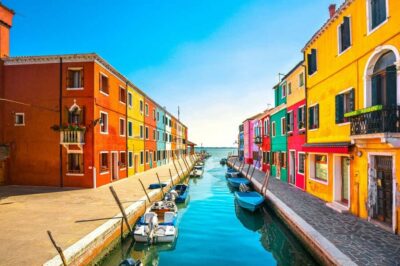
Private 3 hrs Venice Tour: St Mark’s, Walking tour & Boat tour
Read our review →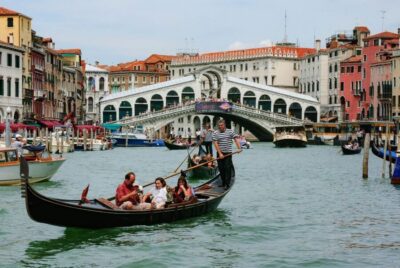
Private Best of Venice Walking Tour with St Mark’s Basilica
Read our review →
Private tour on Murano Island: discover the art of Artisanal Glassblowing
Read our review →