Reviewed · GUIDED
Welcome! Venice Sightseeing kickstart Tour with local guide, small group
Venice makes more sense when someone explains its odd details as you walk. This small-group tour connects the old Rialto trading district with San Marco, using local stories about masks, red-light districts, fish measures, plague, and the city’s unusual water supply to turn a confusing maze into a readable place.
I like the maximum group size of 10, which should make it easier to ask questions and hear the guide in narrow lanes. I also like the route from Campo San Polo to St. Mark’s Square, since it gives you both neighborhood Venice and the grand ceremonial center. The main consideration is that this is a walking and orientation tour, not an inside visit to the Basilica or Doge’s Palace.
Key points to know before booking
- Local guides such as Lucia and Gianni lead the walk, with a strong focus on Venetian stories and everyday details.
- Rialto is the heart of the route, including the market area, Grand Canal, and a less obvious view of the Rialto Bridge.
- You explore more than postcard Venice, with Carampane, narrow lanes, small squares, wells, and private palaces along the way.
- San Marco monuments are seen from outside, so you will need separate tickets if you want to enter the Basilica, Doge’s Palace, or another paid attraction.
- The tour takes about two hours and ends in St. Mark’s Square, useful for your first morning or first afternoon in town.
- The price is $81.28 per person, a fair value if you want a personal introduction, though less so if you already know Venice well.
Why this walk works as a first look at Venice
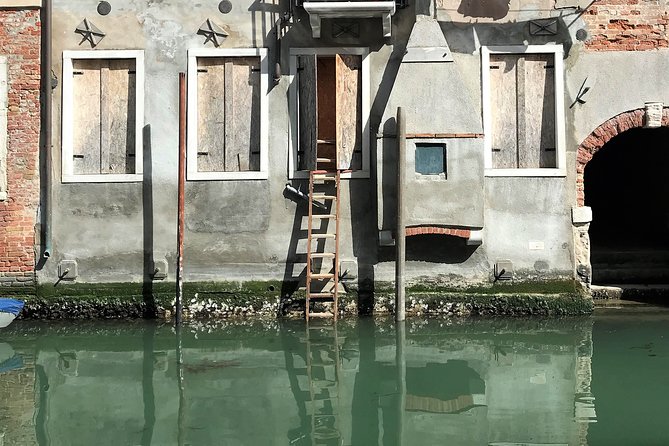
Venice can be hard to read on your own. Streets change names, canals interrupt direct routes, and a grand palace may appear beside a very plain alley. This tour gives you a basic map in your head while adding the stories that make the city memorable.
You begin in Campo San Polo, one of Venice’s traditional squares, and finish at Piazza San Marco. That route has a useful shape: you start with local neighborhoods and commerce, then reach the public face of the old Venetian Republic. You are not simply ticking off famous buildings. You are watching Venice shift from backstreet life to ceremonial power.
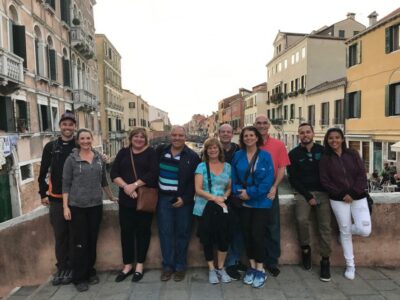
The guide is central to the experience. Lucia is identified as a lifelong resident of Venice, and Gianni has also led the walk. The guide may vary by date, but the stated approach remains the same: explain how the city formed, how its districts work, and how to look beyond the obvious view.
I especially like the promise of questions and conversation. One family used the tour as a Venice introduction for children, including an eight-year-old and a teenager. That points to a useful strength: the material can work for adults, but the stories about masks, legends, strange street names, and old rules should also hold younger attention.
A few more Venice outings worth comparing
- Venice: La Fenice Opera House Entry Ticket with Audio Guide
★ 4.6 · 11,742 reviews - Murano & Burano Islands Guided Small-Group Tour by Private Boat
★ 4.5 · 7,580 reviews - Venice Islands: Murano Glass & Burano Colors Guided Visit
★ 4.5 · 4,581 reviews
From Carampane to San Polo: Venice without the polished surface
The walk begins around Rio Terà de le Carampane, an old district with a more complicated past than its elegant image might suggest. During the Serenissima Republic, this area was associated with prostitution, and the guide explains the stories of the women who lived there.
This is a good early stop because it shows that Venice was not only churches, merchants, and palaces. It was also a working city with rules, social divisions, and less respectable corners. The tour also points out nizioleti, the painted street signs used around Venice. Their names can reveal something about the trade or function of a place, making a simple walk feel like a lesson in local language and memory.
You then meet in Campo San Polo, at the well in the middle of the square. Here the guide lays out basic facts about Venice: how the city is divided, how it began, how water was supplied, and what rules help protect the fragile city.
That introduction matters. Venice is built in a way that often seems impossible, but the explanation of water, foundations, and daily systems gives you a better frame for everything that follows. You also hear about the duties of loving and respecting the city, an important subject in a place dealing with heavy tourism and a shrinking resident population.
Rialto market and the old trading city
Rialto was once the financial and commercial center of Venice, sometimes described by historians as the Wall Street of medieval Europe. The tour explores the market area and explains why this part of the city became so important.
The market is especially dependent on the day and time of your visit. That is worth keeping in mind. You may see more activity and color when the market is operating, but the tour still has material to discuss even when stalls are quiet. The guide points out an old system of measuring fish and talks about how the area is affected by the declining number of Venetians living on the islands.
That last subject gives the stop more weight. Rialto is not just a photogenic market district. It is part of a city trying to keep ordinary life going while tourism takes up more space. I like that the tour connects architecture and commerce with the question of who still lives in Venice.
The Grand Canal and a different view of Rialto Bridge
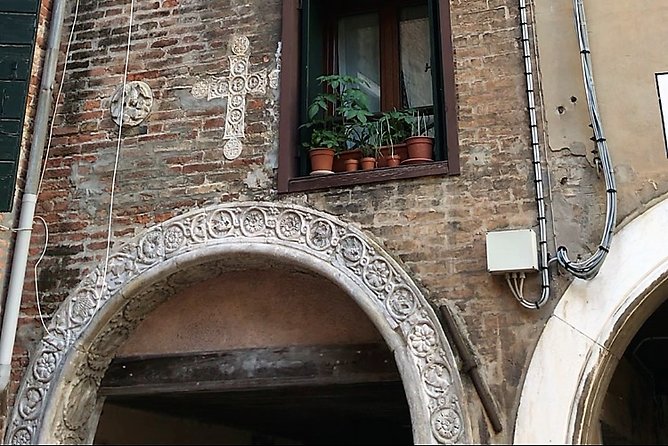
The Grand Canal gets two separate looks during the route. At one stop, you pause for photographs and discuss the waterway’s role in Venice. At another, you look across toward the Church of La Salute and the Dorsoduro district.
The Grand Canal is more than a scenic backdrop. It was Venice’s main route for movement and trade, and its broad curve lets you see how palaces faced the water rather than a road. The guide uses the view to explain the city’s structure and the relationship between its districts.
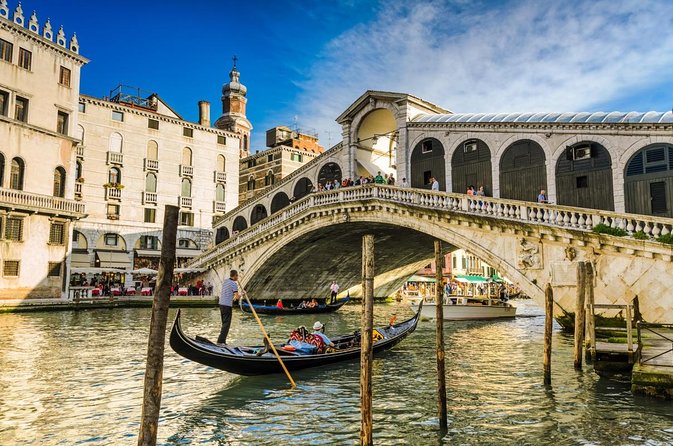
At Rialto Bridge, the tour avoids treating the famous arch as just a photo stop. You are taken to a less obvious viewpoint and hear why the bridge was built, when it was built, and where the name Rialto comes from. The decorations also receive attention. The description hints that their meaning is not immediately clear, so this is the sort of stop where a guide adds real value.
This part should be one of the strongest sections for first-time visitors. You get a classic Venice view, but the explanation gives you something to look for beyond the usual bridge photograph. You should have your camera ready, though the tour is not built around long photography sessions.
A different way to spend a morning on the water:
- Venice: Doge’s Palace Reserved Entry Ticket
★ 4.6 · 42,716 reviews - Venice: Grand Canal Gondola Ride with App Commentary
★ 4.1 · 18,908 reviews - Boat Trip: Glimpse of Murano, Torcello & Burano Islands
★ 4.3 · 15,699 reviews - Venice: Grand Canal by Gondola with Live Commentary
★ 4.1 · 13,681 reviews
Narrow lanes, small squares, wells, and private palaces
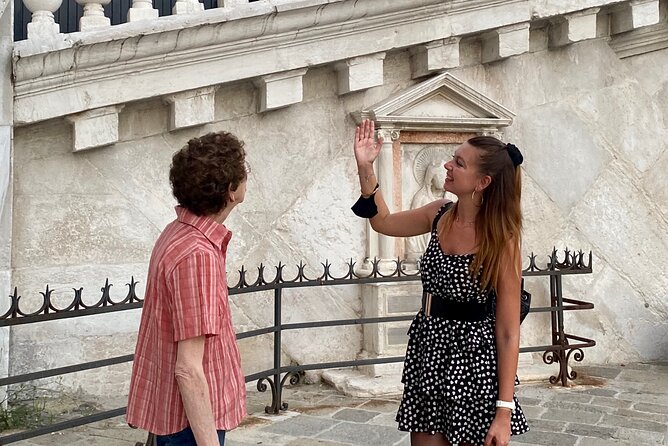
After the main Rialto sights, the route moves away from the largest crowds. You walk through Venice’s unusual layout of bridges, narrow alleyways, small campi, elaborate wellheads, and private palaces.
This is where the small group matters. A group of up to 10 people is more manageable in a tight lane than a large tour party. You can also ask about details that are easy to miss, such as the shape of a wellhead or the reason a square carries a particular name.
The walk is not a formal architecture lecture. It is closer to learning how to notice Venice. You may begin to see how each bridge solves a practical problem, how a small square serves as a neighborhood center, and how a plain doorway can belong to an impressive private residence.
One possible stop in the San Marco area is Scala Contarini del Bovolo, depending on the day. The guide explains the name, the Contarini family, the reason for the unusual staircase, and why it is tucked away from the main routes. Since the itinerary says the sight is shown according to the day, you should treat it as a possible feature rather than a guaranteed visit.
Stories of masks, Carnival, and the plague
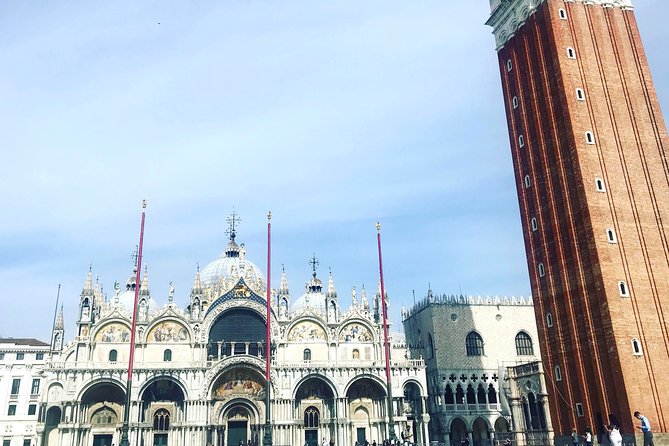
Venetian masks and Carnival are not treated as simple costume decoration. The guide explains why they became so important in the city and how they fit into Venetian social life.
That subject gives the tour a lighter change of pace after the market and urban history. It also helps explain why masks remain so closely tied to Venice’s image. You hear stories rather than receiving only dates and names, which can make the walk easier to remember.
The stop facing La Salute Church adds a darker thread. The guide discusses the real story of the black plague and explains the church’s connection to that event. Across the Grand Canal, you look toward Dorsoduro, a district associated here with art and a different side of the city.
The view is one of the tour’s best photo opportunities, but its value is not only visual. Venice’s churches and public spaces often carry memories of disease, danger, and civic survival. A short explanation can change how you read the grand buildings around the water.
Ending in Piazza San Marco
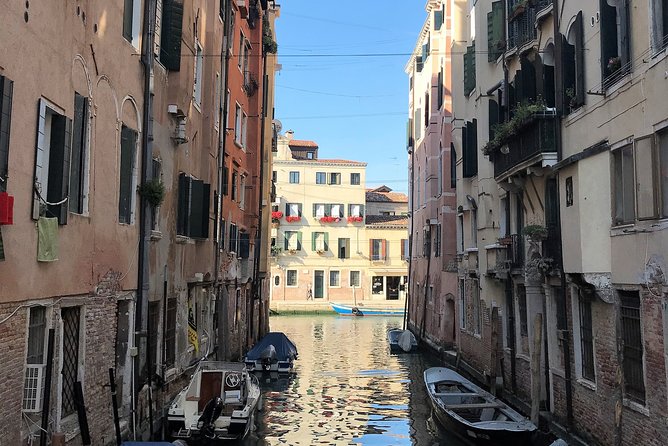
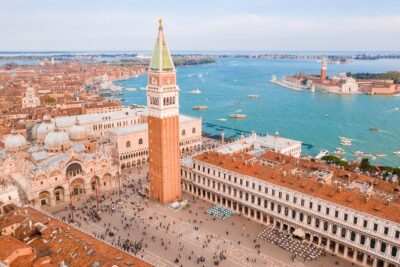
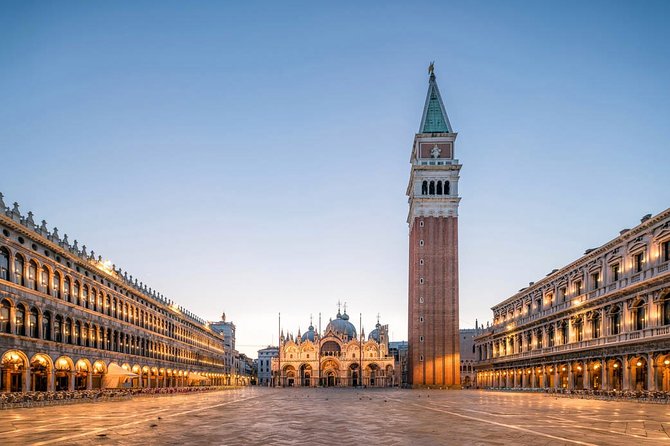
The tour finishes in Piazza San Marco, where Venice presents its most famous face. From the square, you see the Doge’s Palace, St. Mark’s Basilica, the Campanile, the Clock Tower, the Marciana Library, the Procuratie, the former royal palace, and the columns at the waterfront.
The guide points out details and legends that are easy to miss when you arrive alone. You also hear about the square’s role as the old entrance to the city and the power it represented during the Venetian Republic.
Keep your expectations clear: the monuments are viewed from outside. This tour does not include admission to the Basilica, Doge’s Palace, or other interiors. That is not a weakness if you want a quick orientation, but it matters if your main goal is to see the mosaics inside St. Mark’s or the rooms of the Doge’s Palace.
The ending is practical. You receive directions and suggestions for continuing your visit. Since the tour ends in one of Venice’s busiest and most important areas, you can use the location to visit a museum, enter a monument with a separate ticket, or continue walking on your own.
What the $81.28 price buys you

At $81.28 per person, this is not a cheap stroll. The value depends on how much you want a personal introduction to Venice.
You are paying for a local guide, a small group of no more than 10, a carefully connected route, photo stops, and explanations that cover both famous sights and ordinary city details. If this is your first visit, the price can make sense because you gain a working framework for the rest of your stay.
I would be less quick to recommend it to someone who has already spent several days exploring Venice, especially if you already know Rialto and San Marco well. The tour does not include food, transport, or entry tickets. It also lasts about two hours, so part of the value comes from the guide’s storytelling rather than from the number of attractions visited.
The walk has received a 5 out of 5 rating from 52 reviews, with 100 percent recommending it. The most consistent praise centers on the guides’ ability to explain Venice clearly, answer questions, keep children interested, and give first-time visitors a useful base. One guide continued despite heavy rain, but you should not assume every departure will operate in poor weather.
Timing, walking effort, and practical details
The meeting point is in Campo San Polo, and the tour ends in Piazza San Marco. You need to plan your own way to the start and should allow time to find the square and the well used as the meeting point.
The tour calls for moderate physical fitness. Venice means bridges, uneven walking routes, narrow lanes, and plenty of time on your feet. The supplied details do not give a step-free route, so anyone with mobility concerns should ask the provider for current route information before booking.
The experience uses a mobile ticket. Confirmation is provided at booking, and service animals are allowed. It operates near public transportation, though you still need to arrange your own local transport.
If you are visiting Venice for only one day from outside the city, check the current access-fee rules. On certain dates, many day visitors must pay a €5 fee, with exemptions in some cases. The applicable dates and conditions are provided through cda.ve.it.
Free cancellation is available up to 24 hours before the start time. Late cancellations and late changes are not accepted for a refund. The tour also requires good weather and a minimum number of participants. If the provider cancels for either reason, you are offered another date or experience, or a full refund.
Who should book this Venice walk
I would choose this tour at the start of a first Venice visit, especially if you want the city explained rather than simply photographed. Families may find the stories easier for children to follow than a long museum visit, and the small group leaves more room for questions.
It also suits anyone who enjoys local history, odd details, and street-level observation. The Carampane stories, fish measurements, painted street names, plague history, and Rialto explanations give you more than a standard march between famous sights.
You may want something else if you mainly want monument interiors, a food tasting, a gondola ride, or a slower photography walk. Those are not included. The tour is best viewed as a smart first chapter, not a complete Venice program.
Should you book it?
Book it if this is your first time in Venice and you want to understand the city’s layout, history, and daily life before exploring alone. Lucia and Gianni are both named as guides, and the strongest part of the experience is the human explanation of places you might otherwise pass without noticing.
Skip it if you already know Rialto and San Marco well or if you want a tour centered on interior admissions. At $81.28, the price is justified by the small group and local storytelling, but only if that kind of orientation is what you need.
FAQ
How long does the tour last?
The tour lasts approximately two hours.
Where does the tour begin?
It begins at Campo San Polo, 30125 Venezia VE, Italy.
Where does the tour end?
It ends in St. Mark’s Square, also called Piazza San Marco.
What is the maximum group size?
The tour has a maximum of 10 participants.
Are monument admission tickets included?
No. The major monuments in St. Mark’s Square are viewed from outside, and admission tickets are not included.
Does the tour visit St. Mark’s Basilica interiors?
No. The Basilica is discussed and viewed from outside only.
Does the tour include the Doge’s Palace?
The tour includes an outside look at the Doge’s Palace and its details, but admission is not included.
What does the tour cost?
The listed price is $81.28 per person.
Is the tour suitable for children?
The experience can suit families. The tour has been used by a family with an eight-year-old and a teenager, and the guides include stories and explanations for different ages.
What happens if bad weather cancels the tour?
If poor weather causes a cancellation, you are offered a different date or experience, or a full refund.
Recently added around Venice
- Your evening in Venice – Legends&Ghosts&Aperitif★ 4.7 · 79 reviews
- Venice: City Tour & Skip the Line for St. Mark’s Basilica★ 4.1 · 84 reviews
- Walking Tour to Uncover the Hidden Venice★ 4.4 · 34 reviews
- Wine Tasting in Venice★ 4.6 · 42 reviews
- Venice: Walking Tour & Gondola Ride★ 4.4 · 22 reviews
- Venice: Watercolor Painting Class at the Prisons Palace★ 4.7 · 27 reviews
- VIRTUAL MUSEUM: Creature di Gomma – Venice Vintage Toys★ 4.7 · 3 reviews
- Venice Walking Tour from St. Mark’s to Rialto Bridge★ 4.5 · 12 reviews
Guided, compared.
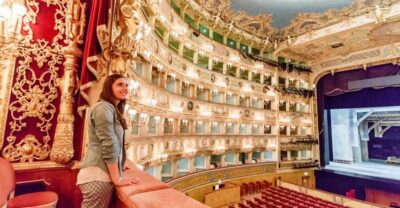
La Fenice Opera House Entry Ticket with Audio Guide
Read our review →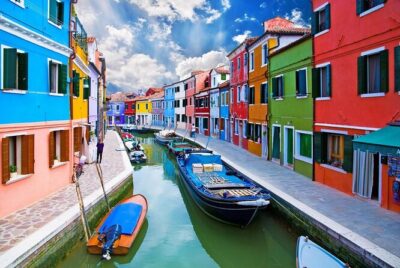
Murano & Burano Islands Guided Small-Group Tour by Private Boat
Read our review →
Venice Islands: Murano Glass & Burano Colors Guided Visit
Read our review →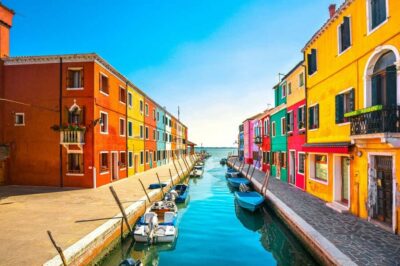
Street Food Tour with a Local Guide and Tastings
Read our review →
Doge’s Palace, Bridge of Sighs & Prisons Guided Tour
Read our review →
Skip the Line: St. Mark’s Basilica Guided Tour
Read our review →