
Reviewed · VENICE GHOST AND LEGEND TOURS
Prisons’ Palace: Maleficia, Inquistion torture tools
Venice’s Prisons Palace holds a grim chapter of the Serenissima Republic: the courts that prosecuted witchcraft, magic, and occult practices. The one-hour Maleficia exhibition uses documents, reproductions, and justice instruments to show how accusations became imprisonment, torture, and death.
I like the setting inside this historic prison palace, just beside Doge’s Palace, and I like the focus on evidence rather than folklore alone. The ancient documents and the cell for women accused of witchcraft give the subject a human scale. At $11, it is also a modest add-on to a day around San Marco.
The main drawback is that the exhibition is small and the subject is bleak. If you want a broad, lively account of Venetian history, this may feel limited. It is best for you if you are comfortable with displays about torture, death, and persecution.
Key points to know before you go
- The setting is the Prisons Palace: Find it across the bridge on the right side of Doge’s Palace, near San Marco Square.
- The visit lasts one hour: That makes it easy to fit before or after another central Venice sight.
- The exhibition mixes objects and documents: You’ll see reproductions, ancient records, and justice instruments linked to witchcraft prosecutions.
- The displays include a women’s cell: This gives the exhibition a sharper sense of the people who suffered under these accusations.
- Audio commentary comes in four languages: English, French, Italian, and Spanish are available.
- The exhibition has a serious tone: It is not a playful haunted attraction, but a look at punishment and fear in past centuries.
Inside the Prisons Palace beside San Marco
The first practical point is finding the entrance. The Prisons Palace is beside Doge’s Palace, close to San Marco Square, but it is not the same entrance. Walk to the right side of Doge’s Palace entrance and cross the bridge to reach the prison building.
That detail matters because the area around San Marco is full of grand doors, arches, and queues. It is easy to follow the crowd toward Doge’s Palace and miss the separate entrance. Give yourself a few extra minutes to get your bearings.
The setting does much of the work. This was a place of confinement and judgment, not a modern museum room built for a temporary display. The exhibition places its material inside a palace associated with prisoners and the courts that dealt with them. Even before you study an object, the building gives the subject a sober tone.
You enter for a visit of about one hour. There is no long route through the wider Venetian prison system described here, so you should think of Maleficia as a compact exhibition within the Prisons Palace rather than a full-day museum.
More ghost and legend walks in Venice:
- Venice Ghost Stories, Legends and Anecdotes Tour
★ 4.0 · 846 reviews - Venice: Ghost Tour to Rialto and San Marco Square
★ 3.8 · 659 reviews - Venice: Mysterious Tales of Ghosts and Murders
★ 4.9 · 636 reviews
What the Maleficia exhibition explains
Maleficia refers to harmful magic or evil spells. The exhibition looks at the way the Holy Office dealt with accusations of witchcraft from roughly the 15th through the 18th centuries.
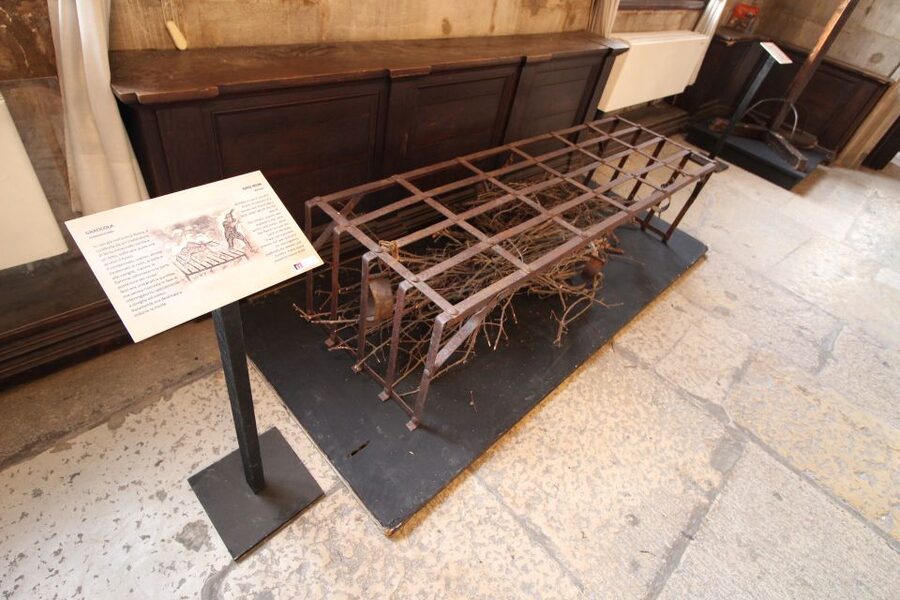
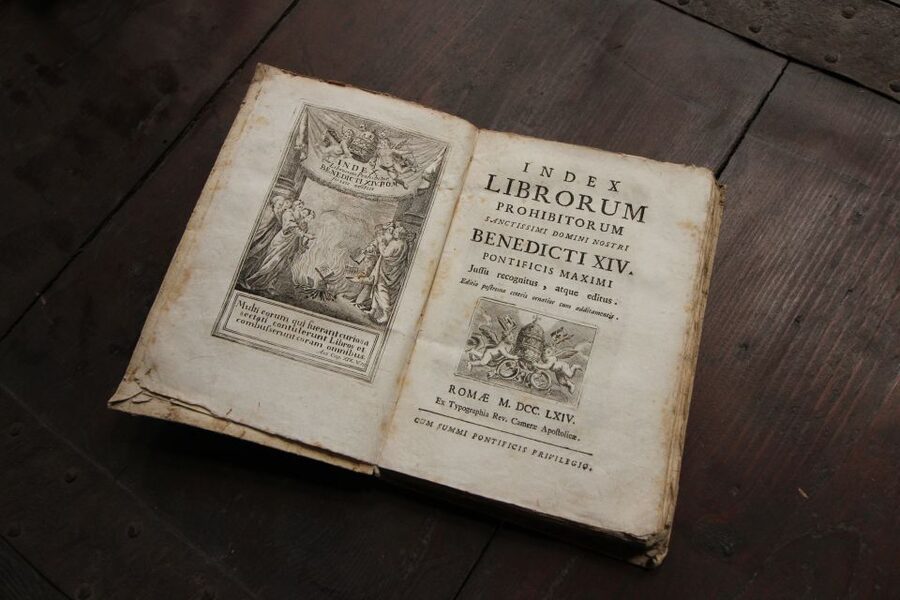
The subject is not presented only through stories of witches and supernatural belief. You’ll find ancient documents used in the persecution of witchcraft, along with reproductions and instruments of justice. That mix is useful because it shows both the ideas behind the trials and the physical methods used against the accused.
The exhibition also connects the displays to the larger story of the Serenissima Republic. Venice is often presented through art, trade, churches, canals, and grand civic buildings. Maleficia shows a harsher side of the same republic, where official courts could punish people accused of magic and occult practices.
I like that contrast. You can spend the morning admiring the ceremonial rooms of Doge’s Palace, then cross into a place tied to confinement and punishment. The two sites are physically close, but they tell very different stories about power in Venice.
Documents, reproductions, and the machinery of punishment
The exhibition includes original documents and reproductions. That distinction is worth keeping in mind. Not every object is an original instrument from the period, but the display uses period material and reconstructed tools to explain how justice operated.
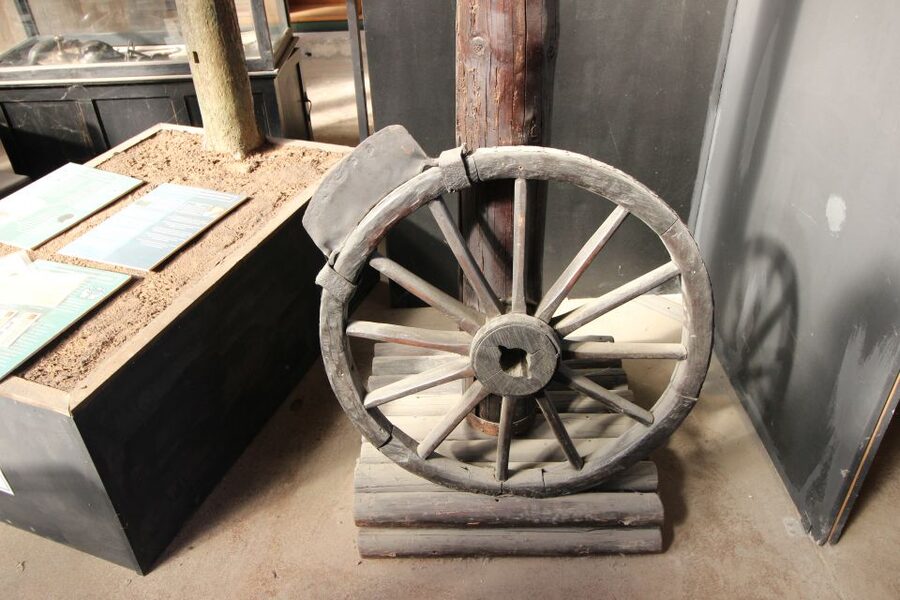
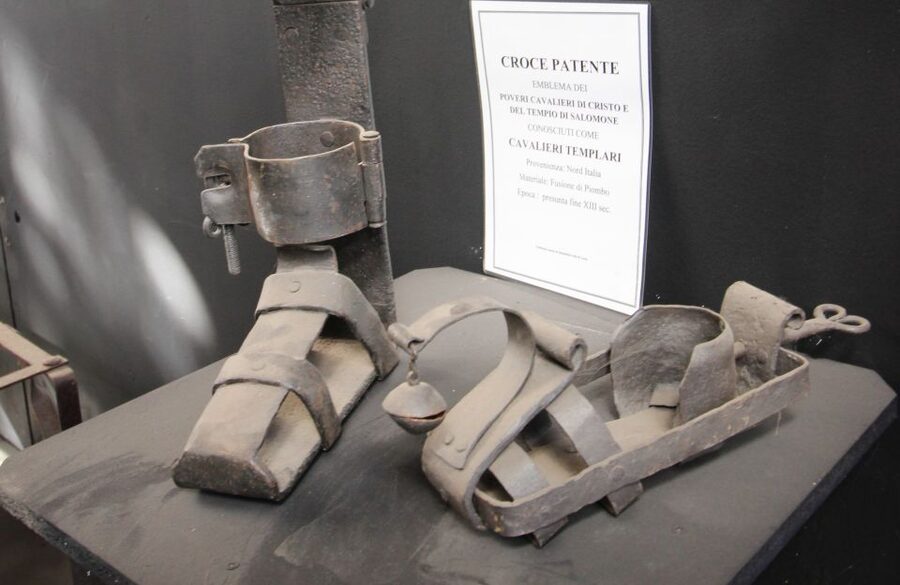
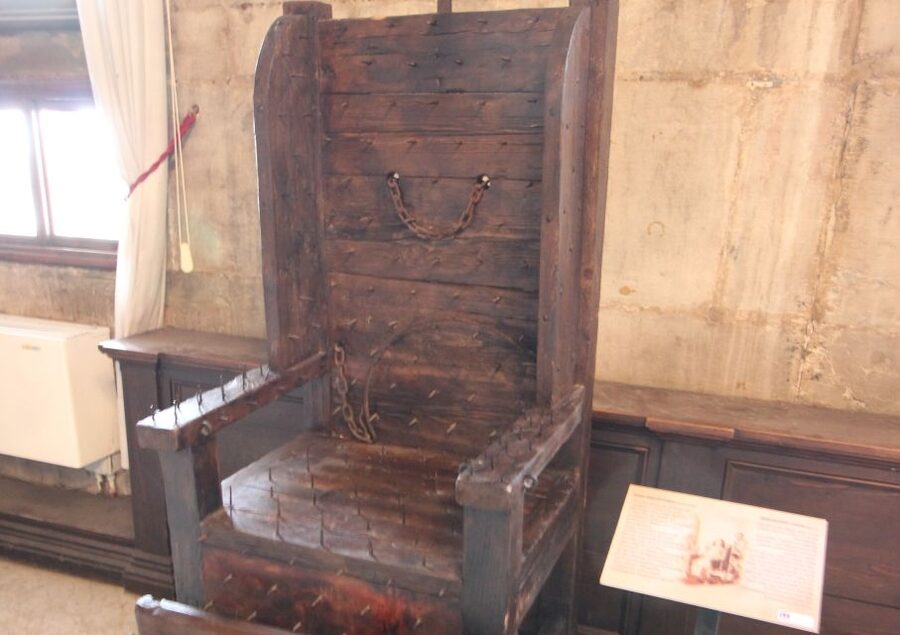
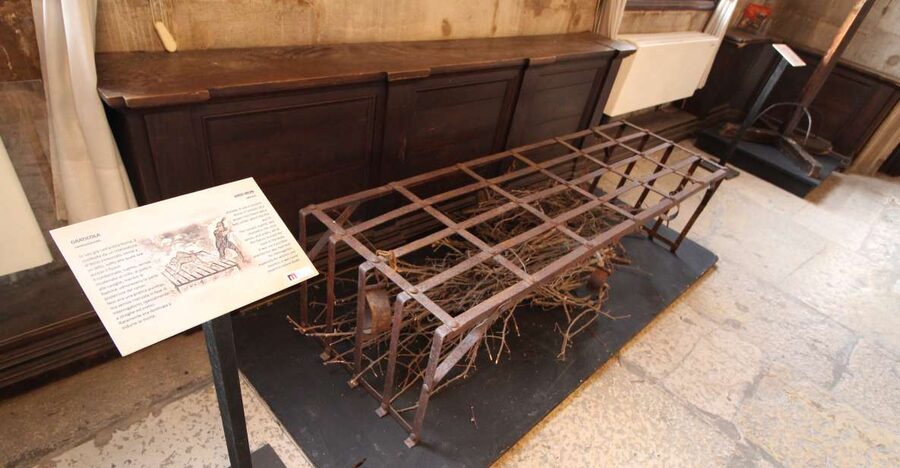
Among the items are instruments described as a garrote, a head crusher, and a pillory. You’ll also see an authentic whipping post. These objects are direct and uncomfortable. They are not decorative antiques. Their purpose was to control, hurt, shame, or kill.
The word torture can attract attention, but the most useful part of this display is the context around the objects. A tool by itself can become a shock prop. Documents and commentary help connect it to the legal and religious systems that allowed such punishment.
You may find the exhibition especially effective if you want to understand how fear became official policy. Accusations of witchcraft were not simply village rumors. The Holy Office had procedures, records, and instruments for dealing with suspected magic. That makes the material disturbing in a more serious way.
The display is also a reminder that justice in earlier centuries could be public, physical, and meant to frighten others. A pillory or whipping post punished one person while warning everyone nearby. The exhibition’s objects make that idea plain without needing a large collection.
The women’s cell and the human cost
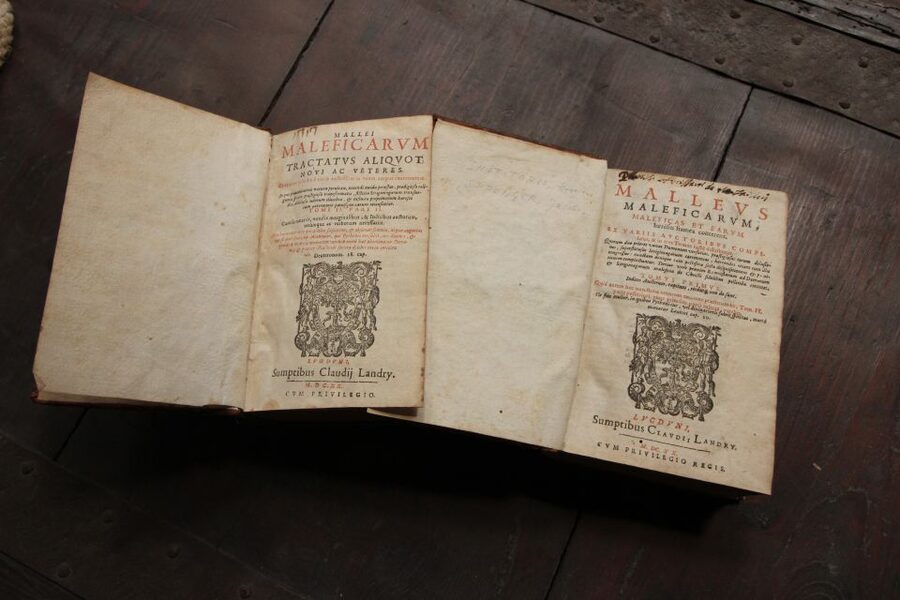
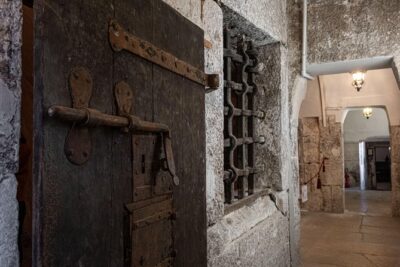
One of the most important spaces is a cell for women accused of witchcraft. It shifts the focus from courts and devices to the people who were locked away.
This is where I find the subject most affecting. Documents can feel distant, and instruments can seem like museum pieces. A cell makes the loss of freedom easier to picture. The accused were not abstract figures from a legend. They were women held by a system that treated suspicion as a reason for confinement and punishment.
The information provided does not describe the cell’s size or furnishings in detail, so you should not expect a recreated room with a full theatrical setup. Its value is as part of the exhibition’s wider argument: witchcraft accusations had real consequences, including imprisonment and death.
The exhibition also mentions famous figures such as Giacomo Casanova, who was accused of dabbling in magic and the occult. Casanova is usually remembered for romance, adventure, and escape. His connection to this subject shows that suspicion of forbidden practices could touch well-known people as well as ordinary women.
That detail adds a Venetian name many visitors will recognize, but the main focus remains the system of persecution. The exhibition is less about celebrating Casanova than about showing how accusations of magic could bring people before the authorities.
A different way to spend a morning on the water:
- Venice: Doge’s Palace Reserved Entry Ticket
★ 4.6 · 42,716 reviews - Venice: Grand Canal Gondola Ride with App Commentary
★ 4.1 · 18,908 reviews - Boat Trip: Glimpse of Murano, Torcello & Burano Islands
★ 4.3 · 15,699 reviews - Venice: Grand Canal by Gondola with Live Commentary
★ 4.1 · 13,681 reviews
Audio commentary in four languages
An audio guide is included with the entrance ticket. Commentary is available in English, French, Italian, and Spanish.
That is helpful in a display built around documents and unfamiliar legal terms. Without explanation, an old record or instrument can be hard to read. The commentary gives you a path through the material and helps explain what the objects were used for.
You can access the audio guide commentary through the supplied Easy Guide Veneto link:
The experience is not described as a guided tour with a named guide or a live group leader. Plan on using the audio commentary rather than expecting a personal lecture. That gives you control over the pace, but it also means the quality of your visit depends on how closely you listen and read.
I recommend taking your time with the documents rather than rushing from one tool to the next. The instruments make an immediate impression, but the written material explains the beliefs and legal process behind them. In a one-hour visit, you should have enough time to hear the commentary and pause at the most serious displays.
Is one hour and $11 good value?
At $11 per person, Maleficia is reasonably priced for a central Venice stop, especially if you are already visiting Doge’s Palace or walking around San Marco. The exhibition does not require a major time commitment, and the audio commentary is included.
The value depends on your interest. If you want a large museum collection, extensive art, or a detailed tour of every room in the Prisons Palace, one hour may feel brief. The exhibition is focused on witchcraft persecution, the Holy Office, and punishment. It does not try to cover all of Venetian history.
For the right visitor, the price works well. You get a distinctive setting, a specific historical theme, and access to documents and instruments that are difficult to understand from a general city walk. It is also short enough to fit between major sights.
The experience currently carries a 4.1 out of 5 rating from 66 bookings. One recent Italian-language assessment rated the visit two out of five and suggested Venice could say more about such a subject. That is a fair caution: the exhibition’s theme is larger than its one-hour presentation.
Another recent five-star assessment found the visit matched expectations. That helps define the best way to book it. Go expecting a compact, atmospheric exhibition with a grim focus, not a full account of every witchcraft trial in Venice.
Who should visit Maleficia?
I would recommend this experience to you if you enjoy:
- Social and legal history rather than only paintings and architecture
- Unusual museums and lesser-known corners near major sights
- Exhibitions about witchcraft beliefs, courts, and punishment
- Short visits that fit around a busy Venice schedule
- Audio-guided displays in English, French, Italian, or Spanish
- Serious historical material presented through objects and documents
It may not suit you if you dislike displays of torture or death. The subject is not softened. The garrote, head crusher, pillory, and whipping post are there to show how harsh justice could be.
It is also not recommended for people with limited mobility, and the experience is specifically listed as unsuitable for people with mobility impairments. Keep that in mind before booking.
Families should use their own judgment. The supplied information does not give a minimum age, but the subject matter is plainly grim. Young children may find the instruments frightening or may not understand the historical setting.
How to plan the visit around Doge’s Palace
The easiest plan is to pair Maleficia with other sights around San Marco Square. Since the Prisons Palace is beside Doge’s Palace, you can place this visit before or after your time there.
Allow a little extra time to locate the correct entrance. Do not join the line at Doge’s Palace unless that is also part of your plan. Cross the bridge on the right side of the Doge’s Palace entrance to reach the Prisons Palace.
The stated opening hours are 10:00 AM to 5:00 PM. Check availability for the starting time offered on your chosen day, since the activity lasts one hour and the operating window is limited.
The booking terms are practical for a changing Venice schedule. You can reserve now and pay later, and cancellation is available up to 24 hours in advance for a full refund. Those terms are useful if your day depends on weather, transport, or a timed visit to another attraction.
Should you book the Maleficia exhibition?
Book it if you want a short, unusual stop that shows Venice through its courts, prisons, and witchcraft prosecutions. The Prisons Palace setting, the women’s cell, and the mix of documents and punishment instruments give the visit more substance than a simple collection of theatrical torture props.
Skip it if you want a large museum or a broad tour of Venetian history. The exhibition is focused, serious, and compact, and one hour is enough for most of what is offered.
At $11, I see it as a good add-on for a visitor already in San Marco, especially one interested in social history. Go with measured expectations, listen to the audio guide, and treat the instruments as evidence of real suffering rather than entertainment. That is when Maleficia is most useful.
FAQ
Where is the Maleficia exhibition located?
It is housed in the Prisons Palace near San Marco Square, beside Doge’s Palace. To reach it, cross the bridge on the right side of the Doge’s Palace entrance.
How long does the visit last?
The stated duration is one hour.
What are the opening hours?
The exhibition is open from 10:00 AM to 5:00 PM.
What does the ticket include?
The ticket includes entrance to the Maleficia Museum and audio commentary.
Which languages are available for the audio guide?
The audio guide is available in English, French, Italian, and Spanish.
What will I see inside the exhibition?
You will see ancient documents, reproductions, instruments of justice connected with witchcraft persecution, a garrote, a head crusher, a pillory, an authentic whipping post, and a cell for women accused of witchcraft.
Is the exhibition suitable for people with mobility impairments?
No. The activity is not recommended for people with limited mobility and is listed as unsuitable for people with mobility impairments.
Recently added around Venice
- Your evening in Venice – Legends&Ghosts&Aperitif★ 4.7 · 79 reviews
- Wine Tasting in Venice★ 4.6 · 42 reviews
- Venice: City Tour & Skip the Line for St. Mark’s Basilica★ 4.1 · 84 reviews
- Walking Tour to Uncover the Hidden Venice★ 4.4 · 34 reviews
- Venice: Walking Tour & Gondola Ride★ 4.4 · 22 reviews
- Venice: Watercolor Painting Class at the Prisons Palace★ 4.7 · 27 reviews
- VIRTUAL MUSEUM: Creature di Gomma – Venice Vintage Toys★ 4.7 · 3 reviews
- Venice Walking Tour from St. Mark’s to Rialto Bridge★ 4.5 · 12 reviews
Venice Ghost and Legend Tours, compared.
Venice Ghost Stories, Legends and Anecdotes Tour
Read our review →

Lords of the Night Prisons Palace: Cells & Torture Tools Visit
Read our review →
Legends, Anecdotes and Ghost Stories Walking Tour
Read our review →
Browse the lists this tour appears in