

Reviewed · VENICE
Venice: Scuola Grande di San Rocco Audioguide
The most striking part of the Scuola Grande di San Rocco is the chance to look up at Tintoretto’s grand paintings while hearing what you are seeing. This $6 digital audioguide turns a quiet museum visit into a guided tour without tying you to a group or a fixed schedule.
I like the freedom to pause, replay, and move at my own speed. I also like that the guide covers both Tintoretto’s life and the Scuola’s story, rather than treating the paintings as isolated decorations. The catch is important: this $6 purchase is for the audio guide only. You still pay €10 for museum entry.
Key Points to Know Before You Go
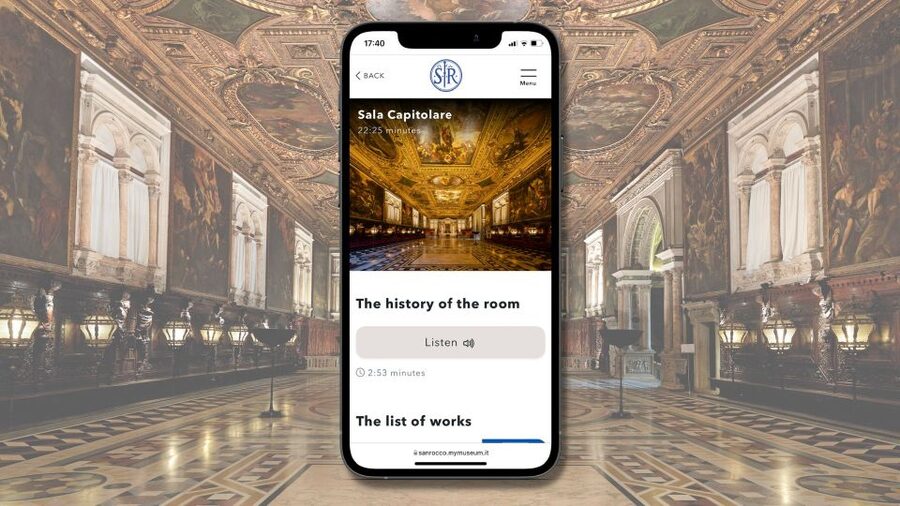
- Tintoretto is the main attraction: Hear about Saint Roch in Glory, The Annunciation, The Crucifixion, and other major works.
- The guide runs in your browser: You do not need a separate audio device, but you do need a charged smartphone and headphones.
- Four hours begins at activation: Start the guide when you are ready to enter and explore.
- The museum ticket costs extra: Buy the €10 admission ticket at the ticket office in the building.
- You set the pace: Pause or replay the commentary instead of following a group.
- Languages are limited but useful: Audio is available in Italian, English, French, and German.
Why Tintoretto’s Scuola Grande Matters

The Scuola Grande di San Rocco is not simply a picture gallery. It was a Venetian charitable and religious institution, and its rooms were created to impress, teach, and inspire the people who entered them.
That purpose matters when you visit. The paintings were not made to sit quietly on white museum walls. They belong to rooms designed for ceremony and reflection. The audio guide helps connect the paintings with the building and with the institution that commissioned them.
Tintoretto is the central figure here. He was one of Venice’s great painters, known for ambitious scenes and dramatic religious subjects. The guide gives you a way to follow his career while you look at the work in the rooms around you.
I find this kind of explanation especially useful in Venice. Many churches and historic buildings are packed with art, but labels can be brief or easy to miss. A phone-based guide gives you a fuller account while you are standing directly in front of the painting.
Other Venice outings people book alongside this one:
- Venice: Doge’s Palace Reserved Entry Ticket
★ 4.6 · 42,716 reviews - Venice: Grand Canal Gondola Ride with App Commentary
★ 4.1 · 18,908 reviews - Boat Trip: Glimpse of Murano, Torcello & Burano Islands
★ 4.3 · 15,699 reviews
Starting in the Sala Terrena
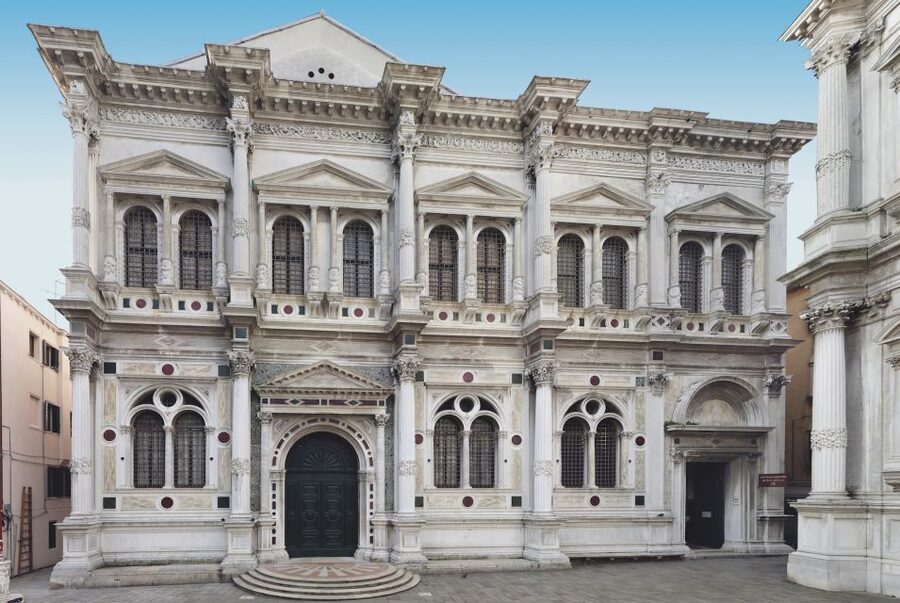
Your visit begins at Campo San Rocco 3054A. Enter the Scuola Grande di San Rocco and climb a couple of steps to reach the ticket office. The office is in the beautiful Sala Terrena, where you can ask about both admission and access to the digital guide.
This first stop is more than a practical check-in point. The Sala Terrena is part of the historic setting, so you begin surrounded by the architecture before moving farther into the building.
At the ticket office, buy the museum entry ticket if you have not already done so. Admission costs €10, and it is not included in the $6 audioguide price. Ask for access to the phone guide at the same time.
That separation between admission and commentary is the main point to understand before booking. If you expect a $6 museum ticket and discover the €10 charge at the door, the visit can feel more expensive than planned. In reality, you are paying for two different things: entry to the building and the optional audio content.
Entering the Museum With Your Phone
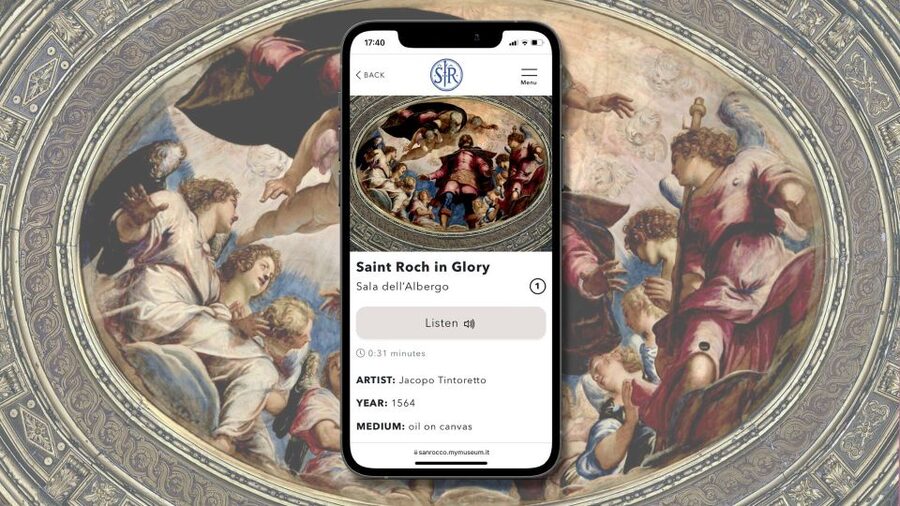
The digital guide is available through your smartphone’s browser. You do not collect a traditional audio handset, and there is no need to follow a guide holding a flag.
Bring a charged phone and headphones. Headphones are not listed as included, so pack your own. This is a small detail, but it can make a big difference in a quiet interior where playing audio aloud would be distracting.
The guide is multilingual, with Italian, English, French, and German options. Choose your language before you begin, then activate the guide when you are ready to start looking around.
The four-hour period begins with your first activation. That gives you plenty of breathing room for a normal visit, especially since the audio guide does not force you to move from one stop to the next.
I would avoid activating it while still sorting out tickets or waiting at the entrance. Handle the admission first, get your phone ready, then begin the four-hour window once you are inside and prepared to listen.
Following Tintoretto Through the Rooms

The tour begins from the Sala dell’Albergo and leads you through the museum rooms. The exact pleasure of the visit comes from matching the commentary to the paintings in front of you.
The guide includes Saint Roch in Glory, a work tied to the building’s religious purpose and dedication to Saint Roch. Listening while looking upward helps you notice how the scene was meant to function within the room, rather than viewing it as a flat image in isolation.
The Annunciation gives you another major subject to consider. This familiar biblical scene appears across European art, but Tintoretto’s treatment becomes more meaningful when you understand the choices behind it. The guide helps explain the subject and the artist’s approach as you examine the work yourself.
The Crucifixion is another key stop. It is one of the paintings specifically highlighted for the audio commentary, and it gives you a chance to consider Tintoretto’s handling of a large, emotionally charged religious scene.
You are not simply pressing play and walking past the art. Stop when a detail catches your eye. Replay a section if the room is busy or if you want more time to look. The self-paced format works best when you treat the guide as a companion rather than a soundtrack.
A different way to spend a morning on the water:
- Venice: Grand Canal by Gondola with Live Commentary
★ 4.1 · 13,681 reviews - Venice: La Fenice Opera House Entry Ticket with Audio Guide
★ 4.6 · 11,742 reviews - Doge’s Palace & St. Mark’s Basilica with Terrace Access Tour
★ 4.7 · 10,697 reviews - Venice: Burano, Torcello & Murano Boat Tour w/Glassblowing
★ 4.4 · 10,245 reviews
What the Commentary Adds
A good audio guide should answer three basic questions: What am I looking at? Why is it here? What should I notice?
This guide is designed to cover all three. It explains the history of the Scuola Grande di San Rocco, introduces Tintoretto, and discusses the cultural importance of the works inside.
That broader context is useful because the building can otherwise feel like a series of grand rooms filled with large paintings. The guide gives those spaces an order and helps you understand why the art belongs there.
You also control the amount of information you receive. If you prefer a quick look, listen to the main sections and continue. If you enjoy art history, take more time with each stop. No group is waiting, and you do not have to keep pace with a professional guide.
The downside is that a browser-based guide depends on your own device. A weak battery, forgotten headphones, or an awkward phone connection can spoil the convenience. Charge your phone before leaving your hotel and keep the access details easy to find.
How the Four-Hour Window Works
The guide is valid for four hours from the first activation. This is not a four-hour guided excursion with a fixed route. It is a time window in which you can use the digital commentary while visiting the museum.
For most people, four hours is generous. You can listen slowly, pause between rooms, and take breaks without worrying that the guide will end after a short standard tour.
The most practical approach is to activate it only once you are ready to begin. Since the clock starts at first use, avoid opening the guide just to test it far ahead of your visit.
The activity ends back at the Scuola Grande di San Rocco. There is no separate transport, meeting point across town, or final drop-off. You arrive at Campo San Rocco, visit the building, and leave from the same place.
Comparing the Cost With a Traditional Tour
The listed price is $6 per person for the audio guide, with the €10 museum ticket added separately. That makes the value depend on what you want from the visit.
If you only want to see the rooms and paintings, you may decide that admission alone is enough. The extra $6 buys interpretation, not access.
I think the guide is a reasonable add-on if you care about Tintoretto or prefer to understand the setting rather than glance around. The price is modest compared with a private guide, and you get four hours of use instead of a short group talk.
The value is less clear if you already know the Scuola well, plan to spend only a few minutes inside, or dislike listening through a phone. You also need to account for the total cost before booking: $6 for the guide plus €10 for entry.
A practical warning comes from the booking setup. At least one buyer misunderstood the purchase and thought it covered two museum admissions, then had to buy the €10 tickets separately. Read the inclusions carefully. This is an audio guide reservation, not a combined admission ticket.
Who Will Like This Format
This experience suits independent visitors who like to set their own rhythm. You can linger over one painting, skip a section, or pause the commentary while taking in the room.
It is a good fit for art-minded visitors who want more background on Tintoretto. It also works well for couples or families who do not want to stay together every second. Each person can listen on a phone, though each person should have the required access and equipment.
The guide is available in four languages, which makes it practical for Italian, English, French, and German speakers. If your preferred language is not one of those four, confirm the language choice before purchase.
The activity is listed as wheelchair accessible. Still, the entrance instructions note a couple of steps before the ticket office in the Sala Terrena. If step-free access is essential for you, ask the ticket office for current assistance details before beginning.
What I Would Bring
Keep your preparation simple:
- A fully charged smartphone
- Headphones
- Your booking information
- Time to buy the separate €10 entry ticket
Your headphones matter because the audio guide is meant for personal listening. Your phone battery matters even more because the guide runs on your own device.
I would also avoid planning the activation at the very end of a packed Venice sightseeing day. The four-hour window is flexible, but you will get more from the visit if you are not rushing through the rooms.
The Main Limitation: It Is Not a Personal Guide
The digital guide gives you information, but it does not answer questions. You cannot ask it to explain a detail you notice or adjust the route for your interests.
That is the trade-off for a low price and total independence. A live guide can react to your questions and point out small details in real time. The phone guide gives you privacy and control instead.
The 3.6 rating from 25 reviews suggests a mixed experience overall, and the clearest concern is the confusion over what the purchase includes. That issue is easy to prevent: treat the $6 as the commentary fee and budget separately for the €10 museum admission.
Should You Book the Scuola Grande di San Rocco Audioguide?
Book it if you want a flexible introduction to Tintoretto and the history of the Scuola Grande di San Rocco. The four-hour activation window, multilingual commentary, and phone-based format give you plenty of control.
Skip it if you only want a quick look, already know the building well, or expect the price to include admission. The extra €10 ticket is not a minor footnote, especially for a couple or family.
For most independent art lovers, I think the guide is worth the $6, provided you arrive with a charged phone, headphones, and a clear understanding of the separate museum fee. It gives the paintings a useful voice without turning your visit into a rigid group tour.
FAQ
Is the museum ticket included in the $6 price?
No. The museum ticket costs €10 and must be purchased separately at the ticket office.
Where does the visit begin?
It begins at the Scuola Grande di San Rocco, located at Campo San Rocco 3054A in Venice.
Where do I get access to the digital guide?
Go to the ticket office at the entrance after climbing a couple of steps. The ticket office is in the Sala Terrena, where you can ask for the guide.
How long is the audioguide valid?
It is valid for four hours from the moment you first activate it.
Which languages are available?
The audioguide is available in Italian, English, French, and German.
Do I need a smartphone?
Yes. The guide is available through the browser on your smartphone.
Should I bring headphones?
Yes. Headphones are listed as something you should bring with you.
Is the experience wheelchair accessible?
Yes, the activity is listed as wheelchair accessible. The entrance instructions also mention a couple of steps before the ticket office.
Can I cancel for a full refund?
Yes. You can cancel up to 24 hours in advance for a full refund.
Recently added around Venice
- Your evening in Venice – Legends&Ghosts&Aperitif★ 4.7 · 79 reviews
- Walking Tour to Uncover the Hidden Venice★ 4.4 · 34 reviews
- Wine Tasting in Venice★ 4.6 · 42 reviews
- Venice: City Tour & Skip the Line for St. Mark’s Basilica★ 4.1 · 84 reviews
- Venice: Walking Tour & Gondola Ride★ 4.4 · 22 reviews
- Venice: Watercolor Painting Class at the Prisons Palace★ 4.7 · 27 reviews
- VIRTUAL MUSEUM: Creature di Gomma – Venice Vintage Toys★ 4.7 · 3 reviews
- Venice Walking Tour from St. Mark’s to Rialto Bridge★ 4.5 · 12 reviews