
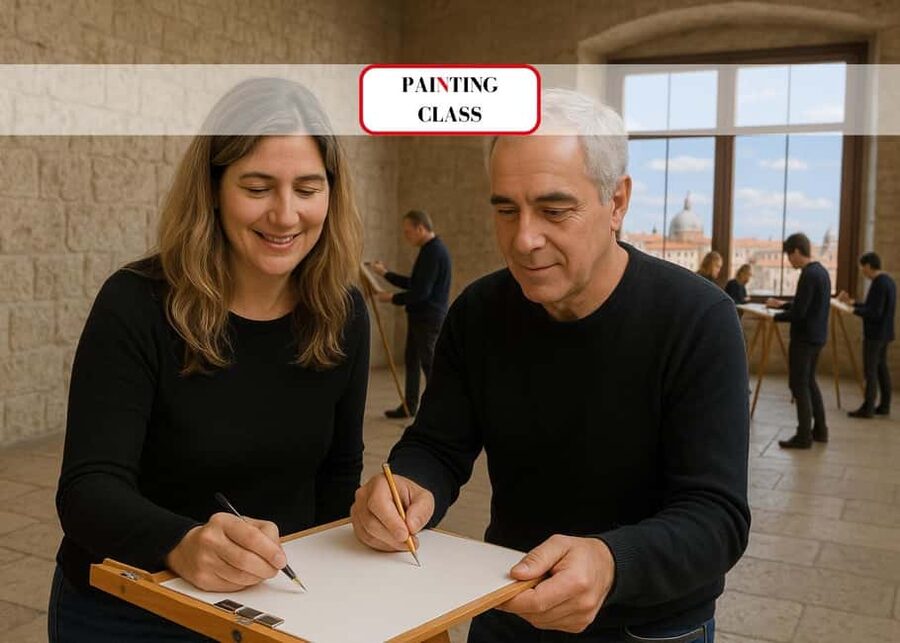
Reviewed · WORKSHOPS
Venice: Watercolor Painting Class at the Prisons Palace
Venice becomes your subject in this small watercolor class beside the Prisons Palace, just across the bridge from the Doge’s Palace. Instead of only photographing the canals and palaces, you’ll learn how to put their shapes, reflections, clouds, and changing light onto paper with help from Venetian artist Nicola Tenderini, also named Nicholas Tenderini in the activity information.
I like the six-person limit, which gives the instructor time to look at each student’s work. I also like the practical teaching sequence: first sketch the scene, then study light and color, then add effects such as water reflections and soft shading. The main drawback is that this is not a walking tour, so you should book it for hands-on art instruction rather than a broad introduction to Venice.
Key points to know before booking
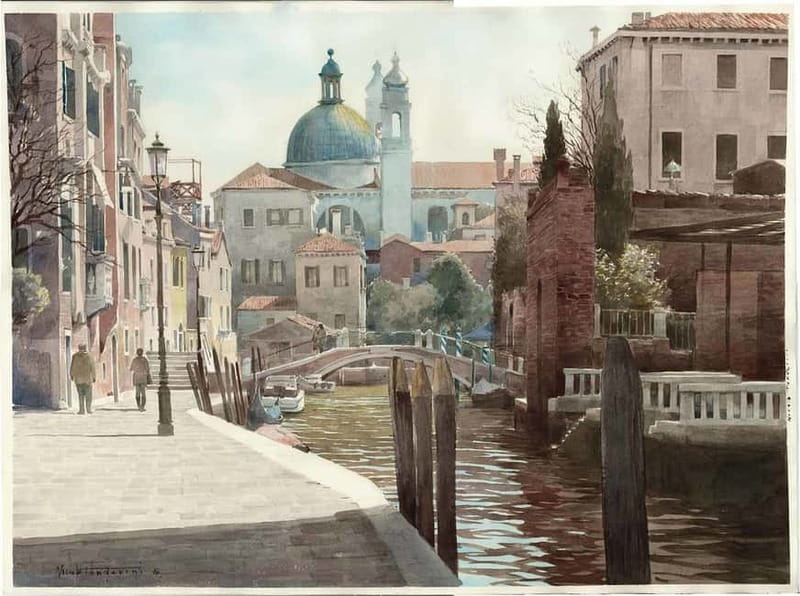
- A genuine beginner-friendly art class: You start with a pencil sketch before touching the paint.
- A quiet setting near St. Mark’s Square: The Prisons Palace location keeps you close to Venice’s best-known sights without making you paint in the middle of a crowded square.
- Watercolor techniques with a local artist: Expect help with reflections, shadows, clouds, sky, brush use, and color mixing.
- Small groups of up to six: The format allows for individual tips, even when all participants are new to watercolor.
- Rain does not necessarily cancel the creative part: An indoor studio space may be used in poor weather.
- Good for nonartists and curious companions: One participant may arrive with no painting background and still find the lesson accessible.
Painting Venice beside the Prisons Palace
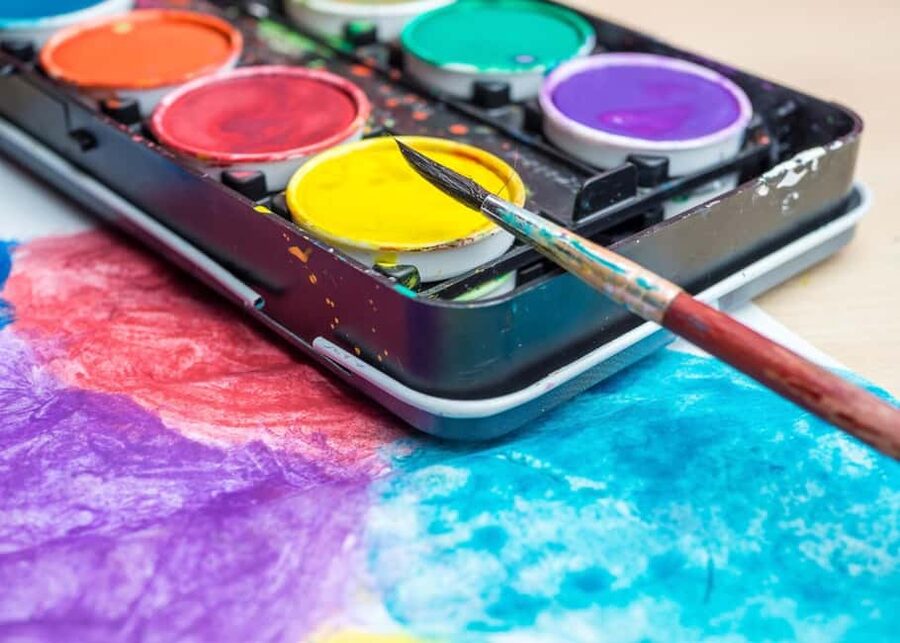
The meeting point is inside the Prisons Palace, close to St. Mark’s Square. From the entrance of the Doge’s Palace, cross the bridge on the right-hand side, then enter the Prisons Palace and go upstairs to the first floor.
This location matters for two reasons. First, you are near the architectural and canal views that make Venice such a natural subject for watercolor. Second, you do not need to spend extra time finding a distant art studio. The class begins in one of the city’s central sightseeing areas, making it easier to fit into a day that includes the Doge’s Palace, St. Mark’s Basilica, or the waterfront.
Plan to arrive 10 minutes early. The directions are clear, but central Venice can still take longer to cross than a map suggests. Bridges, narrow lanes, and crowds can slow you down, especially around St. Mark’s Square.
The class ends back at the meeting point. There is no transport involved, and you do not need to carry your own easel, paints, or paper. All equipment is supplied.
More hands-on workshops in Venice:
- Venice: Carnival Mask Workshop
★ 4.5 · 1,925 reviews - Venice: Pasta and Tiramisu Cooking Class with Wine
★ 4.9 · 1,010 reviews - Pasta and Tiramisu Cooking Class with Wine in Venice
★ 5.0 · 945 reviews
The first lesson is the pencil sketch
The class begins with the part many beginners are tempted to skip: the sketch. You’ll learn how to divide the paper and measure the main shapes before adding color.
That basic step is important in watercolor because mistakes are harder to hide once the paper is wet. A loose sketch helps you place the horizon, buildings, bridges, sky, and water before the paint starts moving. You may be used to seeing professional artists begin with broad brushstrokes, but this lesson gives you a more controlled way into the subject.
The instructor’s approach is useful for people who have never painted a city scene. One participant with experience in pastels but no background in watercolor found the method especially helpful because the instructor explained how to measure and divide the spaces before painting. That kind of structure can keep you from feeling lost when the page is still blank.
You should not expect to produce a museum-quality Venetian scene in 105 minutes. The value is in learning a process you can repeat later. By the end, you should have a better sense of how to simplify a complicated view into a few clear shapes.
Learning how light changes the colors
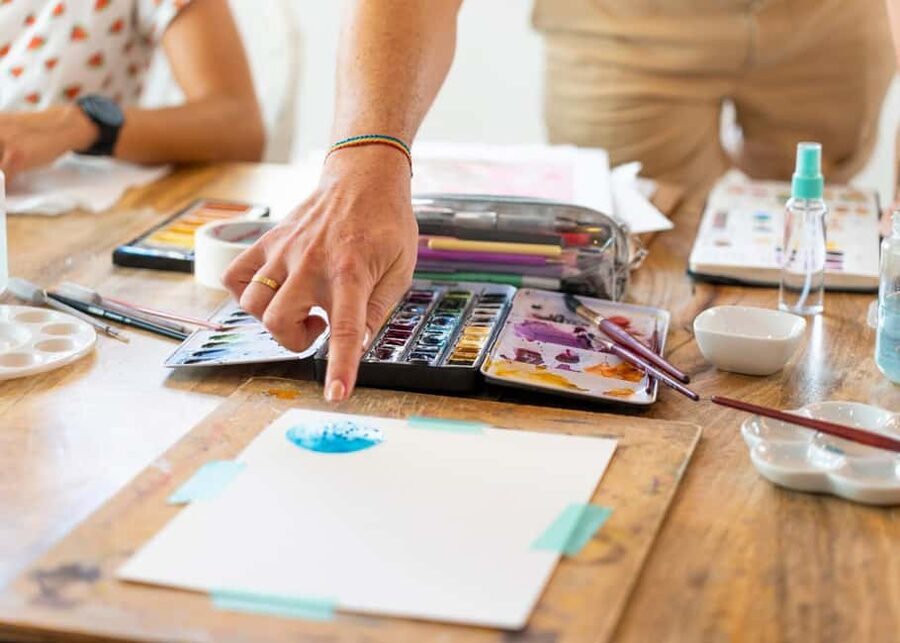
After the drawing comes color. The instructor explains that light is not just something shining on a scene. It affects the colors you see and the way those colors should be placed on paper.
This is where the class moves beyond a basic craft lesson. Venice is full of pale stone, colored walls, reflective water, shaded passages, and bright open sky. Watercolor can show those changes with thin washes, soft edges, and careful layering, but only if you pay attention to where the light falls.
You’ll learn how to mix paint and use water to control the strength of each color. The instructor also demonstrates different brush techniques and how to move watercolor across the paper. These details are especially useful for beginners, since watercolor can quickly become muddy when too many strong colors are mixed together.
The lesson is taught in English, Spanish, Italian, and French. That makes it practical for an international group, though the class may be shared with people from different parties. The small size, limited to six participants, helps keep the instruction personal even when the group has mixed skill levels.
Reflections, clouds, shadows, and Venetian details
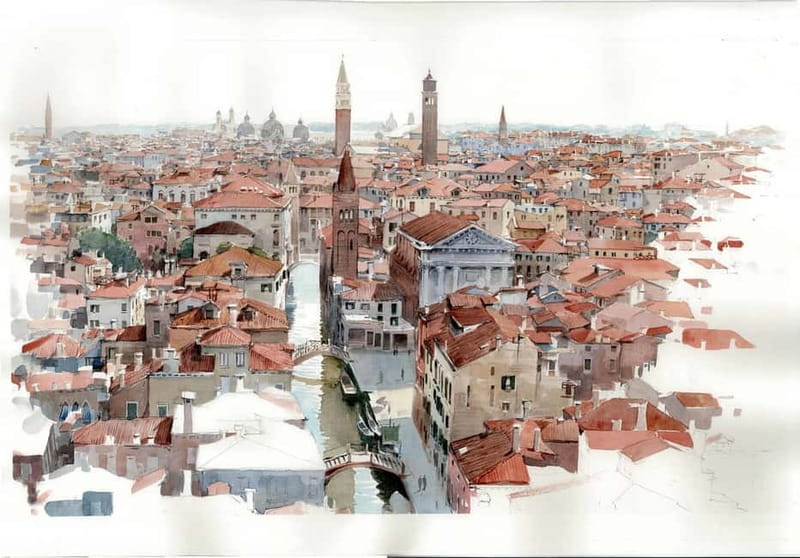
The class focuses on the pictorial effects that make Venice recognizable. You’ll work on water reflections, the shading between clouds and sky, and the light and shadow details that give buildings and canals shape.
Reflections are a particularly useful subject. A canal is not painted by copying every ripple. Instead, you need to suggest the reflection with broken shapes, softened edges, and carefully chosen color. The instructor shows how watercolor can do this without turning the page into a mass of hard outlines.
The sky receives similar attention. Clouds can blend into blue rather than sitting like separate white objects above the buildings. That transition between cloud and sky is one of the places where watercolor’s soft edges work well.
The teacher also helps you find shadows in the scene. Shadows give depth to a building, bridge, or passage, but they need more care than simply adding black paint. The class teaches you to look at how the light affects the color and form around it.
These are useful lessons even if you never paint Venice again. Once you understand how to simplify reflections and shadows, you can apply the same ideas to other city scenes, travel sketches, or views from home.
A different way to spend a morning on the water:
- Venice: Doge’s Palace Reserved Entry Ticket
★ 4.6 · 42,716 reviews - Venice: Grand Canal Gondola Ride with App Commentary
★ 4.1 · 18,908 reviews - Boat Trip: Glimpse of Murano, Torcello & Burano Islands
★ 4.3 · 15,699 reviews - Venice: Grand Canal by Gondola with Live Commentary
★ 4.1 · 13,681 reviews
Nicola Tenderini’s teaching style
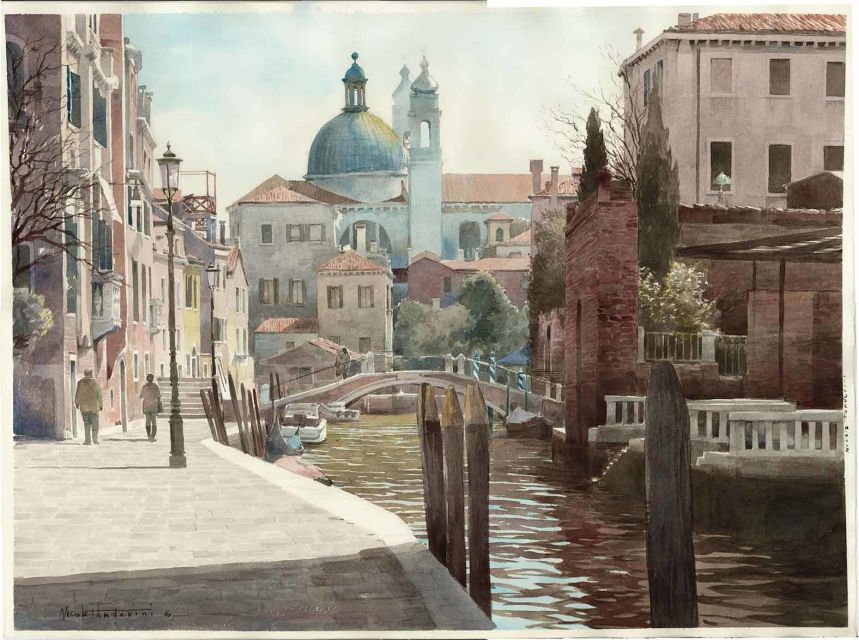
The instructor is identified as Nicola Tenderini, with the name Nicholas Tenderini also used in the activity details. The teaching is designed for complete beginners, not only for people who already know watercolor terms or techniques.
A strong point is the attention given to different skill levels. In one class, all six participants were new to watercolor, and Nicola managed his time so each person received tips and guidance. That is exactly what you want from a small group lesson. You still work independently, but you are not left alone when your colors spread too far or your sketch needs adjusting.
The teaching also appears patient and practical. Rather than only demonstrating a finished painting, the instructor explains how to measure the scene, mix colors, apply water, and use the brushes. That makes the class feel like a real lesson instead of a quick souvenir activity.
If you are an experienced painter, you may find the pace introductory. The course is built around fundamentals, so it is better suited to someone learning watercolor or trying city painting for the first time. An experienced artist might still appreciate the setting and the chance to work with a local teacher, but should not expect advanced instruction.
A quiet corner instead of a crowded photo stop
The activity takes place in a calm area of Venice with limited foot traffic. That is a welcome change from the crowds around St. Mark’s Square, where it can be hard to stop and look closely at a building, let alone paint it.
A quieter setting helps you notice small details. You can watch how a reflection breaks apart, how a shadow reaches across a wall, or how the sky changes the color of the water. The class gives you a reason to slow down and look instead of simply moving from one famous sight to the next.
The setting also makes the class feel connected to Venice’s artistic character. You are not just sitting in a generic room with a printed photograph. You are learning to interpret the city around you, with its unusual light, water, and architecture.
Still, the exact view you paint can depend on the conditions and the instructor’s choice. The activity promises Venice and its romantic corners, but it does not list a fixed set of stops or a guaranteed painting subject. If you want a particular landmark on your paper, ask the instructor at the beginning.
What happens if it rains
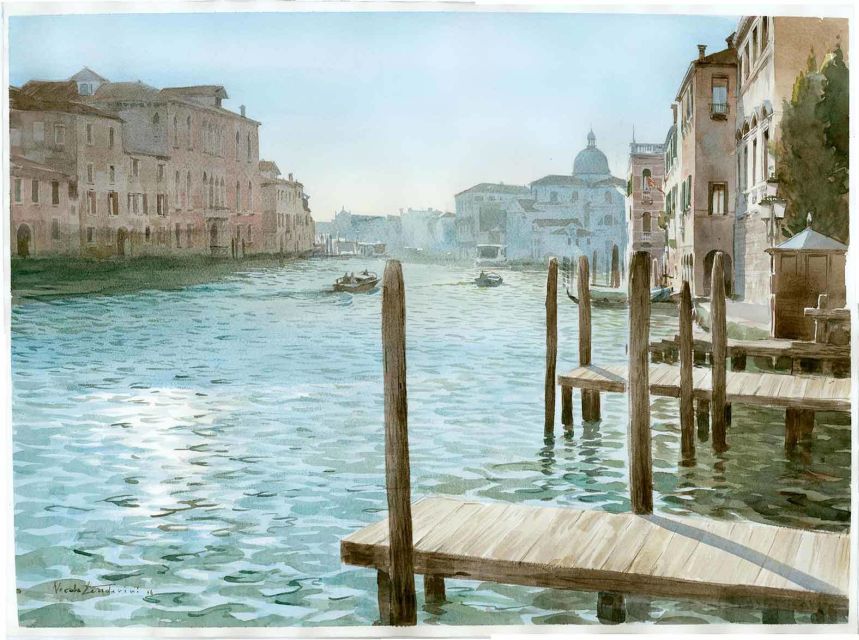
Venice weather can change quickly, and watercolor paper is not a good partner for heavy rain. The class has an indoor studio option, and the instructor may contact you ahead of time if the lesson needs to move inside.
That backup is more than a minor convenience. It means bad weather does not have to erase the main purpose of the activity. In an indoor studio, you can still learn how to draw the scene, mix colors, handle the brushes, and create light and shadow.
You may lose some of the direct outdoor atmosphere, but you gain a controlled setting. There is no wind moving your paper or rain disturbing the paint. For an art lesson, that can make the technical work easier.
If painting outdoors is your top priority, check the conditions before booking and be ready for either format. The class is best viewed as a watercolor lesson inspired by Venice, not as a guaranteed outdoor sketching session.
What the $89.50 price includes
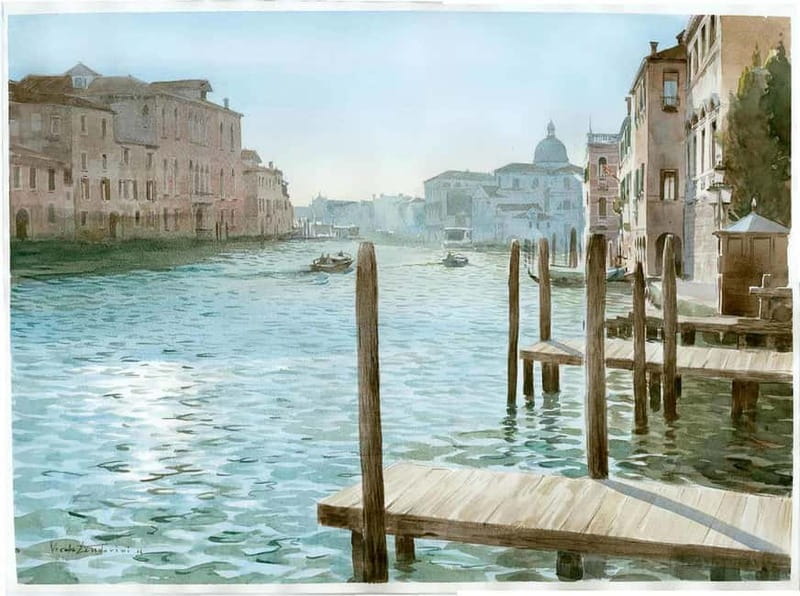
The cost is $89.50 per person for 105 minutes. That is not the cheapest way to spend an hour and 45 minutes in Venice, but the price includes the art equipment, live instruction, and a bookmark to take with you.
The real value depends on what you want from the class. If you only want a quick souvenir, the price may feel high. If you want guided instruction, supplies, a small group, and a creative break from sightseeing, it is easier to justify.
You are paying for access to an instructor who can correct your technique as you work. Buying watercolor supplies separately would not give you the same immediate guidance, especially if you are unsure how to begin. The small group is also important here. A much larger class could offer the same materials but far less individual attention.
The bookmark is a modest extra, not a reason to book by itself. Think of it as a small keepsake from a class where the painting is the main souvenir.
Who will get the most from this class
This activity is a good match for:
- Complete beginners who want a clear introduction to watercolor.
- Couples or friends looking for a shared activity that is quieter than a standard sightseeing tour.
- Art lovers who want to understand how Venetian scenes are built on paper.
- People who have tried other media, such as pastels, but want to learn watercolor.
- Repeat visitors who have already seen the main sights and want a more hands-on way to spend time in central Venice.
You do not need to arrive with drawing experience. The lesson begins with the sketch and proceeds step by step.
It is less suitable if you want a full guided tour of Venice, a long outdoor painting session, or advanced technical instruction. It is also not a good choice if climbing stairs or moving through the meeting point is difficult. The activity is not fully accessible for wheelchair users or people with walking disabilities.
Wear comfortable shoes and bring a sun hat. Pets are not allowed.
Timing, language, and practical planning
The class lasts 105 minutes, with starting times shown when you check availability. That makes it fairly easy to fit between major sights, but allow enough time to reach the Prisons Palace and find the first-floor meeting point.
You should not schedule it so tightly that you must leave early for a timed museum entry. Watercolor works better when you have time to listen, practice, and finish your work without watching the clock.
Instruction is available in English, Spanish, Italian, and French. The class may include people who booked separately, so you should expect a shared small group rather than a private lesson.
Free cancellation is available up to 24 hours before the activity for a full refund. You can also reserve the place and pay later, which is useful when your Venice plans are still changing.
Should you book the Prisons Palace watercolor class?
Book it if you want to do something creative in Venice, especially if you are a beginner who likes patient instruction and a small group. The strongest reasons are the six-person limit, the practical lesson sequence, and the chance to learn how reflections, shadows, clouds, and light are handled in watercolor.
I would choose it for a rainy-day alternative too, since the lesson can move indoors and still retain its main purpose. Just remember that this is an art class, not a sightseeing tour, and that the exact scene is not guaranteed.
Skip it if you would rather spend your time inside Venice’s major monuments or if you want an advanced painting workshop. For everyone else, $89.50 buys more than paper and paint. It buys a slower look at Venice and a skill you can continue using after you return home.
FAQ
Where does the watercolor class meet?
It meets at the Prisons Palace near St. Mark’s Square. Enter the Prisons Palace and go upstairs to the first floor.
How do I reach the Prisons Palace?
From the entrance of the Doge’s Palace, cross the bridge on the right-hand side to reach the Prisons Palace.
How long does the activity last?
The class lasts 105 minutes. Starting times depend on availability.
How many people are in the group?
The group is limited to six participants.
What languages are available?
The instructor provides commentary in English, Spanish, Italian, and French.
Is the class suitable for complete beginners?
Yes. The instruction begins with a pencil sketch and covers basic watercolor methods, including color mixing, brush use, reflections, shadows, and light.
Are painting supplies included?
Yes. All equipment is included.
What happens if it rains?
The class may take place in an indoor studio space during rainy weather. The instructor communicates the change ahead of time when needed.
Is the activity wheelchair accessible?
No. The activity is not fully accessible for wheelchair users or people with walking disabilities.
Can I cancel for a refund?
You can cancel up to 24 hours in advance for a full refund. You can also reserve now and pay later.
Recently added around Venice
- Your evening in Venice – Legends&Ghosts&Aperitif★ 4.7 · 79 reviews
- Venice: City Tour & Skip the Line for St. Mark’s Basilica★ 4.1 · 84 reviews
- Walking Tour to Uncover the Hidden Venice★ 4.4 · 34 reviews
- Wine Tasting in Venice★ 4.6 · 42 reviews
- Venice: Walking Tour & Gondola Ride★ 4.4 · 22 reviews
- VIRTUAL MUSEUM: Creature di Gomma – Venice Vintage Toys★ 4.7 · 3 reviews
- Venice Walking Tour from St. Mark’s to Rialto Bridge★ 4.5 · 12 reviews
- Venice: Walking Tour & Gondola Ride★ 4.4 · 54 reviews
Workshops, compared.

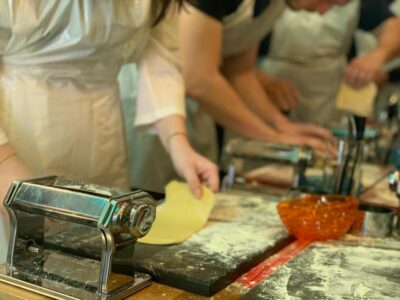
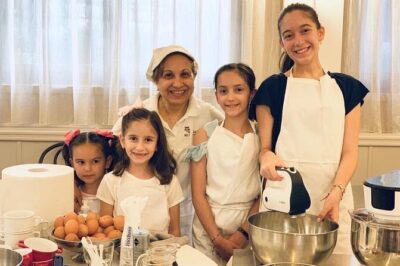
Pasta and Tiramisu Cooking Class with Wine in Venice
Read our review →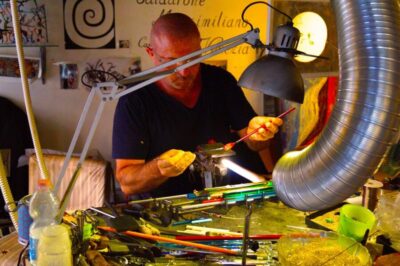
Create Your Glass Artwork: Private Lesson With Local Artisan
Read our review →
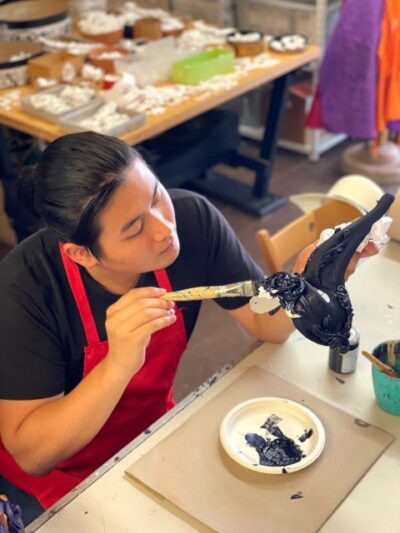
Venetian Carnival Mask Making Class in Venice, Italy
Read our review →
Murano Glass Factory Experience: A Workshop in Venice
Read our review →
Browse the lists this tour appears in