
Reviewed · VENICE HIDDEN GEMS WALKS
Walking Tour to Uncover the Hidden Venice
Venice reveals itself best on foot, one narrow lane and small square at a time. This 90-minute walking tour begins beside Saint Mark’s Square and follows a route through grand landmarks, old trading streets, and less obvious corners. Guides such as Angelo and Ana have brought strong local knowledge and personal stories to the walk.
I like the clear focus on Venetian history and architecture, and I like that the route connects the famous sights with places many first-time visitors miss. The radio system should also help you hear the guide in crowded streets. The main drawback is simple: the tour is outside only, so your $51 covers orientation and commentary, not entry to the basilica, Doge’s Palace, Campanile, or other sights.
Key points to know
- A compact route with major sights: You see Saint Mark’s Basilica, Doge’s Palace, Rialto Bridge, and several lesser-known stops in 1.5 hours.
- Outside visits only: The guide explains the buildings, but entrance tickets are not included.
- Strong local storytelling: Guides including Angelo and Ana have been praised for clear explanations and personal Venetian stories.
- A useful first-day walk: The route gives you a map in your head before you explore Venice on your own.
- Easy to book, harder to physically manage: Comfortable shoes are essential, and the walk is not suitable for wheelchair users or strollers.
- Good value for context, not for access: At $51, you are paying for a live guide and efficient sightseeing rather than admission fees.
Starting beside Saint Mark’s Square
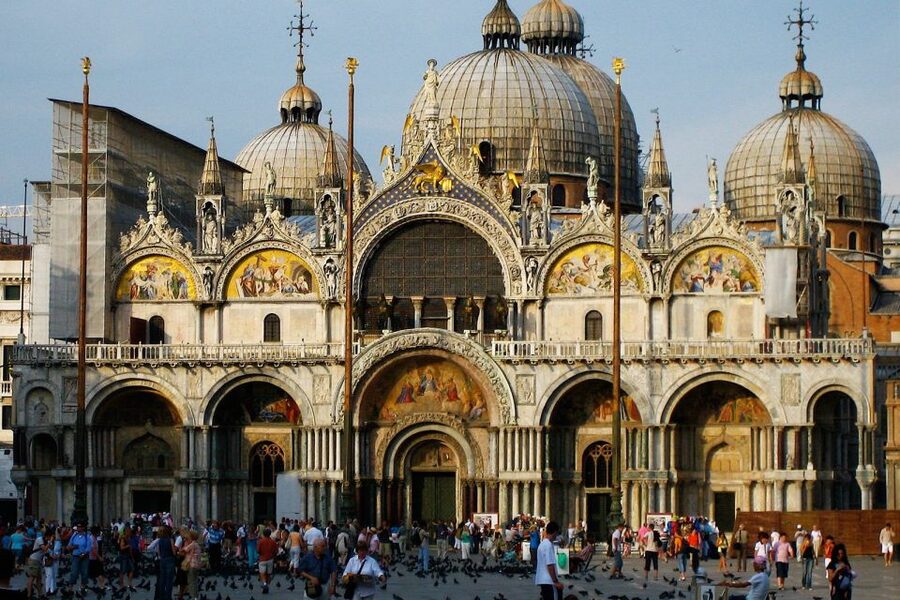
Meet in front of the post office on Calle larga de l’Ascension, close to the Correr Museum and Saint Mark’s Square. Look for the meeting point sign on the wooden kiosk, and arrive 15 minutes early. Venice has a talent for making a five-minute walk feel like a small expedition, so do not cut this close.
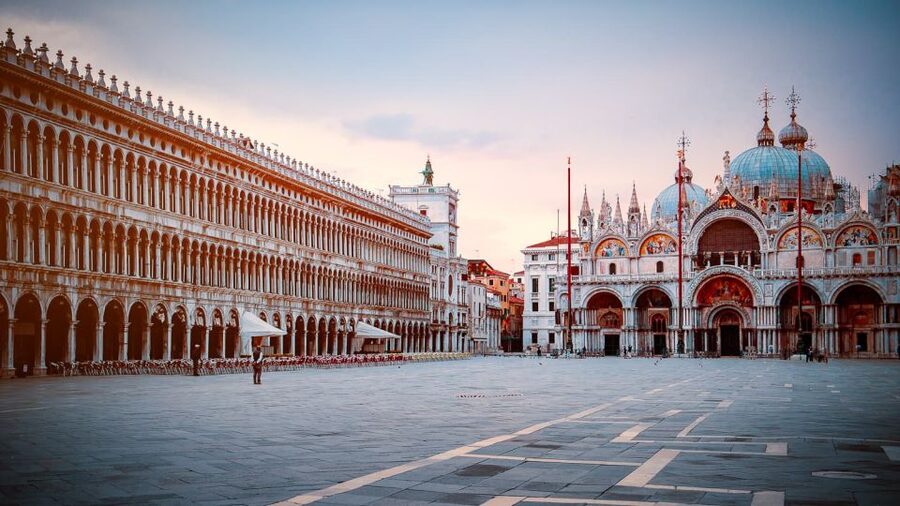
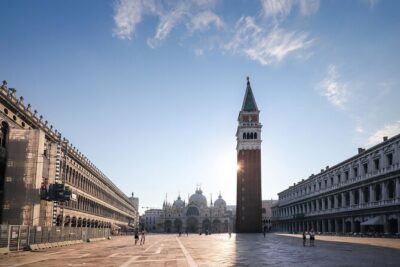
The opening setting is dramatic. Saint Mark’s Square has long been the public face of Venice, and the guide uses it to explain how the Venetian Republic grew into a major sea power. You will hear about the city’s political system, trade, ships, and place in the wider Mediterranean world.
That context gives the rest of the walk a useful frame. Instead of seeing Venice as a collection of pretty facades, you begin to understand why churches, palaces, bridges, and commercial streets were built where they are. The city’s beauty was never separate from its business and government.
The square can be crowded, especially around the basilica. Keep close to the guide and use the provided radio system. It is a small but important feature, since a guide speaking beside a busy tourist center can otherwise become difficult to follow.
More quiet corners of Venice:
- Venice: Rialto Bridge & Offbeat Unusual Venice Walking Tour
★ 4.2 · 3,538 reviews - Tour of The Real Hidden Venice
★ 5.0 · 2,006 reviews - Venice: Off the Beaten Path Private Gondola Ride
★ 4.3 · 703 reviews
Saint Mark’s Basilica, seen from the outside
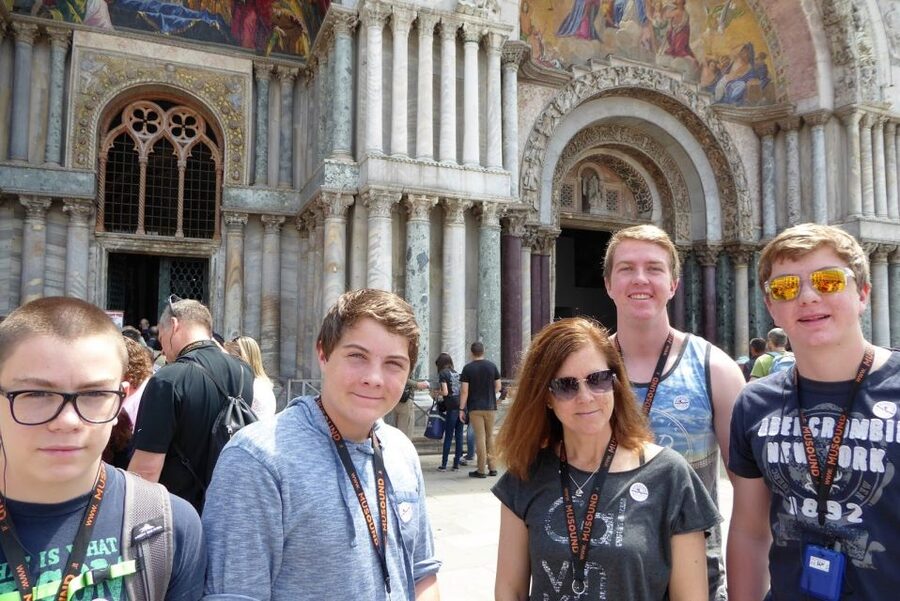
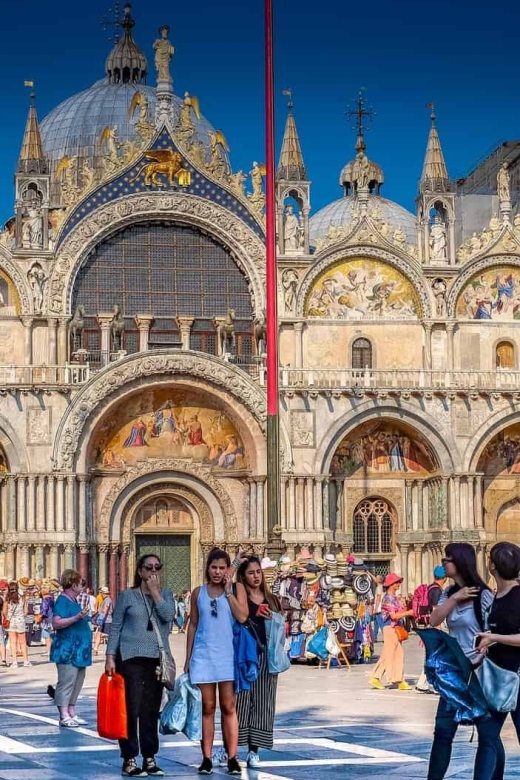
The first major stop is Saint Mark’s Basilica. Its mosaics, domes, and gold decoration make it one of Venice’s most striking buildings, even when you are only viewing it from the square.
Because this is a walking tour, you do not go inside. That is the most important point to understand before booking. The guide can explain the basilica’s role and point out architectural details, but you will need a separate ticket and a separate visit if you want to see the interior mosaics and treasures.
For a first orientation, the outside commentary still has value. You can look up at the facade while hearing why the building became such a powerful symbol of Venetian identity. The guide may also help you notice details that are easy to miss when you are focused on taking photographs.
I would not choose this activity as your only Saint Mark’s experience. I would use it to decide what deserves a return visit, then come back at a quieter time for the interior.
Doge’s Palace and the Bridge of Sighs
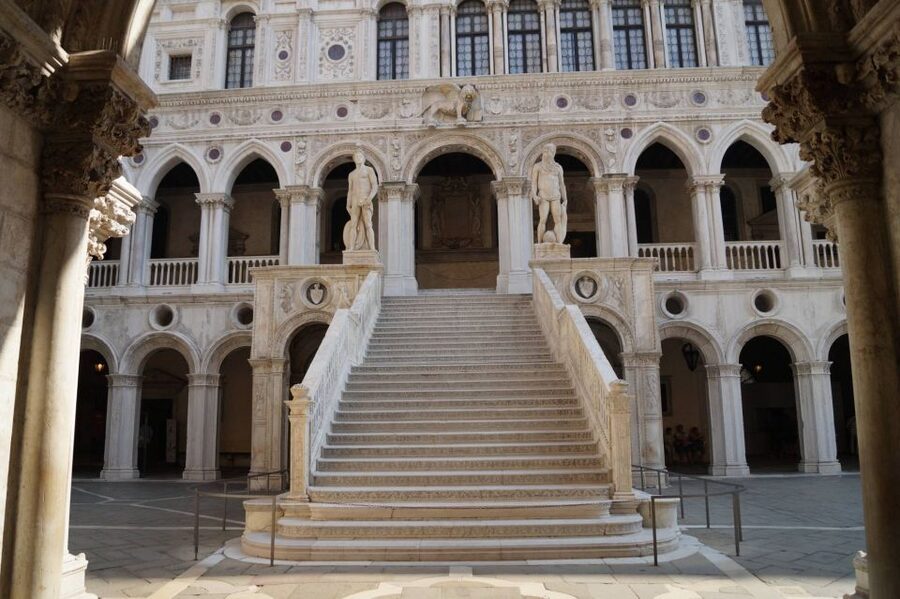
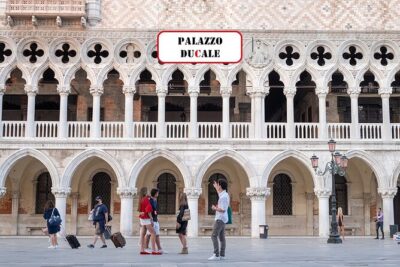
A short walk takes you to the Doge’s Palace, the Gothic seat of Venetian government. The building’s ornate exterior can look almost light and decorative, but its purpose was serious. This was where the republic’s leaders worked, judged, negotiated, and displayed the authority of Venice.
The guide covers the palace’s glorious period and the damage caused by a major fire. That gives the building a human story rather than treating it as a postcard backdrop. You will also hear about the palace in relation to the Venetian state, not simply as an attractive Gothic building.
The route then reaches the Bridge of Sighs. You do not cross it as part of an interior palace visit, but you can learn why this enclosed bridge became associated with prisoners being led away from the courts. It is a good example of how Venice turns practical infrastructure into legend.
The Campanile is also part of the story. Once used as a lighthouse for sailors approaching the city, the tower now offers panoramic views when visited separately. This walk does not include an ascent, so if you want the view from the top, plan that as its own stop.
Santi Giovanni e Paolo and the city’s quieter side
The walk moves away from the most crowded part of Saint Mark’s toward Campo SS. Giovanni e Paolo. This square feels different from the open theatrical space around the basilica. It gives you a better sense of Venice as a lived-in city, with a large church, surrounding buildings, and a more local rhythm.
The church is described as the largest in Venice, and its scale helps explain the power of religious institutions in the republic. Again, the tour stays outside. You will see the facade and hear the guide’s explanation, but an interior visit would require separate admission if applicable.
Nearby is the Scuola Grande di San Marco, a richly decorated building with an impressive facade. A scuola was not a normal school in the modern sense. These institutions were charitable and religious brotherhoods, and their buildings reflected the wealth and civic pride of the groups behind them.
This is one of the route’s strongest choices. You still see famous Venice, but the walk gives you some breathing room from the square and introduces the way churches and charitable societies shaped the city.
More walking tours in Venice:
- Venice Walking Tour and Gondola Ride
★ 3.5 · 3,630 reviews - Private 3 hrs Venice Tour: St Mark’s, Walking tour & Boat tour
★ 4.0 · 3,372 reviews - Venice: City Center Historical Guided Walking Tour
★ 4.2 · 1,873 reviews - Private Best of Venice Walking Tour with St Mark’s Basilica
★ 4.0 · 1,063 reviews
Marco Polo’s house and the stories beneath the stones
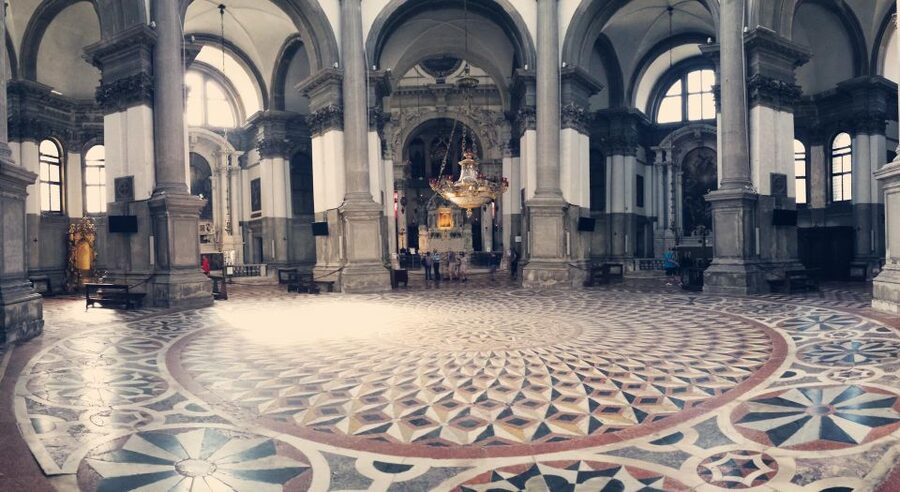
The route continues to the reported home of Marco Polo. The explorer is closely tied to Venice’s image as a city of merchants, mapmakers, and sea routes. Seeing the location associated with him adds a personal touch to the larger story of the republic.
Do not expect a museum visit here. The point is the setting and the story, not an interior attraction. This kind of stop works best when the guide adds detail and connects the person to the city around him.
That is where the guide matters most. A past guide named Angelo was praised for having been born in Venice and for sharing personal stories from his childhood. Another guide, Ana, was described as passionate and engaging. Those details suggest the best version of this tour is not a memorized list of dates, but a walk shaped by a guide who can explain how Venice feels as well as how it developed.
Guide quality can vary on any group tour, so I would treat those names as useful examples rather than a promise that one of them will lead your departure. The listed languages are English, Spanish, Italian, German, and French.
The Mercerie, where Venice went shopping
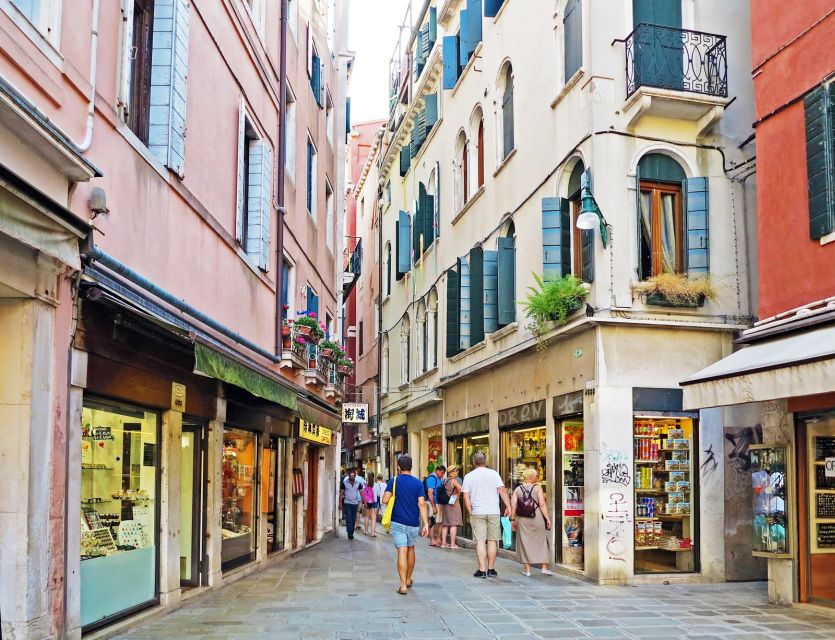
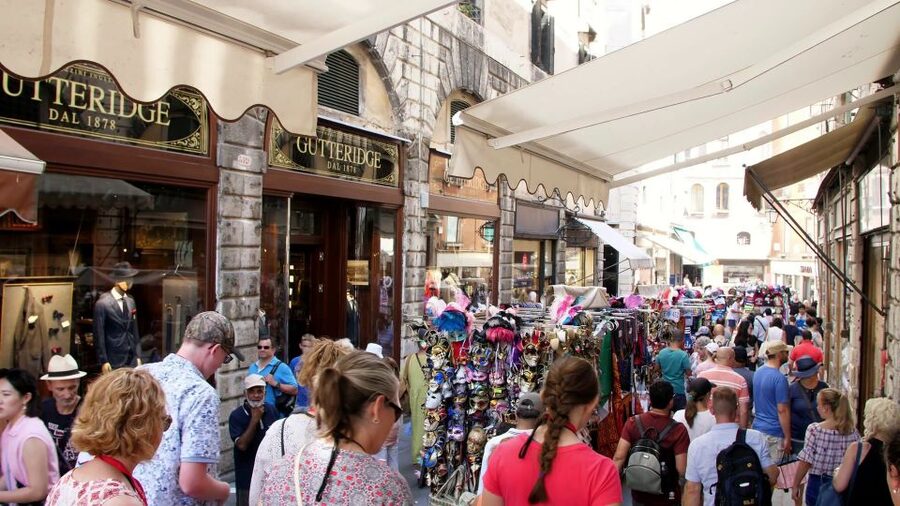
The Mercerie is the historic commercial spine between Saint Mark’s Square and the Rialto area. Its narrow streets once carried much of the city’s shopping and trade, and they remain a useful place to understand how Venice functioned beyond its palaces.
This section is especially helpful because it links the grand republic to ordinary movement through the city. Goods, money, visitors, and locals all passed through these lanes. The street can be busy, and it is not the place to wander while staring at your phone. Keep your attention on the guide and on the paving under your feet.
The narrow alleys are part of the appeal, but they also explain the practical limits of this outing. Venice involves bridges, steps, uneven paving, and frequent stops in crowded areas. The operator does not consider the tour suitable for wheelchair users or people with mobility impairments, and baby strollers are not allowed.
Wear comfortable shoes. Leave luggage, large bags, and oversize items at your accommodation or another permitted storage point. Pets are not allowed either.
Rialto Bridge and the end of the loop
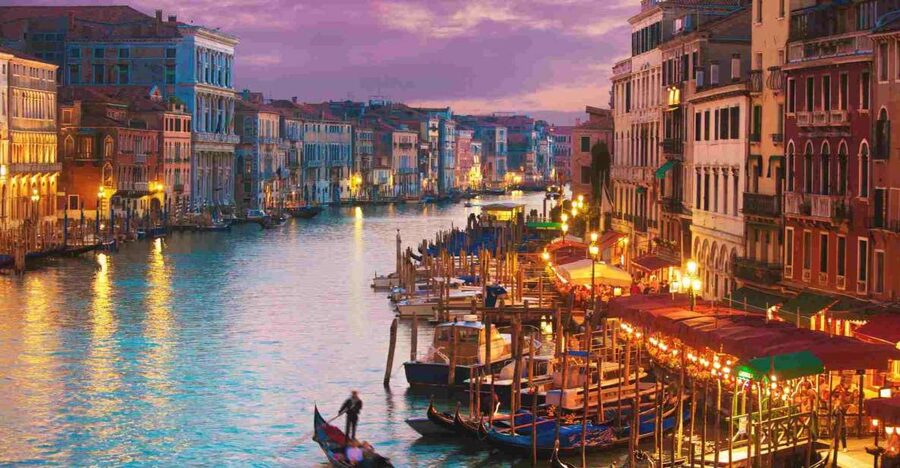
Rialto Bridge is the route’s final major landmark. It is one of Venice’s clearest symbols of commerce because it crosses the Grand Canal near the old market and trading district. From the bridge, you get a strong sense of Venice as a city built around water, exchange, and movement.
The bridge can be crowded, and the tour may not pause for long. That is not a flaw so much as a feature of the schedule. With only 90 minutes, the guide has to keep the group moving.
The stated route returns to the starting area at Calle larga de l’Ascension. Since the walk includes a number of major stops, expect a brisk pace rather than a slow photographic stroll. You will have time to see and hear about the places, but not enough time for a long stop at each one.
One important practical point: some descriptions of the route refer to Teatro La Fenice and Scala Contarini del Bovolo, while the listed itinerary focuses on Saint Mark’s Basilica, Doge’s Palace, Santi Giovanni e Paolo, Marco Polo’s home, the Mercerie, and Rialto Bridge. Treat the six listed stops as the reliable core of the experience. If La Fenice or the spiral staircase matters most to you, confirm the exact route before booking.
What $51 buys you in Venice
The price is $51 per person. That is not a bargain basement walking tour, but Venice is a place where a good guide can save you time and help the city make sense.
Your fee covers an official certified guide, the radio system, and the guided city walk. It does not cover food, drinks, hotel pickup, transportation, or entrance tickets. You will also need to reach the meeting point on your own.
I see the value in this tour if you want a structured introduction. In 90 minutes, you get a historical framework, a route through the central districts, and a list of places worth revisiting. You also avoid spending your first hours in Venice with no sense of direction.
The value is weaker if you want interiors. A separate visit to Saint Mark’s Basilica, Doge’s Palace, or the Campanile will add time and cost. You are paying for interpretation and a planned route, not a package of admissions.
For many visitors, that is a fair trade. Venice is full of details that look random until someone explains them. A guide can point out a building connected to trade, a church tied to civic life, or a lane that formed part of the city’s old shopping route.
Who should take this walk?
I would recommend it to a first-time visitor who wants a fast, organized introduction to central Venice. It also suits anyone who enjoys architecture and political history more than shopping or food stops.
It is a good choice early in your stay. After the walk, you can return to the basilica, Doge’s Palace, Rialto, or the smaller squares with a better sense of where you are. One person described the tour as a strong way to begin a Venice visit because it created an immediate interest in exploring more. I agree with that use.
The tour is less suitable if you dislike group pacing or want a leisurely photography walk. It is also not right for anyone who needs step-free access, uses a wheelchair, has a mobility impairment, or is traveling with a stroller.
The 4.4 rating from 34 reviews suggests a generally positive experience, but not a perfect one. One piece of feedback described the walk as ending about 10 minutes early and focusing more on major sights than genuinely secret corners. That is a fair warning. The title promises hidden Venice, but the route still includes the city’s major headline attractions.
Another point to keep in mind is duration. The official length is 1.5 hours. One comment refers to a much longer experience, but you should plan around the stated 90 minutes and not expect a three-hour tour.
Simple ways to get more from the experience
Arrive early enough to find the wooden kiosk without rushing. Saint Mark’s Square has several landmarks and meeting points, and a late arrival could mean missing the group.
Bring your passport or ID card, as requested, and wear shoes suited to uneven streets and bridges. Do not bring a suitcase or large bag. The tour has no hotel pickup, so allow time to reach the post office near the Correr Museum.
If you want to enter the basilica or Doge’s Palace, arrange that separately. The walking tour is best treated as an introduction, not a substitute for the city’s major interiors.
Listen for the small details. The most praised part of this experience is the guide’s storytelling, especially the history of Venice and personal anecdotes connected to the city. A guide like Angelo can add childhood memories, while a guide like Ana can bring energy and clear explanations. Those details are what turn a route between landmarks into a useful tour.
Should you book this Venice walking tour?
Book it if you want a short, guided orientation that combines Saint Mark’s Square, Gothic palaces, old churches, Marco Polo, the Mercerie, and Rialto Bridge. At $51, it makes sense for a first visit when you value clear context and an efficient route.
Skip it if you mainly want to go inside the attractions, need accessible streets, or expect a long exploration of secret corners. The experience is strongest as a first-day walk, especially when you plan to return later to the buildings that interest you most.
For the right person, this tour gives Venice a useful shape. You finish knowing more about the republic, its commerce, its churches, and its narrow streets, with several good reasons to keep walking after the guide says goodbye.
FAQ
How long does the walking tour last?
The stated duration is 1.5 hours, or 90 minutes. Plan your schedule around that length.
Where does the tour meet?
Meet in front of the post office on Calle larga de l’Ascension, near the Correr Museum and Saint Mark’s Square. Look for the meeting point sign on the wooden kiosk.
Are entrance tickets included?
No. The tour visits the attractions from the outside, and entrance tickets are not included.
Which languages are available?
The live guide is available in English, Spanish, Italian, German, and French.
Is the tour accessible by wheelchair or stroller?
No. The tour is not wheelchair or stroller accessible, and baby strollers are not allowed.
What should I bring?
Bring a passport or ID card and comfortable shoes. Luggage, large bags, oversize luggage, and pets are not allowed.
Recently added around Venice
- Your evening in Venice – Legends&Ghosts&Aperitif★ 4.7 · 79 reviews
- Venice: City Tour & Skip the Line for St. Mark’s Basilica★ 4.1 · 84 reviews
- Wine Tasting in Venice★ 4.6 · 42 reviews
- Venice: Walking Tour & Gondola Ride★ 4.4 · 22 reviews
- Venice: Watercolor Painting Class at the Prisons Palace★ 4.7 · 27 reviews
- VIRTUAL MUSEUM: Creature di Gomma – Venice Vintage Toys★ 4.7 · 3 reviews
- Venice Walking Tour from St. Mark’s to Rialto Bridge★ 4.5 · 12 reviews
- Venice: Walking Tour & Gondola Ride★ 4.4 · 54 reviews
Venice Hidden Gems Walks, compared.
Rialto Bridge & Offbeat Unusual Venice Walking Tour
Read our review →
Venice 3,5 hrs tour: Doge’s Palace, St Mark’s and Hidden Gems
Read our review →
Private Secret Venice Tour; Rialto Market, San Polo & Food and Wine tasting
Read our review →
Unusual Venice Walking Tour through Rialto & Gondola Experience
Read our review →Browse the lists this tour appears in