
Reviewed · MURANO BURANO AND TORCELLO ISLAND TOURS
Ellegi Murano Glass: The Art of Tradition
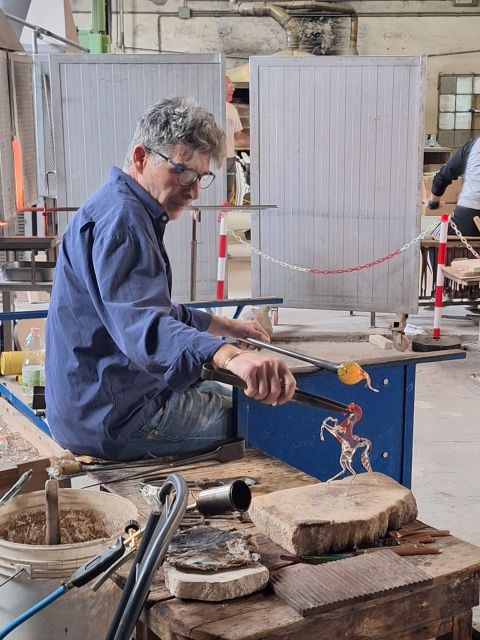
The most compelling part of Ellegi Murano Glass is the furnace demonstration. You watch a craftsperson pull molten glass from intense heat and turn it into an object before your eyes, sometimes a plate and sometimes a horse. It is a quick, direct look at a skill passed through the family for generations.
I like the $5 price, which makes this an easy addition to a Murano visit, and I like the convenient location near the Faro boat stop, the Glass Museum, and the Basilica of Santa Maria e San Donato. The main caution is the short presentation. Explanations can be hard to hear, and busy sessions may feel hurried or poorly organized.
Key points at a glance
- Hot glass shaped in front of you: See both blown and molded glass techniques at the working furnace.
- A five-dollar stop: The low price makes the demonstration good value when paired with other Murano sights.
- Near the Faro boat stop: You can reach the factory on foot from one of Murano’s main landing points.
- A family-run craft tradition: The factory presents glassmaking as a skill handed down from one generation to the next.
- Useful for families: Children through age 15 enter free, and pets are welcome.
- Short but memorable: Plan on about 15 minutes, though the description of the demonstration says it can last closer to 20.
Why the furnace is the real attraction
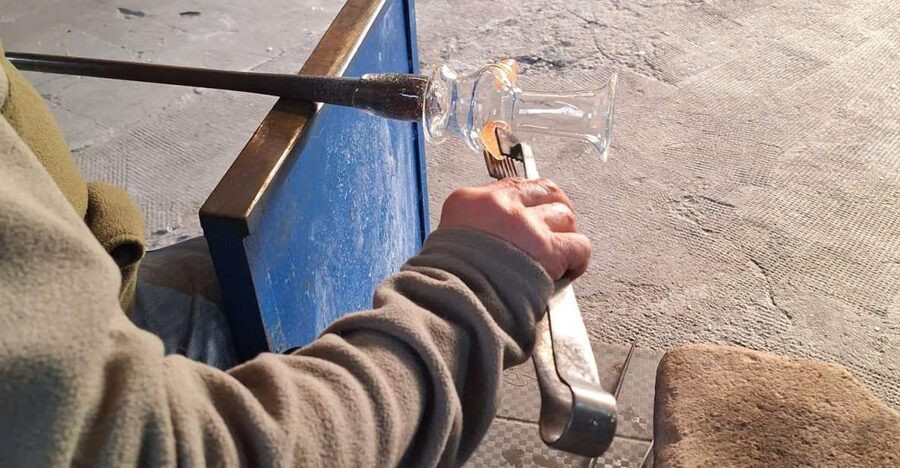
Murano glass is best understood by watching it being made. Finished pieces in a shop window can be beautiful, but they do not show the heat, timing, and control needed to shape them. At Ellegi, the central event is the live work at the furnace.
The glass is taken out at high temperature, then formed in front of the audience. You may see the artisan blow into the material or use a mold to create a shape. The process moves quickly, so it helps to watch the hands rather than wait for a long lecture.
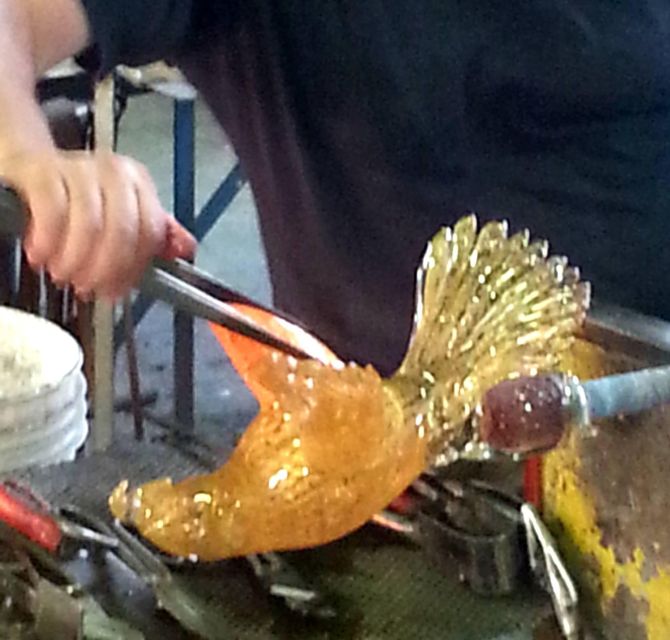
The demonstration is especially effective when the craftsperson creates a recognizable object. A plate gives you a clear sense of how molten glass spreads and takes form. A horse shows how the artisan can build a more detailed figure from a hot, flexible material.
The factory describes this craft as a family tradition dating back roughly 600 years. That does not mean every part of the present building is six centuries old, but it does explain the importance placed on inherited skill. The factory also says there are no formal schools for this particular family method, so the work is taught from one generation to the next.
That detail gives the brief presentation some weight. You are not simply watching a souvenir being produced. You are seeing a specialized craft that depends on practice, family instruction, and confidence around a furnace.
More Murano glassblowing visits:
- Venice: Burano, Torcello & Murano Boat Tour w/Glassblowing
★ 4.4 · 10,245 reviews - Venice: Murano and Burano Boat Tour with Glass Factory Visit
★ 4.2 · 9,527 reviews - Venice: Murano & Burano Panoramic Boat Tour w/ Glassblowing
★ 4.4 · 6,212 reviews
Finding Ellegi near Murano’s Faro stop
The factory is easy to fit into a day on Murano. Its meeting point is the internal courtyard, with the factory name displayed above the entrance. From the main boat stop at Faro, it is only a short walk.
This location matters because Faro is a practical arrival point for exploring the island. You can visit Ellegi, then continue to the Glass Museum or the Basilica of Santa Maria e San Donato without making a separate cross-island trip. The factory also has its own private boat pier for private taxi arrivals.
The access route is described as free of architectural barriers, and the activity is listed as wheelchair accessible. That makes this a more practical choice for a mixed-age or mixed-mobility group than a venue with awkward steps or narrow access.
Give yourself a few minutes to locate the courtyard rather than rushing in at the last second. The factory entrance and the internal meeting area are not the same thing, so look for the sign above the entrance and then continue to the courtyard.
A 15-minute demonstration, with a possible 20-minute rhythm
The advertised duration is 15 minutes, although the factory description also refers to a demonstration lasting 20 minutes. Treat it as a short stop, not a major guided tour. You will return to the same factory after the presentation.
The basic sequence is simple:
- Meet in the internal courtyard.
- Watch the glass-processing demonstration at the furnace.
- Hear an explanation of blowing and molding.
- Visit the showroom before leaving.
This short format is useful if your Murano schedule is full. You can see a working demonstration without giving up half a day. It also makes the activity suitable for children who may not want to sit through a long museum talk.
The tradeoff is depth. A short presentation cannot explain every stage of glass production or give you a detailed account of Murano’s artistic movements. If you want a full lesson, this will feel too brief. If you want a clear, visual introduction, the timing works well.
The two techniques to watch for
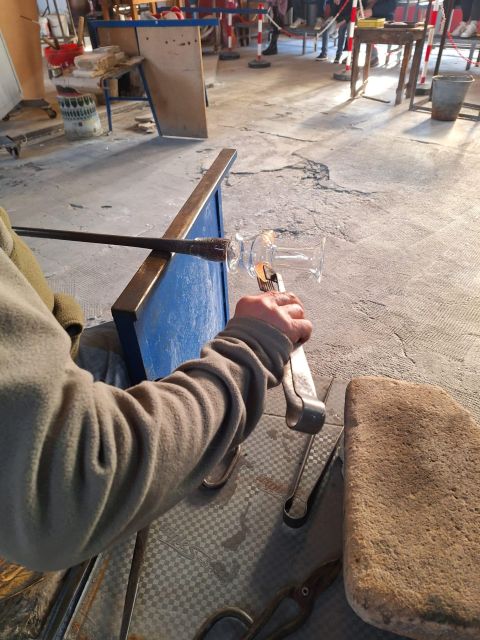
Pay attention when the guide explains the difference between blown and molded glass. These are not just two labels in the program. They show two different ways an artisan controls hot glass.
With blown glass, air helps expand the material. The artisan must control the shape while the glass remains hot and workable. The action is easy to understand when you watch the form grow in real time.
Molded glass is shaped with a form that helps create a particular outline. A mold can produce a more defined object, but the artisan still has to manage temperature, timing, and movement. Watching the two methods side by side gives you a better sense of why handmade glass varies from one piece to another.
The explanation is offered in Italian, English, Spanish, or French, depending on the language arranged for the presentation. This is helpful, but do not rely on a long, quiet classroom-style talk. One English-language report found the explanation useful but hard to hear at times, and another booking expected Spanish guidance that was not available on the day.
If language is important to your visit, confirm the available language when booking and pay attention to the scheduled start time. The factory lists all four languages, but the day’s staffing and the way the group is arranged can affect what you actually hear.
More island days out to Murano, Burano and Torcello:
- Boat Trip: Glimpse of Murano, Torcello & Burano Islands
★ 4.3 · 15,699 reviews - Murano, Burano and Torcello Half-Day Sightseeing Tour
★ 3.5 · 7,928 reviews - Murano & Burano Islands Guided Small-Group Tour by Private Boat
★ 4.5 · 7,580 reviews - Venice: Murano, Burano, Torcello, and Glass Factory Tour
★ 4.4 · 5,563 reviews
The showroom adds value, with a sales stop attached
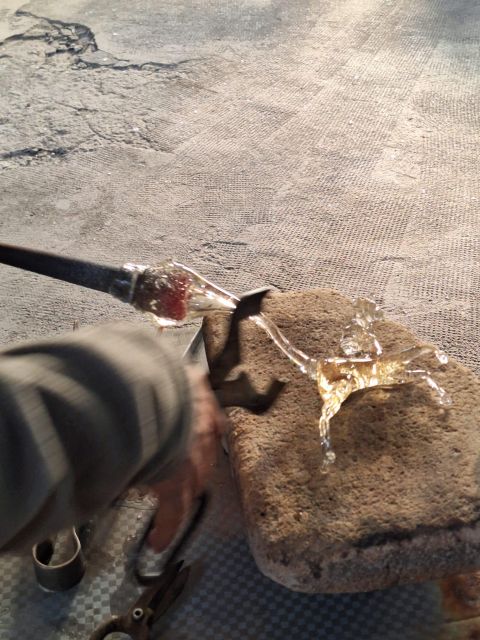
The visit includes the showroom, where you can see and buy Ellegi’s handmade products. This is convenient if you want to compare the finished pieces with the work you have just watched.
I like the connection between the furnace and the shop. You see the material being shaped, then see the polished result displayed for sale. That makes the showroom feel less like a separate retail stop and more like the final part of the demonstration.
Still, the showroom is a shop. You do not need to buy anything to make the demonstration worthwhile. Take time to look at the workmanship, but remember that the entry fee covers the demonstration and showroom visit, not a glass object.
Drinks and snacks from the automatic vending machines are not included. That is a minor point, but it helps to know that the five-dollar price is for the glass experience itself.
What the $5 price really buys you
At $5 per person, this is one of the easier Murano activities to justify. You are paying for a live furnace demonstration, multilingual guidance when available, and access to the showroom. Children up to age 15 enter free, which improves the value for families.
The price works best when you think of Ellegi as a compact stop between larger sights. You can add it to a visit to the Glass Museum and the Basilica of Santa Maria e San Donato without paying for a long excursion or private class.
The low price also limits what you should expect. This is not a hands-on workshop, a private lesson, or a detailed tour of every production room. You watch the artisans work rather than make your own glass.
The quality of the experience depends on the day’s organization. One particularly positive account described the glassmaking as delightful and worth the money, while also noting interruptions during the work. Another found the staff friendly and the price fair, but thought the information was limited and the sound difficult to follow.
That is a fair way to judge the value. If you want to see hot glass shaped at close range, $5 is a sensible price. If you are mainly seeking a polished, carefully paced guided tour, the experience may feel basic.
Timing, crowd flow, and what can go wrong
The biggest practical weakness is organization. A busy session can feel like mass processing, with people unable to see everything clearly. The demonstration area may not give every person the same view, especially if you arrive after the group has formed.
Try to arrive early enough to get oriented in the courtyard. Stand where you can see both the artisan and the guide. If the speaker is explaining the technique, move closer if possible, since the working furnace and surrounding activity can make the talk difficult to hear.
You should also keep expectations flexible. A report from February 2025 described the factory as open while the demonstration area was being renovated, with no clear sign or staff explanation. That was a serious service failure, not a normal feature of the experience, but it shows why same-day confirmation can be sensible if the demonstration is a central reason for visiting Murano.
The factory offers free cancellation up to 24 hours before the activity and allows you to reserve without paying immediately. Those terms are useful if your Venice plans depend on weather, boat schedules, or a changing family timetable.
Is this a good stop for children and older visitors?
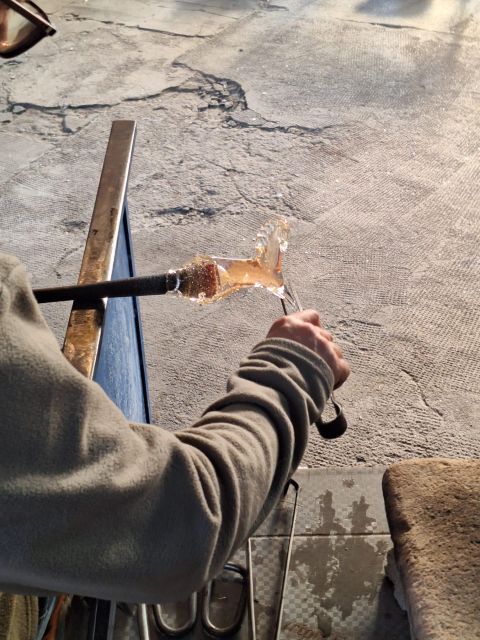
Yes, with the right expectations. Children can watch a glowing piece of glass become a plate or animal in minutes, which is more immediate than a long museum display. Children up to age 15 enter free, and pets are welcome.
The short duration also helps. You are not asking a young child to remain quiet for an hour. The furnace and hot glass provide a clear visual focus, although you should keep children close and follow staff directions around the working area.
The accessible route is another plus for groups with mobility needs. The factory states that there are no architectural barriers and lists the activity as wheelchair accessible.
Older visitors may appreciate the compact format, but hearing can be an issue. The presentation is not always easy to follow from the back, so choosing a position near the speaker matters. If you need detailed verbal explanation, ask about the language and try to remain close to the guide.
How Ellegi fits into a Murano day
I would place this visit between the main boat stop and the island’s other sights. Start at Faro, find the factory courtyard, watch the demonstration, and then continue toward the Glass Museum or the basilica.
The stop does not replace the museum. The museum gives you a broader look at glass objects and their development, while Ellegi shows the physical act of making them. Together, they answer two different questions: what Murano glass looks like, and how an artisan forms it.
The basilica provides another change of pace. After the heat and movement of the furnace, you can shift to architecture and religious art. Because Ellegi is close to these attractions, the visit works well as part of a walking route rather than as a stand-alone trip from Venice.
A private taxi can use the factory’s private boat pier, but most people will likely approach from the Faro stop. Either way, the return point is the factory itself, so you are not left searching for a separate end location.
Who should book this experience?
I would recommend Ellegi to you if you want a brief look at real glass production, especially if you are already visiting Murano. It suits families, first-time visitors, budget-conscious adults, and anyone curious about the difference between blown and molded glass.
It is also a good choice for a packed Venice itinerary. Fifteen minutes is manageable, and the price is low enough that you do not need to build your entire day around it.
I would be more cautious if you expect a quiet, highly polished presentation with plenty of room and a long explanation. The experience can be hard to hear, and the organization may vary. If you have only one Murano activity available, compare it with the Glass Museum and decide if seeing the craft live matters more to you than a broader historical display.
Should you book Ellegi Murano Glass?
Book it if the idea of watching hot glass shaped in front of you appeals to you. The $5 fee, free entry for children through age 15, central Murano location, and short duration make it an easy addition to your day.
Go early, confirm your language if that matters, and aim for a clear view near the speaker. Think of it as a quick working demonstration with a showroom, not a full glassmaking course.
For most people already visiting Murano, I think the price makes the gamble reasonable. The furnace work is the memorable part. Just allow for a brief, sometimes hurried presentation and keep your expectations realistic.
FAQ
Where does the Ellegi Murano Glass experience begin?
Meet in the internal courtyard of the Ellegi Murano Glass factory. A sign with the factory name is located above the entrance.
How long does the demonstration last?
The booking information gives a duration of 15 minutes. The factory description also says the demonstration can last 20 minutes, so allow a little flexibility.
What languages are available?
Explanations are offered in Italian, English, Spanish, and French. Availability can depend on the tour arrangement, so confirm your preferred language when booking.
What does the experience include?
It includes a live glass-processing demonstration and a visit to the showroom.
Is the activity wheelchair accessible?
Yes. The factory states that there are no architectural barriers, and the activity is listed as wheelchair accessible.
Are children and pets allowed?
Children up to age 15 enter free, and pets are welcome.
Can I cancel or pay later?
You can cancel up to 24 hours before the activity for a full refund. The reserve-now, pay-later option lets you hold a place without paying at the time of booking.
Recently added around Venice
- Your evening in Venice – Legends&Ghosts&Aperitif★ 4.7 · 79 reviews
- Venice: City Tour & Skip the Line for St. Mark’s Basilica★ 4.1 · 84 reviews
- Walking Tour to Uncover the Hidden Venice★ 4.4 · 34 reviews
- Wine Tasting in Venice★ 4.6 · 42 reviews
- Venice: Walking Tour & Gondola Ride★ 4.4 · 22 reviews
- Venice: Watercolor Painting Class at the Prisons Palace★ 4.7 · 27 reviews
- VIRTUAL MUSEUM: Creature di Gomma – Venice Vintage Toys★ 4.7 · 3 reviews
- Venice Walking Tour from St. Mark’s to Rialto Bridge★ 4.5 · 12 reviews
Murano Burano and Torcello Island Tours, compared.
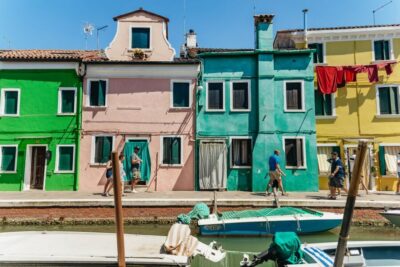
Boat Trip: Glimpse of Murano, Torcello & Burano Islands
Read our review →
Burano, Torcello & Murano Boat Tour w/Glassblowing
Read our review →
Murano and Burano Boat Tour with Glass Factory Visit
Read our review →
Murano, Burano and Torcello Half-Day Sightseeing Tour
Read our review →
Murano & Burano Islands Guided Small-Group Tour by Private Boat
Read our review →
Murano & Burano Panoramic Boat Tour w/ Glassblowing
Read our review →
Venice Islands: Murano Glass & Burano Colors Guided Visit
Read our review →
Browse the lists this tour appears in