
Reviewed · WORKSHOPS
Creative Venice: Artisan Excellence and Craftsmen Workshops
Venice reveals a different face when you leave the grand palaces and step into its working shops. This three-hour walk with guide Valerio Coppo moves from the Rialto fish market to small workshops making ceramics, shoes, hats, paper, glass, jewelry, and historic fabrics.
I like the direct contact with local makers, and I like that the tour can be shaped around your interests and pace. You get stories about how things are made, not just a parade of storefronts. The main drawback is the cost: at $182.17 per person, it makes the most sense for visitors who truly care about craft and small-scale production.
Key points at a glance
- Watch old techniques in working shops, including hand-sewn shoes, Murano glass beads, marbled paper, and 18th-century textile looms.
- Meet Venetian artisans, rather than seeing crafts only behind a shop window.
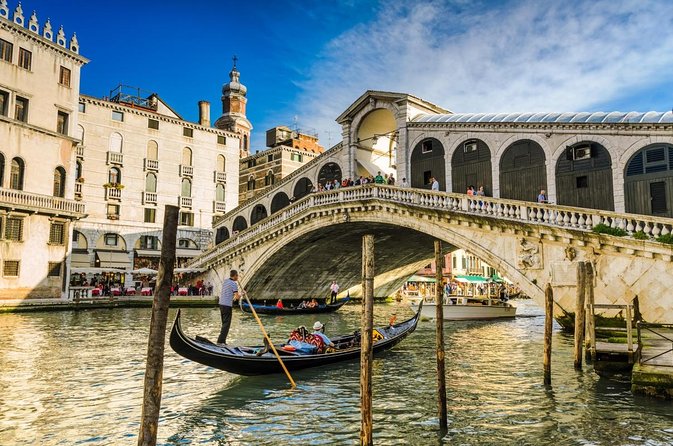
- Begin at Campo San Giacomo di Rialto, near the fish market and Rialto Bridge.
- See a broad range of local work, from rustic ceramics and Panama hats to sculpture, jewelry, and fine fabrics.
- Enjoy a flexible private tour, with a pace and focus that can be adapted to your group.
- Expect a walking tour with nine short stops, covering central Venice and Cannaregio before ending at the Zattere.
Why this Venice craft walk feels different
Many first visits to Venice focus on St. Mark’s Square, the Doge’s Palace, gondolas, and Rialto Bridge. Those places matter, but they can leave you with a polished picture of the city. This experience takes you into the less formal side of Venice, where old skills survive in compact workshops and family-run businesses.
The subject is not one single craft. You move across the Venetian handmade world: food and tableware, footwear, hats, paper, sculpture, jewelry, glass, and textiles. That variety is part of the appeal. You are not spending three hours watching one demonstration. You are building a picture of how local materials, trade, reuse, and design have shaped Venetian work.
Valerio’s role matters here. The strongest praise for the experience centers on his personal approach, his anecdotes, and his ability to show places you would not easily find by yourself. He has also been described as adjusting the tour to the people in the group and keeping the pace relaxed. That is useful in Venice, where a rigid route can turn into a race over bridges and through narrow lanes.
The tour is listed as a private activity, with only your group participating. Personalized pickup is possible for a private booking in Venice’s historic center. If you do not arrange pickup, meet at Campo San Giacomo di Rialto, in front of the church near the fountain in the middle of the square.
More hands-on workshops in Venice:
- Venice: Carnival Mask Workshop
★ 4.5 · 1,925 reviews - Venice: Pasta and Tiramisu Cooking Class with Wine
★ 4.9 · 1,010 reviews - Pasta and Tiramisu Cooking Class with Wine in Venice
★ 5.0 · 945 reviews
Starting at Venice’s oldest-feeling corner
The walk begins in Campo San Giacomo di Rialto, a small square at the heart of the city. The church here is traditionally considered the oldest in Venice, giving the opening stop a useful sense of place before the craft visits begin.
You spend about 15 minutes here. That is enough for an introduction and orientation, but not a long church visit. I like this start because it puts you in the historic center without wasting time on a formal lecture.
From here, the route moves toward the Mercato del Pesce al Minuto, Venice’s fish market. This is one of the best early stops because it shows the city as a working place, not just a museum. Fish is arranged on crushed ice, vendors call out the day’s catch, and local shoppers move through the two market halls.
The market has served Venetian life for roughly 800 years. You can expect noise, movement, seafood, and the occasional seagull rather than a quiet cultural display. At 15 minutes, the visit is brief, so you will get the feel of the market without having time to shop or linger over every stall.
Ceramics and the meaning of the Venetian table
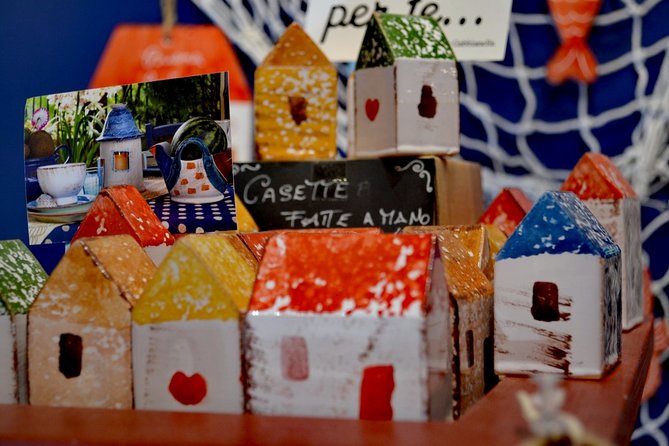
In San Polo, you visit a local artisan making traditional rural products from typical materials and older methods. The focus is ceramics with bright colors, lively patterns, and a warm, informal look.
This stop offers more than a chance to admire plates and bowls. The designs are tied to meals, family gatherings, and celebrations at home. That context helps explain why simple domestic objects can matter so much in Italian culture.
The stop lasts about 15 minutes, so do not expect a full pottery class. Instead, you will learn about the materials, production, and values behind the objects. If you like useful souvenirs, this may be one of the more tempting shops. The tour’s aim, though, is to explain the craft, not pressure you into buying anything. One especially useful point from the experience is that purchases are not required.
Recycled materials become Venetian shoes
Near the Rialto Bridge, the tour visits a traditional shoe shop with an unusual story. Older bicycle tires became waterproof, hard-wearing soles. Jute sacks once used to carry seeds and grain became linings. Worn clothing and scraps were turned into uppers.
This is a good stop for anyone interested in practical design. The shoes show how necessity and reuse shaped local production long before environmental concerns became a major public subject. The workshop also produces newer styles, including Veneziane, inspired by the elegance of the old Venetian Republic and finished with velvet or bright oriental silks.
The shoes are hand-sewn, and the skill passes between generations. You get a clear example of how a traditional product can change without losing its connection to older methods.
Again, the visit is short. Fifteen minutes is enough for an explanation and a look at the products, but not a detailed lesson in shoemaking. If you are hoping to see a complete shoe made from start to finish, this tour does not promise that level of demonstration.
A different way to spend a morning on the water:
- Venice: Doge’s Palace Reserved Entry Ticket
★ 4.6 · 42,716 reviews - Venice: Grand Canal Gondola Ride with App Commentary
★ 4.1 · 18,908 reviews - Boat Trip: Glimpse of Murano, Torcello & Burano Islands
★ 4.3 · 15,699 reviews - Venice: Grand Canal by Gondola with Live Commentary
★ 4.1 · 13,681 reviews
Giuliana’s hats in Campo Manin
Campo Manin brings you to Giuliana’s small hat shop. The selection includes Panama hats imported directly from Ecuador since 1980, gondolier hats, carnival hats, waterproof hats, wool hats, and wedding hats.
The range gives you a quick lesson in how a hat can signal a role, season, event, or local tradition. The shop is officially recognized as a historic place in the Veneto Region, which adds weight to the visit.
I would pay attention to the setting here. The value is not simply seeing a rack of hats. It is seeing a long-running specialist shop still devoted to one product in a city increasingly shaped by mass tourism.
You have about 15 minutes, so this is a compact visit. It may be especially appealing if you wear hats, collect them, or want a practical Venetian souvenir. If hats are not your thing, it will likely be one of the less important stops for you.
Ancient paper and the colors of the lagoon

In Campo Santo Stefano, you meet a maestro marmorizzatore, a master of marbled paper. In Italian, maestro can mean an expert or teacher, and Venetians also use it as a respectful greeting for an older person.
The paper work draws on Venice’s position between northern Europe and the Orient. The maker uses old techniques to produce sheets inspired by the changing colors of the lagoon. Flowers such as tulips and roses appear in the designs, along with trees and other natural subjects.
The most unusual pieces feature smiling fish. The fish appear to be preserved in paper, like fossils set in an ancient sea. It is a memorable example of how a material that seems ordinary can become art through careful pattern and color.
This stop may appeal to you if you enjoy stationery, book arts, interior decoration, or small works that are easy to carry home. As with the other visits, the 15-minute format gives you an introduction rather than a workshop lesson.
Sculpture and jewelry near San Salvador
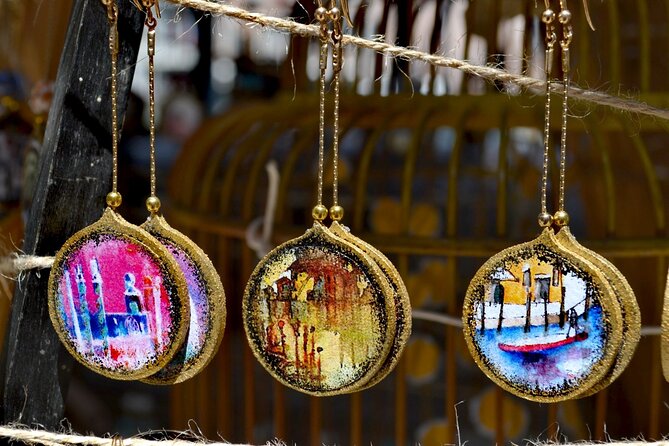
At a cozy atelier near the Church of San Salvador, a pair of artists has worked since 2007. Their creations focus on the relationship between an object and the person looking at it.
The collection includes delicate glass flowers, cut-iron forms, wooden trees, dreamlike objects, jewelry, and scenes that suggest distant or underwater places. This is the most gallery-like stop on the route, and it broadens the tour beyond traditional household crafts.
You may find the work more experimental than the ceramics, hats, or shoes. That variety is useful because it shows that Venetian making is not limited to historic replicas. Artists continue to reinterpret glass, wood, iron, and jewelry in personal ways.
The short visit works best if you allow yourself to look closely. You are not being taken through a large exhibition. You are entering a small creative space where the objects are meant to be examined at close range.
Murano glass without a generic factory visit
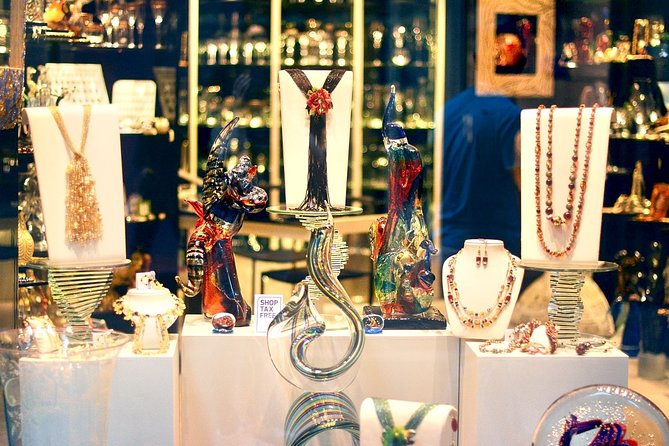
At another stop near Ponte di Rialto, you visit a shop producing jewelry from Murano glass. The beads are handmade by small local workshops using glassmaking, glassblowing, and lamp-working techniques associated with Murano.
This is an important distinction for shoppers. The tour gives you context for how beads are made and where the skill comes from, rather than showing only finished souvenirs. The work is done entirely by hand, according to the description of the shop and its methods.
One past experience with Valerio also involved access to places not open to the general public and conversations with artists, including workshops connected with Murano. That suggests the guide’s local relationships are a key part of the value, although the exact access can depend on the day and the participating shops.
If Murano glass is your main reason for booking, ask about the glass portion when you reserve. The full experience covers many crafts, so this is not a dedicated Murano glassblowing tour.
Eighteenth-century looms in Cannaregio
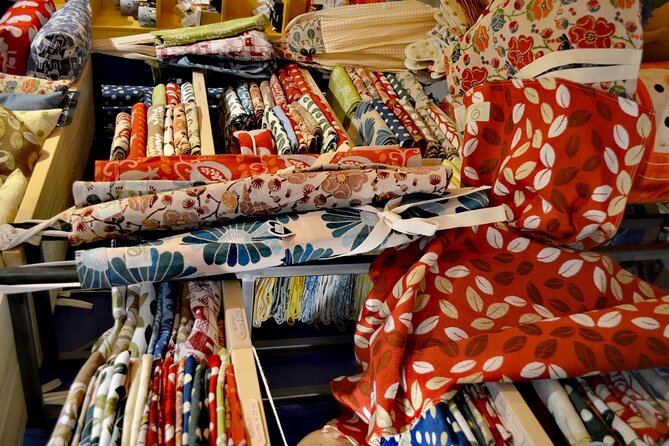
The final craft stop takes you to Cannaregio, where a textile company produces fine fabrics for furniture and high fashion. The selection includes velvets, damasks, lampases, brocatelles, and a special soprarizzo velvet.
The most striking detail is the equipment. The soprarizzo velvet is still made on 18 looms from the 18th century. Those looms once belonged to the silk guild of the Venetian Republic. You are seeing not just an old pattern, but old machinery and skills still being used.
This stop gives the tour a strong finish because textiles connect design, trade, clothing, furniture, and status. The fabric may look decorative, but its production requires specialized knowledge and patience.
The route ends at the Zattere. That gives you a useful place to continue your day, though the tour does not include a final attraction or meal. Plan your next stop before you set out if you want to keep moving without backtracking.
What $182.17 buys you
At $182.17 per person, this is not a bargain walking tour. You are paying for a licensed guide, a private format, local connections, and access to a set of specialist workshops across Venice.
The value improves if two things matter to you: you want a more personal route, and you care about how objects are made. A standard sightseeing walk can show you the major monuments. This experience adds the working side of Venice, with opportunities to speak with craftspeople and see production spaces.
The price is harder to justify if you mainly want famous sights, a long glassblowing demonstration, or time for shopping. The tour spends roughly 15 minutes at each of nine stops, so it covers a lot without going deeply into any one craft.
For a couple, family, or small private group with a strong interest in design and local culture, the flexibility may make the cost worthwhile. Group discounts are available, but the exact savings are not specified. Check the price for your party before booking.
Timing, walking, and practical planning
The tour lasts about three hours and is offered in English. The meeting point is Campo San Giacomo di Rialto, in front of the church near the central fountain, unless you arrange a different pickup for a private group.
You should expect to walk between several central Venice neighborhoods. The route includes Rialto, San Polo, Campo Manin, Campo Santo Stefano, San Salvador, and Cannaregio before ending at the Zattere. The supplied details do not state how many bridges you cross, so plan for ordinary Venice walking and wear shoes that you can use comfortably on cobbled lanes.
The tour is flexible, but flexibility has practical limits. Nine planned stops in three hours leave about 15 minutes at each location, with the rest of the time used for walking, introductions, and discussion. If one workshop fascinates you, ask Valerio early if the route can spend more time there.
Most people can participate, and service animals are allowed. The tour is near public transportation. Confirmation is provided at booking, and free cancellation is available up to 24 hours before the start time. Changes or cancellations inside that 24-hour window are not accepted for a refund.
Who should book this craft-focused Venice experience
I would choose this tour if you have already seen the main monuments, or if you want your first Venice visit to include more than grand architecture. It suits people interested in design, textiles, handmade objects, reuse, fashion, jewelry, and small independent businesses.
It is also a good choice for families with older children who ask how things are made. The variety helps hold attention better than a single workshop visit, though the short stops may feel quick for serious craft students.
I would think twice if you dislike shopping districts or do not want to enter retail spaces. Several stops take place in shops and ateliers, so finished products are part of the setting. There is no stated purchase requirement, but you should be comfortable browsing without buying.
The tour also works well for repeat visitors. You can see Venice as a place where people still make things, not only as a backdrop for photographs.
Should you book it?
Book this experience if you want a personal introduction to Venetian craftsmanship and you value the chance to meet makers in small workshops. Valerio’s relaxed manner, local anecdotes, and ability to adjust the route are central benefits.
Skip it if your priority is a low-cost general sightseeing walk or a long, single-subject demonstration. At $182.17 per person, the tour earns its price through access, variety, and personal attention rather than the number of major monuments covered.
For the right audience, it offers a memorable three hours: fish sellers at Rialto, recycled shoes, Ecuadorian Panama hats, marbled paper, Murano glass, and centuries-old textile looms. That is Venice viewed from the workbench.
FAQ
How long is the Creative Venice tour?
The tour lasts approximately three hours.
What language is the tour offered in?
The experience is offered in English.
Where does the tour begin?
It begins at Campo San Giacomo di Rialto, in front of the church near the fountain in the center of the square.
Where does the tour end?
The tour ends at the Zattere in Venice.
Is pickup available?
Personalized pickup is available only for a private group booking and must be requested. Otherwise, you meet the guide at Campo San Giacomo di Rialto.
Is this a private tour?
Yes. The activity is described as private, with only your group participating.
What crafts will I see?
The route includes ceramics, handmade shoes, hats, marbled paper, sculpture, jewelry, Murano glass jewelry, and historic textiles. It also includes Venice’s Rialto fish market.
Can most people participate?
Most people can participate. Service animals are allowed, and the tour is near public transportation.
Can I cancel for a full refund?
Yes. You can cancel at least 24 hours before the experience start time for a full refund. Cancellations or changes made less than 24 hours before the start time are not accepted for a refund.
Recently added around Venice
- Your evening in Venice – Legends&Ghosts&Aperitif★ 4.7 · 79 reviews
- Venice: City Tour & Skip the Line for St. Mark’s Basilica★ 4.1 · 84 reviews
- Walking Tour to Uncover the Hidden Venice★ 4.4 · 34 reviews
- Wine Tasting in Venice★ 4.6 · 42 reviews
- Venice: Walking Tour & Gondola Ride★ 4.4 · 22 reviews
- Venice: Watercolor Painting Class at the Prisons Palace★ 4.7 · 27 reviews
- VIRTUAL MUSEUM: Creature di Gomma – Venice Vintage Toys★ 4.7 · 3 reviews
- Venice Walking Tour from St. Mark’s to Rialto Bridge★ 4.5 · 12 reviews
Workshops, compared.

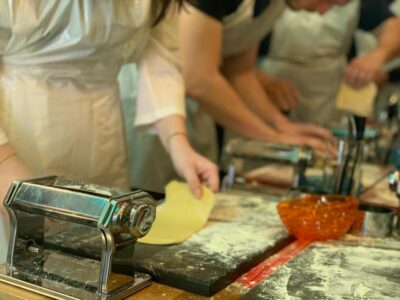
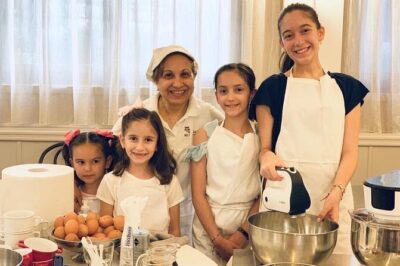
Pasta and Tiramisu Cooking Class with Wine in Venice
Read our review →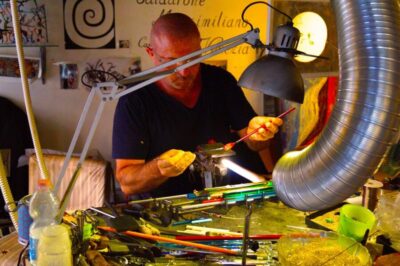
Create Your Glass Artwork: Private Lesson With Local Artisan
Read our review →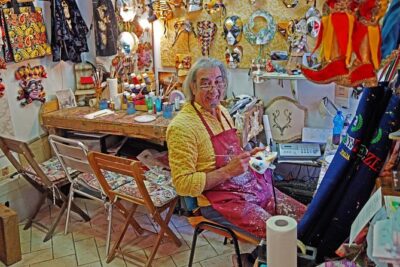
Venetian Carnival Mask Making Class in Venice, Italy
Read our review →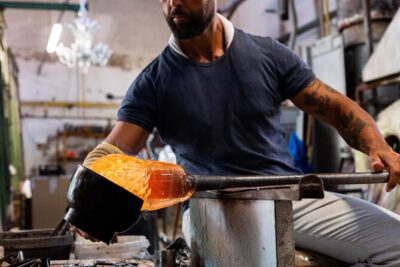
Murano Glass Factory Experience: A Workshop in Venice
Read our review →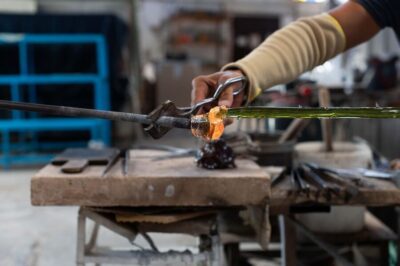
Browse the lists this tour appears in