
Reviewed · VENICE
Gay Life in Venice from the Middle Ages to Present Days
Venice’s LGBTQ past is written into places most people hurry past: a church arcade once watched for cruising, a bridge tied to the city’s old red-light district, and a public square where death sentences were announced. This tour follows those clues with Valerio Coppo, a warm and expressive local guide who links hard history with literature, art, gossip, and pop culture.
I like the tour’s small-group feel, with numbers advertised as capped at eight, though the practical information also lists a maximum of 10. I also like its range: one walk can take you from a medieval trans story to Casanova, a British gay pioneer, Madonna’s Like a Virgin video, and the bisexual life of a famous poet. The main drawback is pace. Nineteen stops in about two hours means many locations receive only a short explanation, and some are viewed from outside.
Key points to know before booking
- Medieval Venice gets an LGBTQ reading: Learn how authorities policed same-sex encounters, prostitution, public behavior, and gender presentation.
- The route is packed with names: Stories involve Rolandina Roncaglia, Casanova, Paolo Veronese, famous writers, painters, and poets.
- The walk begins in Santa Croce: You start at Campo San Giacomo dell’Orio and finish near the Rialto Bridge.
- Expect a history walk, not a nightlife tour: The focus is on places, records, punishment, art, and personal stories.
- Valerio Coppo leads in English: His style is conversational, flexible, and built around questions and unusual details.
- The price is $92.63 per person: That is a serious fee for two hours, but the small group and specialist subject make it more defensible than a standard city walk.
A different way to read Venice
Most first walks through Venice follow the grand route from Rialto to San Marco, with palaces, churches, and postcard views doing the talking. This experience asks you to look again. A quiet campo may mark a death sentence. A church arcade may reveal how public authorities tried to control private meetings. A handsome palace may carry a story of artistic freedom, scandal, or forbidden affection.
That change in viewpoint is the real reason to book. You are not simply collecting facts about LGBTQ life. You are learning how Venice used its streets, churches, markets, prisons, theaters, and public squares to regulate desire, display punishment, and sometimes provide room for people to meet.
The tour also avoids treating LGBTQ history as one smooth story of progress. You hear about cruelty, surveillance, and executions, but also about coded behavior, artistic circles, sexual independence, and people who found ways to live outside accepted rules. That mix gives the walk its weight.
Valerio’s approach, based on the available comments about his tours, is personal and story-led. He speaks very good English, can guide in Spanish, and brings warmth and humor without losing sight of the darker material. He also encourages discussion, so you are not simply walking behind a flag while a guide recites dates.
Other Venice outings people book alongside this one:
- Venice: Doge’s Palace Reserved Entry Ticket
★ 4.6 · 42,716 reviews - Venice: Grand Canal Gondola Ride with App Commentary
★ 4.1 · 18,908 reviews - Boat Trip: Glimpse of Murano, Torcello & Burano Islands
★ 4.3 · 15,699 reviews
Campo San Giacomo dell’Orio to San Cassiano
The meeting point is Campo San Giacomo dell’Orio, a useful starting place in Venice’s Santa Croce district. Here the tour introduces an Italian poet who came out in the early 1970s, wrote some of Italy’s first poetry to explore homosexuality, and later died by suicide.
That opening sets the tone. This is not only a walk through distant centuries. The guide connects Venice to modern Italian LGBTQ expression and to the personal cost of living openly. The location itself is free to visit, as are all the listed stops, but you are paying for the interpretation that ties them together.
At Fondamenta del Megio, you hear about a Venetian historian from the 15th and 16th centuries and his Diarii, an ambitious attempt to record the city’s affairs. His reputation for being kind carries an unpleasant meaning in this setting, and the story shows how words, labels, and social judgments could disguise hostility.
The route then reaches Chiesa Santa Maria Mater Domini. In 1488, public authorities placed the church’s arcades under surveillance to stop men accused of sodomy from meeting there. It is a good example of how a familiar religious building could also become a monitored social space.
At Ponte delle Tette, the subject shifts to sex work and public policy. This area was Venice’s main red-light district in the 15th century. Authorities encouraged prostitutes to display themselves beneath the porticos, hoping to reduce male same-sex activity in the city.
You also hear about the gnaghe, men who dressed as women, hid their faces with cat masks, and made catlike cries while propositioning passers-by. It is one of the tour’s more theatrical stories, but the point is not just the costume. It shows how gender presentation, performance, sex work, and public entertainment could overlap in early Venice.
Rolandina Roncaglia and the city’s harsh punishments
Near Chiesa di San Cassiano, the guide tells the story of Rolandina Roncaglia, described as the first trans person known in Italy. Born Rolandino, she lived as a woman for seven years in a nearby house, sold eggs at the local market, and later worked as a prostitute.
After she was discovered in 1355, she suffered a terrible death. The tour does not soften this part of the past, and you should be ready for direct discussion of execution and state violence. This is one of the most important stops because it moves beyond broad labels and gives a face to a person who lived under rules she could not safely escape.
At nearby Campo San Cassiano, a former theater once claimed to be the world’s first public opera house. The site also served as a meeting place for homosexual encounters. Giacomo Casanova referred to such encounters when he worked as a spy for the state inquisitors in the 18th century.
This pairing works well. Opera, surveillance, sex, and government power all meet in one neighborhood. You see how a place built for public performance could also create opportunities for private contact.
Writers, artists, and secret meetings near the Grand Canal
The stop at Calle dell Ogio concerns a famous British writer and pioneer of the gay movement who met a handsome 19-year-old porter along this short bank beside the Grand Canal. The story adds a literary angle to the walk and reminds you that Venice has long attracted people seeking beauty, anonymity, romance, or escape.
At Campo San Giacomo di Rialto, a statue once served as a platform for public announcements. Officials used it to proclaim bans connected with sodomy, and an officer read the names of people sentenced to death from the block at the end of its staircase.
Its position beside the Rialto market made it an effective place for public communication. This was not punishment kept behind closed doors. The city placed it in front of a large audience, turning law into spectacle. That detail helps you understand how Venice used architecture and crowds to reinforce authority.
Nearby, at Ruga dei Oresi, a suspicious pharmacy was said to be a meeting place for men accused of sodomy. Simply approaching it could reportedly lead to a death sentence. The detail is chilling, and it shows how fear could spread beyond the people actually arrested.
These stops are short, but they give you a practical way to read Venice’s tight streets. A narrow alley was not just a shortcut. It could be a place of contact, observation, rumor, or danger.
A different way to spend a morning on the water:
- Venice: Grand Canal by Gondola with Live Commentary
★ 4.1 · 13,681 reviews - Venice: La Fenice Opera House Entry Ticket with Audio Guide
★ 4.6 · 11,742 reviews - Doge’s Palace & St. Mark’s Basilica with Terrace Access Tour
★ 4.7 · 10,697 reviews - Venice: Burano, Torcello & Murano Boat Tour w/Glassblowing
★ 4.4 · 10,245 reviews
Ca’ Zenobio, San Sebastiano, and pop culture
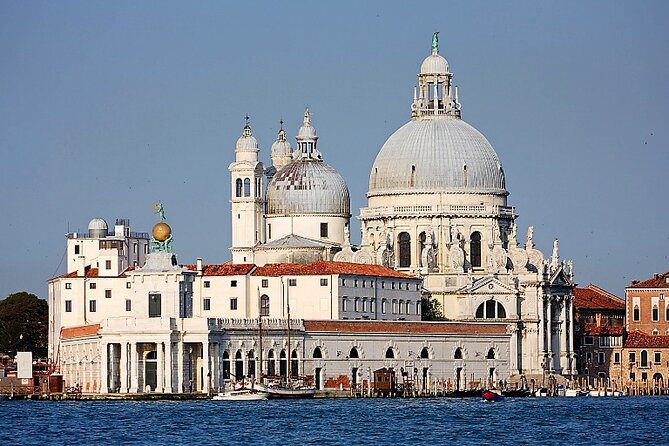
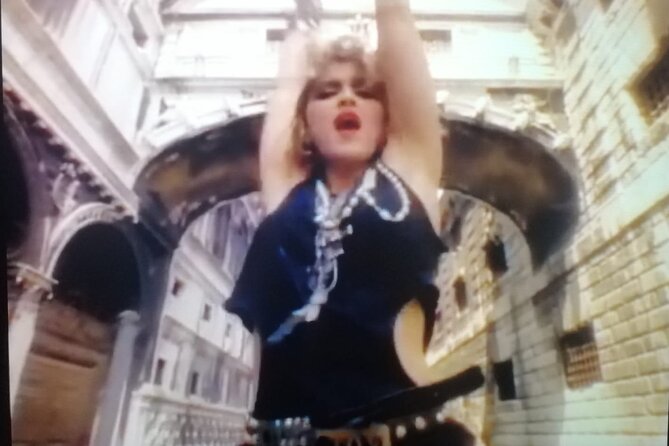
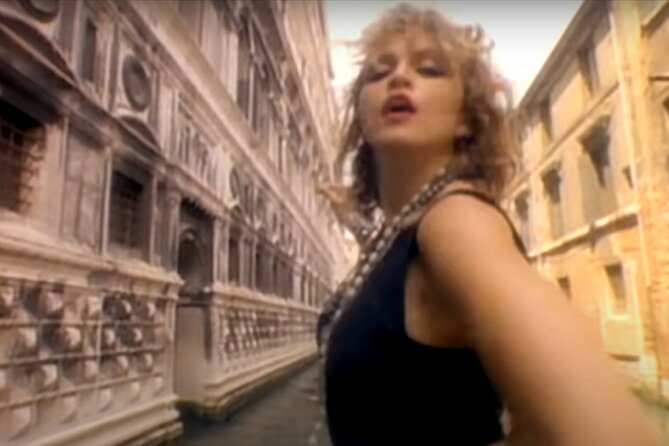
Palazzo Ca’ Zenobio brings the walk into the 18th century and beyond. The late Baroque palace became a center of intellectual life, and its grand interiors later appeared in Madonna’s Like a Virgin video, filmed in the 1980s.
That pop-culture connection may seem far removed from medieval prosecutions, but it gives the tour welcome range. You are reminded that Venice’s buildings keep acquiring new meanings. A palace can be a residence, a meeting place for ideas, a research center, and a film location across different eras.
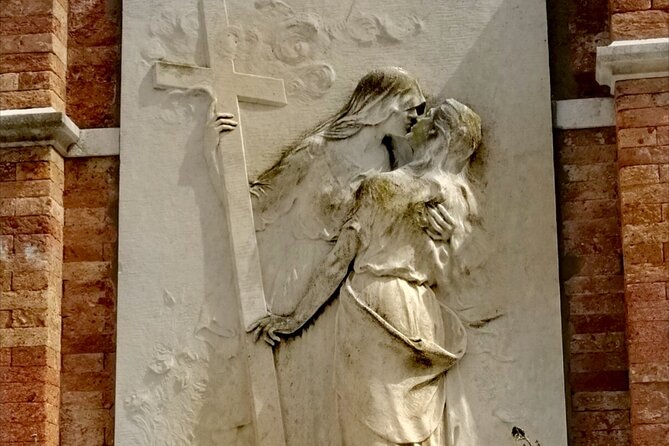
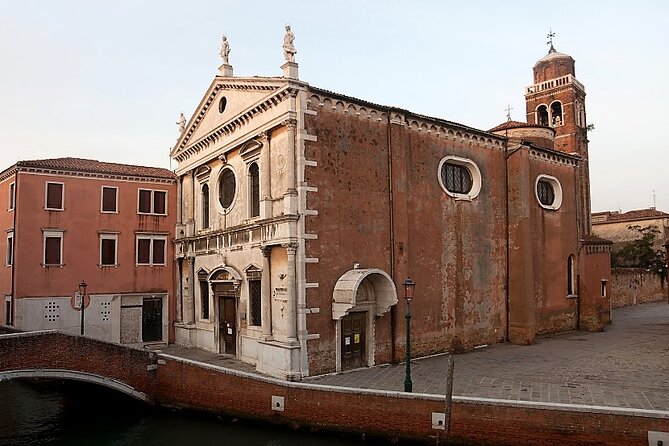
At Chiesa di San Sebastiano, the focus turns to Paolo Veronese. The church is one of Venice’s major art sites because of its paintings, and Veronese is buried there. The guide explains why San Sebastiano is treated as a patron saint of the worldwide LGBTQ community.
This stop should appeal to you if you like art but want more than a list of painters and dates. The church links visual culture with identity and symbolism. It also gives the walk a quieter pause after the more disturbing stories around policing and execution.
San Marco, Harry’s Bar, and public execution
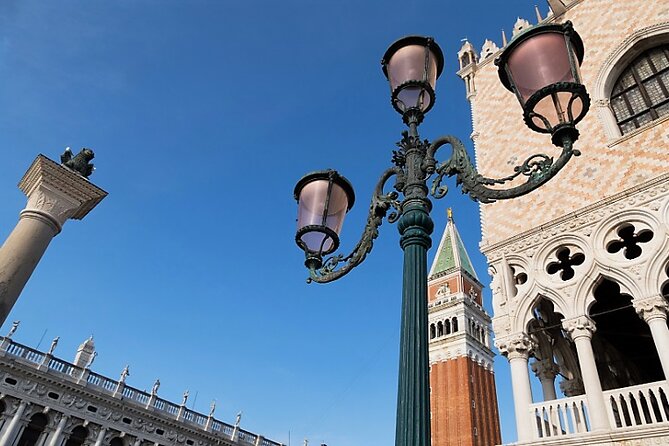
Outside the Campanile di San Marco, you hear about the cheba, an iron cage dating from the 15th and 16th centuries. It was used to expose priests accused of sodomy to bad weather and the taunts of the crowd below.
The object is a powerful reminder that public shame was part of punishment. The story also shows that religious office did not shield a person from prosecution. In this part of Venice, the spectacle of punishment mattered almost as much as the sentence itself.
The next stop is Piazzetta San Marco, between the two columns. Executions took place here until the middle of the 17th century, a detail also connected with Casanova’s account. You may have stood in this famous space before without realizing what happened there. The guide’s value lies in adding that darker layer to a place usually presented as pure ceremony and beauty.
At Harry’s Bar, the subject moves into the 20th century. Although the founder denied the story, the bar is associated with gay visitors gathering there through the 1970s. Treat this as a piece of local lore rather than a courtroom fact. It is still useful because the tour allows room for rumor, memory, and the way a city builds its own mythology.
From Riva degli Schiavoni to Palazzo Mocenigo
At Riva degli Schiavoni, the guide points out a palace connected with a love story between a Venetian rower and a famous German writer. The setting is one of Venice’s most recognizable waterfront areas, but the story directs your attention away from the broad view and toward private relationships played out behind grand façades.
Calle del Dose da Ponte leads to a hotel where a famous lesbian American painter lived. Her relationships with both men and women give the tour another chance to examine sexuality without forcing a single label onto a complicated life.
Palazzo Ca’ Dario is famous for a separate series of misfortunes linked to its owners, many of whom were gay. The tour treats the building’s reputation as part of the city’s darker storytelling tradition. This is likely to appeal to you if you enjoy Venice’s mix of documented events, local legend, and uneasy atmosphere, though the exact line between fact and folklore is worth keeping in mind.
At Palazzo Mocenigo, you hear about a famous British poet whose complicated sexual and romantic life included an important bisexual element. The palace gives the story a fitting backdrop: formal, private, and tied to elite life in Venice.
The final listed stop is Chiesa Parrocchiale di San Martino di Castello. Its former porch was named in a 1450 law among the places where men accused of sodomy cruised at night. By ending with another monitored meeting place, the walk returns to one of its main themes: Venice’s public spaces could offer freedom and danger at the same time.
What the two-hour format means
The advertised duration is about two hours, while the route names 19 stops. That only works if you understand the format. You will not spend 15 full minutes at every location, and you should not expect long interior visits or time to study every church and palace.
Many stops are exterior explanations. The value comes from the route’s connections and Valerio’s storytelling, not from entering each building. If you enjoy a brisk walk with frequent pauses, the pace should suit you. If you want detailed art analysis, extended museum time, or a slow architectural tour, this may feel rushed.
The start at Campo San Giacomo dell’Orio and the listed end near Ponte di Rialto place the walk in central Venice. Wear shoes suited to bridges and uneven paving, and leave room in your schedule for the route to run at a conversational pace. The tour is offered in English, and service animals are allowed. Most people can take part, and public transportation is nearby.
The group is marketed as intimate, with numbers capped at eight in the highlights. The additional information gives a maximum of 10, so check the confirmed group size if that matters to you. Either way, this is intended to be much smaller than a standard mass-market city walk.
Is $92.63 a fair price?
At $92.63 per person, this is not a bargain way to spend two hours in Venice. You are not paying for entrance tickets, since the listed stops are free, and the tour does not include food, drinks, or transport.
The case for the price is specialization. LGBTQ history is not the usual subject of a Venice walk, and the route brings together medieval law, trans history, prostitution, literature, art, opera, film, and gay life in the 20th century. A small group also gives you a better chance to ask questions and follow an interesting thread.
I would book it if this subject matters to you, especially early in your stay. The route can help you read the city differently for the rest of your visit. I would skip it if you want the lowest-cost introduction to Venice or prefer grand monuments explained in conventional art-history terms.
The experience is often booked about 25 days ahead, so popular dates may fill. Free cancellation is available until 24 hours before the start time. Day visitors from outside Venice may also need to pay a separate €5 city access fee on certain dates, with exemptions and applicable days set by the city.
Who should book this walk?
I recommend it to LGBTQ visitors, allies, history fans, and anyone tired of seeing Venice reduced to canals and palace façades. It is also a good choice if you enjoy literary biographies, local legends, and uncomfortable questions about how governments police private life.
You should be comfortable with frank subjects. The walk includes prostitution, executions, suicide, surveillance, gender presentation, and persecution. It is not a nightlife outing, and it does not promise a list of current gay bars or clubs.
Valerio is a particularly good fit if you prefer a guide who speaks with warmth and invites your response. His style, as reflected in the available comments about his work, is flexible and conversational. Some people may want more explicit or intimate anecdotes, but the main strength is the broad historical frame rather than sensational gossip.
My verdict
Book Gay Life in Venice from the Middle Ages to Present Days if you want a specialist walk that gives Venice a human and often unsettling dimension. The route is packed, the fee is high, and the short format limits how long you can linger. Still, the combination of Rolandina Roncaglia, Casanova, artists, writers, churches, punishment sites, and pop culture is unusual.
The best reason to go is simple: after two hours, Venice’s streets will no longer look neutral. You will see who was watched, who was punished, who found one another, and who left traces in the city’s art and literature.
FAQ
Where does the tour begin?
It begins at Campo San Giacomo dell’Orio in Venice, at Campo S. Giacomo dell’Orio, 30135 Venezia VE, Italy.
Where does the tour end?
The listed end point is Ponte di Rialto, 30125 Venice.
How long does the experience last?
The tour lasts approximately two hours.
What language is offered?
The tour is offered in English. The guide has also led tours in Spanish.
How much does the tour cost?
The listed price is $92.63 per person.
How large is the group?
The highlights describe a maximum of eight people, while the additional tour information lists a maximum of 10. Confirm the group size when booking if this is important to you.
Are entrance tickets included?
The listed stops show free admission. The experience includes a tour leader and nature and interpretive guide, but no paid attraction admission is listed.
Is the tour suitable for most people?
The information says most people can participate. Service animals are allowed, and the route is near public transportation.
Can day visitors from outside Venice face an extra fee?
Yes. On certain dates, people visiting Venice for the day may need to pay a €5 access fee. Exemptions and applicable dates are provided by the city through cda.ve.it.
What is the cancellation policy?
You can cancel at least 24 hours before the start time for a full refund. Cancellations or changes made less than 24 hours before the start time are not accepted for a refund. If the minimum number of participants is not reached and the tour is canceled, you will be offered another date or experience, or a full refund.
Recently added around Venice
- Your evening in Venice – Legends&Ghosts&Aperitif★ 4.7 · 79 reviews
- Venice: City Tour & Skip the Line for St. Mark’s Basilica★ 4.1 · 84 reviews
- Walking Tour to Uncover the Hidden Venice★ 4.4 · 34 reviews
- Wine Tasting in Venice★ 4.6 · 42 reviews
- Venice: Walking Tour & Gondola Ride★ 4.4 · 22 reviews
- Venice: Watercolor Painting Class at the Prisons Palace★ 4.7 · 27 reviews
- VIRTUAL MUSEUM: Creature di Gomma – Venice Vintage Toys★ 4.7 · 3 reviews
- Venice Walking Tour from St. Mark’s to Rialto Bridge★ 4.5 · 12 reviews