
Reviewed · MURANO BURANO AND TORCELLO ISLAND TOURS
Glass Lampwork Workshop and Walking in Murano
Murano glass is more than a shop window souvenir. This two-hour visit shows you how the island’s craft still works today, then lets you try lampwork, a 17th-century technique, with local artisan Monica. The best part is the chance to leave with a bead you helped make.
I like the small group size, capped at 15, and the local angle supplied by Murano native Valerio. I also like that the tour visits more than one glass setting, from a major historic factory to smaller craft spaces, without the usual pressure to buy.
The main catch is the price: $92.92 per person before the optional €30 workshop. The glass demonstration and factory showroom are included, but making your own bead costs extra. Church interiors and entrance fees may also require clarification before you set out.
Key points to know before you go
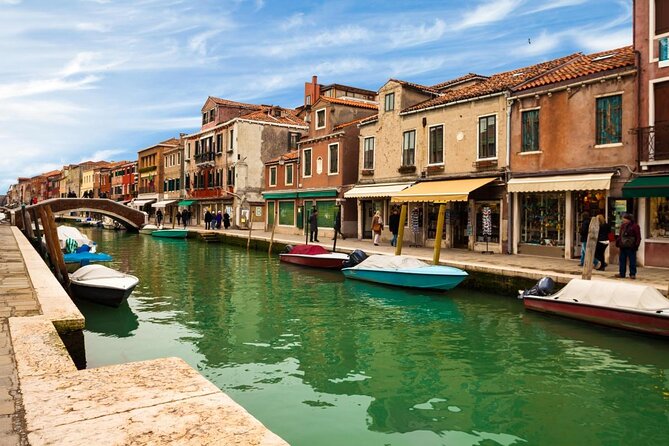
- Meet at Faro di Murano: The tour starts and ends by the Murano lighthouse at Fondamenta Piave.
- See glassmaking in several forms: Expect a factory showroom, an artisan visit, and a lampwork demonstration.
- Make a bead for €30 extra: The hands-on workshop is optional and paid directly on site.
- Walk through historic Murano: The route includes San Pietro Martire, Santi Maria e Donato, Santa Maria degli Angeli, and Palazzo da Mula.
- A local guide leads the way: Valerio Coppo brings personal knowledge of the island and practical suggestions for food and drinks.
- Plan for a short but active outing: The experience lasts about two hours and is offered in English for a maximum of 15 people.
Why Murano is worth the boat ride
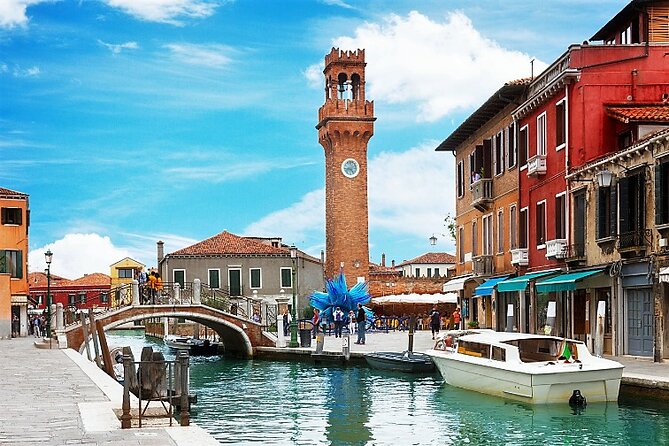
Many people come to Venice, buy a glass trinket, and never learn how it was made. Murano gives that souvenir a place and a story. The island became famous for glassmaking, and the craft remains part of daily life rather than a museum display frozen in time.
This experience is designed to take you beyond the most polished sales stops. You will see how old methods meet newer design work, and you will get time to look at finished pieces without being pushed toward a purchase. That matters in Murano, where some bargain tours use free transport to bring people straight to a factory showroom and then pressure them to shop.
You meet at Faro di Murano, the lighthouse area, and finish back there. The meeting point is near public transport, which makes it a practical starting place if you are already on the island. Allow enough time to locate the exact spot, especially if construction changes the meeting instructions. Keep your phone charged and check any updated directions before leaving your hotel.
The group limit of 15 is a useful middle ground. You get the social feel of a group outing, but the number is still small enough for questions and a hands-on activity. The tour is offered in English, and most people can take part. Service animals are allowed.
More Murano glassblowing visits:
- Venice: Burano, Torcello & Murano Boat Tour w/Glassblowing
★ 4.4 · 10,245 reviews - Venice: Murano and Burano Boat Tour with Glass Factory Visit
★ 4.2 · 9,527 reviews - Venice: Murano & Burano Panoramic Boat Tour w/ Glassblowing
★ 4.4 · 6,212 reviews
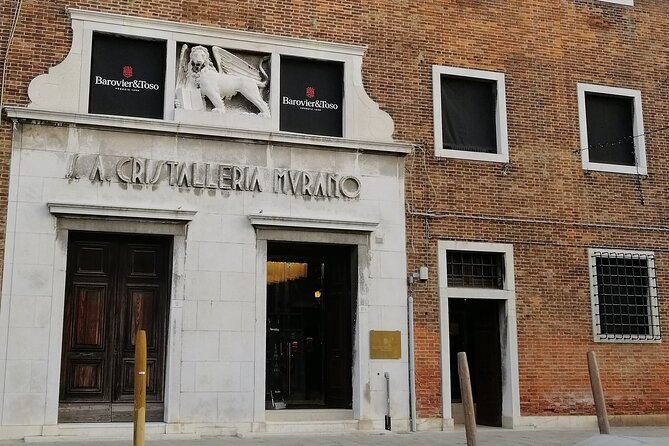
Palazzo Barovier and Toso: start with Murano’s glass legacy
The first listed stop is Palazzo Barovier and Toso. The name connects the visit to one of Murano’s long-established glassmaking families and to the island’s place in the wider glass trade.
The tour includes a visit to the showroom of the oldest glass factory in the world still in operation, active since 1295. That does not mean you will spend the whole tour in a sales room. The point is to see how a very old workshop tradition can support contemporary shapes, colors, and design.
I would treat this part as a chance to compare technique and finish rather than as a shopping stop. Ask Valerio how the objects differ from the smaller workshops later in the route. A major factory and a family-run artisan space may use related methods, but the scale, purpose, and design choices can be quite different.
The included glass artisan visit may feature lampwork or glassblowing. The exact form can vary, so you should not assume you will personally blow a large vase. The useful distinction is simple: the demonstration is included, while the optional chance to work with the glass yourself costs extra.
Lampwork with Monica, the hands-on highlight
Lampwork is the part that turns a glass tour into an activity. Instead of only watching a professional handle molten glass, you can pay an additional €30 on site to create your own Venetian bead.
Monica leads this optional workshop. She guides you through the basic process and helps you make a small piece that you can take home. You are not expected to become a glass artist in one sitting. The value is in trying a delicate old craft under supervision and ending with something personal rather than mass-produced.
The bead needs time to cool before you can collect it. Build a little flexibility into your plans after the workshop, especially if you want to stay nearby for lunch. One useful approach is to schedule no immediate boat connection or timed museum entry after the tour.
Families can find this part especially rewarding. Children get a clear, physical task and a souvenir connected to their own effort. Still, lampworking involves heat and careful handling, so the activity works best for children who can listen closely and follow instructions.
The extra charge is easy to miss if you only glance at the headline price. At $92.92, this is already a premium short tour, and the bead adds €30. The cost makes more sense if you want personal guidance, several glass-related stops, and a local walking tour. If you only want to watch a glassblowing demonstration, cheaper options may suit you better.
San Pietro Martire and Murano’s church history
The walking portion moves beyond the factories. Chiesa di San Pietro Martire is one of the churches named on the route, giving you a pause from glass displays and a look at Murano’s religious side.
The useful feature here is contrast. Murano is not only a craft district. Its churches, palaces, and canals show that the island once had a larger civic and religious role in the lagoon. A guide can explain what you are seeing in a way that a quick solo walk may not.
Check what is included on your date if entering the church is important to you. The tour description lists the churches as walking stops, but it does not include separate church admission. One person who took the route later paid to enter a church independently. Plan for the possibility that you will see the exterior and surrounding area with the group, then choose to go inside on your own.
That arrangement is not necessarily a flaw. It keeps a two-hour tour moving and avoids making everyone pay for every interior. But you should know the difference between passing a church as part of the walk and receiving a formal guided interior visit.
More island days out to Murano, Burano and Torcello:
- Boat Trip: Glimpse of Murano, Torcello & Burano Islands
★ 4.3 · 15,699 reviews - Murano, Burano and Torcello Half-Day Sightseeing Tour
★ 3.5 · 7,928 reviews - Murano & Burano Islands Guided Small-Group Tour by Private Boat
★ 4.5 · 7,580 reviews - Venice: Murano, Burano, Torcello, and Glass Factory Tour
★ 4.4 · 5,563 reviews
Santi Maria e Donato, Murano’s standout church
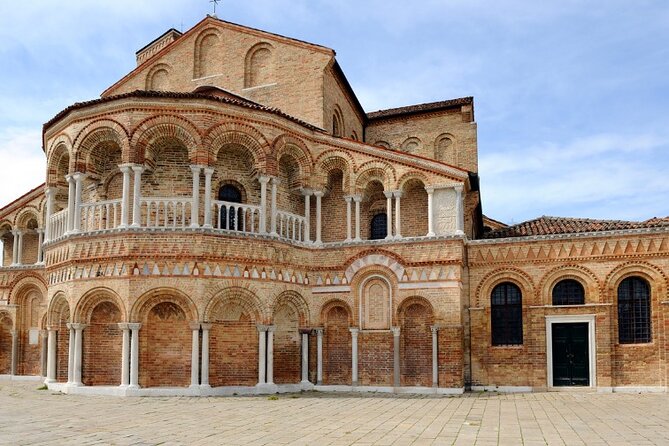
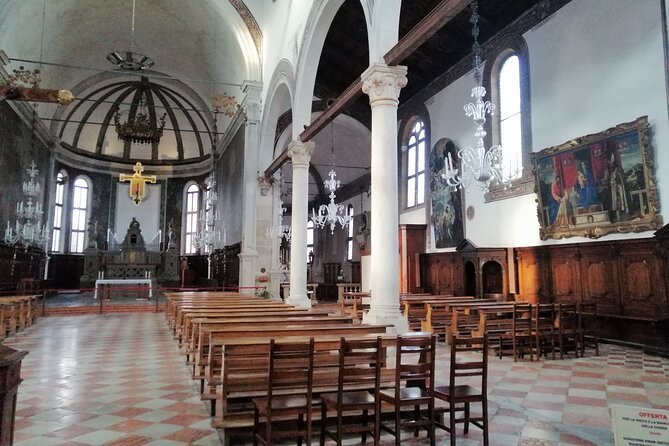
The Duomo di Murano, Santi Maria e Donato, is another major stop. Its Byzantine-style 12th-century mosaics are among the clearest reasons to include a walk with your glass visit.
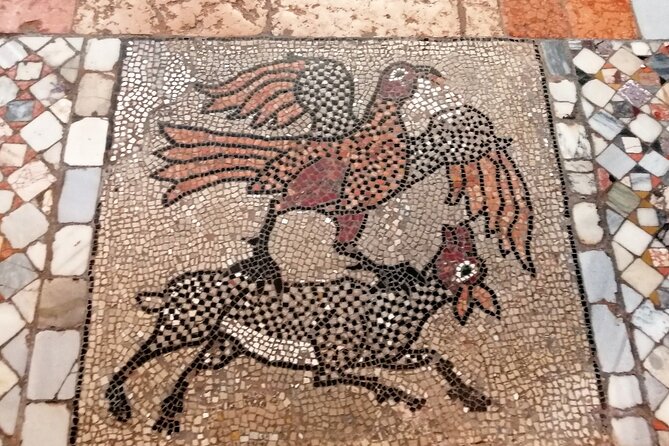
The mosaics add an older layer to the day. Glass in Murano is often associated with modern color and polished display pieces, while the church connects the island to medieval Venice and the eastern Mediterranean world. You get a better sense of Murano as a settled community, not just a place built around workshops.
Take your time looking at the exterior details and asking Valerio about the church’s role in the island’s story. If the interior is open and you want to see the mosaics closely, ask about admission before separating from the group. The provided information does not promise that an entrance ticket is included.
This is also where the pace matters. The entire experience lasts about two hours, and the route includes several stops. You will get orientation rather than a long church lecture. Visitors who want detailed art-history commentary may find the time brief, but people who want a well-shaped introduction should find the balance useful.
Palazzo da Mula and the quieter side of Murano
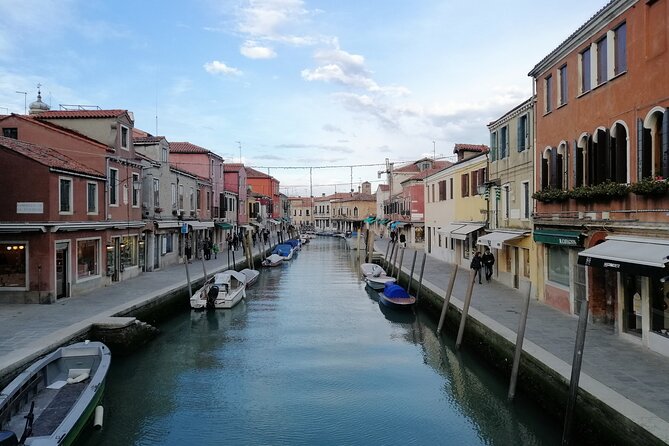
Palazzo da Mula gives the walk another change of scenery. The palace is part of Murano’s architectural character, and it helps show how the island’s wealth and identity were expressed beyond the glass trade.
The walking route is intended to use less obvious lanes rather than only the most visited stretch. That is valuable because Murano can feel very different once you leave the main factory corridor. You may see quieter canals, older facades, and ordinary island life between the headline sights.
Valerio’s local connection is central here. He grew up in Murano, and his recommendations extend beyond the formal route. He has offered suggestions for restaurants, gelato, hot chocolate, and cicheti in Venice. Those tips can be especially useful if you have several days in the city and want help choosing places to eat after the tour.
Do not expect a long free period for shopping or a full meal during the two-hour outing. If you want lunch on Murano, plan it afterward. The bead workshop may need cooling time, and staying on the island for a meal gives you a more relaxed finish.
Santa Maria degli Angeli and the final walk
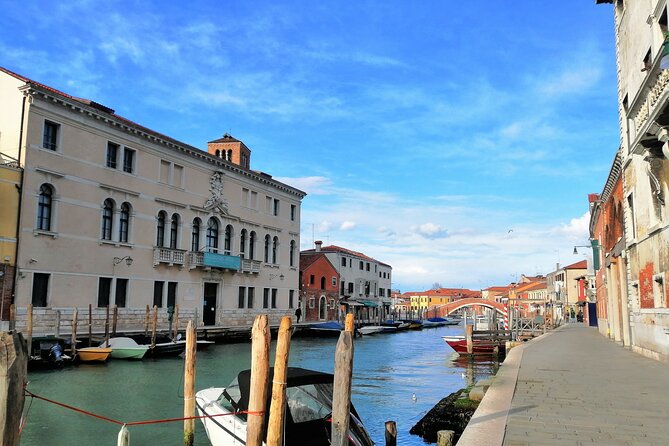
Chiesa di Santa Maria degli Angeli is the final listed church stop. Like the other religious sites, it gives the route a wider purpose. You are not simply moving between showrooms. You are tracing the island’s buildings, craft traditions, and local neighborhoods together.
The route suits people who like variety. In one short outing, you get working glass, finished design, church architecture, and a guided stroll. The tradeoff is that no single topic receives hours of attention. The tour works as an introduction, not a specialist course in Venetian art or glass technology.
Because the activity ends at the starting point, you can continue exploring Murano afterward without worrying about returning to Venice immediately. That is a good moment for lunch, a slower look at shops, or time for your handmade bead to cool. If you have a strict schedule, remember that boat connections and the pace of a group walk can affect your timing.
What the $92.92 price really buys
The price is high for a two-hour activity, so it deserves a clear value test. You are paying for a small English-language group, a guide with a personal connection to Murano, access to a historic factory showroom, an artisan visit, a glass demonstration, and a walk through several notable sites.
You are not paying for the optional bead workshop. That costs €30 on site. You are also not automatically paying for church admission, gratuities, or any Venice access fee that applies on your date.
I see the strongest value in the combination of experiences. A basic factory visit can show you a demonstration, but it may not explain the island well. A standard walking tour can cover the churches, but it may not let you meet a working glass artisan. This outing links the two.
The price is harder to justify if you are mainly looking for a cheap way to reach Murano or if you plan to buy a single souvenir. It is also less attractive if you do not want to pay extra for the hands-on portion. In that case, compare the cost with a shorter glass demonstration or a self-guided visit.
The tour receives a 4.9 rating from 76 ratings, and 99 percent of people who booked it recommend it. Those numbers suggest a consistently strong experience, but they do not remove the need to read the inclusions carefully. The extra workshop and possible church fees are the key points to understand.
Who should book this Murano experience?
I would recommend it to first-time visitors who want more than a showroom, families who like practical activities, and anyone interested in local craft traditions. It is also a good fit if you enjoy small groups and prefer a guide who can connect history to everyday island life.
The workshop makes it particularly appealing to artistic people. You get a small, meaningful object rather than another generic souvenir, and the process gives you a better feel for the patience and precision behind Murano glass.
You might choose something else if you want a full-day cultural tour, a long museum visit, or a detailed church tour. The route is compact and active. It gives you a strong introduction in two hours, but it cannot cover every part of Murano in depth.
Cancellation is free up to 24 hours before the start time. Later cancellations and changes are not refunded. The activity also requires a minimum number of participants, so a cancellation by the operator would lead to another date, another experience, or a full refund.
My recommendation: pay for the bead if the budget allows
I would book this tour if you want Murano to feel like a real island community rather than a stop for factory shopping. Valerio’s local perspective, the mix of large and small glass settings, and the church walk give the visit shape.
If you can afford the extra €30, I would add the lampwork workshop. It is the most personal part of the experience, and you should plan time afterward for the bead to cool. If your budget is tight, skip the workshop and enjoy the included demonstration, but understand that the tour’s full appeal comes from seeing the craft and trying a small piece of it yourself.
FAQ
Where does the Murano tour start and end?
It starts at Faro di Murano, Fondamenta Piave F. M., 30141 Venezia VE, Italy. The activity ends back at the same meeting point.
How long does the experience last?
The tour lasts approximately two hours.
What language is the tour offered in?
The tour is offered in English.
How many people can join the group?
The maximum group size is 15 people.
Is the glass workshop included in the price?
The glass artisan visit and demonstration are included. The hands-on lampwork workshop is optional and costs €30, paid on site.
Who leads the glass bead workshop?
Local artisan Monica leads the optional hands-on bead-making activity.
Which churches are included on the walking route?
The listed church stops are Chiesa di San Pietro Martire, the Duomo di Murano Santi Maria e Donato, and Chiesa di Santa Maria degli Angeli.
Are church entrance fees included?
The provided tour details do not list church admission as included. Ask about entry if you want to visit the interiors.
Can I cancel for a full refund?
Yes, if you cancel at least 24 hours before the experience start time. Cancellations or changes made less than 24 hours beforehand are not refunded.
More walking tours in Venice
- Venice Walking Tour and Gondola Ride
★ 3.5 · 3,630 reviews - Venice: Rialto Bridge & Offbeat Unusual Venice Walking Tour
★ 4.2 · 3,538 reviews - Private 3 hrs Venice Tour: St Mark’s, Walking tour & Boat tour
★ 4.0 · 3,372 reviews - Venice: City Center Historical Guided Walking Tour
★ 4.2 · 1,873 reviews
More hands-on workshops in Venice
- Venice: Carnival Mask Workshop
★ 4.5 · 1,925 reviews - Venice: Pasta and Tiramisu Cooking Class with Wine
★ 4.9 · 1,010 reviews - Pasta and Tiramisu Cooking Class with Wine in Venice
★ 5.0 · 945 reviews - Create Your Glass Artwork: Private Lesson With Local Artisan
★ 5.0 · 556 reviews
Recently added around Venice
- Your evening in Venice – Legends&Ghosts&Aperitif★ 4.7 · 79 reviews
- Wine Tasting in Venice★ 4.6 · 42 reviews
- Venice: City Tour & Skip the Line for St. Mark’s Basilica★ 4.1 · 84 reviews
- Walking Tour to Uncover the Hidden Venice★ 4.4 · 34 reviews
- Venice: Walking Tour & Gondola Ride★ 4.4 · 22 reviews
- Venice: Watercolor Painting Class at the Prisons Palace★ 4.7 · 27 reviews
- VIRTUAL MUSEUM: Creature di Gomma – Venice Vintage Toys★ 4.7 · 3 reviews
- Venice Walking Tour from St. Mark’s to Rialto Bridge★ 4.5 · 12 reviews
Murano Burano and Torcello Island Tours, compared.
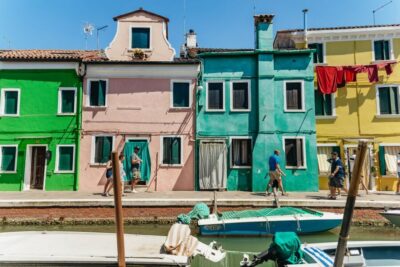
Boat Trip: Glimpse of Murano, Torcello & Burano Islands
Read our review →
Burano, Torcello & Murano Boat Tour w/Glassblowing
Read our review →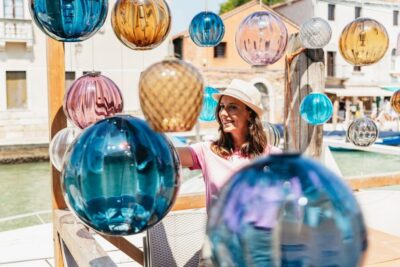
Murano and Burano Boat Tour with Glass Factory Visit
Read our review →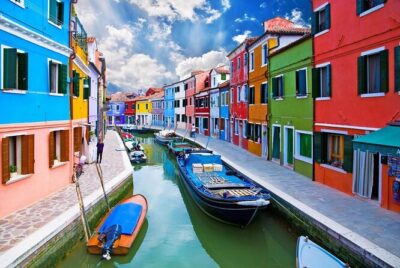
Murano, Burano and Torcello Half-Day Sightseeing Tour
Read our review →
Murano & Burano Islands Guided Small-Group Tour by Private Boat
Read our review →
Murano & Burano Panoramic Boat Tour w/ Glassblowing
Read our review →
Venice Islands: Murano Glass & Burano Colors Guided Visit
Read our review →
Browse the lists this tour appears in