
Reviewed · DOGES PALACE TOURS
Immersive Beauty: A Tailored Private Tour of the Doge’s Palace
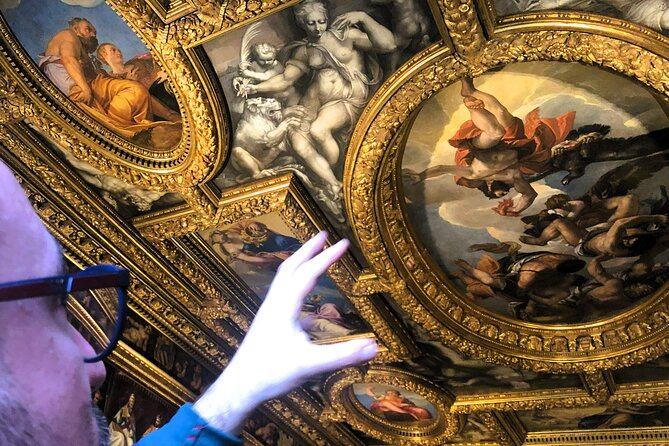
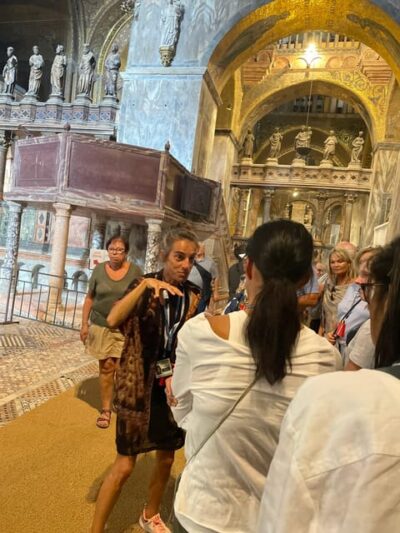
The best part of this private Doge’s Palace tour is its focus. Instead of wandering through a huge palace and wondering which painted ceiling matters, you get Valerio’s help connecting the art to Venice’s system of power, justice, and secret policing. The route reaches the Compass Room, the Council of Ten, the Great Council Chamber, and the prison passage beneath the famous Bridge of Sighs.
I like two things here. First, the tour is private, so you can ask questions and shape the visit around your interests. Second, Valerio is praised for making the palace work for mixed-age groups, including children, and for adding useful Venice advice about restaurants, shopping, and getting around. The main drawback is price: at $185.43 per person, with palace admission extra, this is a premium choice for about two hours.
Key points to know before booking
- A private route through Venice’s seat of power: See political chambers, courts, armories, prisons, and grand state rooms with your own guide.
- Skip-the-line assistance, not admission included: Valerio helps arrange Doge’s Palace tickets at the best available rate, but you pay the entrance fee separately.
- A strong art and history focus: Tintoretto, Veronese, the Golden Staircase, and the huge Great Council Chamber all receive context.
- The secret justice rooms are a highlight: The Compass Room and Council of Ten show the less glamorous side of Venetian government.
- Useful for families and small groups: The guide adjusts explanations to children and adult interests.
- Meeting point at Caffè Florian: You begin at Piazza San Marco and finish back at the same meeting point.
Why a private Doge’s Palace visit helps
The Doge’s Palace is not difficult to enter, but it can be difficult to understand. Room follows room, each packed with painted ceilings, carved stone, official portraits, and grand political symbols. Without some guidance, you may notice the decoration but miss the point.
This tour gives you a person to ask. Why is the Golden Staircase so lavish? Who made decisions in the Senate? Why did Venice need a Council of Ten? What happened to prisoners after they left the courtroom? Those questions turn a palace visit into a picture of how the Venetian Republic worked.
The private format matters most when your group has different interests. You can ask for more art, more political history, more stories about justice, or explanations that work for children. One family used Greek and Roman mythology as a bridge for a 4-year-old and a 9-year-old, while other groups focused on the Republic’s government and palace architecture.
The tour is offered in English, and the guide is Valerio Coppo of deTourist Venice. His background as a local guide is part of the appeal. He does not simply point out famous rooms. He also provides practical suggestions for restaurants, reputable shopping, and visits to Murano and Burano, according to the experience details provided.
More Doge’s Palace tours and tickets:
- Venice: Doge’s Palace Reserved Entry Ticket
★ 4.6 · 42,716 reviews - Doge’s Palace & St. Mark’s Basilica with Terrace Access Tour
★ 4.7 · 10,697 reviews - Venice: Doge’s Palace, St Mark’s Basilica, and Pala d’Oro
★ 4.4 · 6,235 reviews
Starting beneath the arcades of St. Mark’s Square
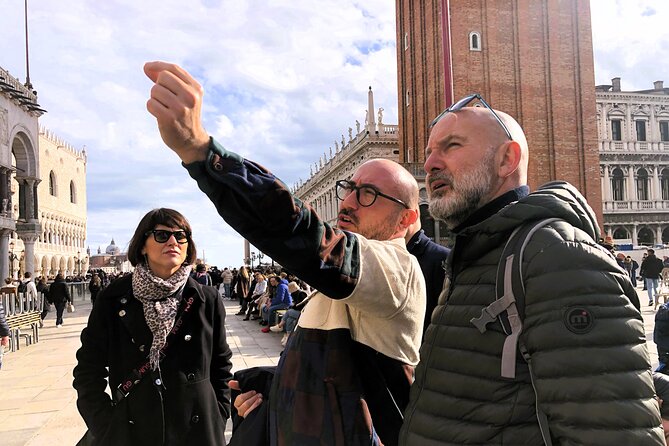
You meet at Caffè Florian, at Piazza San Marco 57. This is a useful starting point because St. Mark’s Square is not just a scenic gathering place. It is the public face of Venice, surrounded by the basilica, the bell tower, arcades, and the Doge’s Palace.
The opening stop is brief, about five minutes. I would treat it as an orientation rather than a full square tour. Valerio introduces the square’s development, architecture, and role in Venetian public life before leading you toward the palace.
That short introduction helps you read the building as more than a beautiful waterfront façade. The palace was the working center of Venetian government, and its location beside the square made political authority visible to everyone arriving in the city.
Courtyard, Giants’ Staircase, and the first symbols of power
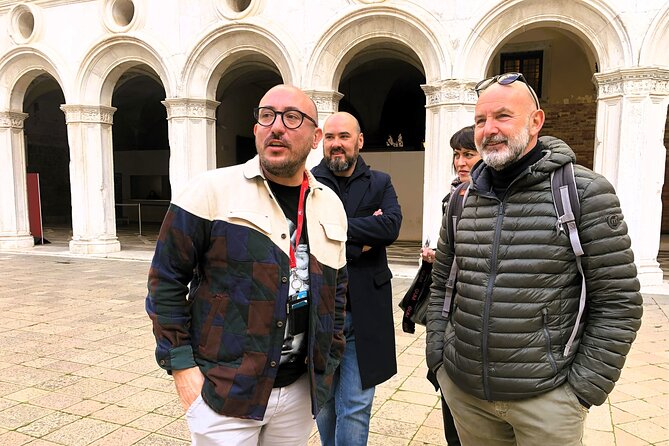
Inside, the Scala dei Giganti gives you an immediate lesson in Venetian self-presentation. The monumental staircase is decorated with statues and symbols associated with authority. It is an impressive first look at a government building designed to make power feel permanent.
The next stop is the Loggia, an open gallery with views toward St. Mark’s Basilica and the square. From here, you can connect the palace to the city around it. The building was not isolated from public life. Its architecture faced outward, showing visitors where the Republic’s authority lived.
You then climb the Scala d’Oro, or Golden Staircase. Its name tells you what to expect: an ornate route built to impress. The decoration reflects the prestige of the Doge and the state offices beyond it.
These early rooms are visually strong, but they can pass quickly. The scheduled stops are generally short, often about five minutes, so ask questions as you go if you want to pause on a ceiling, sculpture, or view.
The official rooms where Venice made decisions
The route continues through the Square Atrium and the Sala delle Quattro Porte, or Room of the Four Doors. These spaces acted as passageways and formal settings for government work. Their decoration was not random. In a palace built for political theater, architecture helped reinforce rank and ceremony.
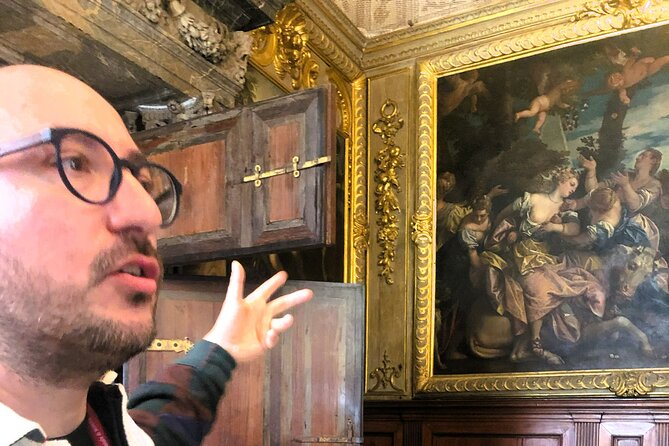
The Sala dell’Anticollegio, or antechamber to the College Hall, brings the art into sharper focus. Works associated with artists such as Tintoretto and Veronese show how Venice used painting to express civic pride and state power.
Next comes the Sala del Collegio, the Council Chamber. This was a central place for political decisions, and the guide’s job here is to connect the grand room to the debates and choices made inside it. You get more from the room when you understand that the paintings were part of an official setting, not merely decoration for its own sake.
The Senate follows. Here, you learn how senators participated in the Republic’s governing system. The tour then moves to the Council of Ten, an especially important stop for anyone interested in surveillance, political control, and the ways a state protects itself.
The Council of Ten can feel less romantic than the palace’s famous art, but it offers a clearer picture of Venetian government. Venice’s power rested not only on merchants, ships, and ceremony. It also depended on rules, investigation, and strict control of political threats.
A few more Venice outings worth comparing
- Murano & Burano Islands Guided Small-Group Tour by Private Boat
★ 4.5 · 7,580 reviews - From Venice: Murano & Burano Guided Tour by Private Boat
★ 4.7 · 4,170 reviews - Private 3 hrs Venice Tour: St Mark’s, Walking tour & Boat tour
★ 4.0 · 3,372 reviews - Venice: Private Gondola Cruise for up to 5 Passengers
★ 3.7 · 3,106 reviews
The Compass Room and Venice’s secret accusations
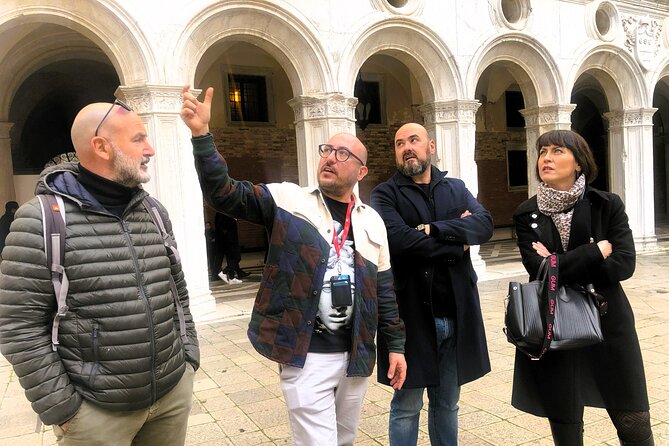
The Sala della Bussola, or Compass Room, is one of the most unusual places on the route. Its story centers on anonymous accusations. A small opening allowed people to submit denunciations, creating a system in which citizens could report suspected wrongdoing without revealing their identities.
This is where the tour moves beyond grand halls and famous paintings. You hear how secret reports, justice, and political fear could work together. The system was meant to protect the state, but it also raises uncomfortable questions about fairness and abuse.
I would give this room your full attention. It explains why the palace was both a center of ceremony and a place where private lives could be examined by the government. The contrast between glittering state rooms and anonymous accusations is one of the strongest ideas in the visit.
Armoury, courts, and the machinery of justice
The Armeria, or Armoury, shifts the focus to military strength. The display connects Venice’s government to battles, alliances, and the defense of its maritime interests. If you prefer political and military history to art, this section should suit you.
The Sala della Quarantia Civil, or Chamber of the Civil Quarantia, brings you back to the courts. Here, Valerio explains the legal structure that helped maintain order in the Republic. The room may not have the immediate visual pull of the Golden Staircase, but its subject is essential to understanding the palace.
You also see the Guariento’s Room, where art adds another layer to the palace’s story. The point is not simply to count famous artists. It is to see how law, government, religion, military power, and art all shared the same building.
The Great Council Chamber and the voting room
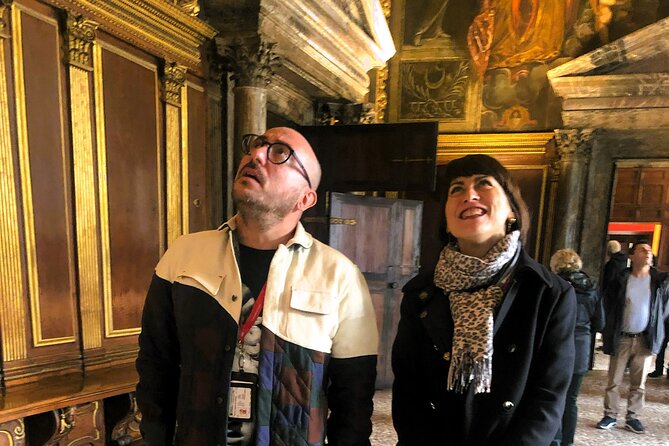
The Sala del Maggior Consiglio, or Great Council Chamber, is the largest room on the tour. Allow about ten minutes here, longer than most of the other stops. Its scale helps you picture the grand assemblies that shaped Venetian political life.
The room also raises questions about how representative Venice really was. The Republic had elaborate systems for councils, elections, and voting, but political power was not open to everyone. A good guide can explain those limits without reducing the room to a simple story about democracy.
The Sala dello Scrutinio, or Scrutiny Room, continues that theme. This was connected to elections and voting procedures. You learn how officials were chosen and how the Venetian electoral system tried to balance competing interests.
These rooms can feel overwhelming because of their size and decoration. I recommend looking first at the overall design, then choosing a few details for closer attention. Your guide helps decide what deserves your limited time.
The picture collection and a final look at the palace’s art
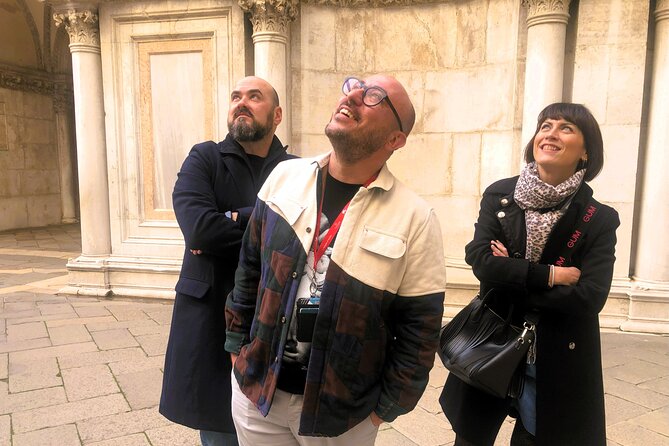
The Quadreria, or Picture Gallery, adds a more focused art stop to the political rooms. It gives you time to consider how paintings helped record and shape the public image of Venice.
If you are strongly interested in art, tell Valerio at the beginning. The tour is designed to be adjusted, and a private guide can spend more time on artistic technique, individual painters, or the meaning of a particular scene. If your group is more interested in political stories, you can keep moving without feeling trapped in a formal lecture.
That flexibility is one reason this tour can work better than a large group visit. You are not forced to follow someone else’s priorities.
Crossing the Bridge of Sighs
The Bridge of Sighs is one of Venice’s best-known sights, but its fame can flatten its story into a romantic legend. On this tour, you hear about the prisoners who crossed it and the practical connection between the palace courts and the prison buildings.
The bridge itself takes about ten minutes. Look through its small windows if access and conditions allow, but remember that the setting is more solemn than romantic. The sighs were linked to prisoners leaving the palace and seeing Venice from behind stone openings before entering confinement.
The guide separates the popular image from the historical function. That makes the bridge more meaningful than a quick photo stop.
The New Prisons and the darker side of Venice
After the bridge, you enter the Prigioni Nuove, or New Prisons. This part of the route gives the palace visit a sharp change in mood. You see how justice was connected to confinement and learn more about prisoners and judicial procedures.
The New Prisons are especially valuable if you want more than grand rooms and polished art. They show the practical side of the Venetian state: investigation, judgment, punishment, and control.
The stop is planned for about ten minutes. As with the Compass Room, this is a place where the guide’s explanation makes the building easier to understand. The architecture alone cannot tell you how the system worked.
What the $185.43 price really buys you
At $185.43 per person, this is not a bargain palace visit. The entrance ticket is not included, although the guide assists with purchasing skip-the-line tickets at the best available rate. Special fares for families, seniors, young people, and students may reduce the separate admission cost.
The value depends on your group. If you are content to walk through the palace independently and read signs, buying a regular ticket will cost less. If you want the building explained, dislike waiting, or have only a short time in Venice, the private format can justify the extra expense.
A private tour also spreads the cost differently. For a couple, the per-person price feels high. For a small family or group splitting the guide service, the experience may make more financial sense, especially if you use the customization well.
The tour lasts about two hours, though the many short stops mean the pace is purposeful. Do not expect a slow museum study session. Expect a guided route through many key spaces, with time to ask questions and request emphasis on the subjects your group cares about.
Who should book this Doge’s Palace tour?
I would recommend it to first-time visitors who want the palace to make sense, not just look beautiful. It is also a good fit for families, since Valerio has adjusted explanations for young children while keeping adults interested.
Art lovers can benefit from the Tintoretto and Veronese references, the Picture Gallery, and the palace’s grand decorative program. People interested in government, law, espionage, and prisons may enjoy the Compass Room, Council of Ten, Civil Quarantia, and New Prisons even more.
The tour also suits visitors who want practical help beyond the palace. Valerio has provided advice on restaurants, shopping, and routes to Murano and Burano. That is useful in Venice, where getting from one place to another can take more thought than the map suggests.
I would hesitate if you are watching every euro, already have a strong grasp of Venetian history, or prefer to explore at your own silent pace. The ticket cost is extra, and a private guide may be more structure than you want.
You receive confirmation at booking, and free cancellation is available up to 24 hours before the start time. Service animals are allowed, the meeting point is near public transportation, and most people can participate. The tour is private, with only your group taking part.
Should you book it?
Book this tour if you want the Doge’s Palace explained as a working government, court, art collection, and prison complex rather than as a series of pretty rooms. The strongest reasons are the private format, the route through less familiar political spaces, and Valerio’s ability to adjust the story for families and different interests.
Skip it if your main goal is the lowest possible cost or a long, unhurried look at individual artworks. For everyone else, the tour offers a practical way to handle one of Venice’s most confusing and important sights, especially when your time is limited.
FAQ
How much does the private Doge’s Palace tour cost?
The listed price is $185.43 per person. Entrance tickets to the Doge’s Palace are not included.
How long does the tour last?
The experience lasts approximately two hours.
Is the tour private?
Yes. Only your group participates in the activity.
Who leads the tour?
The guide is Valerio Coppo, a licensed local guide with deTourist Venice.
What language is offered?
The tour is offered in English.
Where does the tour begin?
You meet at Caffè Florian, Piazza San Marco 57, Venice.
Where does the tour end?
The activity ends back at the meeting point.
Are Doge’s Palace tickets included?
No. The guide assists with purchasing skip-the-line tickets at the best available rate, but the entrance fee is separate.
Can the tour be customized?
Yes. The itinerary can be adjusted around your group’s preferences, including interests in art, history, politics, or family-friendly explanations.
Can I cancel for a full refund?
Yes, if you cancel at least 24 hours before the experience begins. Cancellations made less than 24 hours before the start time are not refunded, and changes within that period are not accepted.
Recently added around Venice
- Your evening in Venice – Legends&Ghosts&Aperitif★ 4.7 · 79 reviews
- Venice: City Tour & Skip the Line for St. Mark’s Basilica★ 4.1 · 84 reviews
- Walking Tour to Uncover the Hidden Venice★ 4.4 · 34 reviews
- Wine Tasting in Venice★ 4.6 · 42 reviews
- Venice: Walking Tour & Gondola Ride★ 4.4 · 22 reviews
- Venice: Watercolor Painting Class at the Prisons Palace★ 4.7 · 27 reviews
- VIRTUAL MUSEUM: Creature di Gomma – Venice Vintage Toys★ 4.7 · 3 reviews
- Venice Walking Tour from St. Mark’s to Rialto Bridge★ 4.5 · 12 reviews
Doges Palace Tours, compared.
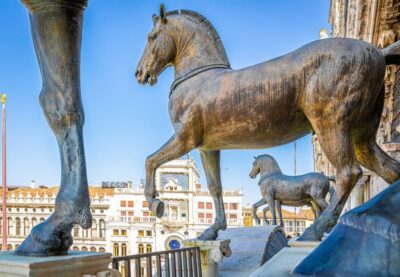
Doge’s Palace & St. Mark’s Basilica with Terrace Access Tour
Read our review →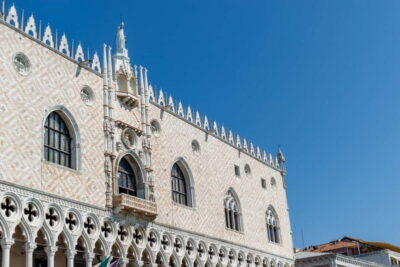
Doge’s Palace, St Mark’s Basilica, and Pala d’Oro
Read our review →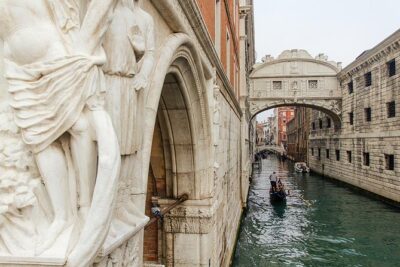
Legendary Venice: Doge’s Palace, St Mark’s & VIP Terrace Access
Read our review →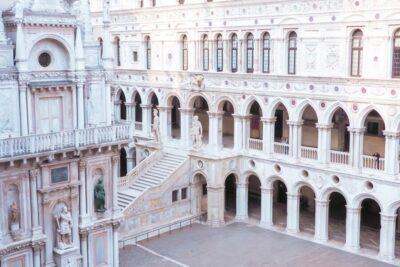
St. Mark’s Basilica & Doge’s Palace Tour with Ticket
Read our review →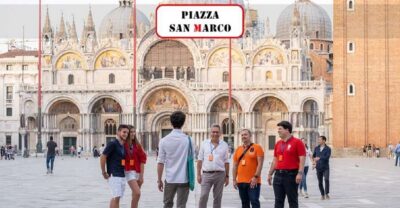
St Mark’s Basilica, Doge Palace, & Bell Tower Option
Read our review →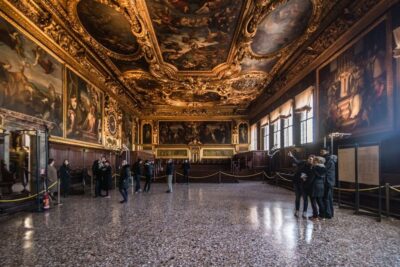
Doge’s Palace, Bridge of Sighs & Prisons Guided Tour
Read our review →Browse the lists this tour appears in