
Reviewed · VENICE
Learn to Row in the Venice Canals
Venice looks different from the water when you are the one handling the oar. This small-group outing teaches you Venetian-style rowing in a traditional boat, then takes you through the quieter canals of Cannaregio, far from the gondola traffic near St. Mark’s Square.
I like the hands-on lesson and the chance to see a residential side of Venice that most day visitors miss. I also like the connection to local boat culture. Guides such as Stefano, Nicola, Emiliano, and Frederico explain how the boats work and why this old craft is worth preserving.
The main drawback is the meeting point. Cantiere Nautico Navale Casaril is not in Venice’s central sightseeing zone, so you need to allow time to find it. The outing also depends on good weather, and the rowing lesson may feel brief if you hoped for a full-length boat tour.
Key points before you book
- Traditional rowing, not a passenger gondola ride: You learn how to handle the oar and forcola, the distinctive support used by Venetian boatmen.
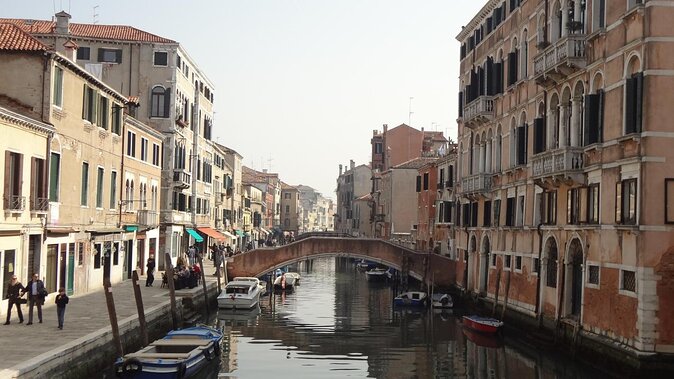
- Quiet Cannaregio waterways: The route reaches the Madonna dell’Orto, Jewish Ghetto, Fondamenta dei Ormesini, Campo dei Mori, and Tintoretto’s former home.
- Small group size: A maximum of six participants makes the instruction more personal and gives each person a fair chance to row.
- A local-led activity: The guides are Venetian or closely connected to the city’s boating traditions, and the focus is on keeping that skill alive.
- Family-friendly effort level: Children and adults from about age 9 upward have enjoyed it, and the rowing is described as active but not strenuous.
- Plan your arrival carefully: The experience begins and ends at Cantiere Nautico Navale Casaril in Cannaregio, not beside the main San Marco sights.
Why rowing gives you a better look at Venice
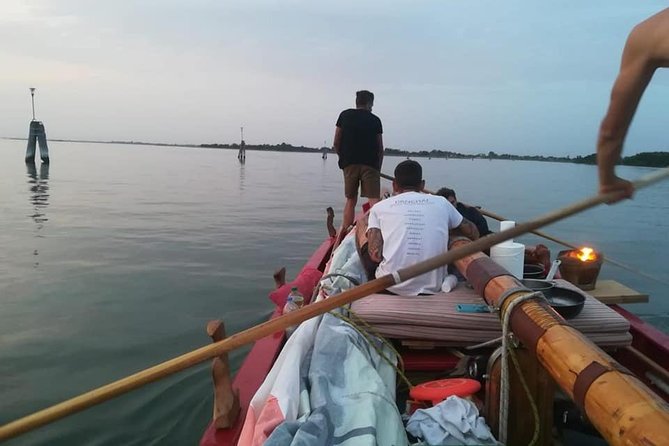
A standard gondola ride lets you admire Venice from a cushioned seat. This activity asks you to do a little work, which changes the way you see the city. You learn how a narrow boat turns, how the oar works, and how a boatman reads the canals.
That effort is modest. The activity is not presented as a workout, and families with children and young adults have taken part without trouble. Still, rowing takes some coordination. You may find the first few strokes awkward, especially since Venetian rowing is done from a standing position and uses equipment that differs from ordinary rowing.
The reward is a stronger sense of place. You are not simply being carried past old buildings. You are trying a traditional skill that once formed part of daily transportation in Venice. The guides also explain the boats and the group’s work to restore and preserve them.
The outing lasts about 90 minutes. That includes the introduction, boat instruction, conversation about Venetian boats, and time on the canals. The group is capped at six, an important detail for an activity where everyone may want a turn at the oar.
Other Venice outings people book alongside this one:
- Venice: Doge’s Palace Reserved Entry Ticket
★ 4.6 · 42,716 reviews - Venice: Grand Canal Gondola Ride with App Commentary
★ 4.1 · 18,908 reviews - Boat Trip: Glimpse of Murano, Torcello & Burano Islands
★ 4.3 · 15,699 reviews
Starting at Cantiere Nautico Navale Casaril
The meeting point is Cantiere Nautico Navale Casaril, at 3009/H, Calle del Magazzen, 30121 Venezia. This is in Cannaregio, a district with a more local feel than the area around the Rialto Bridge and St. Mark’s Square.
I would not leave this arrival until the last minute. The activity ends at the same place, but you still need to locate the boatyard before your scheduled start. The experience is offered in English, and confirmation is sent within 48 hours of booking, subject to availability.
Because this is a small operation, a late arrival can matter more than it would on a large sightseeing cruise. Give yourself extra time to reach the address and get oriented. If you are coming from outside Venice for the day, also check the city’s access-fee rules. On certain dates, day visitors may need to pay a €5 fee, with exemptions and dates listed on the official Venice access-fee website.
The introduction to Venetian boats and rowing
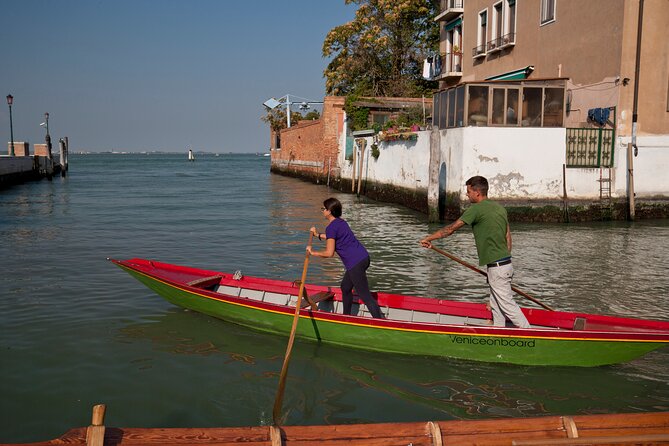
Before setting off, the guide gives a short explanation of traditional Venetian boats and the organization’s recovery work. This opening is more than a basic safety talk. It explains why these boats have their shape, how they were used, and why rowing remains part of Venice’s identity.
The lesson centers on Venetian technique rather than ordinary two-sided rowing. The guide demonstrates the oar, the standing position, and the forcola, the carved oarlock that allows a boatman to steer and propel the boat with one oar.
Several guides receive especially warm praise for their teaching. Stefano is described as passionate about gondoliering and Venetian waterways. Nicola is noted for his boat history and workshop approach. Emiliano is praised for clear instruction and his patience with families. Frederico is described as an especially friendly teacher who explains the forcola and the history of the trade.
The guide handles the instruction, but you are not left as a passive passenger. You get the chance to try the technique yourself. That is the part that makes this different from simply booking a gondola ride.
Madonna dell’Orto and the northern Cannaregio canals
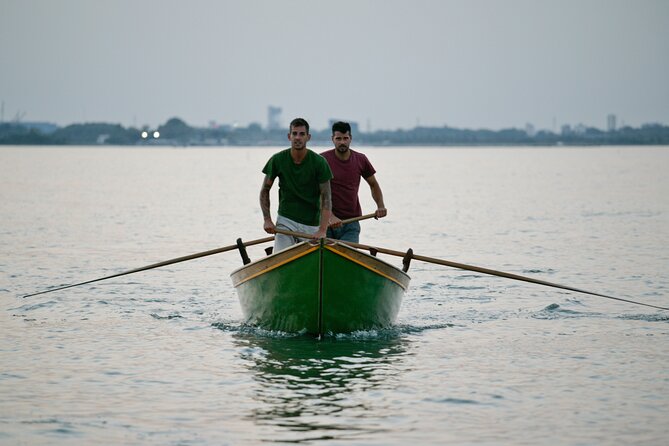
The route includes Chiesa della Madonna dell’Orto, one of Cannaregio’s atmospheric landmarks. From the water, you see the church area as part of the canal network rather than as an isolated stop on a walking map.
This section helps explain the appeal of the outing. Cannaregio has narrow waterways, waterfront paths, old buildings, and quieter corners where the pace feels slower. You are still in central Venice, but the experience is removed from the main stream of sightseeing traffic.
Do not expect a formal church tour or a long stop on land. The activity is about seeing these places from the boat while learning to row. If you want detailed art commentary inside the church, you will need to visit separately.
A different way to spend a morning on the water:
- Venice: Grand Canal by Gondola with Live Commentary
★ 4.1 · 13,681 reviews - Venice: La Fenice Opera House Entry Ticket with Audio Guide
★ 4.6 · 11,742 reviews - Doge’s Palace & St. Mark’s Basilica with Terrace Access Tour
★ 4.7 · 10,697 reviews - Venice: Burano, Torcello & Murano Boat Tour w/Glassblowing
★ 4.4 · 10,245 reviews
The Jewish Ghetto from the water
The route continues toward the Ghetto Ebraico, Venice’s historic Jewish Ghetto. Seeing this district from the canals gives you a useful sense of how waterways shaped movement through the city.
The guide may discuss the area as part of the broader story of Venetian transport and boat use. The exact amount of city history depends on the guide and on your questions. One point worth knowing is that the central purpose is rowing instruction, not a full historical tour of Cannaregio.
If you enjoy asking questions, this is a good part of the outing to speak up. Guides such as Stefano and Frederico have been praised for answering questions about Venice, its boats, and the way the waterways function. If you prefer a guide who delivers a steady stream of facts without prompting, you may find the commentary less detailed than on a dedicated walking tour.
Fondamenta dei Ormesini and Campo dei Mori
Fondamenta dei Ormesini brings you along one of Cannaregio’s attractive canal-side foundations. The word fondamenta refers to a waterfront street or walkway, and these paths show how daily life in Venice still works beside the water.
From the boat, you get a different angle on doors, bridges, walls, and mooring points. The view is close and human in scale. You are not looking across a huge body of water, but moving through the narrow channels that helped make Venice possible.
The route also includes Campo dei Mori, a small square tied to the city’s stories and buildings. As with the other locations, the activity does not promise a long land visit. Think of these places as landmarks you pass while learning the boat, with the guide adding context along the way.
The quiet pace is a major advantage here. The boat allows you to leave the packed pedestrian routes without giving up the character of Venice. You may hear ordinary canal sounds and see a side of the city that is easy to miss when walking from one major sight to another.
The house of Tintoretto
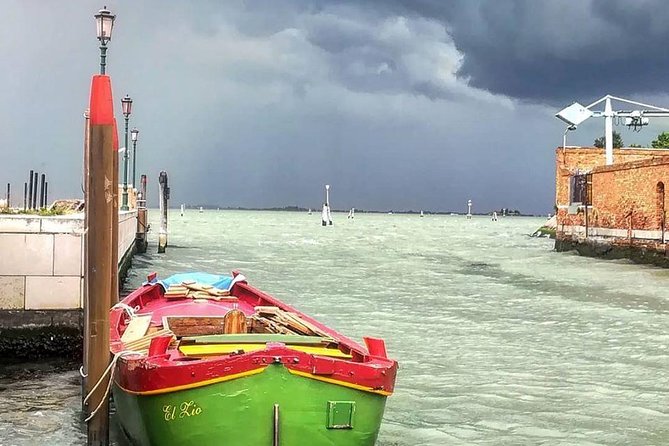
The route passes Casa del Tintoretto, associated with the Venetian painter Tintoretto. This is a memorable landmark because it connects the canals to the people who lived and worked beside them.
Again, this is a view from the water, not an interior museum visit. The value comes from seeing the building in its neighborhood and understanding that Venice’s artists, boatmen, merchants, and residents all depended on the same tight network of canals.
For art lovers, this stop adds extra interest. For everyone else, it is one more reason the route feels more specific than a generic boat outing. You are not simply circling the most photographed buildings. You are following a local district route with several layers of Venetian life.
How much rowing will you actually do?
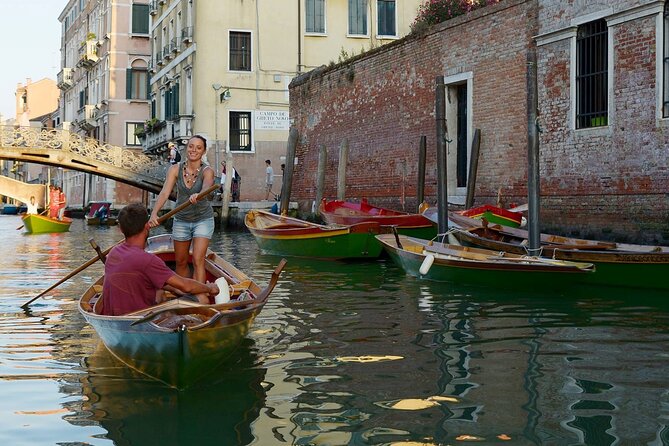
The practical answer is: enough to learn the basics and get a meaningful turn at the oar, but not necessarily enough to become a gondolier. The experience lasts about an hour and a half, and that time includes the introductory explanation and instruction.
Most participants describe the rowing as easier physically than it first appears, though the technique is more complicated than it looks. You will need to listen carefully and follow the instructor’s corrections. The guide controls the outing and helps manage the boat as you practice.
A family may need to share turns. With a maximum of six people, the group is small, but not private for every booking. If your party fills the boat, each person will have less individual rowing time than a couple might.
The activity suits people who want a calm, active experience. It is especially good for families with older children and teenagers, couples looking for something beyond a standard gondola ride, and repeat visitors who have already seen the main sights. Service animals are allowed, and most people can participate.
Is €95.54 a fair price?
At €95.54 per person, this is not a cheap way to spend an hour and a half in Venice. You should book it for the instruction and local focus, not simply for boat transport.
The value improves when you compare the experience with a conventional gondola ride. Here, you get hands-on time, a small group, an English-speaking guide, an explanation of traditional boats, and a route through Cannaregio. You are also supporting an effort to keep Venetian boating traditions and boat restoration alive.
The price is less attractive if you only want to sit back and photograph the canals. A classic gondola ride may suit you better if you want a relaxed passenger experience with no learning curve. This outing is for someone who wants to take part.
The high rating, 4.9 out of 5 from 103 ratings, and 98 percent recommendation rate suggest that the format works well for most people who choose it. The strongest praise centers on the guides, the peaceful canals, the chance to row, and the feeling of seeing an authentic local side of Venice.
Who will enjoy this most?
I would recommend this activity to:
- Families with children and teenagers who want an outing everyone can share
- Couples seeking a quieter alternative to a standard gondola ride
- Repeat visitors who have already covered St. Mark’s Square and the Rialto area
- People interested in traditional crafts, boats, and local history
- Anyone who prefers active participation over simply being carried through the city
- Visitors who want a small group rather than a large cruise
It may not suit you if you have very limited time and are staying far from Cannaregio. The meeting point and 90-minute schedule require planning. It may also disappoint anyone expecting a complete Venice history tour or a long, uninterrupted rowing session.
The activity is offered in English, and most participants can take part. Since it requires good weather, rain or poor conditions can affect the schedule. The operator may offer another date or a full refund if weather cancels the outing.
Booking, cancellations, and useful planning advice
Book ahead if your dates are fixed. This activity is booked an average of 60 days in advance, which suggests that small-group spaces can fill before a Venice visit.
You can cancel for a full refund up to 24 hours before the start time. Changes or cancellations inside that 24-hour window are not accepted for a refund. The same local-time cutoff applies to the cancellation policy.
The activity also requires a minimum number of participants. If that minimum is not reached, you are offered another date or experience, or a full refund.
I would wear comfortable clothing that allows easy movement and bring protection from sun or light rain. The experience can operate in rainy conditions if you choose to continue, but poor weather may lead to cancellation. Check the forecast and keep a little flexibility in your schedule.
Should you book Learn to Row in the Venice Canals?
Book it if you want to understand Venice through its waterways rather than simply photograph them. The best parts are the small group, patient instruction, peaceful Cannaregio route, and the chance to try a traditional Venetian skill yourself.
Skip it if your priority is a short, effortless gondola ride near the main sights, or if getting to the northern Cannaregio meeting point would create a problem. For most active families, curious couples, and repeat visitors, the €95.54 cost buys more than a boat ride. It gives you a story to remember, a skill to try, and a better sense of how Venice works from the water.
FAQ
How long does the rowing experience last?
The activity lasts approximately 1 hour and 30 minutes.
Where does the activity begin?
It begins at Cantiere Nautico Navale Casaril S.r.l., 3009/H, Calle del Magazzen, 30121 Venezia, Italy.
Where does the activity end?
It ends back at the same meeting point.
Is the experience offered in English?
Yes. The experience is offered in English.
How many people can join the activity?
The group has a maximum of six participants.
What places does the route include?
The route includes Chiesa della Madonna dell’Orto, the Jewish Ghetto, Fondamenta dei Ormesini, Campo dei Mori, and Casa del Tintoretto.
Do I get to row the boat myself?
Yes. The activity includes instruction in Venetian rowing and time for participants to try the oar.
Is this activity suitable for children?
Most participants can take part, and the experience has been enjoyed by children and families, including children aged 9 and older.
Are service animals allowed?
Yes. Service animals are allowed.
What happens if bad weather cancels the activity?
If the activity is canceled because of poor weather, you are offered a different date or a full refund.
Recently added around Venice
- Your evening in Venice – Legends&Ghosts&Aperitif★ 4.7 · 79 reviews
- Walking Tour to Uncover the Hidden Venice★ 4.4 · 34 reviews
- Wine Tasting in Venice★ 4.6 · 42 reviews
- Venice: City Tour & Skip the Line for St. Mark’s Basilica★ 4.1 · 84 reviews
- Venice: Walking Tour & Gondola Ride★ 4.4 · 22 reviews
- Venice: Watercolor Painting Class at the Prisons Palace★ 4.7 · 27 reviews
- VIRTUAL MUSEUM: Creature di Gomma – Venice Vintage Toys★ 4.7 · 3 reviews
- Venice Walking Tour from St. Mark’s to Rialto Bridge★ 4.5 · 12 reviews