
Reviewed · VENICE
Palladio. A wonderful live tale through time&soul, from Ve/Pd/Vr
Palladio’s buildings turn a day trip from Venice into a trip through ideas, not just pretty façades. You move from Vicenza’s squares and palaces to the Teatro Olimpico, then out to La Rotonda, the villa that made Palladian design famous around the world. The private format lets the guide shape the day around your interests.
I like the comfortable private transport and the rare access at Palazzo Valmarana Braga, where you receive a private welcome and finish with an aperitif in the loggia. I also like the choice at the end of the Vicenza visit: return to Venice quickly, or take the next train an hour later and enjoy a slower finish.
The main drawback is the price, $612.81 per person, plus the fact that some key interiors are not included. La Rotonda and Villa Foscari require extra payment, and the program packs a lot into roughly eight hours.
Key points at a glance
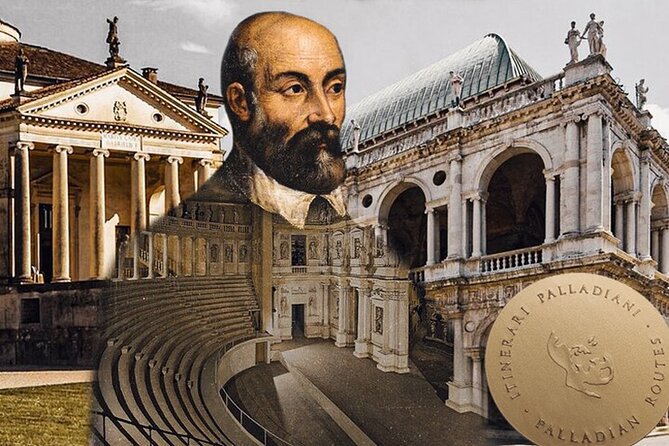
- Palladio’s Vicenza in one private day: See major buildings, streets, squares, and museums without piecing together trains and taxis yourself.
- The Teatro Olimpico is the dramatic centerpiece: Its covered stage and ancient Greek design make it one of Vicenza’s essential sights.
- A private reception and aperitif add access: Palazzo Valmarana Braga provides both a formal introduction and a memorable final toast.
- La Rotonda needs careful planning: Entry is excluded, opening dates are limited, and Monday visits are not available.
- The itinerary is flexible at key moments: You may use an e-bike for the ride to La Rotonda and choose a faster or slower return from Vicenza.
- This is best for architecture lovers: The tour gives far more attention to Palladio than a standard Venice day trip.
Why Palladio makes a good day beyond Venice
Venice can fill several days on its own, but Palladio offers a useful change of pace. His work is not confined to one church or one palace. In Vicenza, his designs shape the streets, public squares, museums, and theaters. The result is a city where architecture feels part of daily life rather than a collection of isolated sights.
Palladio looked to ancient Greece and Rome, then recast those forms for Renaissance patrons in the Veneto. Columns, pediments, symmetry, and carefully ordered rooms became a new language for villas and city buildings. That language later traveled far beyond Italy, including to Washington and other parts of the world.
You do not need an architecture degree to enjoy this day. The guide’s job is to show you how the buildings relate to one another and to explain the people who paid for them. One of the strongest parts of the experience is the focus on the nobles and patrons who helped shape Palladio’s career.
The private setup matters here. A large group would make it harder to pause in a small museum room, ask questions about a façade, or adjust the pace when a particular building catches your eye.
Other Venice outings people book alongside this one:
- Venice: Doge’s Palace Reserved Entry Ticket
★ 4.6 · 42,716 reviews - Venice: Grand Canal Gondola Ride with App Commentary
★ 4.1 · 18,908 reviews - Boat Trip: Glimpse of Murano, Torcello & Burano Islands
★ 4.3 · 15,699 reviews
Villa Chiericati opens the story from outside
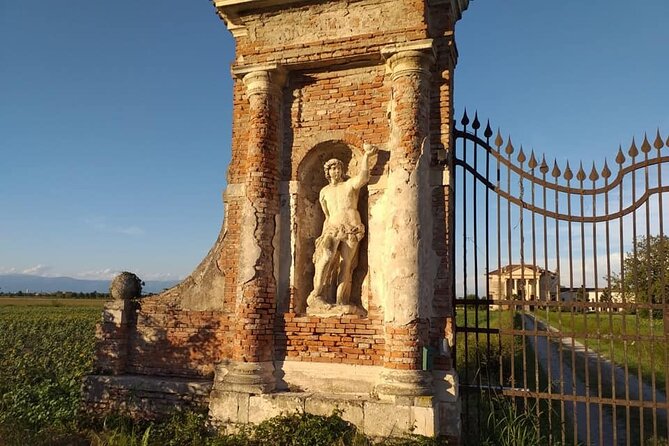
The first stop is Villa Chiericati, seen from outside. You spend only about five minutes here, so this is not a full villa visit. Think of it as a doorway into the larger story.
The villa is presented as a romantic ruin and as a symbolic starting point. The idea is to connect Palladio’s work with the ancient world, then follow those ideas forward through European and American architecture. It is a thoughtful opening, but the short stop may feel slight if you expected to enter the building.
Admission is not included, and the program does not promise interior access. If your main goal is to see Palladian interiors, save your anticipation for the Basilica Palladiana, Palazzo Chiericati, the Teatro Olimpico, and the Palladio Museum.
Palazzo Valmarana Braga gives the day a private welcome
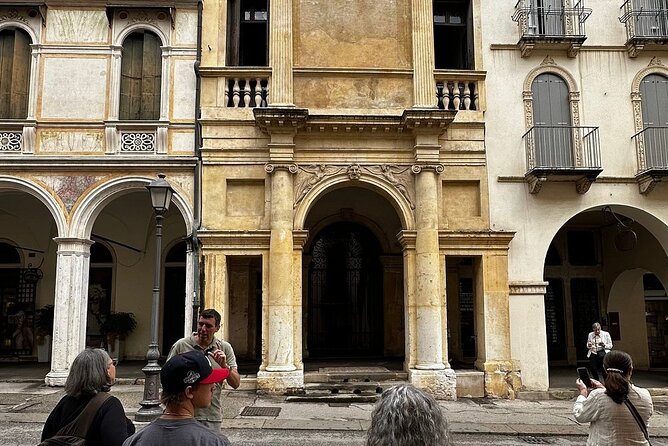
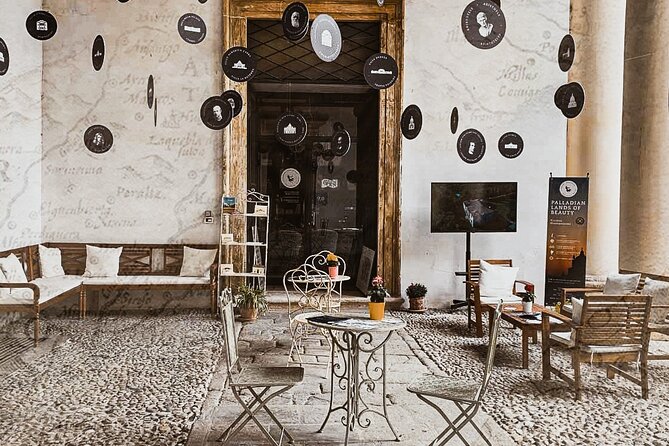
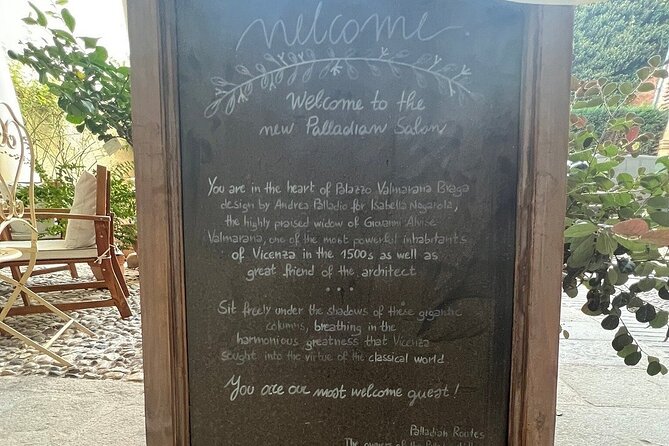
The visit to Palazzo Valmarana Braga is one of the more unusual parts of the day. You receive a private welcome inside one of Vicenza’s UNESCO-listed Palladian buildings. The palace also serves as the headquarters of a business network connected with the owners of Palladio’s villas.
You have about 25 minutes to hear how the UNESCO sites fit together and to look at the building itself. Pay attention to the façade, which is described as one of Palladio’s most remarkable palace fronts. Inside, the Renaissance fresco on the ceiling of the count’s study adds another layer to the visit.
The room’s cosmology and the reconstruction connected with the Empress of Austria help place the palace in its social setting. This is not only a lesson in architectural form. It is also a look at how elite families used grand spaces to express status, learning, and political connection.
A visit like this can be more rewarding than simply photographing a palace from the street. It also gives the guide a natural place to explain how Palladian design spread beyond Vicenza and became a model in other countries.
Piazza dei Signori and the Basilica Palladiana
Piazza dei Signori is Vicenza’s great public room. The 20-minute stop gives you time to look across the square, understand its role in city life, and take in the patrician buildings around it.
The square works as a pause between indoor visits. It also helps you see Palladio’s buildings in context. This is not a museum display arranged for tourists. It is a functioning civic center, surrounded by the architecture that gives Vicenza its particular character.
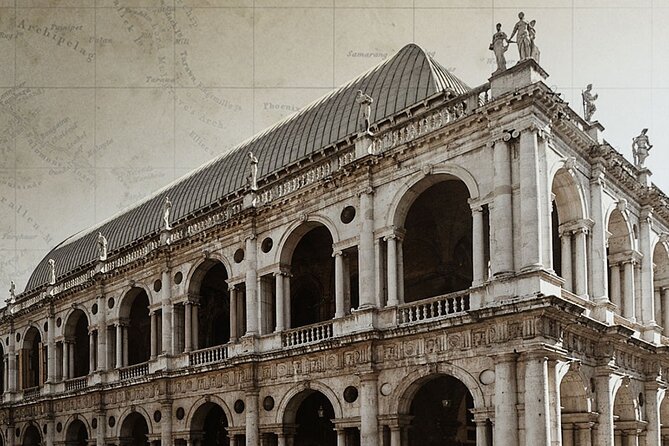
Next comes the Basilica Palladiana, with admission included. The building is one of Vicenza’s defining sights, and the visit includes a climb to the terraces for a view over Piazza dei Signori. That elevated viewpoint is valuable because it lets you read the square as a whole instead of examining one façade at a time.
Back below, the arcades hold the Jewelry Museum. Its focus on Vicenza’s goldsmith tradition adds a local craft angle to a day otherwise dominated by architecture. The museum is described as one of a kind, but the schedule allows only about 30 minutes, so you will need to keep moving.
The Basilica is a good example of the tour’s balance. You are not only hearing about Palladio. You are seeing how his work shaped the public center of the city.
A different way to spend a morning on the water:
- Venice: Grand Canal by Gondola with Live Commentary
★ 4.1 · 13,681 reviews - Venice: La Fenice Opera House Entry Ticket with Audio Guide
★ 4.6 · 11,742 reviews - Doge’s Palace & St. Mark’s Basilica with Terrace Access Tour
★ 4.7 · 10,697 reviews - Venice: Burano, Torcello & Murano Boat Tour w/Glassblowing
★ 4.4 · 10,245 reviews
Strada Maior and the contrast between Vicenza and Venice
Strada Maior, now the city’s main street, links several of Vicenza’s Palladian buildings. Walking here gives the tour a welcome connection to ordinary city life. Historic shops and daily routines continue beneath the architecture, and the street feels less like a formal monument zone than a living urban setting.
The name honors Palladio, whose work is closely tied to Vicenza’s identity. The guide uses the street to explain why the city is sometimes presented as a small Rome, a place where ancient ideals were reshaped for the Renaissance.
There is also a visual conversation with Venice. A loggia opposite the Basilica creates a striking contrast between the two cities. Venice is present without being the subject of the day, and the connection helps explain why Vicenza’s architecture developed within the wider Venetian world.
You should expect some walking between stops. The schedule is not a slow, unstructured stroll, so comfortable shoes will help. The reward is a better sense of how the city’s buildings relate to one another.
Palazzo Chiericati introduces Palladio’s patrons
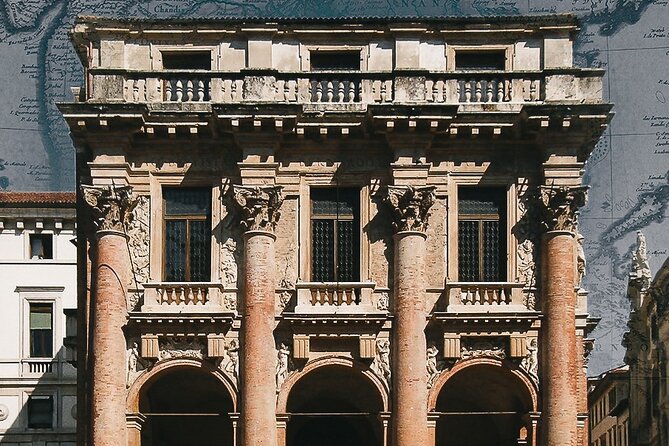
At the Museo Civico di Palazzo Chiericati, admission is included and the visit lasts about 30 minutes. The palace itself is part of the UNESCO site, with an imposing façade that once faced the river landing from Venice.
Inside, the civic museum holds Venetian works by artists including Tintoretto, Veronese, and Sansovino. The tour focuses on the main floor and, in particular, the portraits of the men who helped create the conditions for Palladio’s work.
This is an important shift in emphasis. Palladio did not design in a vacuum. Wealthy and ambitious patrons gave him commissions, challenged his ideas, and helped spread his reputation. Looking at their portraits makes the architect’s career more human and more specific.
The allotted time is short for a civic museum with a broad art collection. I would treat this as a focused Palladian visit rather than a complete museum tour. If you want to study Venetian painting at length, you will need another visit.
The Teatro Olimpico is the day’s great interior
The Teatro Olimpico is the emotional high point of the Vicenza portion. Entry is included, and the visit takes about 35 minutes. This is the first covered theater in history, and it embodies Palladio’s interest in the ancient Greek ideal.
The theater is striking because the design is both architectural and theatrical. The setting, proportions, and stage create an atmosphere that feels far removed from a normal modern performance hall. A light and sound presentation helps explain the building and gives the visit a sense of occasion.
Palladio began the project, and the theater belongs to the circle of patrons and artists who pursued a revival of the ancient world. You can see why the building remains essential even for people who are not specialist architecture fans. It is a complete experience, not just a façade or a collection of measurements.
Thirty-five minutes is enough for the main presentation, but not for an unhurried study of every detail. Still, this is one place where the tour’s compact schedule works well. The guide gives you the context, then the theater does much of the talking.
Afterward, you may choose a quicker return to Venice or wait an extra hour for a slower finish. That choice can make a real difference. If you are tired, take the faster option. If the day has sparked your interest in Vicenza, the later departure gives you more breathing room.
Contrà Porti layers several centuries into one street
Contrà Porti is presented as Vicenza’s most beautiful street, and it earns its place in the program through variety. Buildings from different periods and cultural currents line the route, giving you a quick lesson in how the city changed over time.
The street also carries a larger historical theme. Vicenza sits at a meeting point between the Renaissance world to the south and ideas arriving from northern Europe during the Reformation. The tour uses this setting to connect architecture with religious and political change.
The stop lasts about 15 minutes and is free. It is brief, but that is enough to read the façades and understand why a street can be as useful as a museum when you are studying a city.
The Palladio Museum turns buildings into models
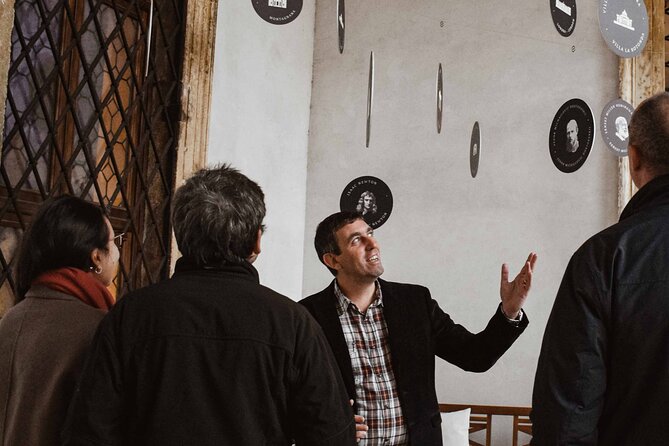
The Palladio Museum gives you a more analytical look at the architect’s work. Entry is included, and the visit lasts about 40 minutes. Wooden models of Palladian villas make it easier to understand plans, proportions, repeated motifs, and the way buildings were adapted to their sites.
For many people, this will be the point when the day’s earlier stops click into place. You have already seen palaces, public buildings, and a theater. Here, the models help you compare them and see the wider system behind them.
The museum can also be opened for the group outside its standard public hours. That is a useful benefit, especially when the timing of the rest of the day does not match normal opening schedules.
I would not skip this stop simply because you have already seen several buildings. The museum gives you a clear framework for understanding Palladio’s villas and explains why his influence lasted so long.
The private aperitif in the loggia
Back at Palazzo Valmarana Braga, the tour ends its Vicenza section with a private aperitif in the Palladians’ loggia. Alcoholic drinks are included, and the setting is more distinctive than a standard café stop.
The columns and references to ancient virtues fit the theme of the day. This is also a chance to slow down after several timed visits and talk through what you have seen.
The aperitif is a real part of the value, not just a free drink added to a package. You are paying for a private setting tied directly to the buildings and the people at the center of the tour. If you prefer a fast sightseeing day with no ceremonial touches, this may feel less important. If you enjoy architecture presented through atmosphere and conversation, it is a strong finish.
La Rotonda and Villa Foscari require extra planning
Villa Capra, better known as La Rotonda, is Palladio’s most famous villa. The tour stops there for about 20 minutes, but admission is not included. The villa is also subject to strict opening dates: entry is possible from March 11 through December 10, except Mondays.
From Tuesday through Thursday, the visit can be exclusive because the villa is normally closed to the public on those days. That is a major advantage if your date lines up, but you must confirm the arrangement before booking.
You may also reach La Rotonda by e-bike. The bikes are available at no extra charge for the ride, and the option adds a pleasant change from riding in the van. The tour does not promise that every person must cycle, so ask the provider about the practical plan for your group.
Villa Foscari is another outside stop, with entry excluded. Known as La Malcontenta, it sits beside the Brenta Canal and marks an important stage in Palladio’s development. Its pronaos on the main façade replaces the earlier loggia style and gives the villa the air of a princely country palace.
Entry may be possible on the villa’s opening days for an additional cost. If you choose that option, the Vicenza program is shortened in proportion. You should decide which matters more to you: extra interior access at Villa Foscari or more time in Vicenza.
Is $612.81 a fair price?
At $612.81 per person, this is not a budget day trip. The price makes more sense for a private group that values door-to-door transport, a dedicated guide, included admissions at several major sites, a private reception, an aperitif, and the chance to adjust the pace.
You also avoid the work of arranging transport between Venice, Vicenza, La Rotonda, and possibly Villa Foscari. The van comfort is particularly useful because the day involves several stops and a return journey.
The value drops if you only want a quick look at Vicenza’s main square and one or two buildings. You could likely spend less by taking public transport and visiting independently, but you would lose the private access, guiding, and carefully linked story.
Lunch is not included. Budget time and money for that yourself, although the exact lunch arrangement is not specified. The tour lasts about eight hours, so this is a full day rather than a casual half-day outing.
Pickup is offered, and a water taxi from your Venice hotel may be arranged for an extra cost if requested at least three days ahead. This can be useful, but it increases the total price.
Who should book this Palladian day?
I would choose this tour if you care about architecture, art, design, or the history of ideas. It also suits couples, families, or small private groups who want a guide to explain the connections rather than simply point out buildings.
The experience is especially good for someone who has already seen Venice’s major sights and wants a different side of the Veneto. It gives you public monuments, private palace access, museum collections, a theater, and villa architecture in one carefully linked day.
I would hesitate if you dislike a structured schedule, do not want to pay extra for optional villa entries, or prefer to spend a whole day in one museum. The program moves quickly, and several stops last only 15 to 30 minutes.
The experience is offered in English and is described as suitable for most participants. It is a private activity, so only your group takes part. Confirm the exact pickup and return details before booking, since the activity finishes in a different location from its starting point.
Should you book it?
Book this if you want Palladio to be the main subject of your day, not a brief footnote to Venice. The Teatro Olimpico, Basilica Palladiana, Palladio Museum, private palace access, and La Rotonda create a strong sequence, and the guide’s focus on patrons makes the story more than a parade of buildings.
Skip it if the $612.81 price feels too high or if you want full entry to every villa without extra charges. Also check the date carefully, especially for La Rotonda and Villa Foscari. For the right person, this is a polished, private way to see why Palladio’s ideas traveled far beyond Vicenza.
FAQ
How long does the Palladio tour last?
The experience lasts approximately eight hours.
Is transportation included?
Yes. Private transportation is included. A water taxi transfer from your Venice hotel may also be arranged for an extra cost if requested at least three days before the tour.
Is the tour private?
Yes. Only your group participates in this private activity.
Is lunch included?
No. Lunch is not included.
Is admission to La Rotonda included?
No. Admission to Villa La Rotonda is excluded and requires an additional payment. Entry is available from March 11 through December 10, except Mondays.
Can I enter Villa Foscari?
Possible entry to Villa Foscari can be arranged on the villa’s opening days for an extra cost. Choosing this option reduces the time spent in Vicenza.
What is included in the price?
The price includes private transportation, listed entrance fees, the guided Palladian story, possible free use of an e-bike for the ride to La Rotonda, an alcoholic aperitif, and a small Palladian gift.
Recently added around Venice
- Your evening in Venice – Legends&Ghosts&Aperitif★ 4.7 · 79 reviews
- Venice: City Tour & Skip the Line for St. Mark’s Basilica★ 4.1 · 84 reviews
- Walking Tour to Uncover the Hidden Venice★ 4.4 · 34 reviews
- Wine Tasting in Venice★ 4.6 · 42 reviews
- VIRTUAL MUSEUM: Creature di Gomma – Venice Vintage Toys★ 4.7 · 3 reviews
- Venice: Walking Tour & Gondola Ride★ 4.4 · 22 reviews
- Venice: Watercolor Painting Class at the Prisons Palace★ 4.7 · 27 reviews
- Venice Walking Tour from St. Mark’s to Rialto Bridge★ 4.5 · 12 reviews