
Reviewed · VENETIAN MASK AND CARNIVAL WORKSHOPS
Secrets of Venice Carnival and Life of Casanova Tour
Casanova is the key to this Venice Carnival walking tour, but the real pleasure is seeing the city through its private, pleasure-seeking past. You follow narrow alleys near his childhood home, pass the house of poet Giorgio Baffo, and hear how masks let Venetians hide their identity. I especially like the mix of local streets and colorful Carnival customs, plus the final cappuccino and frittella, a pastry made during Carnival season.
I also like the guide-led storytelling. Sergio, known as The Swiss, has earned praise for his humor and his ability to handle a large group, while earlier tours with Lorenzo and Dennis were also warmly received. The main concern is group size and street noise. Rain, umbrellas, and crowded lanes can make the guide hard to hear, and some people found the longer stops tiring.
Key points to know before booking
- Casanova’s San Samuele: Walk past places linked with Casanova, Giorgio Baffo, and Venice’s old social world.
- Carnival costumes and masks: Learn why masks were worn and how traditional Venetian masks are made.
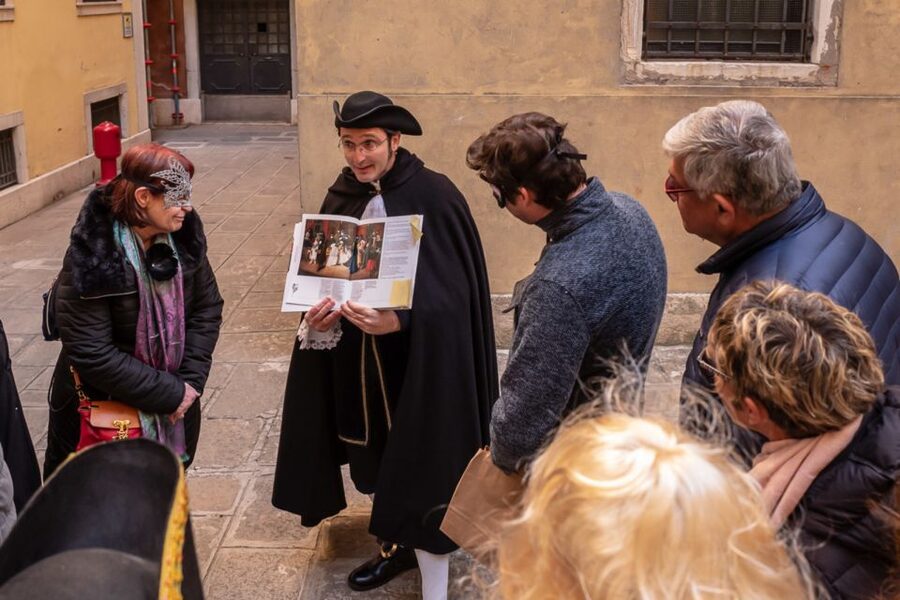
- A guide in costume: Your English-speaking guide sets the mood from the first meeting at La Fenice.
- The Ridotto casino: Hear about Venice’s first casino and Casanova’s meetings with the aristocracy.
- A seasonal finish: End with a hot cappuccino and a Venetian frittella at Le Café Venezia.
- Best for history fans: The tour favors stories, atmosphere, and walking over grand indoor sights.
Why Casanova is a clever way to see Venice
Venice can feel like a city of famous façades and packed routes between St. Mark’s Square and the Rialto Bridge. This tour takes a different path. Casanova gives the guide a reason to connect architecture, social customs, romance, gambling, politics, and Carnival.
You hear about Casanova as a lover, adventurer, Freemason, and servant of the establishment. That mix matters because he was not simply a romantic character from an old story. His life opens a window onto the complicated Venetian society around him, where aristocrats, courtesans, poets, gamblers, and masked partygoers crossed paths.
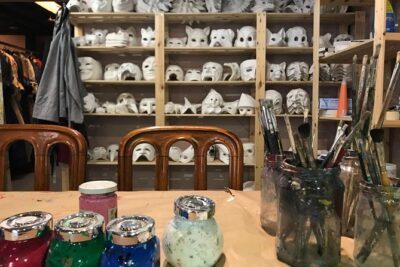
The tone is playful, but the subject is not limited to gossip. You learn how Carnival once allowed people to disguise their identity and move across social boundaries. The mask could offer privacy, mischief, or freedom from normal rules. Your guide also explains how traditional masks are made, giving the costume a craft element rather than treating it as mere decoration.
This is a good choice if you want context for the costumes you see around Venice during Carnival. The flamboyant outfits are not random modern dress-up. They draw on styles associated with earlier centuries, including elegant clothing worn to grand balls in private palaces.
More Casanova tours in Venice:
- Venice: Opera Concert at Casanova Prisons in St. Mark Square
★ 4.5 · 347 reviews - Venice: Carnival Mask Decoration Class at Casanova Prisons
★ 4.5 · 154 reviews - Carnival Mask Decoration Class at Casanova’s Prisons
★ 4.0 · 26 reviews
Meeting the guide at Teatro La Fenice
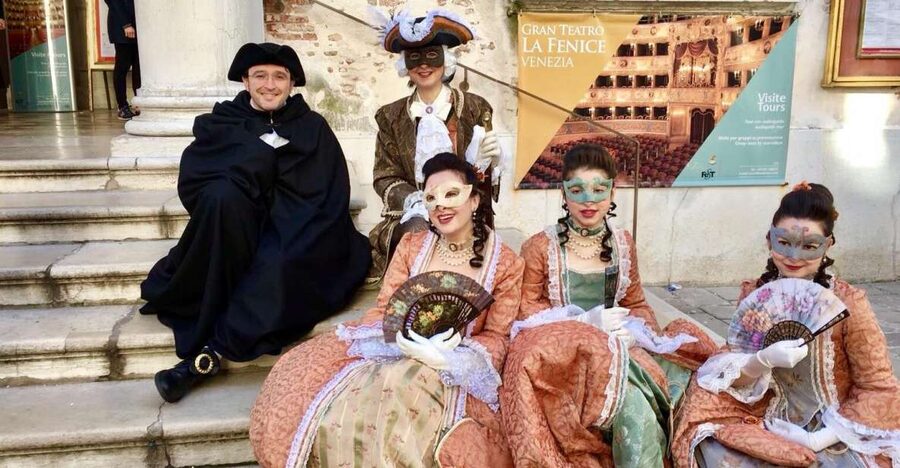
The tour begins in Campo della Fenice, in front of Teatro La Fenice. Look for the guide holding a sign with the tour name. The guide wears a Carnival costume, which should make the meeting point easier to spot and gets the theme going immediately.
The meeting point is close to St. Mark’s Square, but Venice directions can be confusing if you rely only on a map. From the square, pass beneath the arches near the Correr Museum, take the Salizada San Moisè, cross the bridge in front of Hotel Bauer, and continue onto Calle Larga XXII Marzo. Take the second right onto Calle della Vesta, cross the small bridge, and continue about 50 yards to the well in Campo della Fenice.
Allow extra time. Venice’s narrow lanes and bridges can turn a short distance into a slow walk, especially if you are stopping to check signs or carrying a bag. Oversize luggage is not allowed, so arrive with only what you can manage comfortably.
Teatro La Fenice is an appropriate starting point. It connects the tour to Venice’s love of theater, performance, masks, and spectacle. You do not receive a full theater visit as part of this experience, so book it for the streets and stories, not for an opera-house tour.
Narrow alleys and the San Samuele neighborhood
From La Fenice, the route moves through the San Samuele area, where Casanova grew up. This is one of the strongest parts of the experience because the setting is less formal than Venice’s grand squares. Narrow calle lead you through the kind of compact urban space where neighbors, lovers, merchants, and partygoers once crossed paths.
The guide points out Casanova’s house and the home of Giorgio Baffo, the poet who introduced the young Casanova to worldly pleasures. These stops give the story a physical anchor. Instead of hearing about Casanova as a distant figure, you connect him with particular corners of Venice.
Do not expect grand interiors at every stop. The value comes from the location and the explanation. The homes are part of the street scene, and the guide supplies the meaning. If you prefer major monuments with formal entrances, this can feel modest. If you enjoy seeing how a famous person fits into an ordinary neighborhood, it works well.
The walking itself is manageable for many people, but this is still a standing tour on stone streets and bridges. One person specifically found some stops too long and became tired from standing. Comfortable shoes and a willingness to pause when possible will help.
Palazzo Contarini del Bovolo and the Carnival mood
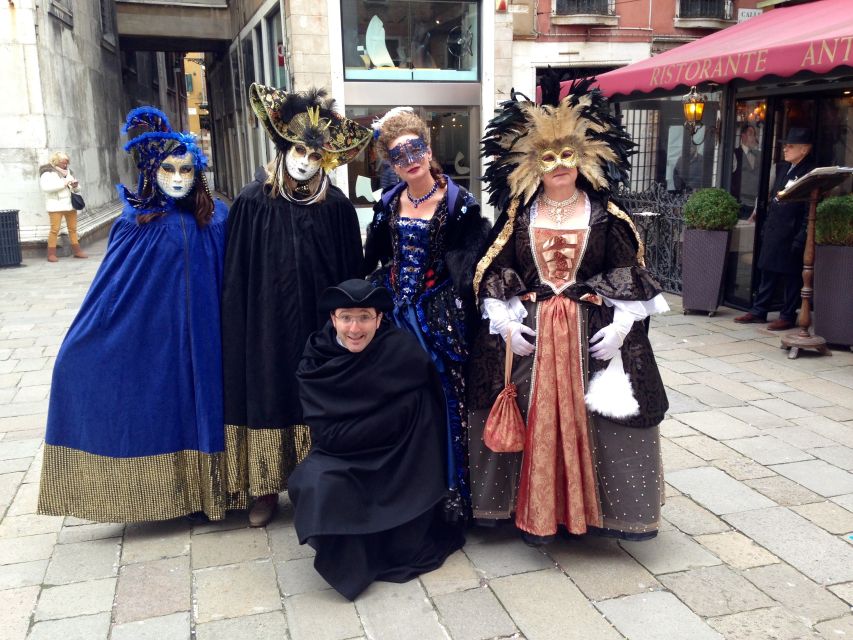
Palazzo Contarini del Bovolo is one of the listed stops. The palace is associated with one of Venice’s more unusual architectural details, and its inclusion fits the tour’s interest in theatrical settings and aristocratic life.
The focus here is not simply on taking a photograph. The guide uses the stop to explain the world of grand residences, social display, and private entertainment. During Carnival, wealthy Venetians could attend elaborate balls in palaces, wearing luxurious costumes that hid or changed their public identity.
This is where the tour’s costume theme becomes easier to understand. The clothing was part of the performance. A mask could conceal who you were, while the quality of your costume could signal status, taste, or access to an exclusive gathering.
The guide may also point out costume details that are easy to miss when you walk through Venice alone. The experience is more useful during Carnival season, when you can compare the historical clothing described on the tour with costumes appearing around the city.
More mask and Carnival workshops in Venice:
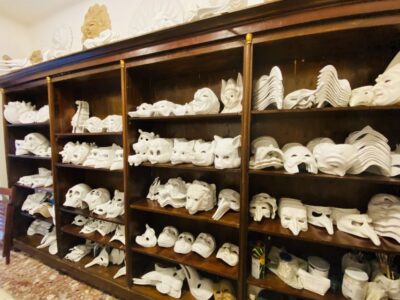
- Venice: Carnival Mask Workshop
★ 4.5 · 1,925 reviews - Venetian Carnival Mask Making Class in Venice, Italy
★ 4.5 · 525 reviews - Venice: Venetian Masks Workshop
★ 4.9 · 411 reviews - Venice: Paint your own Venetian Mask Workshop
★ 4.6 · 332 reviews
Campo Santo Stefano and Venice after dark
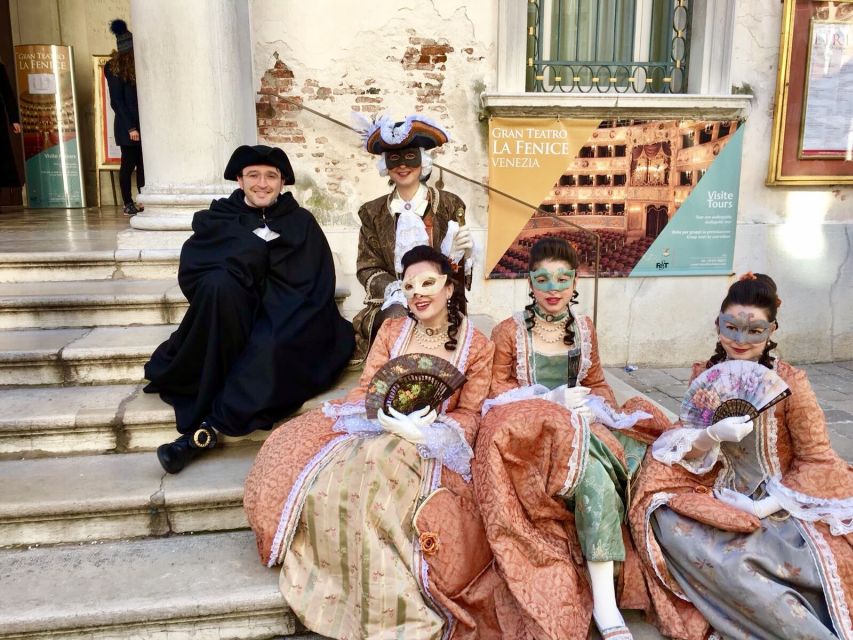
Campo Santo Stefano is another central stop. The square provides more room than the narrow calle, so it can be easier to gather the group and follow the explanation. The guide continues the story of Venice’s social life, including the role of courtesans and the pleasure-seeking culture that made the city famous.
This part may appeal most to you if you enjoy the less polished side of history. Venice was not only churches, merchants, and political ceremonies. It was also a city of flirtation, gambling, secrets, and carefully managed appearances.
The stories about courtesans are part of the larger picture, not a separate attraction. They help explain how entertainment and social connection worked in Casanova’s Venice. The tour has a sensual theme, but the material is presented as cultural history rather than as a modern nightlife experience.
A practical warning: Campo Santo Stefano and the surrounding streets can be busy. If the group is large, stay near the guide. One person found that other members wandered away, and another had trouble hearing in rainy weather when umbrellas muffled the guide’s voice. A compact group would be ideal, but you should be prepared to keep your attention on the guide.
The Ridotto, Venice’s first casino
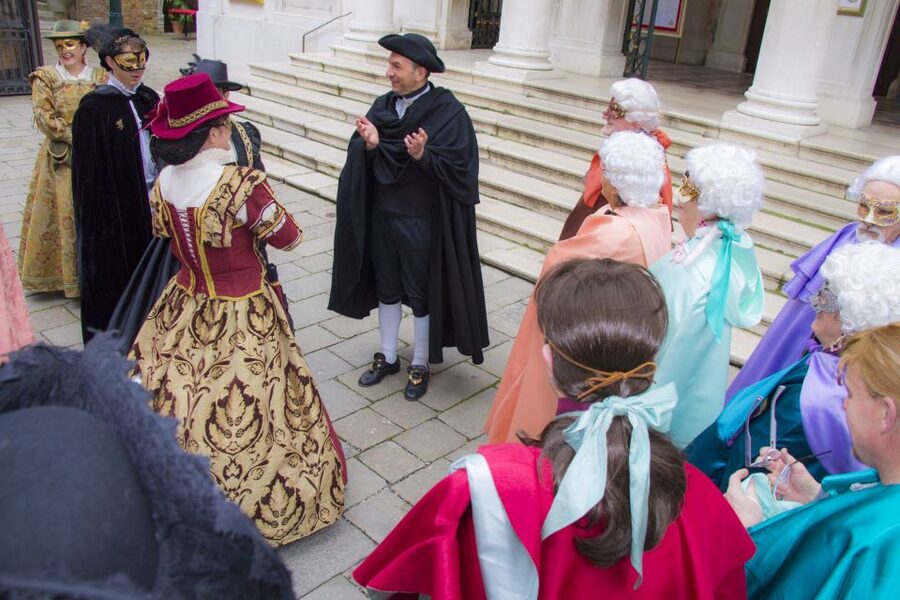
The Ridotto is one of the most interesting historical references on the route. It was the first casino in Venice, and Casanova used it as a meeting place for Venetian aristocrats.
This stop adds a useful social and financial angle to the tour. Gambling was not just an evening pastime. It created a setting where people could meet, watch one another, take risks, and negotiate social relationships. For Casanova, the casino was part of the network that connected his romantic adventures with the city’s upper class.
The Ridotto also helps explain why masks were so useful. In a city where reputation mattered, anonymity could make gambling and social encounters more daring. The guide connects these ideas to Carnival, when disguise was accepted and public behavior loosened.
You should not expect to enter a functioning casino. The point is the story and its place in Venice’s past. For visitors who enjoy social history, this may be more memorable than another view of a familiar church.
How the mask tradition fits the tour
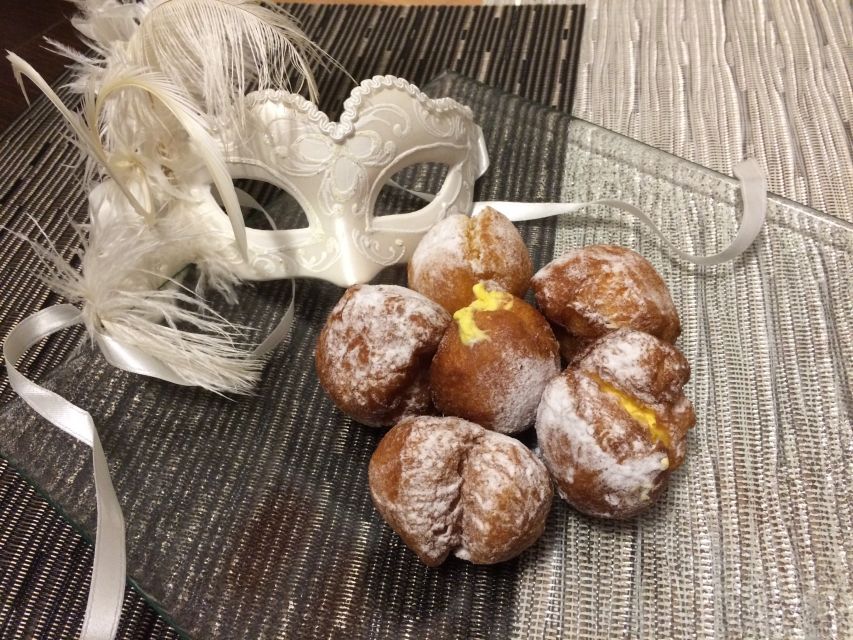
The mask discussion is one of the clearest reasons to book this experience during Carnival. You hear why Venetians used masks to hide their identity and how the traditional versions are made.
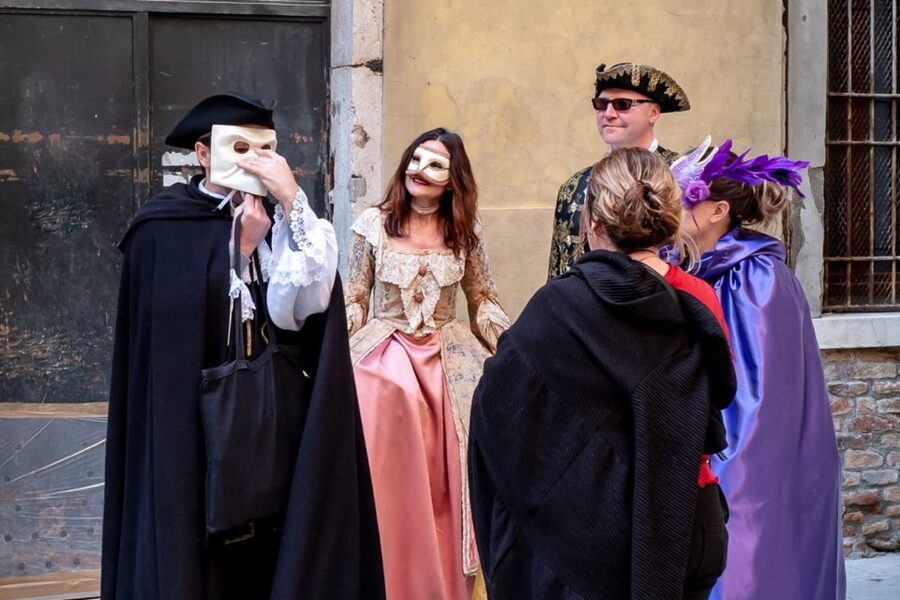
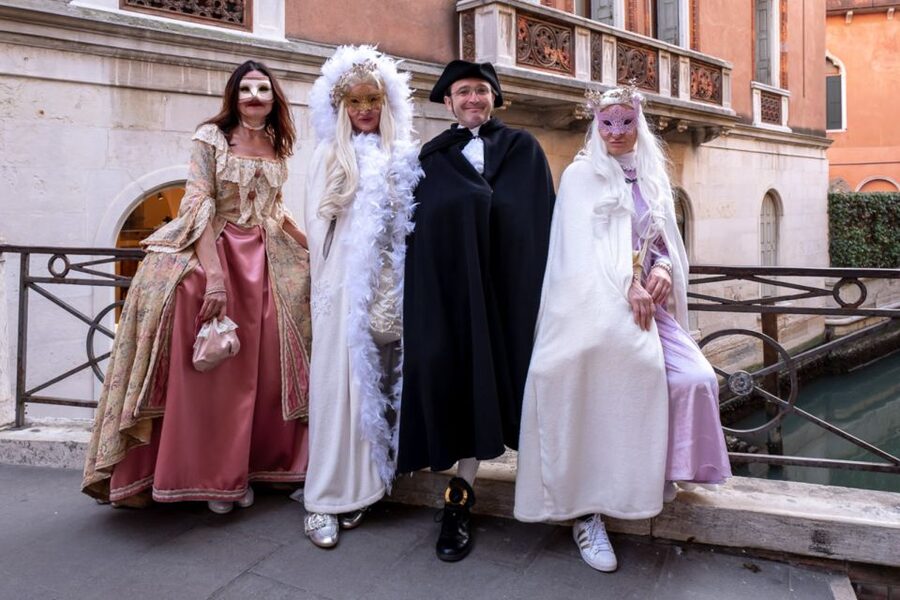
That information changes the way you look at the costumes around town. A mask is not simply a souvenir or a camera prop. It belongs to a long tradition of disguise, performance, and social freedom. The guide also describes the highly decorated costumes worn at grand balls, where appearance and mystery worked together.
You may come in your own Carnival costume, cape, or mask. This is encouraged and makes the tour more fun for photographs. You do not need to dress up to take part, but a small costume piece can make the experience feel more connected to the theme.
The guide’s own costume helps create the atmosphere, especially at the beginning. It also gives the group an obvious person to look for in the busy streets. Just remember that a costume does not solve the practical issues of rain, cold, or slippery bridges. Wear suitable shoes and clothing underneath.
Cappuccino and frittella at Le Café Venezia
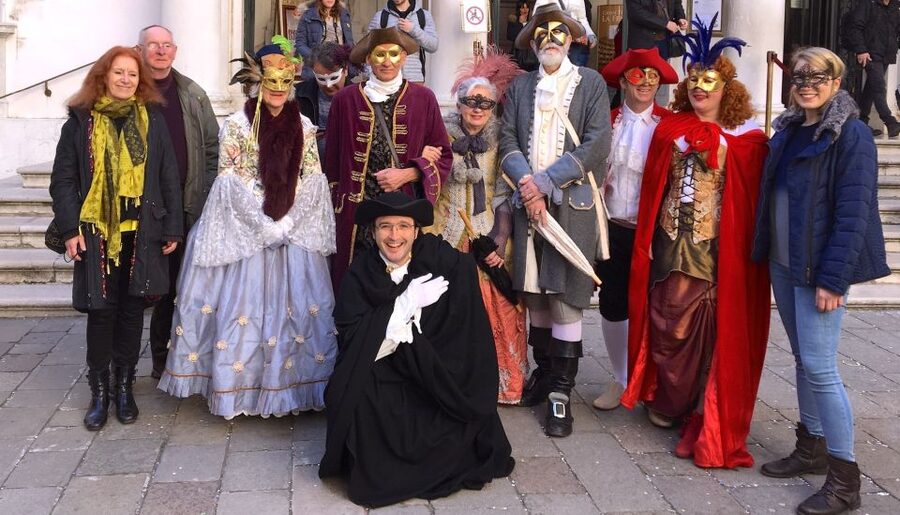
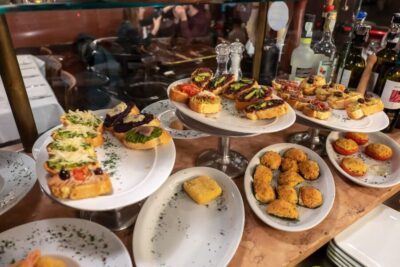
The tour ends at Le Café Venezia, about a ten-minute walk from St. Mark’s Square. Your included treat is a hot cappuccino and a Venetian frittella, a Carnival cake made only during the Carnival period.
This finish is more than a small snack. After standing and walking through the city, a warm drink gives the tour a natural closing point. It also lets you continue the conversation with the guide. One especially positive account described the guide sitting with the group and chatting after the tour ended.
The pastry is seasonal, so the timing of your visit matters. The experience is built around Carnival, and the frittella is part of that calendar rather than an everyday promise. Extra food and drinks are not included, so order additional items only if you want them.
The café is also useful as a navigation point. You are not returned to Teatro La Fenice. One older account found the ending confusing because the group was left at a café without a clear sense of where they were. Since Le Café Venezia is about ten minutes from St. Mark’s Square, you can use the square as your next reference point, but bring a map app if you are unfamiliar with Venice.
Guide style, group size, and hearing the stories
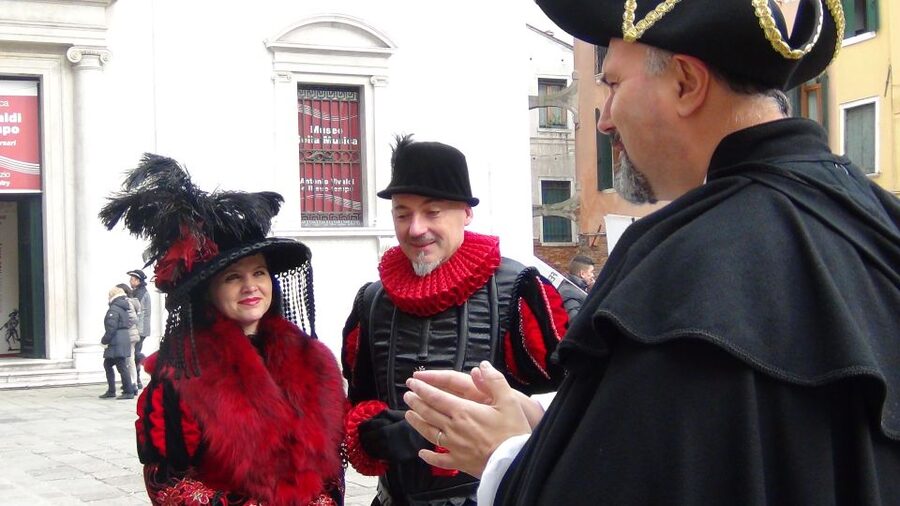
The guide makes or breaks this experience because the main attraction is spoken storytelling. English is the only listed tour language.
Sergio, also called The Swiss, has been praised for his humor, clear explanations, and ability to keep a fairly large group together. Other guides named in past bookings include Dennis and Lorenzo. Lorenzo received repeated praise for an enjoyable, friendly approach, while Dennis was described as a strong guide for showing less familiar parts of Venice.
The feedback is not uniformly perfect. One person found the group too large for the streets and said rain on umbrellas made the guide difficult to hear. Another found the information interesting but thought some stops lasted too long. If you have hearing concerns, try to stay close to the guide and avoid drifting toward the back.
This is not a private tour, and the experience can change with the group. A smaller group will make it easier to ask questions and hear every detail. A larger group may bring more energy but requires you to pay attention at every turn.
Is $88 a fair price?
At $88 per person, this is not a bargain-priced stroll. The price makes the most sense if you value a themed guide, a focused Casanova story, Carnival background, and the included café stop.
You are paying for about two hours of activity, with the main guided walk described as roughly one and a half hours, followed by the cappuccino and frittella. You are not paying for museum admission, a theater performance, or a private palace visit. That distinction matters.
I would compare it with the cost of a general Venice walking tour and ask what you want from your time. If you want a broad introduction to the city’s main sights, this is too narrow. If you have already seen St. Mark’s Square and want a story-led route through smaller streets, the price is easier to justify.
The value also depends on your interest in Casanova and Carnival. Someone who enjoys social history, old scandals, costumes, and local customs will get more from it than someone looking mainly for architecture. The pastry and coffee are pleasant additions, but they should not be the reason you book.
Who should book this Venice Carnival tour?
I would recommend it to adults and older children who enjoy lively storytelling and do not mind standing outdoors. It suits a first or second visit to Venice when you want to move beyond the most famous sights.
It is particularly good for:
- People interested in Casanova, courtesans, gambling, and Venetian social life
- Visitors coming during Carnival who want meaning behind the costumes
- Couples looking for a romantic and slightly mischievous theme
- History fans who prefer streets and stories to formal museum rooms
- Anyone who wants a café stop built into a short walking tour
It is less suitable if you need step-free access. The tour is not suitable for wheelchair users, and Venice’s bridges, narrow lanes, and uneven walking surfaces can be hard for anyone with mobility limits.
You may also want another option if you dislike group tours, have difficulty hearing in noisy streets, or want a tour with little standing. Rain and cold can affect the experience, so check the weather before choosing your clothing.
Should you book Secrets of Venice Carnival and Life of Casanova?
Book it if you want Venice presented as a city of masks, desire, gambling, theater, and social games. The route gives you a different side of the city, with Casanova as the thread connecting houses, alleys, aristocratic meeting places, Carnival customs, and the Ridotto.
Skip it if your priority is entering major monuments or getting a broad overview of Venetian art and architecture. Also think twice if large groups and outdoor standing are difficult for you.
For the best experience, arrive early at Campo della Fenice, stay close to the guide, wear comfortable shoes, and consider bringing a mask or cape. The coffee and frittella are a fitting final touch, but the real value is the storytelling and the chance to see Venice through its more secretive social past.
FAQ
Where does the tour begin?
It begins in Campo della Fenice, in front of Teatro La Fenice. Look for the guide holding a sign with the tour name.
Where does the tour finish?
It finishes at Le Café Venezia, about a ten-minute walk from St. Mark’s Square.
How long does the tour last?
The activity lasts about two hours. The main guided walking portion is described as approximately one and a half hours.
What language is the tour in?
The tour is conducted in English by a live English-speaking guide.
Is a guide included?
Yes. An English-speaking guide is included, and the guide wears a Carnival costume.
What food and drink are included?
You receive a hot cappuccino and a Venetian frittella, a Carnival cake traditionally made during the Carnival period.
Are extra drinks and food included?
No. Additional food and drinks are not included.
Can I wear a Carnival costume?
Yes. You are welcome to wear a Carnival costume, cape, or mask. This is encouraged for photographs.
Is the tour suitable for wheelchair users?
No. The experience is not suitable for wheelchair users.
Can I bring oversize luggage?
No. Oversize luggage is not allowed on the tour.
Can I cancel the booking?
You can cancel up to 24 hours in advance for a full refund. A reserve now and pay later option is also available.
Recently added around Venice
- Your evening in Venice – Legends&Ghosts&Aperitif★ 4.7 · 79 reviews
- Venice: City Tour & Skip the Line for St. Mark’s Basilica★ 4.1 · 84 reviews
- Walking Tour to Uncover the Hidden Venice★ 4.4 · 34 reviews
- Wine Tasting in Venice★ 4.6 · 42 reviews
- Venice: Walking Tour & Gondola Ride★ 4.4 · 22 reviews
- Venice: Watercolor Painting Class at the Prisons Palace★ 4.7 · 27 reviews
- VIRTUAL MUSEUM: Creature di Gomma – Venice Vintage Toys★ 4.7 · 3 reviews
- Venice Walking Tour from St. Mark’s to Rialto Bridge★ 4.5 · 12 reviews
Venetian Mask and Carnival Workshops, compared.
Venetian Carnival Mask Making Class in Venice, Italy
Read our review →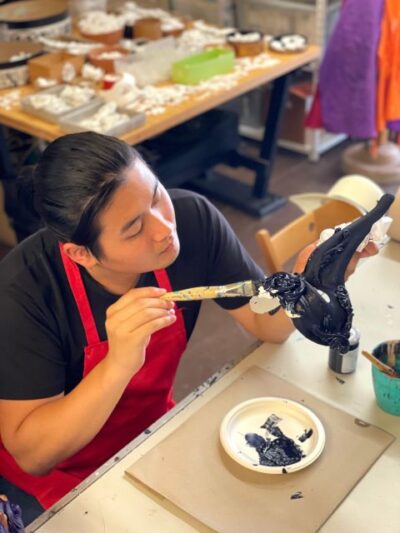
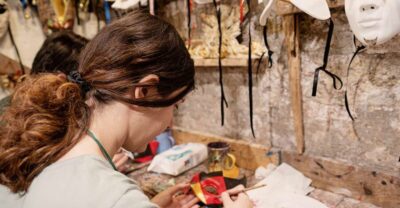
Carnival Mask Decoration Class at Casanova Prisons
Read our review →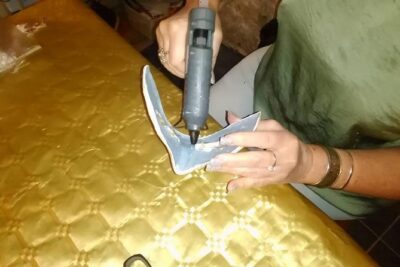
Mask Workshop – Paint Your Own Venetian Mask in Venice, Italy
Read our review →Browse the lists this tour appears in