
Reviewed · DOGES PALACE TOURS
Venice: Doge’s Palace Skip-the-Line Tour with Prisons
The most gripping part of this Doge’s Palace tour comes near the end, when you cross the Bridge of Sighs and enter the old prisons. The palace begins as a glittering seat of government, then turns into a place of narrow cells and hard punishment. That sharp change gives the visit its drama.
I like the 75-minute length, which keeps the tour focused, and I like that your ticket also covers the Correr Museum, Archaeological Museum, and Biblioteca Marciana. The main caution is that the skip-the-line benefit does not bypass security checks, and crowded rooms or weak microphone sound can sometimes make the guide harder to follow.
Key points to know before booking
- Follow the route from political power to prison cells: The tour connects grand council rooms, artwork, the Bridge of Sighs, and the prisons into one clear story.
- Look for the famous Venetian artists: Tintoretto, Titian, Veronese, and Bellini are among the artists represented inside the palace.
- Use the skip-the-line entrance wisely: You avoid the queue for non-reserved tickets, but everyone must still pass through security.
- Expect guide quality to shape the experience: Denise, Marco, Donatella, Marina, and other guides have been praised for humor, local insight, and clear explanations.
- Keep your museum ticket: Entry to the other St. Mark’s Square museums is included for three months from the date of issue, but those visits are not guided.
- Plan for stairs and standing: Some parts may be difficult for people with limited mobility, and there are few places to sit during the route.
Why the Doge’s Palace deserves a guided visit
Venice can be hard to read at street level. You see beautiful stone, water, bridges, and churches, but the machinery that made the Venetian Republic powerful is easier to understand inside the Doge’s Palace.
For centuries, this was the center of Venetian government. The Doge lived and worked here, and councils made decisions that shaped trade, war, taxation, and daily life across the republic. This was not simply a royal residence. It was a working political headquarters, and the grand rooms were designed to make that power visible.
That is where a guide helps. Without context, the palace can become a parade of enormous rooms and dark paintings. With a good explanation, the scale begins to make sense. You learn why the government needed so many council chambers, why the walls carried scenes of victory, and how art helped present Venice as wealthy, orderly, and favored by heaven.
The tour is especially useful if this is your first time in Venice. Several guides have been praised for explaining not only the palace but also the development of Venice as a trading power. The best guides do not simply list dates. They connect the building to the people who governed from it.
More Doge’s Palace tours and tickets:
- Venice: Doge’s Palace Reserved Entry Ticket
★ 4.6 · 42,716 reviews - Doge’s Palace & St. Mark’s Basilica with Terrace Access Tour
★ 4.7 · 10,697 reviews - Venice: Doge’s Palace, St Mark’s Basilica, and Pala d’Oro
★ 4.4 · 6,235 reviews
Entering the palace through the grand public rooms
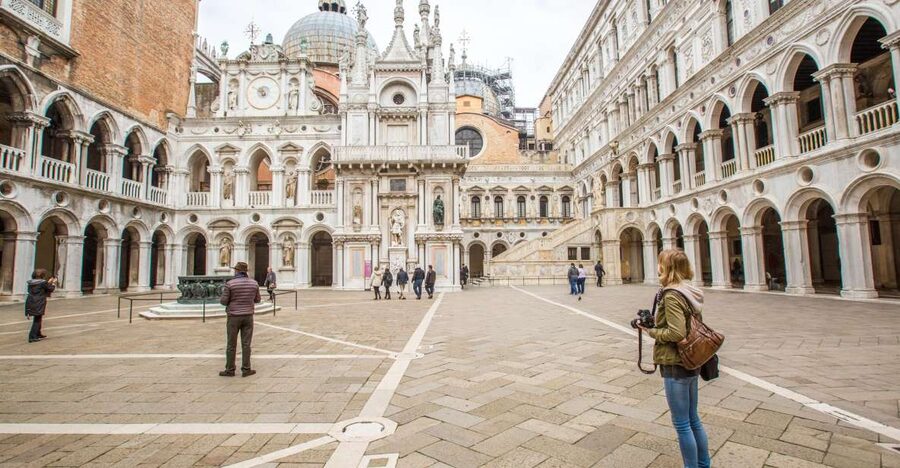
The architecture gives you the first lesson. The Doge’s Palace combines Byzantine, Gothic, and Renaissance elements, which can sound like a standard art-history description until you see them together.
From outside, the building has the delicate arcades and pointed forms associated with Venetian Gothic design. Inside, the mood changes. Staircases, council chambers, painted ceilings, gilded decoration, and monumental canvases create a setting meant to impress anyone entering on official business.
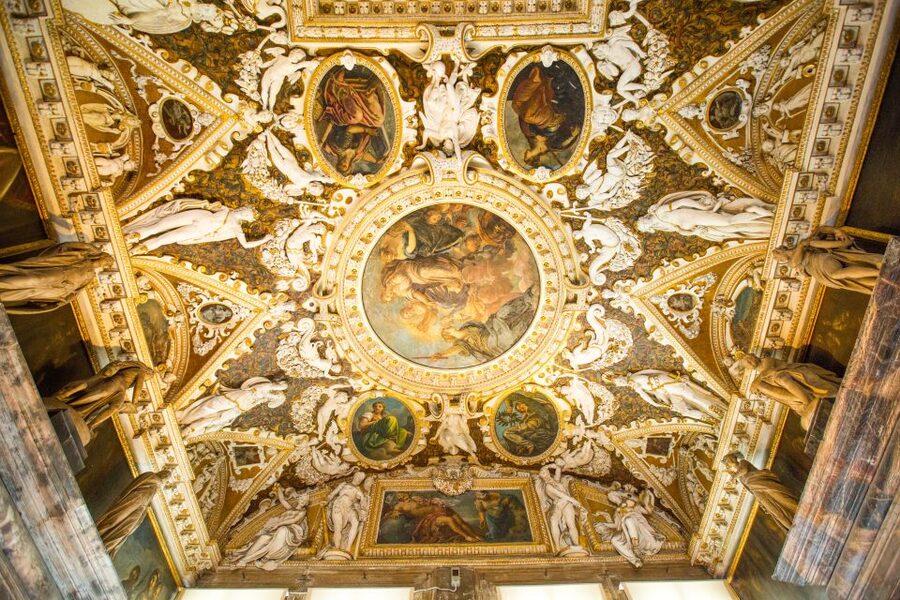
Your guide will take you through the rooms connected with the Venetian government. These spaces were not decorated modestly. The art and architecture were part of the political message. Venice wanted visiting diplomats, merchants, and citizens to see a republic that appeared prosperous, disciplined, and secure.
Pay attention to the contrast between the lower and upper areas. The palace can feel almost light and open in one room, then heavy with gold and dark painted scenes in the next. That variety is one reason a guided route is useful. Your attention is directed toward specific ceilings, staircases, paintings, and architectural details instead of being left to wander without a plan.
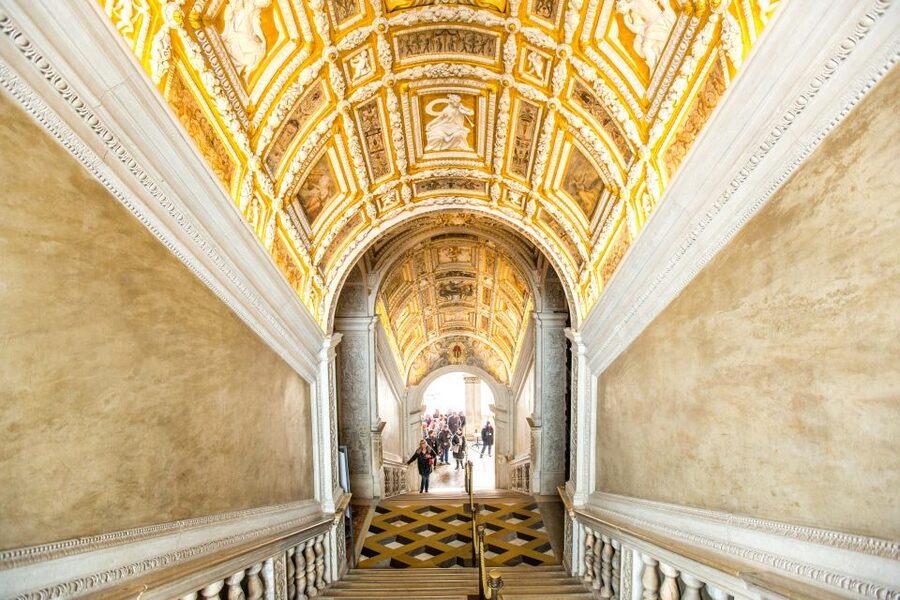
The famous Gold Staircase is one of the visual highlights. Its decoration is not just a pretty entrance. It was a controlled passage into the heart of government, and its costly appearance helped mark the importance of the people allowed to use it.
Finding Tintoretto, Titian, Veronese, and Bellini
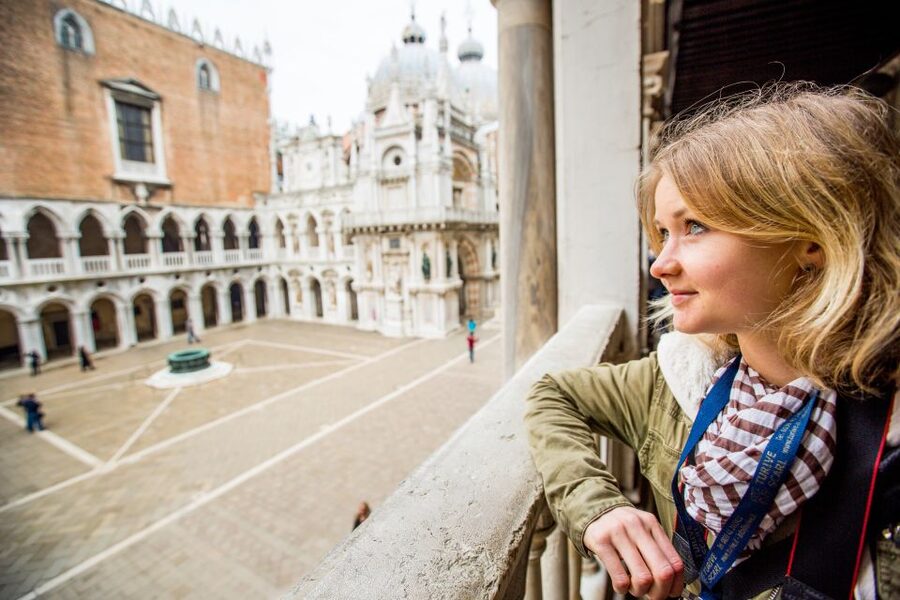
You do not need to arrive as an art specialist. The guide introduces the major works and points out the details worth your time.
Tintoretto is particularly important in the palace, where large-scale scenes demand attention simply because of their size. Titian, Veronese, and Bellini add different voices to the artistic story of Venice. A guide can help you see how these painters served religious, civic, and political purposes rather than treating every canvas as decoration.
I appreciate tours that explain what to look at without turning the visit into a lecture. The strongest descriptions focus on facial expressions, crowd scenes, gestures, clothing, and the use of light. When a guide pauses at one detail and explains why it matters, a huge painting becomes easier to understand.
The palace is visually crowded, and that is both its pleasure and its problem. You will see more detail than you can absorb in one pass. One early visitor found the guided hour useful but wanted longer at a few stops. That is a fair tradeoff during a busy day in Venice. The tour gives you a framework, then you can return to the rooms afterward and examine what caught your eye.
Your ticket lets you remain in the palace after the guided portion, according to the experience details and past use of the tour. That extra time matters. You can revisit a painting, slow down in the council rooms, or see areas such as the armoury that may not receive much attention during the main route.
Crossing the Bridge of Sighs
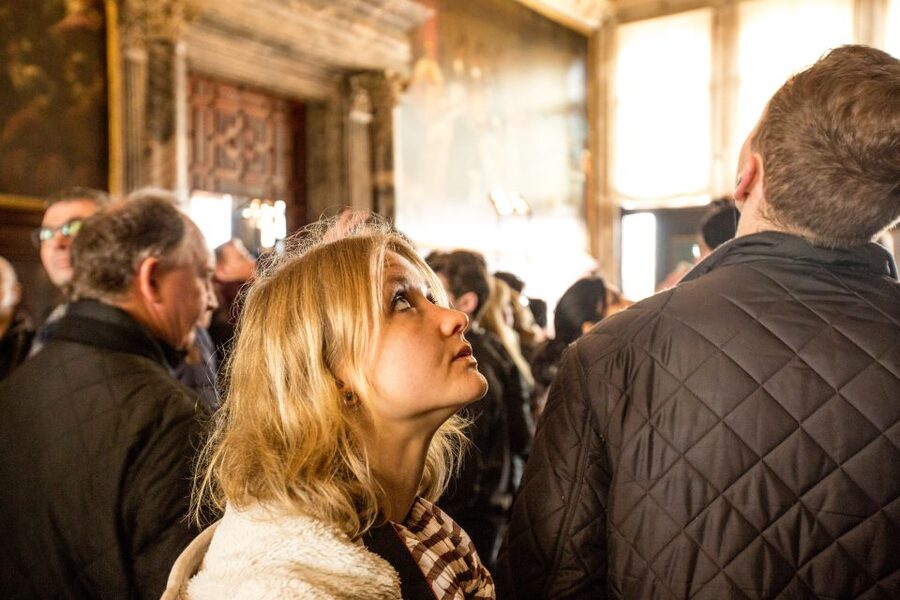
The Bridge of Sighs is one of Venice’s most photographed landmarks, but the view becomes more meaningful once you know what it connected.
The enclosed bridge links the Doge’s Palace with the prison area. Prisoners crossed it after hearings or sentencing, moving from the rooms of justice into confinement. The familiar name refers to the sighs said to escape as prisoners looked through the small windows toward Venice for what might be their last view of freedom.
The passage itself is brief, but it carries emotional weight. You are walking through the same route used by people who had just faced the Venetian justice system. It is a small moment in physical terms, yet it shifts the palace story from ceremony to consequence.
You may find the bridge crowded, and the windows are not large. Still, the experience is more than a photo stop. The guide’s explanation connects the bridge to the legal and political system inside the palace. That makes the crossing worth including, even if you have already seen the famous exterior view from the canal-side bridge.
More skip-the-line tickets in Venice:
- Skip the Line: St. Mark’s Basilica Guided Tour
★ 4.0 · 2,380 reviews - Venice: St. Mark’s Basilica Skip-the-Line Entry & Audioguide
★ 3.9 · 2,107 reviews - Skip-the-Line: Doge’s Palace & St. Mark’s Basilica Fully Guided Tour
★ 4.5 · 1,892 reviews - Venice: Doge’s Palace Skip-the-Line Ticket with Guidebook
★ 4.0 · 1,196 reviews
Entering the prisons linked to Casanova
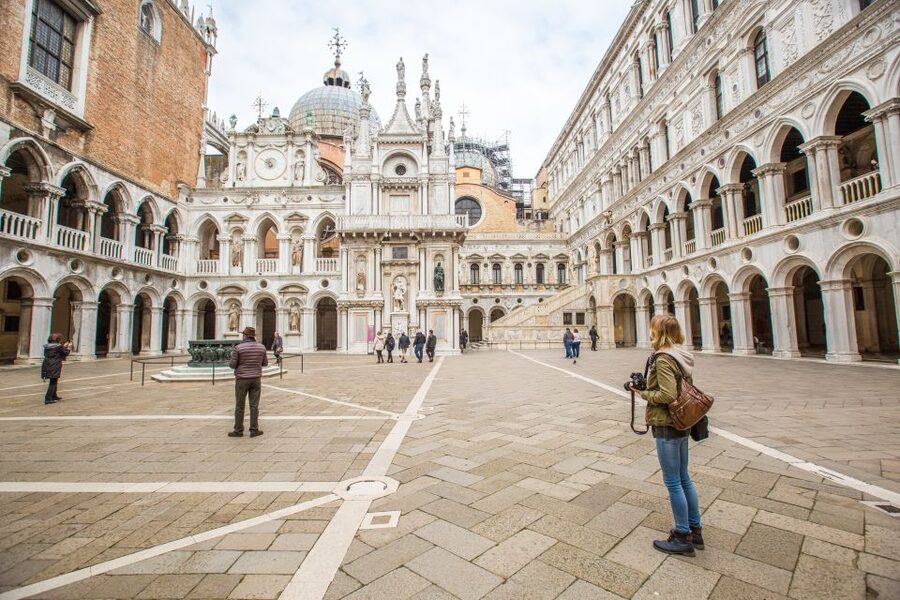
The prison section gives the tour its strongest contrast. After the bright halls and grand government rooms, the cells feel plain, restrictive, and practical.
The tour includes the prisons associated with Giacomo Casanova, the famous Venetian adventurer who was incarcerated there and later escaped. His story adds a memorable human thread, but the prison visit is not only about one famous prisoner. It also shows the physical reality behind the palace’s legal authority.
You move from a building designed to display power into spaces designed to contain people. That change helps explain how the republic’s grand public image rested alongside a strict justice system.
The prison route may feel less polished than the palace rooms, which is exactly why it works. You are no longer looking at painted ceilings and gold ornament. The appeal is atmospheric and historical rather than decorative.
If you prefer art and architecture, you may find the prisons less rewarding than the council rooms. If you want a visit with a clear narrative arc, they are essential. The route begins with government, moves through justice, and ends with confinement. That structure makes the palace easier to remember.
How much time the 75-minute tour gives you
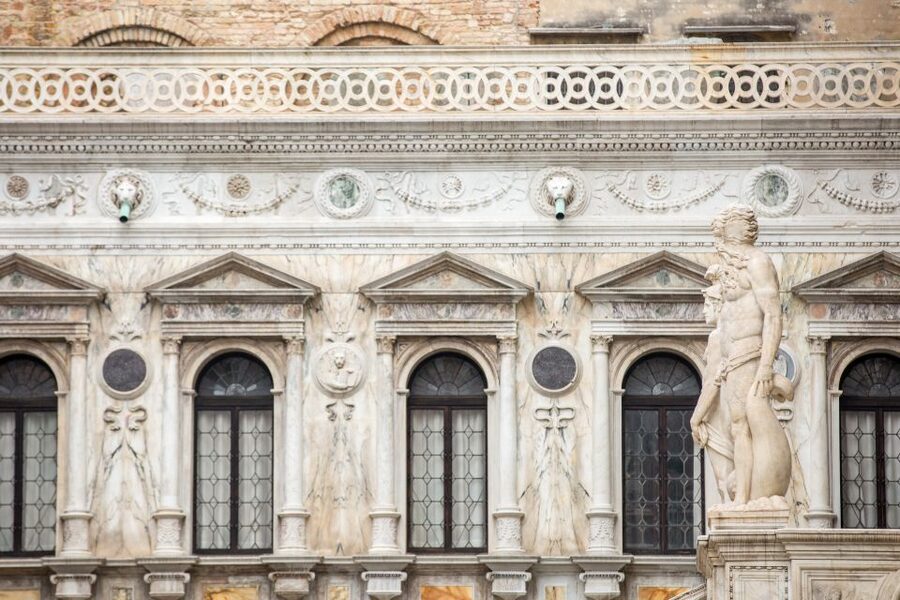
The advertised duration is 75 minutes, though the exact length can vary. One past visit lasted closer to 90 minutes, while another guide delivered a well-paced one-hour route. You should plan on roughly an hour and a quarter for the guided portion, with additional time if you stay afterward.
That is a good length for Venice. The palace is large enough to fill a morning, but many people also have church visits, canal crossings, and meals planned around St. Mark’s Square. A 75-minute tour gives you the main story without taking over the day.
The pace also suits families. One group with children aged 7 to 11 found that the guide kept the visit engaging with humor and interesting facts. Younger children may still tire during the standing portions, especially when rooms are crowded.
Older visitors should also plan carefully. The route can involve extended periods on your feet, and there are limited seating opportunities. One past visitor specifically wished for more places to sit. If you have mobility limits, ask about the route before booking, since some people with disabilities may miss portions of the visit.
Skip-the-line access and the meeting point
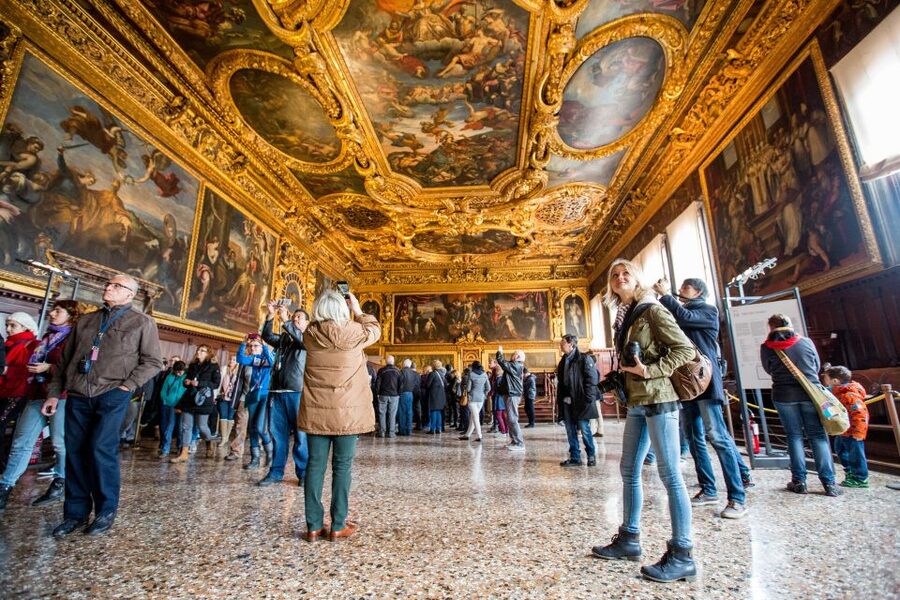
At $54 per person, the price is mainly paying for three things: reserved entry, a live guide, and the chance to see the palace without spending a large part of your day in the standard queue.
The separate entrance skips the line for non-reserved tickets. It does not mean instant entry. Security checks remain mandatory, so you may still wait outside, especially at busy times. This distinction matters because skip-the-line does not mean skip-every-line.
The meeting point can vary depending on the option you book. Check your voucher carefully rather than assuming the meeting point is directly at the palace. Some past visitors found the tour shop meeting process unclear, with staff escorting the group toward the palace before the main guide appeared.
That does not necessarily ruin the visit, but it is a reason to arrive early. Give yourself time to find the meeting point, collect any audio equipment, and avoid arriving at the last minute. Earlier feedback also mentioned delays with headsets, and several people found microphone static or crowd noise distracting.
A small practical tip: if you have compatible personal earphones, bringing them may help, though the supplied equipment and exact connection type can vary. The guide’s voice matters in the echoing rooms, so stand close enough to hear clearly without blocking others.
The guides can make or break the experience
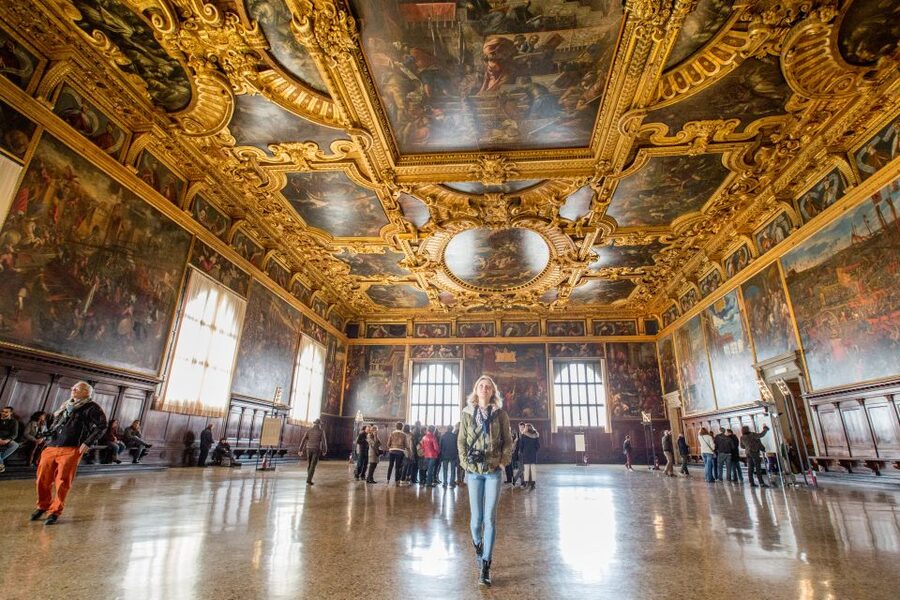
The strongest part of this tour is often the person leading it. Guides named Denise, Marco, Donatella, Marina, Louisa, Filippo, and others have been praised for humor, clear explanations, and strong knowledge of Venetian history.
Denise has been especially appreciated for bringing local family connections and Venetian culture into the story. Marco has been praised for combining historical detail with jokes and a comfortable pace. Donatella and Marina have also received warm comments for making the palace understandable and engaging.
Of course, you cannot select a specific guide unless the booking option says so. Guide quality can vary, and language ability, accent, group size, and microphone sound all affect how easy the commentary is to follow.
Tours may be bilingual from November through March. That can mean a slower or less direct presentation, so check the language conditions for your date if you want a fully single-language tour.
The available languages are English, Spanish, French, German, and Italian. The guide is live, not an audio-only recording, which gives you a chance to ask questions and receive explanations suited to the group.
What else your ticket includes
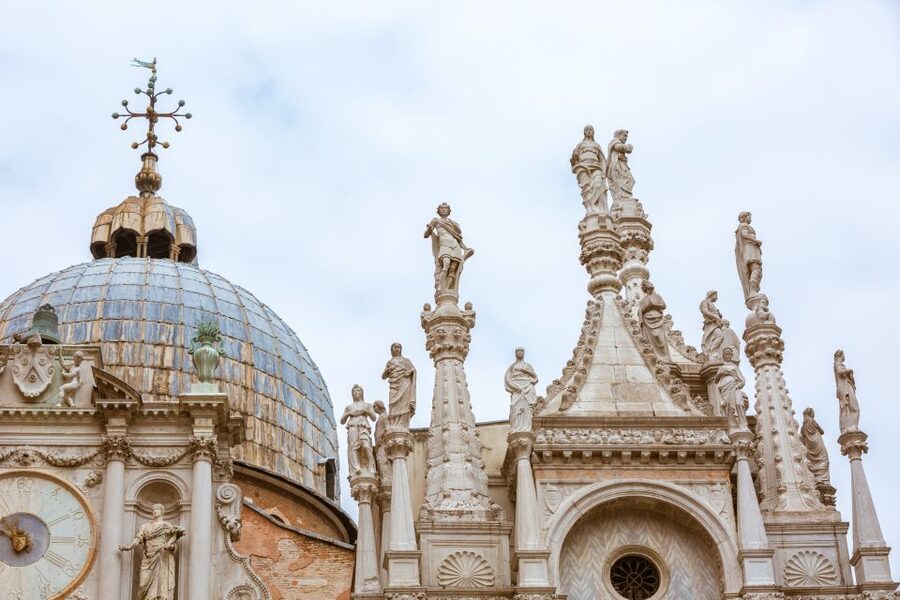
The ticket also includes entry to the museums around St. Mark’s Square:
- Correr Museum
- Archaeological Museum
- Biblioteca Marciana
These museum entries are not guided, so think of them as a useful bonus rather than part of the 75-minute route. The ticket is valid for three months from the date of issue, giving you flexibility to visit them on another day.
The Correr Museum is a particularly practical follow-up if you want more Venetian art, civic history, furniture, and state rooms after the palace. The other museums add archaeological objects, sculpture, books, and material connected with Venice’s cultural life.
This extra access improves the value of the $54 price, especially if you have enough time in Venice to use it. If your schedule allows only a quick stop at St. Mark’s Square, the added museums may not change your decision much.
Children up to age six enter free. The tour is also refundable if canceled at least 24 hours in advance, and you can reserve without paying immediately under the reserve-now, pay-later option.
Is $54 good value?
The answer depends on the queue and your interest in guided history.
If the standard line is long, the price can be sensible. A past visit in high season estimated that the outside queue might have taken three hours, making reserved entry far more valuable than the ticket price alone suggests. Crowd levels change, of course, but St. Mark’s Square is one of Venice’s busiest areas.
Buying individual museum tickets may also cost more than expected, especially if you plan to visit the Correr Museum and the other included institutions. One visitor found the package much cheaper than buying tickets separately.
The less convincing case is a short visit when you want to move at your own pace. The guide controls the route, and you may wish for more time with certain paintings. The ticket still lets you remain afterward, which softens that limitation.
I would call the price fair for first-time visitors, families, and anyone visiting in peak season. Independent art lovers who already know the palace may prefer a standard ticket and a slower self-guided visit.
Who should book this Doge’s Palace tour?
I would choose this tour if you want the palace to make sense rather than simply look beautiful. It is particularly useful for:
- First-time visitors to Venice
- History and political culture enthusiasts
- Families who benefit from stories and a clear route
- Anyone visiting during a busy season
- People interested in Casanova and the Venetian prisons
- Visitors who want the Bridge of Sighs explained, not just photographed
I would think twice if you have difficulty standing, climbing, or moving through crowded interiors. The palace can also be frustrating if you want long, quiet periods with individual artworks.
For the best experience, arrive early at the correct meeting point, confirm your language, listen for the guide’s instructions, and keep time afterward for the rooms you want to revisit. Do not use flash photography, which is not allowed.
Should you book it?
Book this Doge’s Palace tour if you want a focused introduction to Venice’s government, art, justice system, and prisons. The guide adds real value, and the route from the decorated halls to the Bridge of Sighs and Casanova’s prison gives you a story you will remember.
The $54 cost is easiest to justify when queues are long or when you plan to use the included St. Mark’s Square museums. Skip it if you prefer complete independence, need a highly accessible route, or want to study every painting at your own pace.
For most first visits, I would book it, then stay afterward to explore the palace on your own.
FAQ
How long is the Doge’s Palace tour?
The stated duration is 75 minutes. The exact timing can vary, and some visits have lasted longer.
Does the tour include the Bridge of Sighs and prisons?
Yes. The guided tour includes the Doge’s Palace, the prisons, and the Bridge of Sighs.
Does skip-the-line access remove the need to wait?
No. You skip the line for non-reserved tickets, but mandatory security checks can still create a wait.
Which languages are available?
Live guides are available in English, Spanish, French, German, and Italian. From November through March, tours may be bilingual.
Are the other St. Mark’s Square museums included?
Yes. The ticket includes the Correr Museum, Archaeological Museum, and Biblioteca Marciana. Those museum visits do not include a guide, and the ticket is valid for three months from the date of issue.
Can children join the tour?
Children up to age six enter free. The experience may suit families, though children and older adults should be prepared for standing and walking during the route.
Recently added around Venice
- Your evening in Venice – Legends&Ghosts&Aperitif★ 4.7 · 79 reviews
- Venice: City Tour & Skip the Line for St. Mark’s Basilica★ 4.1 · 84 reviews
- Walking Tour to Uncover the Hidden Venice★ 4.4 · 34 reviews
- Wine Tasting in Venice★ 4.6 · 42 reviews
- Venice: Walking Tour & Gondola Ride★ 4.4 · 22 reviews
- Venice: Watercolor Painting Class at the Prisons Palace★ 4.7 · 27 reviews
- VIRTUAL MUSEUM: Creature di Gomma – Venice Vintage Toys★ 4.7 · 3 reviews
- Venice Walking Tour from St. Mark’s to Rialto Bridge★ 4.5 · 12 reviews
Doges Palace Tours, compared.
Doge’s Palace & St. Mark’s Basilica with Terrace Access Tour
Read our review →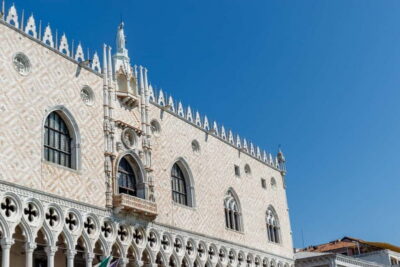
Doge’s Palace, St Mark’s Basilica, and Pala d’Oro
Read our review →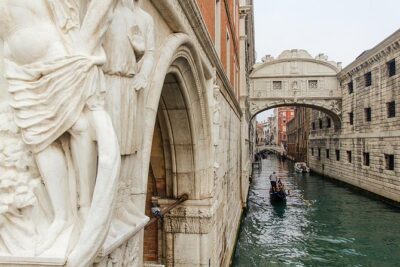
Legendary Venice: Doge’s Palace, St Mark’s & VIP Terrace Access
Read our review →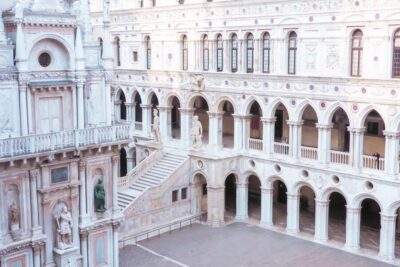
St. Mark’s Basilica & Doge’s Palace Tour with Ticket
Read our review →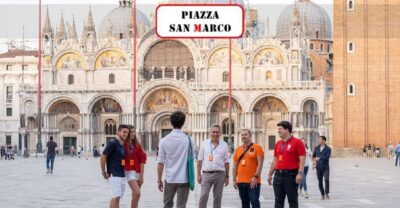
St Mark’s Basilica, Doge Palace, & Bell Tower Option
Read our review →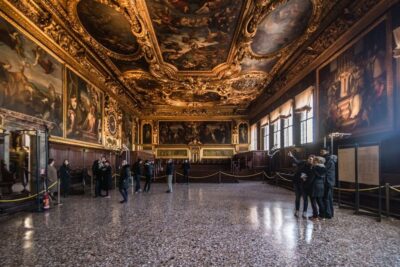
Doge’s Palace, Bridge of Sighs & Prisons Guided Tour
Read our review →Browse the lists this tour appears in