
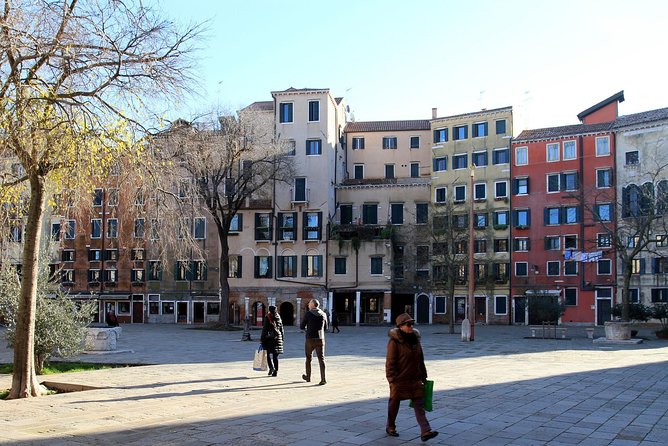
Reviewed · VENICE JEWISH GHETTO TOURS
Venice: Jewish Ghetto Walking Tour with Synagogues Visit
The most memorable part of this Venice tour comes inside the synagogues. After walking through the compact Jewish Ghetto, you enter the Levantine and Spanish Synagogues with guides from the Jewish Museum, who explain their design, traditions, and place in Venetian Jewish life. That access is the real prize.
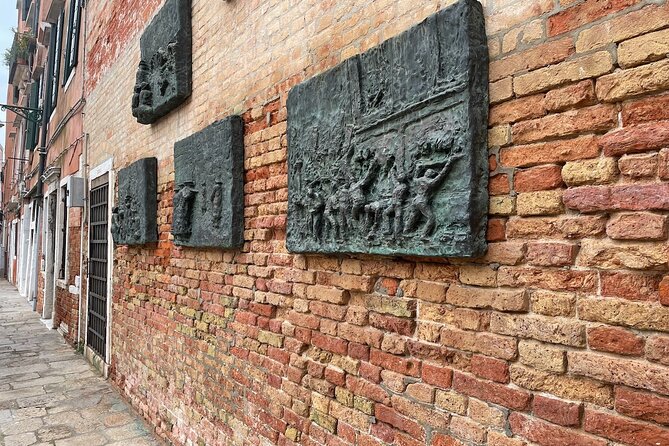
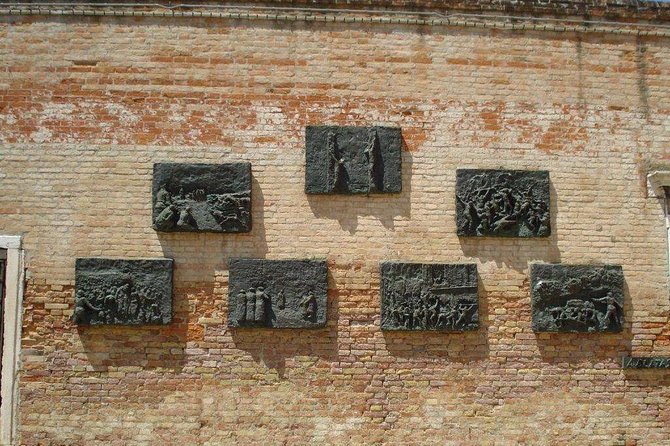
I like the small group, limited to 10 people, and the way the walk points out details you could easily miss, including the deportation memorial and the bas-reliefs in Campo del Ghetto Nuovo. I also like the serious, human story behind the pretty squares and artisan shops. The drawback is that the Ghetto is small, so you spend a fair amount of the two hours standing in one area.
Key points to know before you book
- Two synagogue interiors: The Levantine and Spanish Synagogues are visited with Jewish Museum guides, though the Levantine visit is not offered on Fridays.
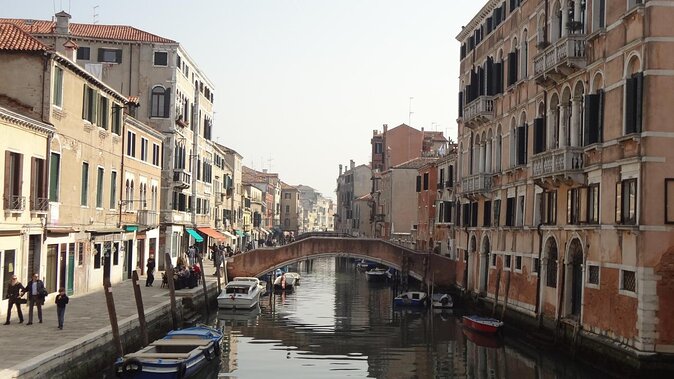
- A compact route: Most of the walking takes place around Ghetto Vecchio, Ghetto Nuovo, and nearby Cannaregio.
- A maximum of 10 people: This makes it easier to hear the guide and ask questions.
- A moving memorial: You pass the memorial to Jews deported during the Nazi period, along with the stepping stones and other reminders of loss.
- Dress matters: Cover your belly, shoulders, and knees inside the synagogues. Sharp objects and weapons are not allowed.
- Meet early: The tour starts in Campo del Ghetto Nuovo and does not accept late arrivals.
Why the Venice Ghetto deserves two hours
Venice’s Jewish Ghetto is easy to overlook. It sits in Cannaregio, away from the grandest route between St. Mark’s Square and the Rialto Bridge. You can walk through the area on your own in a few minutes, but the important details are not always obvious. The tour gives those details a place and a story.
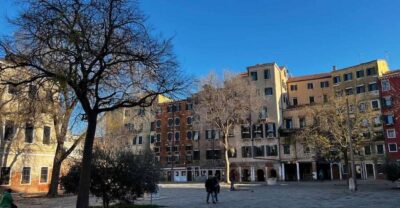
The word ghetto itself is tied to this part of Venice. In 1516, the Venetian government confined Jewish residents to an island that had previously been used for a foundry. Gates controlled access, and guards patrolled the area. The neighborhood became crowded as different Jewish communities arrived, including Ashkenazi, Italian, Levantine, and Spanish Jews.
That background changes the way you see the tall buildings around Campo del Ghetto Nuovo. They are not simply old Venetian apartment blocks. Their height reflects the pressure of limited space inside a controlled district. The guide explains how the community adapted to those restrictions and built religious and commercial life within them.
The route also helps connect past and present. You pass bakeries, restaurants, handicraft shops, galleries, and small food businesses that keep the area from feeling like a museum set. At the same time, signs in Hebrew and Italian point toward the synagogues, making the neighborhood’s continuing identity clear.
More Jewish Ghetto tours in Venice:
- Venice: Guided Tour of the Jewish Ghetto and Synagogue Visit
★ 4.4 · 610 reviews - Venice: Jewish Ghetto Walking Tour with Synagogue Visits
★ 4.7 · 379 reviews - Venice: Cicchetti, Spritz, and Wine Tour in Ghetto Ebraico
★ 4.9 · 315 reviews
Starting in Campo del Ghetto Nuovo
The meeting point is Campo del Ghetto Nuovo, in the New Ghetto Square. You should arrive five to 10 minutes early because it is not possible to join after the walk has begun. The square is near public transportation, but the narrow lanes and canals can make the final approach less obvious than expected.
This is one practical weakness of the experience. Some people have had trouble finding the square, and the directions can feel less clear than they should be. Give yourself extra time, especially if you are coming from another part of Venice with luggage, children, or a tight schedule.
Once the group gathers, the local guide begins with the physical layout of the Ghetto. You learn how the old and new sections relate to each other and how the district was separated from the rest of Venice. The walking is gentle, but the guide often stops to talk, so comfortable shoes and weather protection are sensible.
The group size helps here. With no more than 10 people, you can usually stay close to the guide and ask questions. That matters in Venice, where passing boats, nearby conversations, and hard stone walls can make a large group difficult to follow.
Ghetto Vecchio and the everyday Jewish neighborhood
Ghetto Vecchio, or the Old Ghetto, is not a single grand monument. It is a collection of lanes, workshops, shops, galleries, and food businesses. The appeal is in the ordinary details: signs, doorways, small businesses, and buildings shaped by centuries of restricted space.
The guide places these details in context. You hear about the Jewish communities that lived here, the customs that shaped daily life, and the way the district changed over time. Several guides, including Claire, Clara, Christina, Cristina, Sylvia, and Isabella, have been praised for explaining the area clearly and bringing energy to the walk. Guide quality can vary, but the strongest tours appear to combine history with a warm, conversational approach.
This first section is also where expectations matter. You are not covering a large part of Venice. The Ghetto is compact, and the route involves more listening than continuous walking. If you want a fast-paced tour with constant movement, you may find the pauses slow.
I see that as a fair trade for this subject, but the guide needs to handle the stops well. In cold weather, hot sun, or rain, standing in one place becomes tiring. Ask questions and stay engaged, but bring a light rain layer or sun protection according to the forecast.
Cannaregio and the signs that point the way
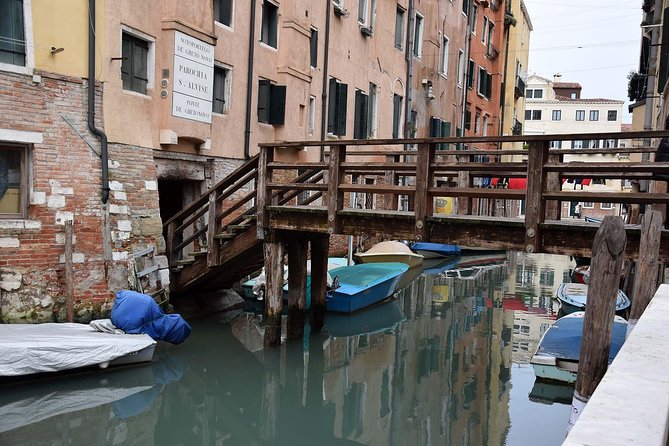
The walk continues through Cannaregio, now one of Venice’s residential districts. The yellow signs in Hebrew and Italian help you notice the connection between the modern neighborhood and the religious institutions nearby.
This section is less about a long list of sights and more about orientation. You begin to see the Ghetto as a living part of Venice rather than an isolated historical stop. The bakeries, delis, shops, and workshops offer a sense of continuity, even though only a small percentage of present-day residents are Jewish.
For me, this is one of the tour’s strongest features. You are not only looking at closed doors and plaques. You are seeing a district where history still affects what you eat, where you shop, and how the streets are marked.
The walk can also reveal the limits of the route. You may spend much of the time in and around two small adjacent islands. The tour is strongest for interpretation, not distance. If you already know the basic story of the Venetian Ghetto and mainly want to wander, the price may feel high.
More walking tours in Venice:
- Venice Walking Tour and Gondola Ride
★ 3.5 · 3,630 reviews - Venice: Rialto Bridge & Offbeat Unusual Venice Walking Tour
★ 4.2 · 3,538 reviews - Private 3 hrs Venice Tour: St Mark’s, Walking tour & Boat tour
★ 4.0 · 3,372 reviews - Venice: City Center Historical Guided Walking Tour
★ 4.2 · 1,873 reviews
Ghetto Nuovo, the bas-reliefs, and the deportation memorial
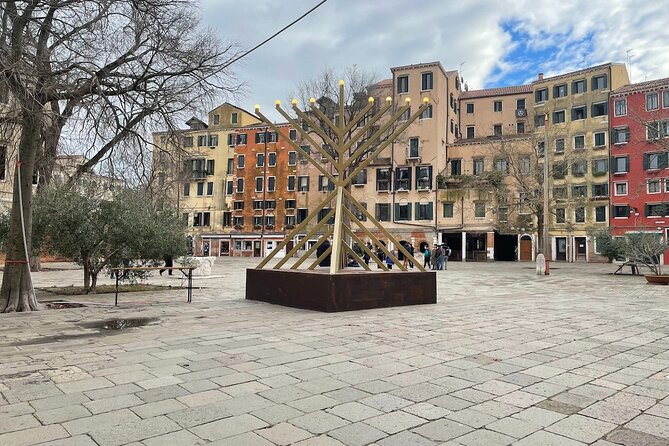
After crossing the bridge into Ghetto Nuovo, the guide explains why the island was fortified and how its population grew under confinement. The square gives you a clear sense of the district’s scale. It also makes the old restrictions easier to imagine than a paragraph in a guidebook ever could.
The bas-reliefs in Campo del Ghetto Nuovo are a detail many people would pass without understanding. Your guide explains their meaning and why they matter. This is exactly the kind of small discovery that can justify a guided walk in Venice. You can see the object alone, but you may not know what you are seeing.
You also pass the Deportation Memorial. The tone becomes more sober here, as it should. The memorial recalls Jewish residents who were deported and murdered during the Nazi period. One review describes the stepping stones as especially emotional, and that detail gives you a good idea of the memorial’s power: it is not a grand, distant monument, but something encountered under your feet as you walk.
The historical material requires care. Most guides appear to handle it respectfully, but one unhappy experience described unclear speaking, errors in naming an artwork, and an overly cheerful tone when discussing persecution and deportation. That criticism is worth taking seriously. The subject calls for accuracy, restraint, and clear language. The synagogue portion is led by a separate Jewish Museum guide, which can make the second half feel more focused.
Entering the Levantine and Spanish Synagogues
The synagogue visits are the heart of the experience. The itinerary allows access to the Levantine and Spanish Synagogues, with explanations from guides connected to the Jewish Museum. You receive the synagogue tickets from your tour guide.
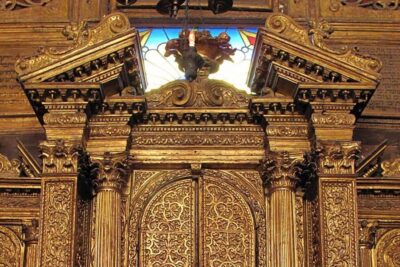
Inside, the focus shifts from the street history of the Ghetto to religious space, design, and community traditions. The interiors are still used, and that gives the visit a different feeling from entering a purely historic building. You are seeing places connected to worship and communal life, not just preserved rooms.
The synagogue portion can last about 30 minutes in the listed schedule, though some participants describe roughly an hour of synagogue visits. Exact timing may depend on the day and access arrangements. The Spanish Synagogue is generally the major highlight, while the Levantine Synagogue is not available on Fridays.
There is one important booking point to check carefully. One person reported being asked for an additional €17 to enter the Spanish Synagogue despite expecting admission through the tour. Since the supplied tour information says the synagogue visit and tickets are included, confirm the current inclusions before paying, especially if the booking page uses different language. Do not assume an extra fee is part of the normal arrangement.
The Jewish Museum itself is under restoration and closed to visitors, so this is not a museum tour. You will not browse its full collection or galleries. The synagogue visit is a separate opportunity to experience part of the city’s Jewish heritage while the museum work continues.
Dress is required for entry. Men and women must wear clothing covering the belly, shoulders, and knees. Plan this before you arrive rather than trying to improvise at the door. Knives, sharp objects, and weapons are not permitted on the tour.
How much value do you get for $88.10?
At $88.10 per person, this is not a cheap neighborhood walk. You are paying for a small group, a professional local guide, and access to synagogue interiors with Jewish Museum guides. The price makes the most sense if the synagogue visits are important to you and you want help understanding the district’s history.
The value is weaker if you mainly want to stroll through Cannaregio. The area is compact, and several people have felt that two hours included too much standing. You can see some of the streets and shops without booking a tour, though you will miss much of the context and may not enter the synagogues.
I would compare this price with the cost of separate synagogue or museum access before booking. The listing describes the museum interior as closed, and the tour is specifically built around the walking commentary and synagogue visit. If you are interested in Jewish history, religious architecture, or the way Venice shaped minority communities, the guided access is more useful than a simple neighborhood walk.
The maximum of 10 people improves the value. A large group would be frustrating in the narrow streets and make questions harder. Here, the format is closer to a focused seminar that happens to move through a neighborhood.
Guide quality and the shape of the experience
The strongest guide reports describe animated delivery, clear answers, humor used carefully, and a willingness to respond to questions. Clara is praised for holding attention for the full two hours, while Alicia receives especially strong remarks for the synagogue and historical portions. Paola, who leads the synagogue visits, is described as respectful and thorough.
Still, guide quality is the tour’s biggest variable. One guide was difficult to hear because she often spoke while walking away from the group. Another participant felt the first guide spent too much time on general Venetian history and not enough on Jewish life. You should know this is an interpretation-heavy tour, so the guide’s voice, pacing, and accuracy matter greatly.
If hearing every word is important to you, stay near the guide and speak up early if you cannot hear. The small group should make that possible. The synagogue guide is separate, so an uneven first half does not necessarily predict the quality of the interior visit.
Rain does not automatically ruin the experience. One person completed the walk in heavy rain and still found it worthwhile. The bigger concern is prolonged standing in bad weather, so wear suitable shoes and clothing.
Who should book this Venice Ghetto walk?
I would recommend it to you if you want to understand how Jewish life developed in Venice, prefer a small group, and care about entering historic synagogues. It also suits visitors who have already seen the main Venetian sights and want a quieter district with a serious subject.
It is a good choice for Jewish visitors interested in ancestral or religious connections, but you do not need to be Jewish. The history of forced residence, cultural adaptation, religious practice, and wartime deportation is important for anyone interested in European history.
Families and older visitors can participate because most people can take part, but the tour includes walking, bridges, uneven pavement, and standing. The supplied information does not promise seating or a step-free route, so consider your own comfort before booking.
You may want a different activity if you dislike lectures, want a lot of walking, or have only a short time in Venice. The area is small and the tour spends time explaining rather than rushing from sight to sight.
Should you book it?
Book this tour if the synagogue interiors are your priority. They are the part you are least likely to experience casually, and the Jewish Museum guides add useful detail that a general city guide may not provide.
Book with caution if you are paying mainly for sightseeing. The Ghetto is compact, the pace can feel slow, and the quality of the first guide may vary. Confirm the Spanish Synagogue admission terms, check the Friday restriction for the Levantine Synagogue, and arrive early at Campo del Ghetto Nuovo.
With free cancellation up to 24 hours before the start, you have some flexibility, but late changes are not accepted. At $88.10, I would make the call based on your interest in Jewish history and synagogue architecture, not on the amount of ground covered. For the right visitor, this is a thoughtful and moving side of Venice that is easy to miss alone.
FAQ
How long does the Jewish Ghetto tour last?
The walking tour lasts approximately two hours.
Where does the tour begin and end?
It begins in Campo del Ghetto Nuovo, 30121 Venezia, Italy, and ends back at the meeting point.
How many people are in the group?
The tour has a maximum of 10 participants.
Are the synagogue visits included?
The tour includes visits to synagogues led by guides from the Jewish Museum, and the tour guide provides the synagogue tickets. Confirm current admission terms when booking, since one reported experience involved an additional fee for the Spanish Synagogue.
Can I visit the Levantine Synagogue on a Friday?
No. The Levantine Synagogue is not included on Fridays.
Is the Jewish Museum open during the tour?
No. The museum interior is under restoration and closed to visitors. The tour does include the synagogue visits.
What should I wear to the synagogues?
Both men and women must wear clothing that covers the belly, shoulders, and knees.
Can I cancel for a refund?
Yes. You can cancel at least 24 hours before the experience start time for a full refund. Cancellations or changes made less than 24 hours before the start time are not refunded or accepted.
Recently added around Venice
- Your evening in Venice – Legends&Ghosts&Aperitif★ 4.7 · 79 reviews
- Venice: City Tour & Skip the Line for St. Mark’s Basilica★ 4.1 · 84 reviews
- Walking Tour to Uncover the Hidden Venice★ 4.4 · 34 reviews
- Wine Tasting in Venice★ 4.6 · 42 reviews
- Venice: Walking Tour & Gondola Ride★ 4.4 · 22 reviews
- Venice: Watercolor Painting Class at the Prisons Palace★ 4.7 · 27 reviews
- VIRTUAL MUSEUM: Creature di Gomma – Venice Vintage Toys★ 4.7 · 3 reviews
- Venice Walking Tour from St. Mark’s to Rialto Bridge★ 4.5 · 12 reviews
Venice Jewish Ghetto Tours, compared.
Guided Tour of the Jewish Ghetto and Synagogue Visit
Read our review →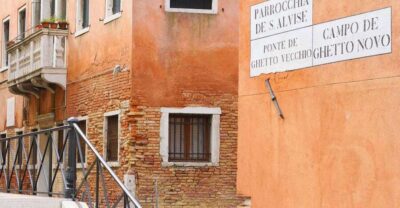
Jewish Ghetto Walking Tour with Synagogue Visits
Read our review →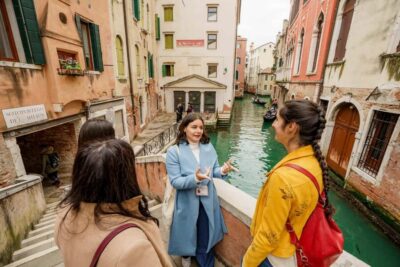
Cicchetti, Spritz, and Wine Tour in Ghetto Ebraico
Read our review →
Jewish Ghetto & Cannaregio Area Food Tour: Pasta Wine Gelato and More!
Read our review →
Small-Group Walking Tour of the Jewish Ghetto in Venice
Read our review →
Jewish Ghetto and Cannaregio Food and Wine Tour
Read our review →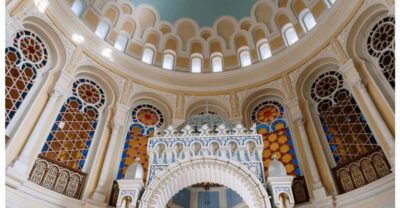
Jewish Ghetto and Synagogue Ticket with Audio Guide
Read our review →Browse the lists this tour appears in