
Reviewed · RIALTO AND GRAND CANAL TOURS
Venice: Traveling Opera in a Historic Palace on Grand Canal
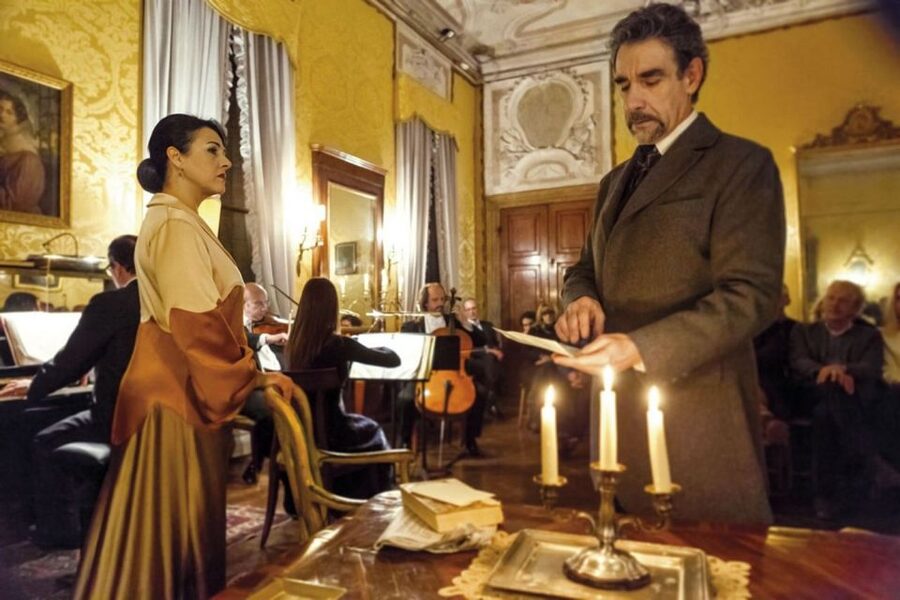
The clever idea here is simple: instead of watching opera from one fixed seat, you move through three rooms of a Venetian palace as the story changes. Singers perform only a few feet away, musicians fill the rooms with piano and strings, and the setting becomes part of the drama.
I like the close contact with the performers and the way the palace does real work as a stage, not just as pretty wallpaper. I also like that this format welcomes first-timers. The main drawback is practical: there are about 30 stairs and no elevator, and the chairs may feel firm during a two-hour show.
Key points to know before you book
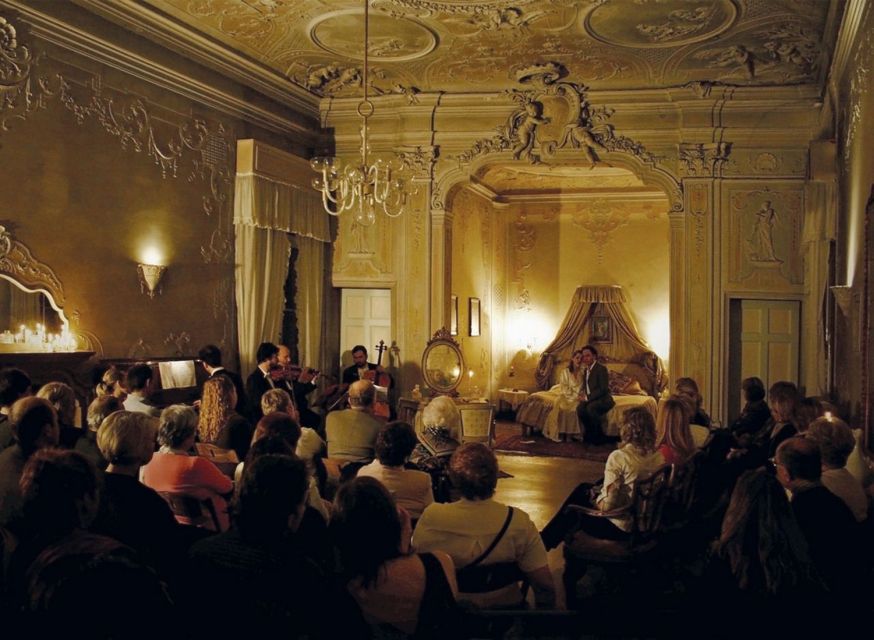
- Three rooms, three dramatic settings: Move through Palazzo Barbarigo Minotto as the opera progresses.
- Close-up performance: Singers and musicians perform just a few feet from the audience.
- Historic Grand Canal setting: See ornate rooms with stuccoes, Tiepolo paintings, and canal views.
- Good for opera beginners: Strong acting and familiar stories make the action easier to follow.
- Small live ensemble: Piano, violin, and cello create the sound instead of a full orchestra.
- Plan your arrival: Doors open 30 minutes before the curtain, and late admission is not guaranteed.
Opera that moves through a Venetian palace
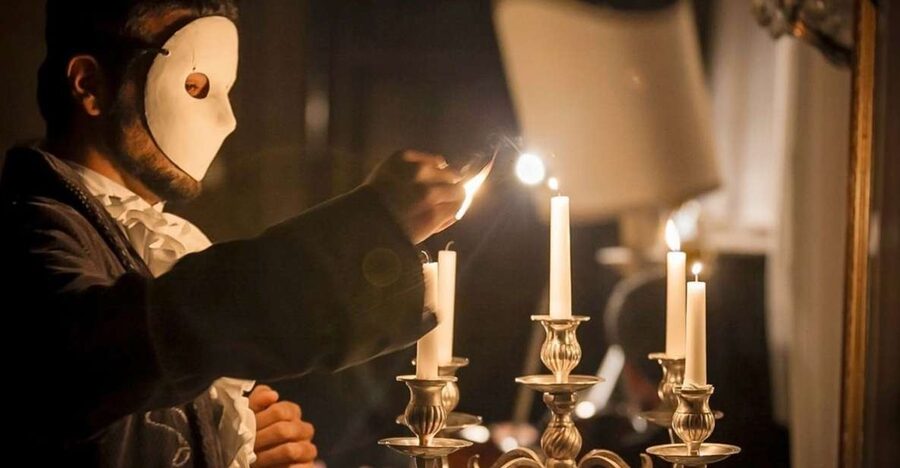
This is not a standard night at a large opera house. At Palazzo Barbarigo Minotto, the audience moves from room to room while the performance moves from act to act. The format recalls the intimate opera tradition of the late 1800s, when music and theater often took place in elegant private surroundings rather than in a vast modern auditorium.
The palazzo sits on the Grand Canal and is presented as one of Venice’s important Venetian-Gothic buildings. Inside, the rooms are decorated with stuccoes and paintings by Tiepolo. You are not simply passing through a museum before the performance. The rooms become the sets, and their scale keeps the action close.
That closeness changes how you listen. A singer’s breath, gesture, and facial expression are easy to see. You notice the acting as much as the voice. At times, a performer may be only a few yards away, or even right beside the audience. This can feel thrilling, though it also means the experience is more exposed than sitting in the back of a conventional theater.
More Rialto and Grand Canal trips:
- Venice: Grand Canal Gondola Ride with App Commentary
★ 4.1 · 18,908 reviews - Venice: Grand Canal by Gondola with Live Commentary
★ 4.1 · 13,681 reviews - Venice: Shared Gondola Ride Across the Grand Canal
★ 3.9 · 6,645 reviews
Arriving at Palazzo Barbarigo Minotto
Allow extra time to find the entrance. The palace is in the San Marco area, near the Grand Canal, but the entrance can be easy to miss among Venice’s narrow lanes and unmarked doorways. Your meeting point may vary with the booking option, so check the exact instructions rather than relying only on a general map pin.
Doors open 30 minutes before the show. That early window matters for two reasons. First, late admission is not guaranteed after the curtain. Second, seating is not pre-assigned. You choose your place when you arrive, so coming early gives you a better chance to settle where you want.
There are no assigned seats, but this does not mean you stay in one place all evening. The audience shifts rooms as the performance changes acts. You may get a different view in each space, which helps reduce the usual problem of being stuck behind a tall person or seated at an awkward angle.
The route includes about 30 steps, with no elevator. If stairs are difficult for you, this is an important reason to choose another concert venue. Food is not allowed inside. Dress is not mandatory, but long trousers and closed shoes are suggested for men, while jackets and ties are not required. You will also receive a Musica a Palazzo membership card.
Act one: close enough to see every expression
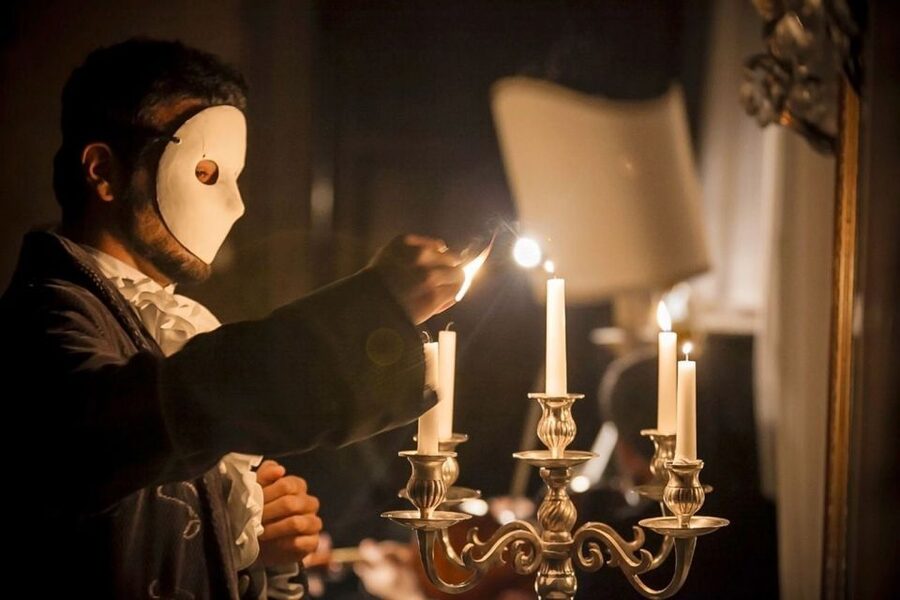
The first act establishes the special character of the evening. In a large opera house, you watch from a distance and often rely on surtitles or a printed synopsis. Here, the singers are close enough for you to read the drama in their faces and movements.
The productions can include works such as La Traviata, Rigoletto, and The Barber of Seville. The exact opera depends on the date you choose. These familiar titles help first-time listeners because the emotional situations are clear, even if you do not know every musical passage.
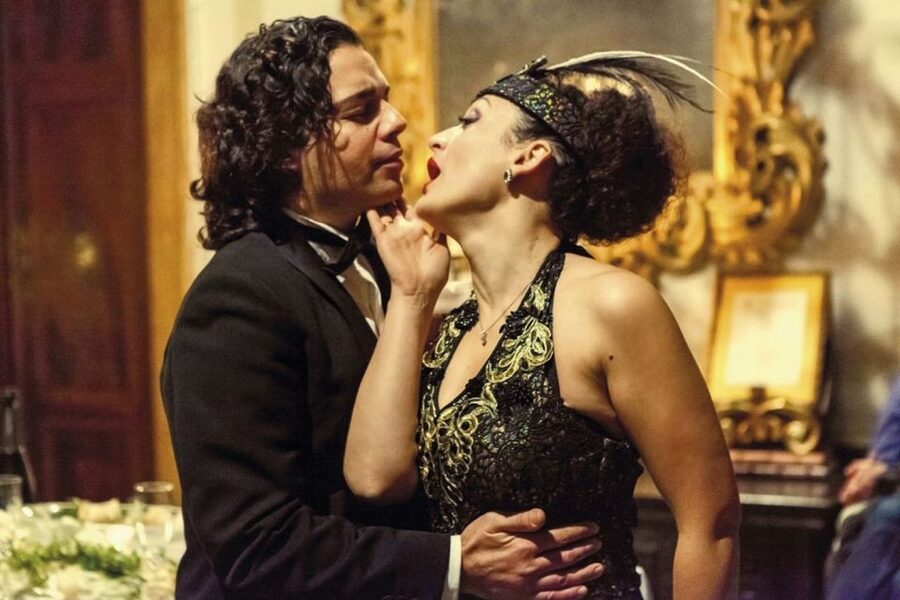
The small size of the room also makes the audience feel present in the scene. In La Traviata, for example, the opening party can be staged with an unusual sense of proximity, including prosecco being poured and handed to some audience members. That sort of detail turns a formal concert into something more theatrical and social.
The singers are not only required to sing well. They must also act without the protective distance of a proscenium stage. That is why this event can work for someone who has never attended opera. You can follow the characters through gesture, costume, movement, and tone instead of trying to decode a remote performance.
Act two: the palazzo becomes part of the story
After the first act, the audience moves to another room. This is the heart of the concept. The change is not a mere break while a crew rearranges scenery. You physically enter a new part of the palace, and the room supplies a new mood for the next section.
This movement keeps the evening active. You are not sitting still for two hours, and a new viewpoint gives you another chance to see the singers clearly. The audience may be seated in a different arrangement, so the experience can feel fresh even though the same small company continues the story.
I especially like the way this avoids the flatness that can sometimes affect a traditional opera viewed from a distant seat. Here, the room’s walls, doors, ceiling details, and decorative plaster help frame the action. A palace built for private life becomes a working theater.
There is a tradeoff. You should not expect the visual machinery of a major opera house, a large chorus, or a full orchestra. The production is deliberately small. If you want grand scale, massed voices, and elaborate scenery, this will feel restrained. If you value direct contact and atmosphere, the small scale is the point.
More concerts in Venice:
- Venice: La Fenice Opera House Entry Ticket with Audio Guide
★ 4.6 · 11,742 reviews - Venice: Interpreti Veneziani Concert at Church of San Vidal
★ 4.8 · 3,256 reviews - Venice: Vivaldi’s Four Seasons Live Classical Music Concert
★ 4.6 · 2,524 reviews - Venice: Vivaldi’s Four Seasons Concert & Music Museum Visit
★ 4.8 · 2,065 reviews
Act three: music without a full orchestra
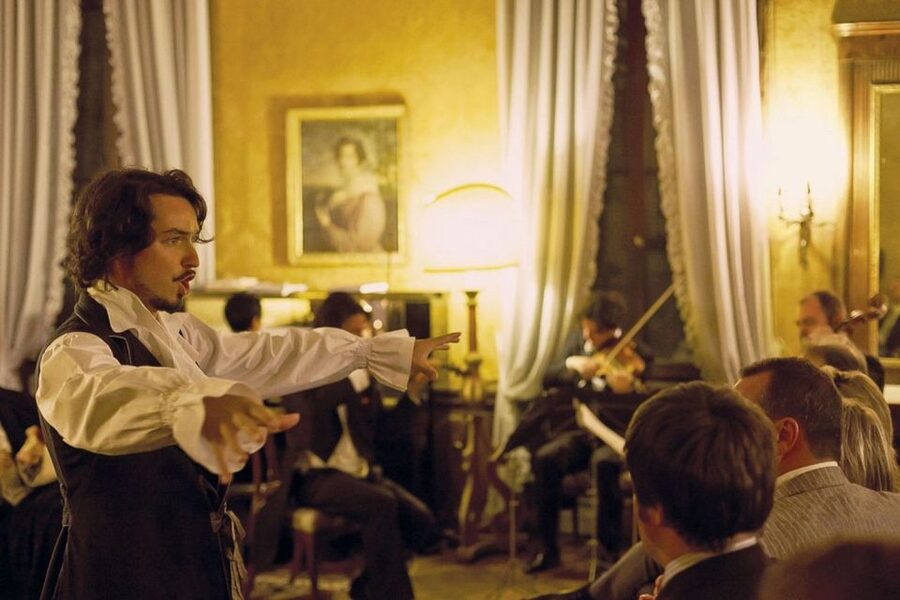
The musical accompaniment comes from a compact ensemble, commonly piano, violin, and cello. This is a striking part of the experience. A few musicians must suggest the force and color of an orchestral score, and the rooms help carry the sound.
The piano can provide the weight and harmonic structure, while the strings add warmth and movement. The result is not an imitation of a full opera orchestra in every respect. It is a chamber version, with the benefit that you can watch the musicians work close by.
The reduced ensemble also keeps the singers in the foreground. You hear the voice without the distance and scale of a huge auditorium. The strongest productions use this small group with real precision, and the pianist can become a major part of the evening rather than a background accompanist.
One practical note: chairs can be firm. The move between rooms gives you a natural change of position, but you are still attending a performance of roughly two hours. If comfort is a priority, arrive early and choose carefully when seating begins.
Italian singing, with help available
The opera is sung in Italian. You can buy an English or French translation at the front desk, which is worth considering if you do not speak Italian or already know the plot.
A translation can make the experience easier to follow, especially with a less familiar opera. At the same time, keep your attention on the stage rather than staring at every line. Because the singers are acting at close range, you can often understand the basic situation from expression and movement.
This format is particularly helpful for a first opera. The performances are small enough that the characters do not disappear into the machinery of a large production. Stories such as The Barber of Seville also bring comedy and quick stage business, while La Traviata offers stronger emotional weight.
Opera regulars should not assume that an intimate setting means a lesser musical experience. The scale is different, but the demands on the singers remain serious. You will hear the power of the voice without the filter of distance, and you may notice acting choices that are easy to miss from a balcony.
Grand Canal views and the value of the setting
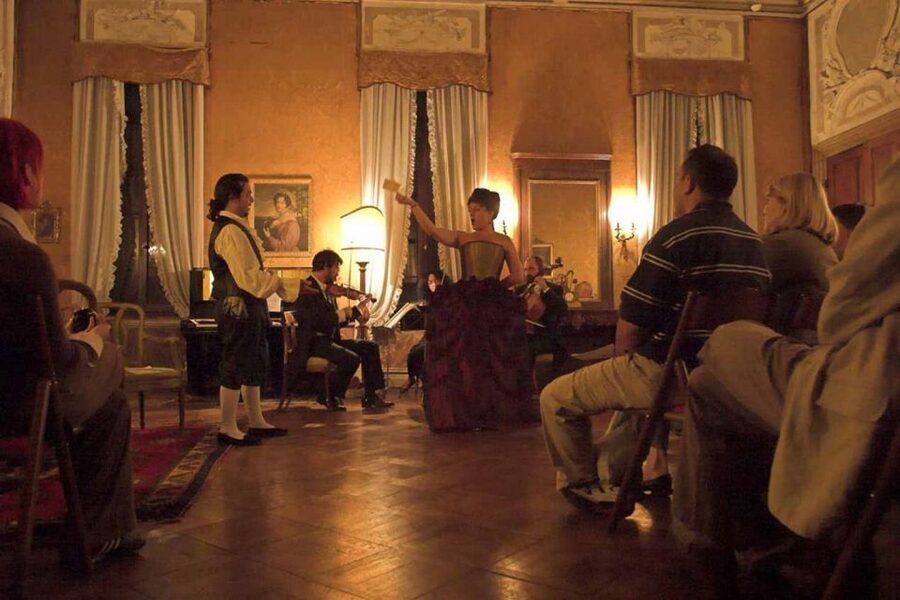
The palace is a major part of what you are paying for. You are not just buying two hours of music. You are entering a historic Venetian interior, sitting among decorative stuccoes and old paintings, and looking out toward the Grand Canal.
That setting gives the evening a strong sense of place. Venice has no shortage of concerts, but many use churches, music halls, or standard performance rooms. Here, the building and the opera support one another. The palace gives the story a period atmosphere, while the singers bring human energy into rooms that could otherwise be admired only as architecture.
A prosecco service may appear during an interval or after an act, depending on the production. It is a pleasant touch, but I would not book this as a food or drink event. Food is not allowed on the premises, and the real value lies in the performance and setting.
The price varies by booking date and option. I would judge it against the cost of a normal concert ticket plus a palace visit, though this is not a substitute for a full museum tour. You are paying for a tightly staged cultural evening in a rare setting, not for a guided history lesson or a long sightseeing itinerary.
Who will enjoy this most
This is a strong choice if you want one memorable evening in Venice and prefer a small, unusual performance to a formal night at a grand opera house. It works especially well for:
- First-time opera attendees who want clear acting and a close view
- Couples looking for a special evening in a historic setting
- Opera fans who enjoy chamber-scale music and unusual staging
- Visitors who appreciate architecture as much as performance
- Families with older children who can sit quietly and manage the stairs
It may not suit you if you need step-free access, dislike moving between rooms, or want a full orchestra and large-scale scenery. It is also not a guided palace visit. The focus is the opera, with the building serving as the setting.
The English, French, and Italian host or greeter options can help with arrival, but the singing itself is in Italian. Do not expect a spoken tour of the rooms. You are there for the performance.
Practical tips for a smoother evening
Arrive 30 minutes early. Venice’s lanes can slow you down, and the entrance is not always obvious. Early arrival also helps with seat choice, since places are not assigned in advance.
Wear shoes that are comfortable on stairs and clothing that feels neat without becoming formal. A jacket and tie are not needed, and comfort matters more than dressing for a grand gala.
If you want to follow every word, buy the English or French translation at the front desk. If you know the opera already, you may prefer to listen and watch without reading.
Expect to move between three rooms. Keep personal items manageable, and listen to the staff when the audience is asked to relocate. The room changes are part of the design, not an interruption.
Finally, remember that this is an intimate performance. A cough, phone screen, or whispered conversation carries farther than it would in a large theater. Silence your phone and give the singers the same attention you would hope for in return.
Should you book this Venetian opera experience?
I would book it if you want opera with a strong sense of place, close-up acting, and a format that keeps the evening moving. The combination of Palazzo Barbarigo Minotto, Grand Canal views, a compact ensemble, and three room changes gives you something quite different from a standard concert.
I would skip it only if stairs are a serious problem, you require assigned seating, or you are searching for the scale of Teatro La Fenice. For everyone else, especially first-timers, this is a smart way to try opera without feeling trapped in an intimidating formal setting. Arrive early, buy the translation if needed, and treat the palace itself as part of the ticket.
FAQ
How long does the opera experience last?
The performance lasts approximately two hours.
Where does the experience take place?
It takes place at Palazzo Barbarigo Minotto, a historic Venetian palace overlooking the Grand Canal.
Do I stay in one room for the whole performance?
No. The audience moves through three different rooms, with each room used for a different act or section of the performance.
Is the opera sung in English?
No. The singing is in Italian. An English or French translation can be purchased at the front desk.
Are seats assigned in advance?
No. Seating is not pre-assigned. You choose your seat when you arrive.
How early should I arrive?
Doors open 30 minutes before the show. Arrive during that window because admission is not guaranteed after curtain time.
Is there an elevator?
No. You must climb about 30 steps to reach the concert rooms.
Is there a dress code?
Dress is not mandatory, but comfortable clothing suitable for the occasion is requested. Long trousers and closed shoes are suggested for men, while a jacket and tie are not required.
Is food allowed inside the palazzo?
No. Food is not allowed on the premises.
Can I cancel the booking?
You can cancel up to 24 hours in advance for a full refund. A reserve-now, pay-later option is also available for eligible bookings.
More history tours in Venice
- Venice’s Best: Basilica, Doge’s Palace, Gondola & History Gallery
★ 4.5 · 2,478 reviews - Venice: City Center Historical Guided Walking Tour
★ 4.2 · 1,873 reviews - Venice: Bell Tower & St Mark’s Square History Gallery Ticket
★ 4.3 · 910 reviews - Basilica, Doge’s Palace, History Gallery & Bell Tower Option
★ 5.0 · 586 reviews
Recently added around Venice
- Your evening in Venice – Legends&Ghosts&Aperitif★ 4.7 · 79 reviews
- Venice: City Tour & Skip the Line for St. Mark’s Basilica★ 4.1 · 84 reviews
- Walking Tour to Uncover the Hidden Venice★ 4.4 · 34 reviews
- Wine Tasting in Venice★ 4.6 · 42 reviews
- Venice: Watercolor Painting Class at the Prisons Palace★ 4.7 · 27 reviews
- VIRTUAL MUSEUM: Creature di Gomma – Venice Vintage Toys★ 4.7 · 3 reviews
- Venice: Walking Tour & Gondola Ride★ 4.4 · 22 reviews
- Venice Walking Tour from St. Mark’s to Rialto Bridge★ 4.5 · 12 reviews
Rialto and Grand Canal Tours, compared.
Grand Canal Gondola Ride with App Commentary
Read our review →
Grand Canal Gondola Experience with Live Commentary™
Read our review →
Rialto Bridge & Offbeat Unusual Venice Walking Tour
Read our review →
Charming Gondola Ride on the Grand Canal & Gondola Gallery™
Read our review →
Browse the lists this tour appears in