
Reviewed · VENICE JEWISH GHETTO TOURS
Small-Group Walking Tour of the Jewish Ghetto in Venice
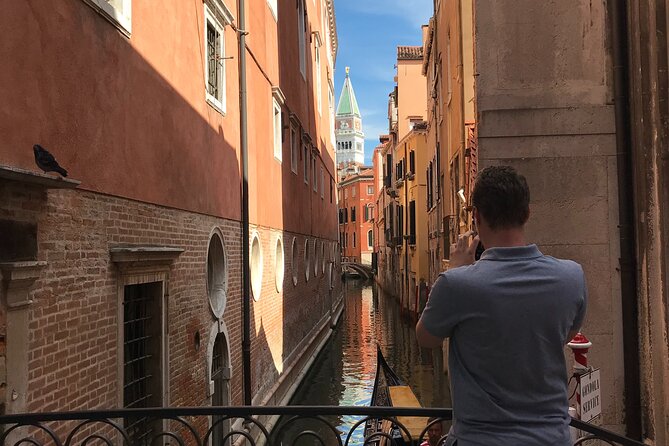
Venice’s Jewish Ghetto gives you a different city from the one of gondolas and grand palaces. This two-hour walk with local guide Lucia Bondetti connects the quiet corners of Cannaregio with the story of Venice’s Jewish community, including why the world’s first ghetto was created and how the district changed over time.
I like two things in particular: the group is capped at 12, and Lucia’s training with the Jewish Community and a rabbi gives the tour a serious historical base. I also like the attention to present-day life, from kosher food and local biscuits to artists still working in the neighborhood.
The main consideration is the pace. This is a talk-heavy history walk, with frequent stops for explanation. If you want to cover lots of ground quickly, you may find it slow. If you want context, questions, and stories tied to the streets around you, that same pace is the point.
Key points to know before booking
- See all three historic ghettos: The walk explains how Venice’s Jewish quarters developed and how they differed from one another.
- Meet Lucia Bondetti: She is a local guide focused on the Jewish Ghetto and has training from the Jewish Community and a rabbi.
- Expect history at nearly every stop: This is designed for people who want explanation, not just a photo walk.
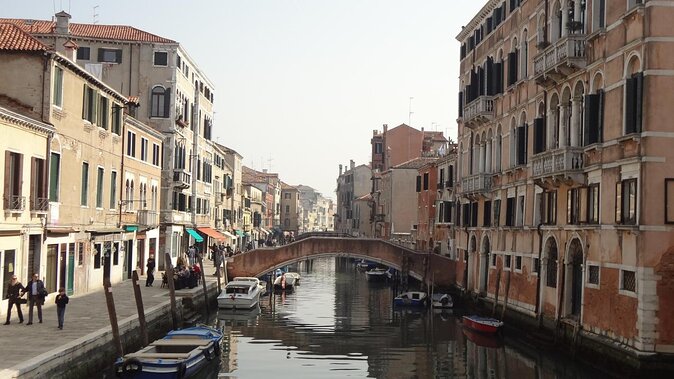
- Visit Cannaregio beyond the main sights: The route includes Fondamenta dei Ormesini, a quieter area connected with everyday Venetian life.
- Synagogues are explained from outside: Interior visits are not part of the experience, but Lucia provides information for visiting them separately.
- Finish with local culture: The walk includes Jewish recipes, biscuits made in the area, and an art gallery.
Why the Jewish Ghetto changes your view of Venice
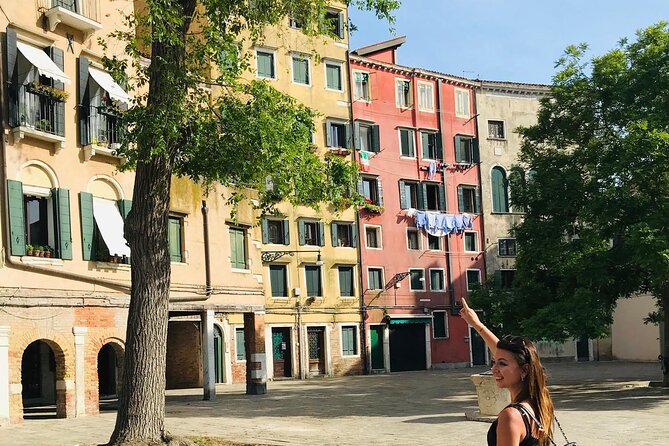
Most first-time visitors meet Venice through St. Mark’s Square, the Rialto Bridge, and the Grand Canal. The Jewish Ghetto offers a more intimate look at how ordinary communities lived within the Venetian Republic.
The word ghetto itself is tied to Venice. Lucia explains why the first ghetto was created, which Doge was in power, and how Jewish residents lived under changing rules. That background matters because the district is not simply a collection of old buildings. The streets reflect decisions about residence, movement, work, religion, and community life.
I appreciate that the walk presents both restriction and resilience. The story is not softened, but it is also not reduced to suffering alone. You learn about the limits placed on Jewish residents, the people who lived and worked there, and the community that continues in Venice today.
The strongest part of the tour is the connection between the past and the street in front of you. A plaque, tree, sculpture, doorway, or small symbol can become a clue to a much larger story. Lucia is also familiar with local shop owners and artists, which helps the neighborhood feel lived in rather than frozen in the past.
More Jewish Ghetto tours in Venice:
- Venice: Guided Tour of the Jewish Ghetto and Synagogue Visit
★ 4.4 · 610 reviews - Venice: Jewish Ghetto Walking Tour with Synagogue Visits
★ 4.7 · 379 reviews - Venice: Cicchetti, Spritz, and Wine Tour in Ghetto Ebraico
★ 4.9 · 315 reviews
Starting in Cannaregio at Campo San Geremia
The meeting point is Campo San Geremia in Cannaregio. This is a useful starting place because the tour begins by setting the Jewish Ghetto within the wider district rather than dropping you straight into a string of facts.
The first part takes you through a green area that helps explain what Cannaregio looked like around the time of the ghetto. It is a quiet opening, and the lack of a major admission sight is part of the design. You are using the space to picture an earlier Venice and understand why this part of the city mattered.
Lucia then explains the Jewish community before the ghetto existed. That sequence is important. You first hear about life before formal segregation, then about the Venetian decision to create a restricted quarter, and only after that do you enter the historic ghetto area.
Expect about 15 minutes in this opening section, followed by another short introduction before entering the ghetto. The time is spent listening rather than ticking off monuments, so keep that in mind if you prefer a fast-moving route.
Entering the three ghettos of Venice
The central walk lasts about an hour. Here, the tour becomes a close look at the three Jewish ghettos of Venice, not one single enclosure treated as a general neighborhood.
Lucia explains the origin of the word ghetto and the reasons Venice created the first one in history. She also points out symbols and details that are easy to miss without local guidance. The route is built around questions: Who lived here? What rules shaped daily life? How did people work, worship, and maintain their community? What changed across different periods?
This is where the small group makes a real difference. With no more than 12 people, you can ask questions without turning the walk into a private tour. Lucia’s approach is warm and direct, and her explanations include the difficult parts of the story without treating the subject as a museum display.
The tour also brings in cultural references, including Shakespeare’s The Merchant of Venice. That connection gives you another way to think about how Jewish life was represented in European culture, though the walk remains focused on Venice and its own community.
You should expect regular pauses. Lucia often stops to explain one feature before moving only a short distance to another. One participant found this too lecture-heavy and wanted to walk farther and listen less. That is a fair warning. The tour suits you best if you enjoy stopping for detail and discussion.
Families can also find the subject accessible. One account describes a family with two teenagers enjoying the experience, and another notes that a younger child stayed engaged. Still, the material is serious, so parents should decide if the historical subject fits their children.
What you will not see inside the synagogues
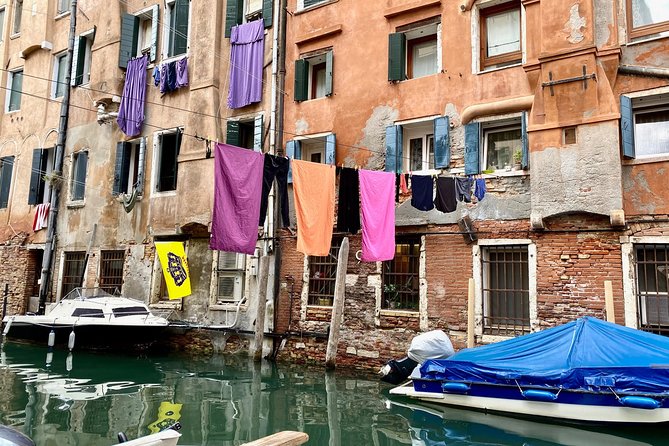
The tour does not include interior visits to the synagogues or the Jewish museum. This is one of the most important points to understand before paying for the walk.
Lucia does show you details connected with the synagogues and explains their history. She can also tell you how to visit the interiors separately. That makes the tour useful as an introduction, but it does not replace a synagogue visit if religious architecture or interiors are your main goal.
I see this as both a limit and a practical advantage. The walk can stay focused on the neighborhood, its streets, and the wider story instead of spending the entire time inside one institution. But you should plan extra time if you want to enter the synagogues afterward.
The tour’s attention to symbols, plaques, and less obvious details is especially helpful here. Even without going indoors, you gain a better sense of how worship and community life fit into the surrounding quarter.
More walking tours in Venice:
- Venice Walking Tour and Gondola Ride
★ 3.5 · 3,630 reviews - Venice: Rialto Bridge & Offbeat Unusual Venice Walking Tour
★ 4.2 · 3,538 reviews - Private 3 hrs Venice Tour: St Mark’s, Walking tour & Boat tour
★ 4.0 · 3,372 reviews - Venice: City Center Historical Guided Walking Tour
★ 4.2 · 1,873 reviews
Everyday Cannaregio along Fondamenta dei Ormesini
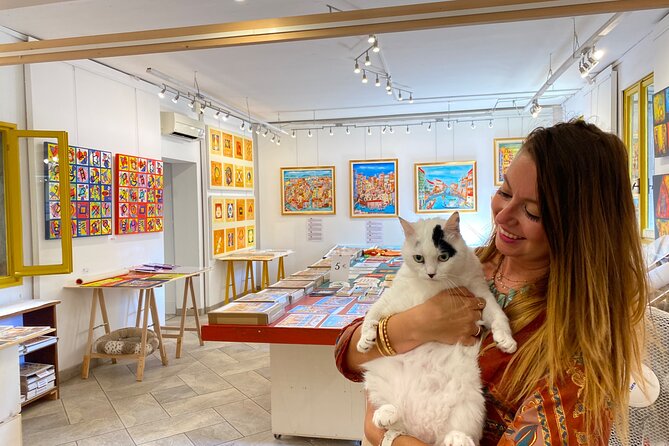
After the historical core, the route moves toward Fondamenta dei Ormesini. This part gives you a different view of Cannaregio, away from the most heavily visited parts of Venice.
The walk ends beside the canal-side fondamenta, where you can see a more ordinary side of the district. It is a good transition from the history of the ghetto to present-day Venetian life. You may find cafés, homes, local businesses, and working spaces rather than the grand ceremonial buildings that define central Venice.
The ending point is also practical. Fondamenta dei Ormesini gives you a pleasant place to continue your afternoon, and Lucia can offer local suggestions. Some participants received restaurant advice and went on to try a kosher restaurant near the ghetto entrance. Treat those recommendations as useful leads, not a fixed part of the tour.
The walk includes a stop connected with Venetian Jewish recipes, distinctive biscuits made in the area, and an art gallery. It may also include contact with artists working in the neighborhood. These details add texture to the history because you see how the area functions now, not only how it operated centuries ago.
Lucia Bondetti’s guiding style
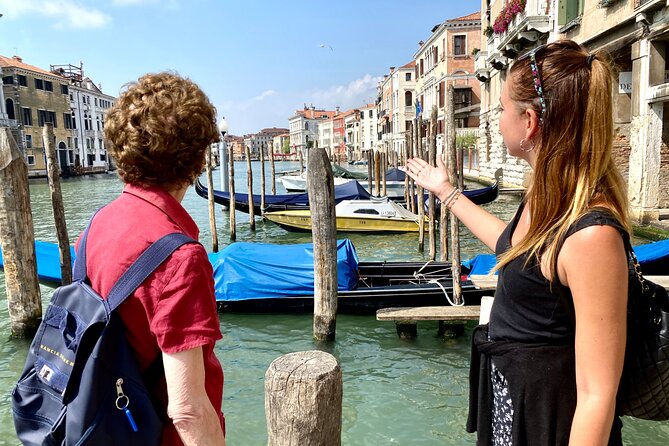
Lucia is the main reason this experience feels more personal than a standard audio guide. She is described as warm, patient, and highly informed, with a clear interest in the subject and the people connected to it.
Her style is story-led. She explains historical events, then connects them with a place, symbol, person, or local custom. She also leaves room for questions and gives thoughtful answers rather than rushing to the next stop.
That level of attention has a trade-off. Lucia’s passion can make the tour feel like a moving seminar. If you want a general orientation to Venice, this is too focused. If you want the Jewish Ghetto explained carefully, the detail is a strong part of the value.
I also like the lack of forced cheerfulness around a serious subject. The walk includes stories of survivors and heroes, discusses the restrictions imposed on Jewish residents, and considers what the community is like now. The tone is compassionate without turning the past into a simple lesson with easy answers.
The tour has a perfect five-star rating from 93 reviews and is recommended by 99 percent of participants. Those figures suggest a strong record, but the one recurring caution is worth taking seriously: this is primarily an educational walking tour, not a fast sightseeing circuit.
Is $71.35 a fair price for two hours?
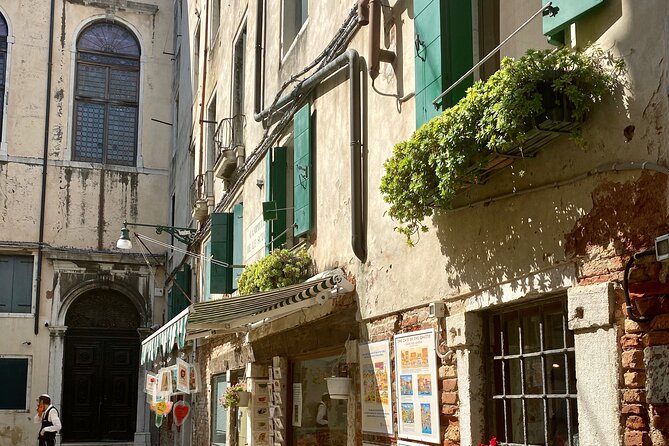
At $71.35 per person, this is not a bargain-priced stroll. You are paying for a small group, a specialist subject, and a guide who offers more than basic directions between landmarks.
The value depends on what you want from Venice. If you are looking for famous views and a broad introduction to the city, spend your money elsewhere. If you want a focused understanding of Jewish Venetian life, the price is easier to justify because the experience brings together history, local knowledge, present-day culture, and practical advice about further visits.
The group limit of 12 matters. A large group would make it harder to hear, ask questions, or examine small details. Here, the guide can respond to the interests of the people in front of her, and the walk can feel more like a conversation.
There are no admission tickets included because the planned route uses public streets and outdoor spaces. The synagogues and museum are not part of the price. Consider the $71.35 fee as payment for interpretation and access to Lucia’s local knowledge, not as an admission package.
The walk is booked, on average, about 60 days ahead. That suggests you should reserve early if your dates are fixed, especially if you want to keep space in a small group.
Timing, walking conditions, and practical details
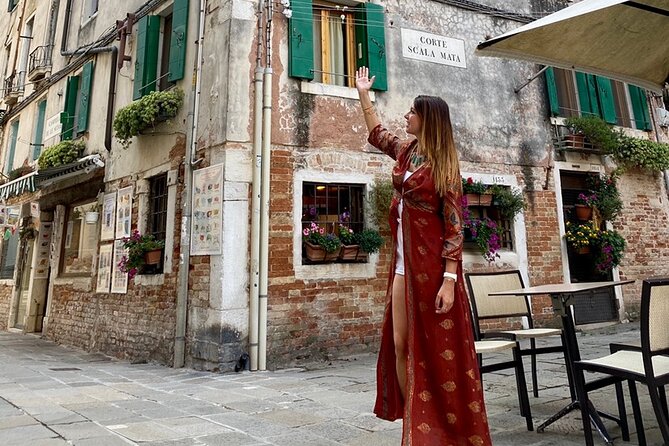
The experience lasts about two hours and is offered in English. It starts at Campo San Geremia and ends at Fondamenta dei Ormesini, so you should not expect to return to the starting point.
You will be walking through city streets and stopping outdoors. The tour requires good weather, and a poor-weather cancellation may lead to a new date or a full refund. If you cancel, you need to do so at least 24 hours before the start time for a full refund.
Most people can take part, and service animals are allowed. The starting area is near public transportation, which makes it fairly easy to reach, though the information provided does not give a detailed mobility assessment.
If you are visiting Venice for only one day, check the city access rules before arriving. On certain dates, visitors staying outside Venice may need to pay a €5 access fee. The applicable dates and exemptions are listed at cda.ve.it.
Wear comfortable shoes and leave room for pauses. This is not a strenuous route in the sense of a long hike, but standing still while listening can be tiring, especially in poor weather.
Who should book this Jewish Ghetto walk?
I would choose this tour if you want to understand Venice through one community’s experience. It works especially well for visitors interested in Jewish history, religious culture, urban history, or the way tourism intersects with everyday neighborhoods.
It is also a good choice if you have already seen the major landmarks and want a quieter part of Venice. Cannaregio gives you space to slow down, and the route finishes in an area where you can continue exploring without immediately returning to the busiest streets.
Families with older children and teenagers may enjoy it, especially if they like stories and questions. Couples, solo visitors, and small groups who prefer a thoughtful guide over a packed schedule should also find the format appealing.
I would skip it if your priority is entering the synagogues, visiting the museum, or covering a large part of Venice in two hours. I would also skip it if long explanations make you impatient. The tour is strongest when you give Lucia time to explain why each place matters.
Should you book it?
Book this walk if you want a serious, personal introduction to Venice’s Jewish Ghetto and are happy to trade speed for context. Lucia Bondetti’s local connections, clear passion, and attention to both past and present make the experience more than a basic neighborhood stroll.
The best plan is to schedule it early in your Venice stay, then use Lucia’s advice to visit a synagogue, museum, kosher restaurant, or gallery afterward. Just remember that the tour itself does not include synagogue interiors and that its pace favors listening.
For a focused look at a less familiar side of Venice, this is a strong choice. For a quick sightseeing loop, choose something broader.
FAQ
How long does the Jewish Ghetto tour last?
The tour lasts approximately two hours.
Where does the tour begin?
It begins at Campo San Geremia in Cannaregio, Venice.
Where does the tour end?
It ends at Fondamenta dei Ormesini in Cannaregio.
Is the tour offered in English?
Yes. The experience is offered in English.
How large is the tour group?
The group has a maximum of 12 participants.
Are synagogue interiors included?
No. Interior visits to the synagogues are not included, but the guide provides detailed information about how to visit them.
Who guides the tour?
The guide is Lucia Bondetti, a local expert on the Jewish Ghetto area. She is trained by the Jewish Community and a rabbi.
What happens if the weather is poor?
The experience requires good weather. If it is canceled because of poor weather, you can receive a different date or a full refund.
Recently added around Venice
- Your evening in Venice – Legends&Ghosts&Aperitif★ 4.7 · 79 reviews
- Venice: City Tour & Skip the Line for St. Mark’s Basilica★ 4.1 · 84 reviews
- Walking Tour to Uncover the Hidden Venice★ 4.4 · 34 reviews
- Wine Tasting in Venice★ 4.6 · 42 reviews
- Venice: Walking Tour & Gondola Ride★ 4.4 · 22 reviews
- Venice: Watercolor Painting Class at the Prisons Palace★ 4.7 · 27 reviews
- VIRTUAL MUSEUM: Creature di Gomma – Venice Vintage Toys★ 4.7 · 3 reviews
- Venice Walking Tour from St. Mark’s to Rialto Bridge★ 4.5 · 12 reviews
Venice Jewish Ghetto Tours, compared.
Guided Tour of the Jewish Ghetto and Synagogue Visit
Read our review →
Jewish Ghetto Walking Tour with Synagogue Visits
Read our review →
Cicchetti, Spritz, and Wine Tour in Ghetto Ebraico
Read our review →
Jewish Ghetto & Cannaregio Area Food Tour: Pasta Wine Gelato and More!
Read our review →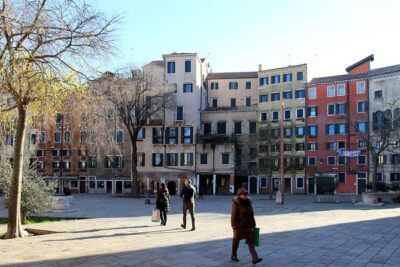
Jewish Ghetto Walking Tour with Synagogues Visit
Read our review →
Jewish Ghetto and Cannaregio Food and Wine Tour
Read our review →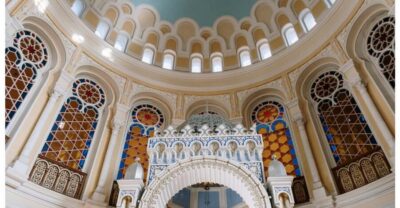
Jewish Ghetto and Synagogue Ticket with Audio Guide
Read our review →Browse the lists this tour appears in