
Reviewed · MUSEUMS
Venice: Leonardo Da Vinci Museum Entrance Ticket
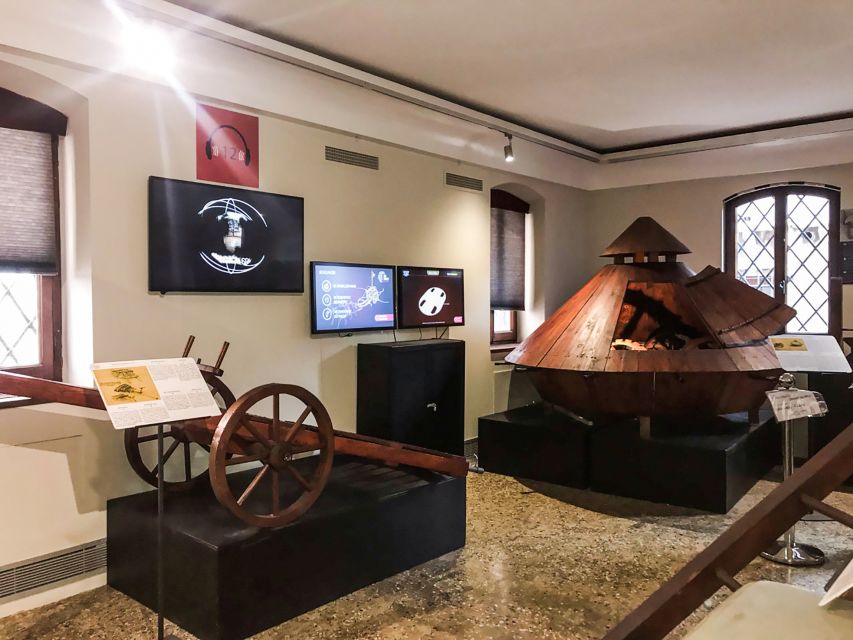
Leonardo’s genius makes the most sense when you can touch the working ideas. At this small museum near San Rocco, you can turn gears, test wooden structures, study flight designs, and see how simple mechanical principles shaped inventions far ahead of their time.
I like the hands-on exhibits, which give children and adults a reason to look closely instead of walking past glass cases. I also like the compact size: you can see it in 30 minutes if pressed, or spend about 90 minutes testing machines and reading the displays. The main drawback is that the museum is small, so visitors wanting a large collection of original works may finish sooner than expected.
Key points to know before you go
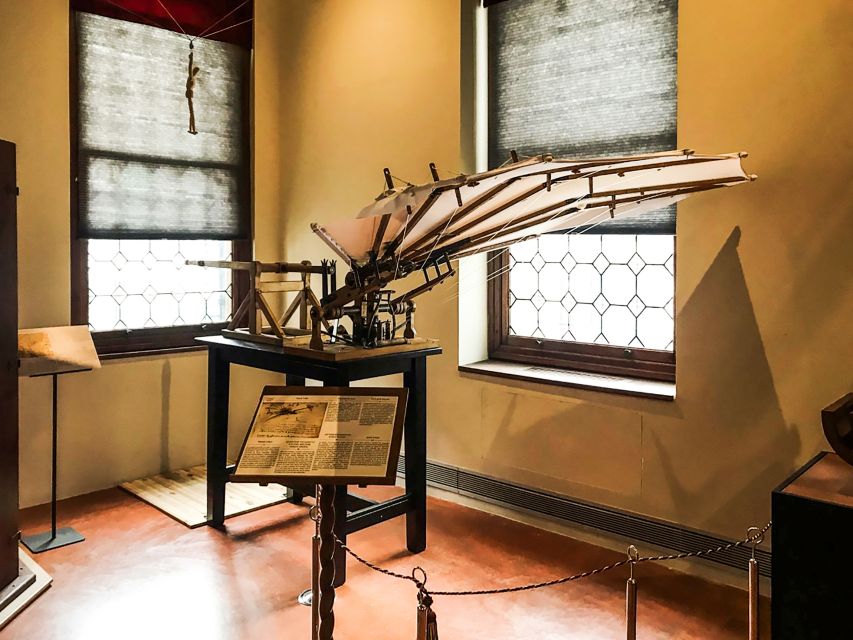
- Four themed sections: Explore Leonardo’s ideas through Earth, Water, Fire, and Air.
- Working reproductions: Operate machines rebuilt from his designs, with changes made only when original proportions required it.
- Good for families: Wooden puzzles, drawing activities, mirrors, and mechanical displays give children something to do.
- Useful short visit: Plan on 30 to 90 minutes, depending on how many machines you try.
- Central but easy-to-miss location: The museum is at Campo San Rocco, in the Scoleta di San Rocco building, opposite the Scuola Grande di San Rocco and behind the Church of the Frari.
- Low-cost indoor stop: At $10 per person, it offers a practical break from Venice’s streets, especially in hot weather.
What the $10 ticket gets you in Venice
This is a modestly priced museum ticket, and its value comes from participation rather than size. For $10, you get entry, permission to take photos, access to the interactive displays, and a 10 percent discount in the bookshop. Children under three enter free.
I would not compare it with a major art museum holding original paintings or manuscripts. This is an educational exhibition built around faithful reproductions, explanatory panels, multimedia material, and machines you can operate. That makes it especially useful when you want a break from Venice’s churches and grand galleries, or when younger members of your group need more than paintings behind ropes.
The ticket is valid for one day, but the museum itself is not an all-day attraction. Most people should allow around an hour. If you read every panel, watch the film, and try the puzzles, 90 minutes is more realistic. If you are moving quickly, the main displays can be covered in roughly 30 to 60 minutes.
That short format is a strength in Venice. You can fit the museum between sightseeing stops without giving up half a day. It also makes the $10 price easier to justify, particularly for families or anyone looking for an indoor activity.
More museums and galleries in Venice:
- Venice’s Best: Basilica, Doge’s Palace, Gondola & History Gallery
★ 4.5 · 2,478 reviews - Venice: Vivaldi’s Four Seasons Concert & Music Museum Visit
★ 4.8 · 2,065 reviews - Charming Gondola Ride on the Grand Canal & Gondola Gallery™
★ 4.0 · 1,313 reviews
Finding the museum near San Rocco
The meeting point is the museum itself: Leonardo da Vinci Interactive Museum, Campo San Rocco, 3052 Venezia. It is in the Scoleta di San Rocco building, opposite the Scuola Grande di San Rocco and behind the Church of the Frari.
You do not meet a guide for a walking tour. Present your ticket at reception and enter. This detail matters because the wording of some booking information can make the meeting point sound like a place where a tour leader will collect you.
The location puts you in a quieter part of central Venice, close enough to reach on foot from major sights. You will still need to follow Venice’s winding lanes and small squares, so leave a little time to find Campo San Rocco. Once there, look for the building and museum entrance rather than expecting a large landmark-style museum facade.
The museum can also serve as a sensible pause in your day. One report noted that staff helped hold suitcases during the visit, but do not treat that as a guaranteed service unless the staff confirms it when you arrive.
Earth, Water, Fire, and Air
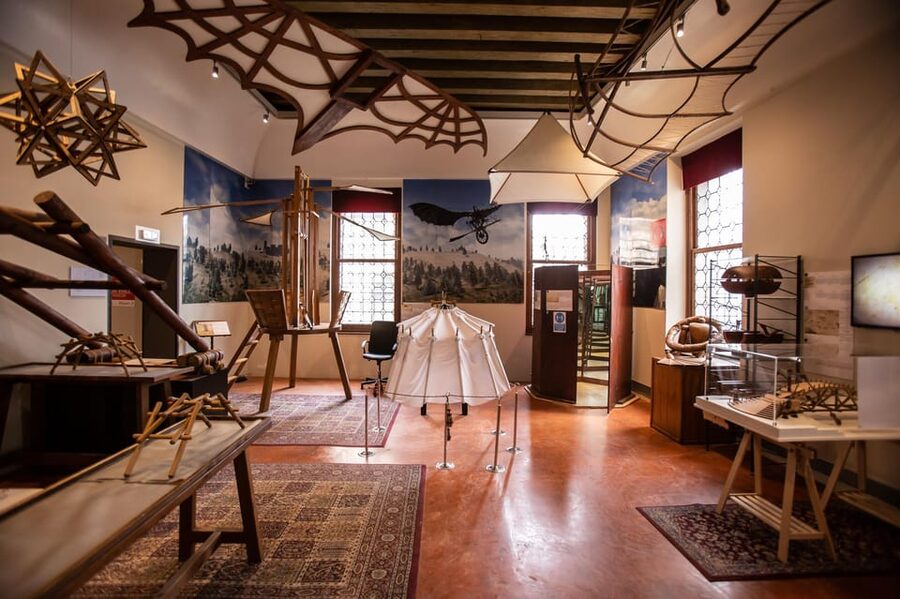
The exhibition is arranged around four elements: Earth, Water, Fire, and Air. This structure helps you connect Leonardo’s work across engineering, mechanics, nature, and movement.
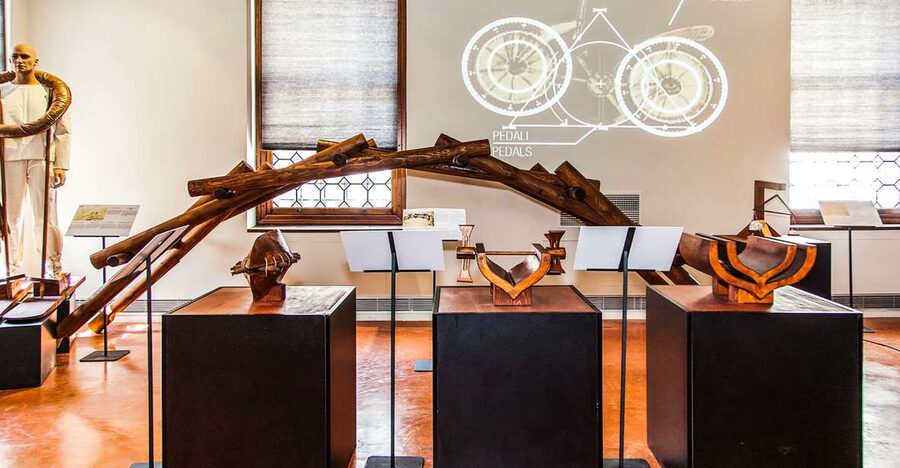
The sections are not simply rooms of diagrams. They include machines rebuilt from Leonardo’s drawings, allowing you to test how the designs work. You may turn, pull, lift, or assemble parts, depending on the display. The practical element is the point: a sketch becomes easier to understand when you see motion in front of you.
The machines are reproductions, not original sixteenth-century objects. They have been rebuilt according to Leonardo’s designs, with adjustments where the original proportions would not work for a modern exhibition. That distinction is important if you are expecting historic artifacts, but it does not reduce the educational value. In some ways, a working reproduction explains the idea more clearly than a fragile original could.
The Air section connects naturally with Leonardo’s interest in flight and movement. The Water section shows how he thought about machines and forces. Earth and Fire broaden the picture beyond the familiar painter and let you see the engineer at work. The museum’s central message is clear: Leonardo was not only an artist.
Hands-on machines and wooden puzzles
The mechanical models are the museum’s strongest feature. You can operate many of them, which turns the visit into a shared activity rather than a silent circuit of displays.
Some devices are easy to understand at once. Others need a little trial and error. That is part of the fun, though it can create small bottlenecks when several people want to use the same machine. If you visit with children, remind them to handle the exhibits carefully. The interactive design invites touch, but these are educational models, not toys.
The wooden construction puzzles are particularly good for pairs or small groups. One puzzle on the second floor is a wooden bridge that works better with two people. Other visitors have enjoyed building wooden structures and working with geometric pieces. Bring patience, and expect a few failed attempts before the solution becomes clear.
The mirror box is another memorable stop. It lets you see reflections from different angles and gives the ground floor a playful break from the written displays. Children often respond quickly to the visual tricks, while adults may find themselves spending longer than expected trying to understand the effect.
You may also find iPads or similar drawing activities for children, allowing them to sketch in a style inspired by Leonardo. These activities help younger visitors stay involved while adults read about the machines and paintings.
A few more Venice outings worth comparing
- Venice: Doge’s Palace Reserved Entry Ticket
★ 4.6 · 42,716 reviews - Venice: La Fenice Opera House Entry Ticket with Audio Guide
★ 4.6 · 11,742 reviews - Venice: St. Mark’s Basilica & Doge’s Palace Tour with Ticket
★ 4.7 · 3,375 reviews - Venice: Palazzo Contarini del Bovolo Entrance Ticket
★ 4.3 · 1,991 reviews
Leonardo the anatomist and artist
The museum also explains Leonardo’s medical studies. Displays about human anatomy help show how closely his art and scientific work were connected. His interest in the human body was not separate from painting: careful observation, proportion, movement, and structure informed both areas.
The anatomy material adds balance to the machine displays. Without it, you could leave thinking only about gears and flying machines. Here, you get a broader picture of a person who studied bodies, engineering, nature, and art with the same restless curiosity.
High-resolution, backlit reproductions of major paintings add another layer. These are not original masterpieces, but the illuminated format lets you examine details and compare Leonardo’s artistic work with his technical studies. If you plan to see the Last Supper in Milan or other Leonardo works elsewhere in Italy, this section provides useful context.
The written information is available in Italian, English, French, German, Spanish, and Russian. Multimedia displays add background about Leonardo’s life and work, and a short film explains his life in a clear, compact way. If you prefer listening, look for the QR code at the front of the shop or entrance area. One useful practical point: scan it when you arrive, since the code may not be repeated throughout the museum.
A good family stop, with enough for adults
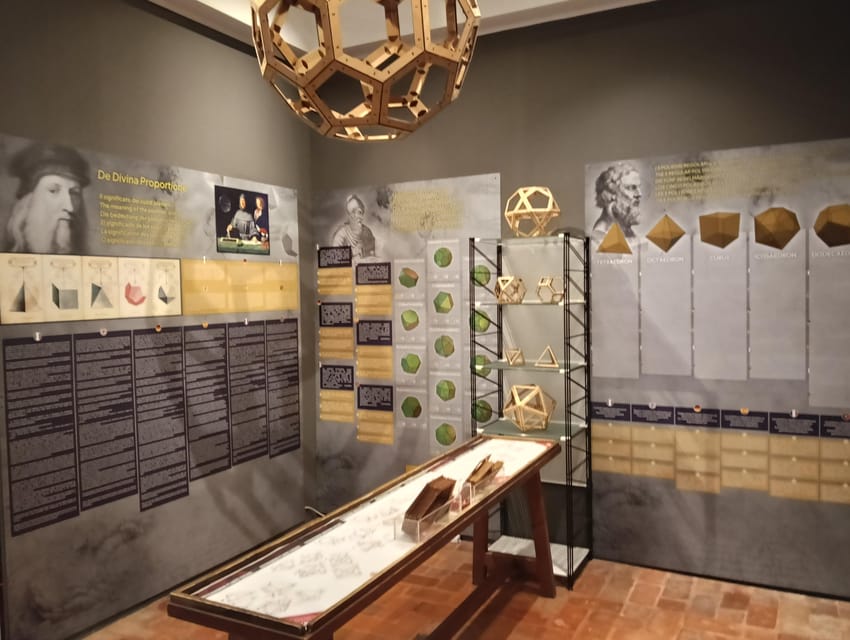
This museum works across a wide age range. A five-year-old may enjoy the moving parts and mirrors, while a teenager may appreciate the puzzles and invention displays. Adults who already know Leonardo’s paintings can still find something new in the engineering and anatomy sections.
It is especially helpful for families because not every person needs to engage in the same way. One person can read a panel, another can test a machine, and a child can draw or solve a construction puzzle. That shared activity often makes the visit more memorable than a room full of labels.
The displays are also suitable for inquisitive adults who like to understand how things work. You do not need specialist knowledge. The explanations are intended to be accessible, and the machines provide a physical example when a diagram alone might seem abstract.
The main family drawback is supervision. Since the exhibits are touchable, children can get carried away and treat them like play equipment. Stay involved and show them how to use each model properly. That keeps the visit enjoyable and protects the displays for the next person.
How long to stay and when to visit
Plan for at least 30 minutes if your schedule is tight. That gives you time to see the main rooms and try a few machines. An hour is a better target for most people, while 90 minutes suits anyone who likes puzzles, reads the background information, and watches the film.
The museum’s small footprint is useful when you are building a busy Venice itinerary. You will not lose an entire afternoon, and the visit can fit before or after the Church of the Frari, the Scuola Grande di San Rocco, or other nearby sights.
It can also be a welcome escape from heat and crowds. The indoor setting provides a calmer change of pace, and one account specifically noted air conditioning. Do not expect silence during a busy family visit, though. Interactive exhibits naturally create more movement and conversation than a traditional gallery.
Last entrance is one hour before closing. Check the available starting times when booking, even though the ticket is valid for one day. The flexible cancellation policy allows a full refund when you cancel at least 24 hours in advance, and the reserve-now, pay-later option can help if your Venice plans are still changing.
The bookshop and small extras
The bookshop sells Leonardo-themed gifts and souvenirs, including books and educational items. The included 10 percent discount makes it worth browsing if you want something connected to the visit.
The shop is also where you should pay attention to the audio guide information. Scan the QR code near the front before moving through the rooms. If you miss it, you may need to return to the beginning to access the material.
Photography is allowed inside, which is useful for remembering the machines and puzzles. Be considerate around other people using the exhibits, and avoid blocking a display while taking pictures.
Who should book this museum?
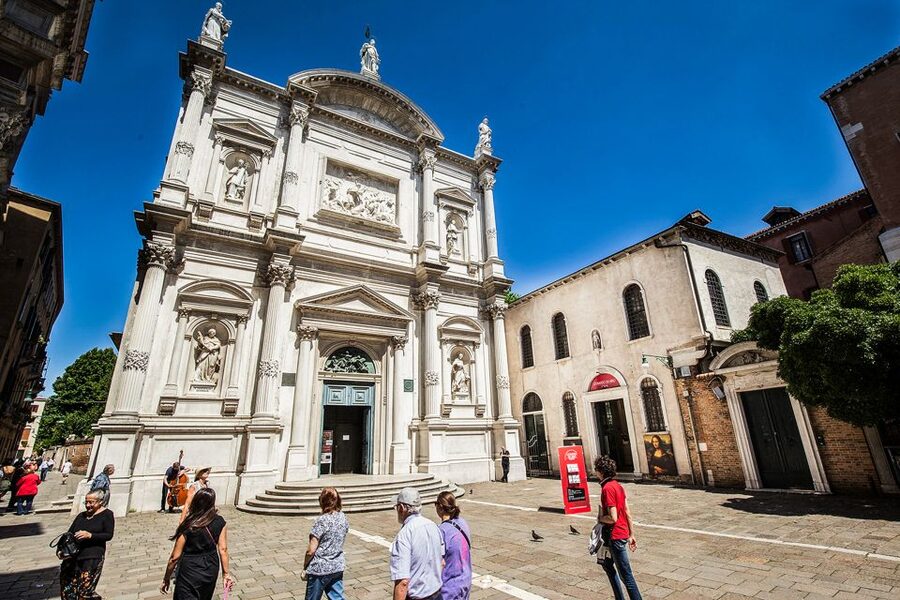
I would recommend it most strongly to families, curious teenagers, Leonardo fans, and anyone wanting a short indoor activity near San Rocco. It is also a good choice if you have only a couple of days in Venice and need attractions that fit between larger sights.
You should set expectations correctly. This is a small exhibition of reproductions, not a major collection of original Leonardo works. If you want grand rooms, rare artifacts, or a long guided lecture, this will probably feel limited.
The museum is also a good match for people who learn by doing. Turning a mechanism or solving a wooden bridge puzzle can make Leonardo’s ideas clearer than reading a biography. The six-language displays and short film help, but the machines carry much of the visit.
Should you book the Leonardo da Vinci Museum?
At $10, this is an easy museum to add if you are interested in inventions, art, anatomy, or family-friendly activities. I would book it if you want a one-hour stop with genuine hands-on content, especially during hot weather or between major Venice churches.
Skip it if your schedule is packed with large art collections and you have little interest in reproductions. For most other visitors, the low price, central location, flexible visit length, and working models make it a sensible addition to a Venice day. Give yourself an hour, scan the audio guide QR code at the start, and save time for the bridge puzzle and mirror box.
FAQ
Where is the Leonardo da Vinci Museum in Venice?
It is at Campo San Rocco, 3052 Venezia, in the Scoleta di San Rocco building. The entrance is opposite the Scuola Grande di San Rocco and behind the Church of the Frari.
Is this a guided tour?
No. The ticket provides museum entry, and there is no guided tour included. Present your ticket at reception when you arrive.
How long does a visit take?
You can see the museum in about 30 to 60 minutes if you move quickly. Allow around 90 minutes if you want to try the machines, solve puzzles, watch the film, and read the displays.
What are the four sections of the museum?
The exhibition is organized around Earth, Water, Fire, and Air. Each section presents Leonardo’s ideas through machines, explanations, and multimedia material.
Are the machines original Leonardo inventions?
The machines are reproductions rebuilt according to Leonardo’s designs. Adjustments were made where necessary because of the original proportions.
Can children visit alone?
No. Children under 15 must be accompanied by an adult. Children under three receive free admission.
Are photos allowed inside?
Yes. The ticket includes the opportunity to take photos inside the museum.
What languages are used in the museum?
Descriptions are available in Italian, English, French, German, Spanish, and Russian. Multimedia displays also explain Leonardo’s life and work.
When is the last admission?
The last entrance is one hour before closing time. Check the available starting times when arranging your visit.
Recently added around Venice
- Your evening in Venice – Legends&Ghosts&Aperitif★ 4.7 · 79 reviews
- Venice: City Tour & Skip the Line for St. Mark’s Basilica★ 4.1 · 84 reviews
- Walking Tour to Uncover the Hidden Venice★ 4.4 · 34 reviews
- Wine Tasting in Venice★ 4.6 · 42 reviews
- Venice: Walking Tour & Gondola Ride★ 4.4 · 22 reviews
- Venice: Watercolor Painting Class at the Prisons Palace★ 4.7 · 27 reviews
- VIRTUAL MUSEUM: Creature di Gomma – Venice Vintage Toys★ 4.7 · 3 reviews
- Venice Walking Tour from St. Mark’s to Rialto Bridge★ 4.5 · 12 reviews
Museums, compared.
Venice’s Best: Basilica, Doge’s Palace, Gondola & History Gallery
Read our review →
Vivaldi’s Four Seasons Concert & Music Museum Visit
Read our review →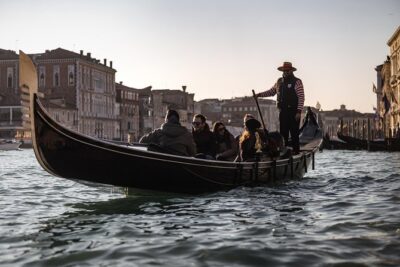
Charming Gondola Ride on the Grand Canal & Gondola Gallery™
Read our review →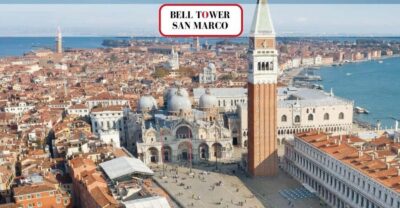
Bell Tower & St Mark’s Square History Gallery Ticket
Read our review →
Venice Museum Pass & Doge’s Palace Entrance Ticket
Read our review →
Basilica, Doge’s Palace, History Gallery & Bell Tower Option
Read our review →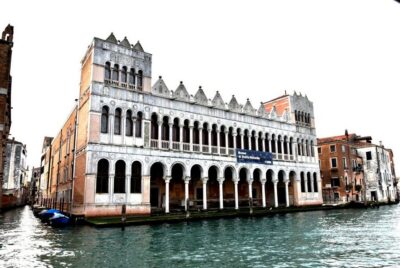
Browse the lists this tour appears in