
Reviewed · MUSEUMS
Venice, Submarine Enrico Dandolo and Naval History Museum
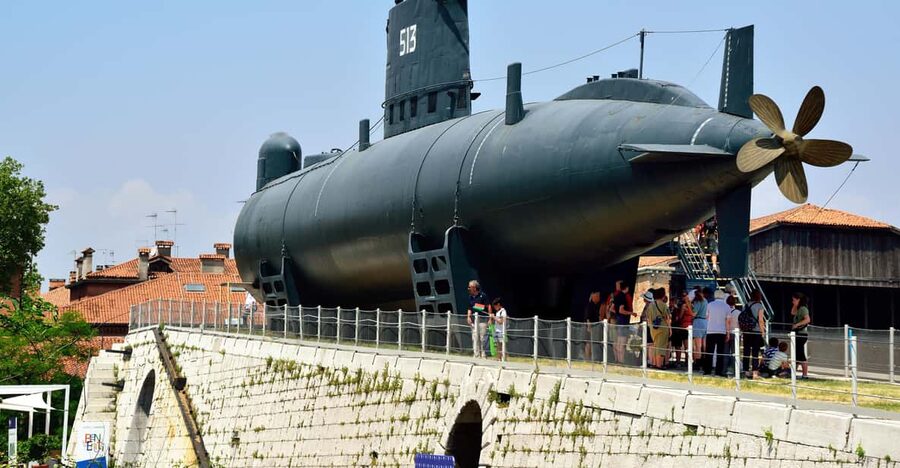
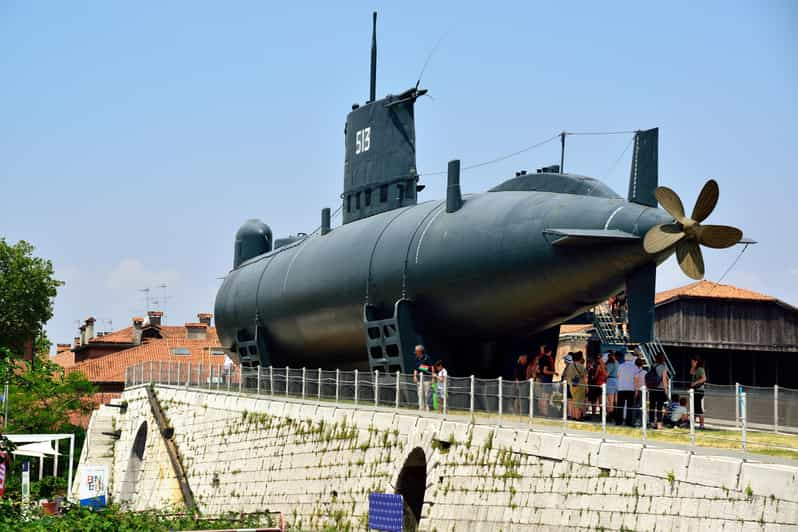
The most unusual part of this Venice experience is not a gondola or a palace. It is a 46-meter Cold War submarine sitting inside the old Arsenal, close to Piazza San Marco. You enter the Enrico Dandolo, one of Italy’s first postwar submarines, and see the cramped control room and torpedo launching chamber.
I like two things here: the small group of up to 10 makes the submarine visit easier to manage, and the $30 ticket includes the Naval History Museum and Ships Pavilion for two days. The museum adds useful context about Venice’s seafaring past and the Italian Navy.
The main drawback is space. The submarine is narrow, and the Arsenal buildings can feel cold, so this is not a good pick if you dislike enclosed places or have serious mobility limits. The 3 p.m. submarine time also leaves little or no time for the museum afterward.
Key points at a glance
- Walk from Piazza San Marco: The Naval History Museum is about five minutes from the square and next to the Ancient Arsenal.
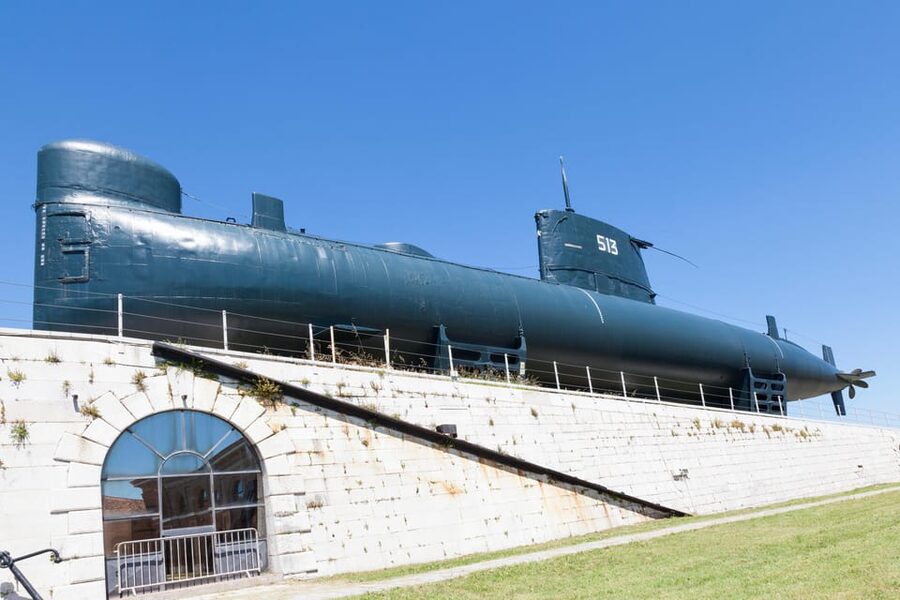
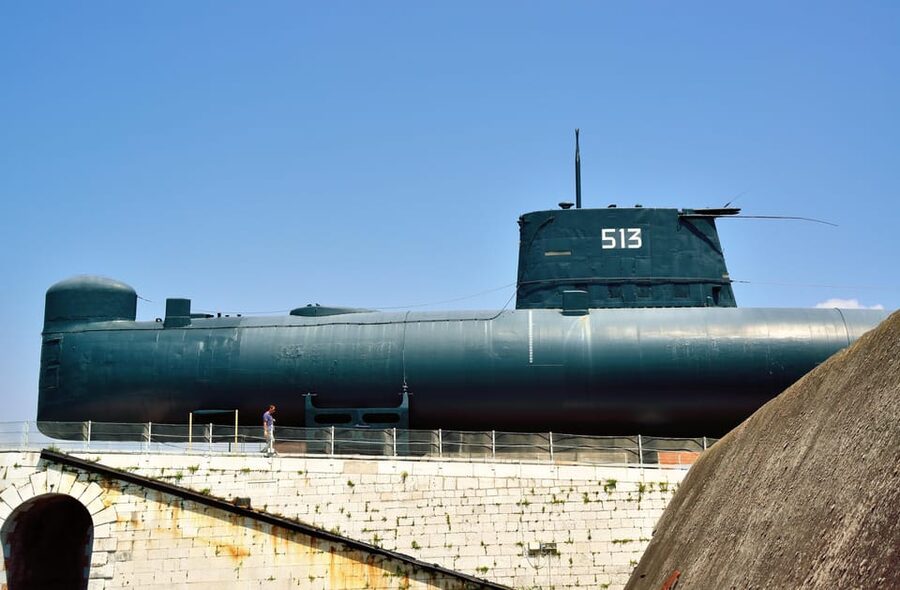
- Enter a real Cold War submarine: The Enrico Dandolo measures 46 meters long but only about 5 meters wide, giving you a close look at life aboard a working military vessel.
- See the control room and torpedo chamber: These are the most memorable parts of the submarine visit.
- Get two days of museum access: Your ticket covers MUNAV, the Ships Pavilion, and the submarine.
- Use an audio guide in five languages: Italian, Spanish, French, German, and English are available.
- Plan around the 3 p.m. time: Visit the museum before the submarine if your entry is scheduled for midafternoon.
Why a submarine belongs on your Venice list
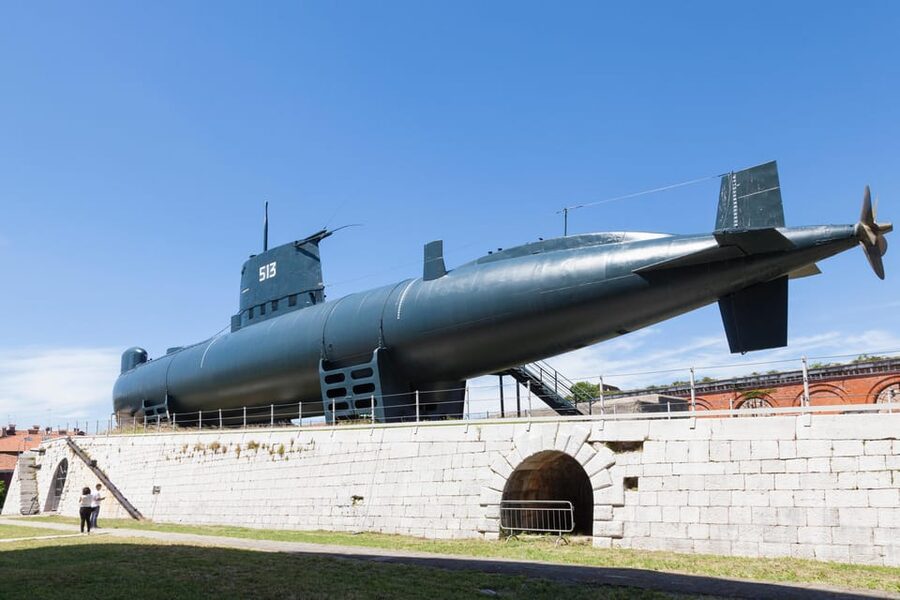
Venice is famous for water, but most visitors see that water from a vaporetto, gondola, or lagoon boat. The Enrico Dandolo gives you a different view of the city’s connection with the sea. It links the old naval power of the Venetian Republic with the modern Italian Navy and the tense years of the Cold War.
The submarine was one of the first four units designed in Italy during the Cold War era. It was built to be silent, fast, and maneuverable, with technology intended for military use. The important point for you is that the vessel now serves as a preserved object rather than an active weapon. You can look closely at the spaces and machinery without turning the visit into a technical lecture.
I find this kind of attraction useful because it changes the pace of a Venice trip. After churches, painted ceilings, and crowded lanes, the submarine feels blunt and practical. There is no polished palace interior here. You are dealing with metal, tight passageways, and the working parts of a vessel made for long periods underwater.
The location helps. MUNAV, the Naval History Museum of Venice, is only about a five-minute walk from Piazza San Marco. That makes it easy to fit between major sights, though the museum and submarine deserve more planning than a quick spare-hour stop.
More museums and galleries in Venice:
- Venice: Leonardo Da Vinci Museum Entrance Ticket
★ 4.5 · 3,560 reviews - Venice’s Best: Basilica, Doge’s Palace, Gondola & History Gallery
★ 4.5 · 2,478 reviews - Venice: Vivaldi’s Four Seasons Concert & Music Museum Visit
★ 4.8 · 2,065 reviews
Entering the Enrico Dandolo at the Arsenal
The submarine visit is the heart of the experience. You board in a small group with an operator, rather than wandering through alone. That matters inside a vessel this narrow, where several people stopping in the same passage can quickly make movement awkward.
At 46 meters long and nearly 5 meters wide, the Enrico Dandolo is large by ordinary-room standards but tight as a visitor attraction. The shape tells you something before you even reach the exhibits. This was built for function, not comfort. You should expect narrow areas, limited room to turn, and a visit that feels close and enclosed.
The control room is one of the main highlights. It offers the clearest sense of how the submarine was operated and navigated. You can examine the space where decisions about movement and direction would have been made, then compare its compact layout with the size of the vessel outside.
The torpedo launching chamber gives the visit its strongest military edge. You are not simply looking at a ship from a dock. You are seeing the compartment connected with the submarine’s offensive purpose. The submarine’s weapons were fortunately never used for offensive operations, but the chamber still shows what the vessel was designed to do.
The experience does not include a traditional guided tour. Instead, an operator accompanies the small group, and an audio guide is included for the museum visit. Host or greeter support is available in Italian and English, while the audio guide is offered in Italian, Spanish, French, German, and English.
That arrangement suits independent visitors who like to set their own pace. It is less suitable if you want a guide talking continuously throughout every room. Before booking, decide which matters more to you: personal commentary or access to a distinctive historic vessel.
What the Naval History Museum adds
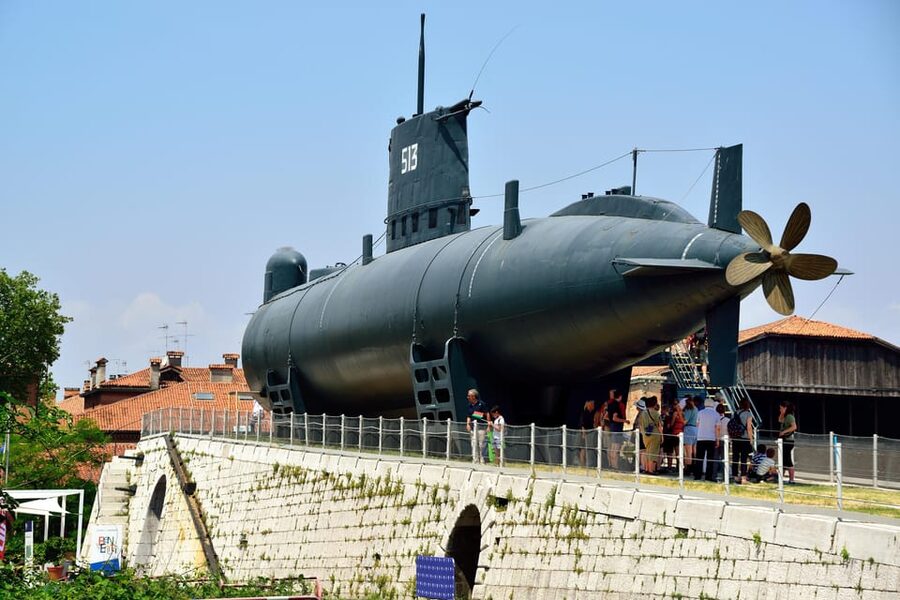
The museum keeps the submarine from feeling like an isolated curiosity. MUNAV covers five floors and about 6,000 square meters, with displays devoted to Venice’s naval past and the Italian Navy. Your ticket also includes the Ships Pavilion.
This second part is valuable because Venice’s maritime story is much older than the submarine. The city’s power depended on ships, shipyards, trade routes, and naval skill. The Arsenal was central to that story, and the museum helps you connect the old Venetian state with the later Italian naval tradition.
You should allow enough time for the museum instead of treating it as a bonus you may or may not squeeze in. The submarine can be the memorable hook, but the museum gives you the background needed to understand why the Arsenal matters.
The museum is available for two days with the ticket. That is a useful benefit in a city where schedules can go wrong easily. You might visit the submarine and museum on the same day, or use the extra day for the museum if your plans are tight.
A practical warning applies to the 3 p.m. submarine visit. You will not have enough time to see the museum afterward as part of that same visit, so go to the museum first. You can also return the following day. This is one of the most important details when choosing a starting time.
A closer look at the Ships Pavilion
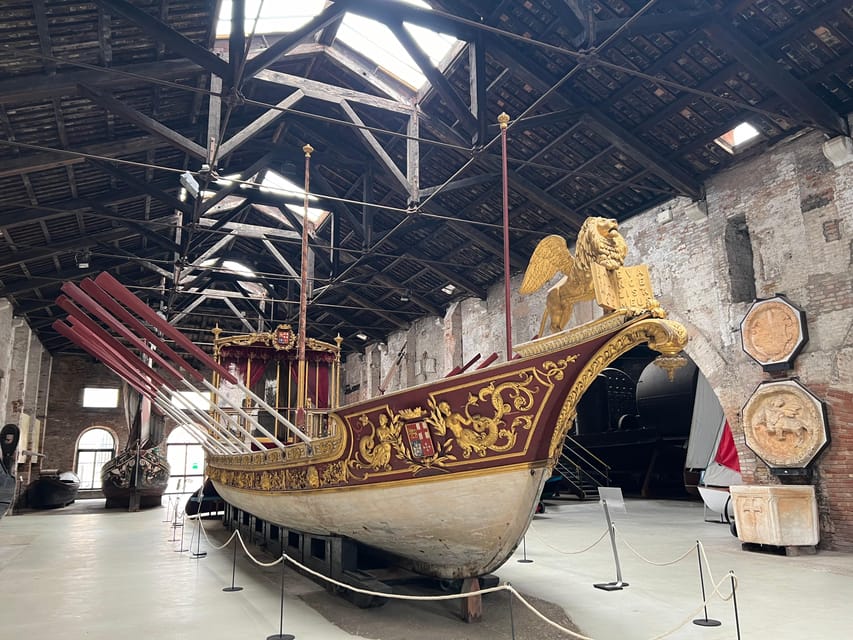
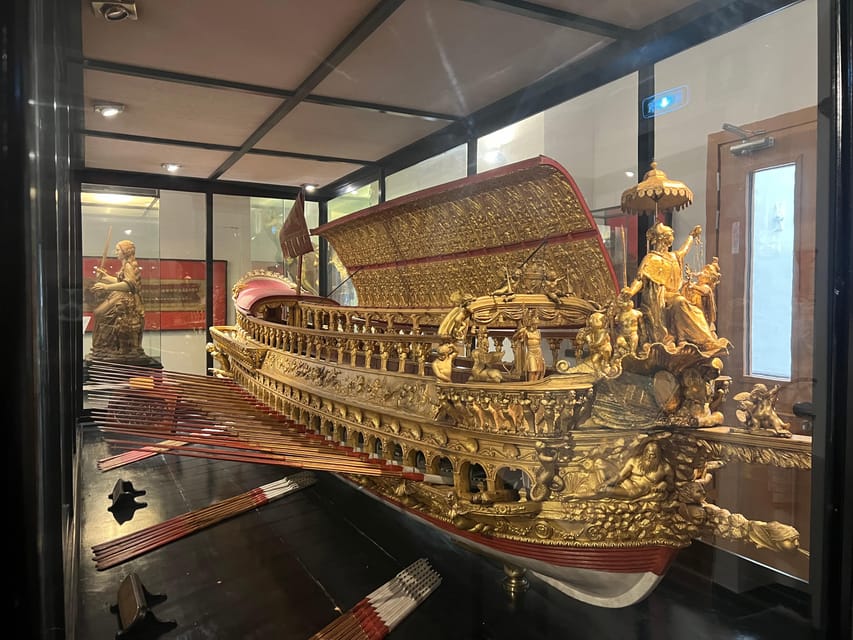
The Ships Pavilion is included with admission and gives the naval story a separate setting from the main museum. It is part of the wider MUNAV visit, so you can treat the ticket as a group of connected sites rather than a single submarine entry.
The available information does not specify every object or display inside the pavilion, so I would not promise a particular ship or exhibit. The safe expectation is that it adds another layer to Venice’s maritime story and gives you more reason to use the two-day access.
If you have a strong interest in ships, naval engineering, or military history, the pavilion may be as important to you as the submarine. If your interest is casual, see the submarine first and then decide how much museum time your day allows.
More history tours in Venice:
- Venice: City Center Historical Guided Walking Tour
★ 4.2 · 1,873 reviews - Venice: Bell Tower & St Mark’s Square History Gallery Ticket
★ 4.3 · 910 reviews - Basilica, Doge’s Palace, History Gallery & Bell Tower Option
★ 5.0 · 586 reviews - Venice: Natural History Museum Entry Ticket
★ 4.7 · 312 reviews
Is $30 a fair price?
At $30 per person, this is not the cheapest short activity in Venice. Its value depends on whether you use the museum access. If you only board the submarine and leave, the price is harder to justify for a 1.5-hour visit. If you visit MUNAV, the Ships Pavilion, and the submarine, the ticket becomes a stronger deal.
The two-day museum access is the key. You are paying for a compact guided entry to a rare attraction plus a large naval museum near the center of Venice. That is more useful than a simple one-room admission, especially if you enjoy museums and want a break from the usual landmarks.
The small group also has practical value. A group limited to 10 is better suited to a narrow submarine than a large crowd. You should still expect some waiting inside the vessel because the passageways are confined, but the group cap helps keep the visit manageable.
The price is particularly reasonable for people who want something different from the standard Venice circuit. If your schedule is packed with St. Mark’s Basilica, the Doge’s Palace, and lagoon trips, you may not have enough time to use the museum access. In that case, the ticket requires more commitment than its short duration suggests.
Timing your visit near St. Mark’s Square
The museum’s location makes this easy to add to a central Venice day. From Piazza San Marco, the walk takes about five minutes. You do not need to set aside a full day, but you should give yourself enough time to arrive, find the entrance, and read the timing carefully.
The stated duration is 1.5 hours. That covers the scheduled experience, but the museum and Ships Pavilion may require additional time if you want to see them properly. Since museum admission remains valid for two days, you do not need to force every room into one visit.
If your submarine entry is in the morning or earlier in the day, you can visit the museum afterward. For a 3 p.m. entry, reverse the order. Go to MUNAV first, then report for the submarine. The alternative is returning the next day, which works well if you are staying in Venice for more than one night.
The buildings can be cold, especially outside the warmer season. Bring a warm layer even if the weather feels mild when you leave your hotel. You will spend time in historic Arsenal spaces and inside a metal submarine, so comfort matters.
Who will enjoy this experience most?
I would recommend this to adults and older children who are curious about military history, ships, engineering, or unusual museums. Children can enter from age six, and anyone under 14 must be with an adult holding a ticket. The submarine gives families a strong visual experience, though younger children may not enjoy the tight spaces.
It also suits repeat visitors to Venice. If you have already seen the main churches and palaces, the submarine and naval museum offer a change of subject without sending you far from the center.
The experience is less suitable for anyone with claustrophobia. The narrow interior is not a minor detail. It shapes the whole visit. Wheelchair users and people with severe motor disabilities cannot enter because of architectural barriers.
The submarine is also not the best choice if you need a fully guided explanation in your preferred language. The operator accompanies the group, but the formal tour is not described as a guided tour. The audio guide covers five languages, which gives you more independence but less personal discussion.
What to bring and how to prepare
Bring a passport or identity card. It is required for the visit, so do not leave identification at your accommodation.
Wear shoes and clothing that let you move comfortably in a confined space. The available information does not specify a dress code, but narrow passageways are easier when you are not carrying bulky bags or wearing restrictive clothing.
Plan your museum order before you book. If your time is 3 p.m., see the museum first or use the second day. This simple choice prevents the most common timing problem with the experience.
You can cancel up to 24 hours before the activity for a full refund, and the reserve-now, pay-later option keeps your plans flexible. Those terms help if your Venice schedule depends on weather, train arrivals, or other timed attractions.
Should you book the Enrico Dandolo submarine?
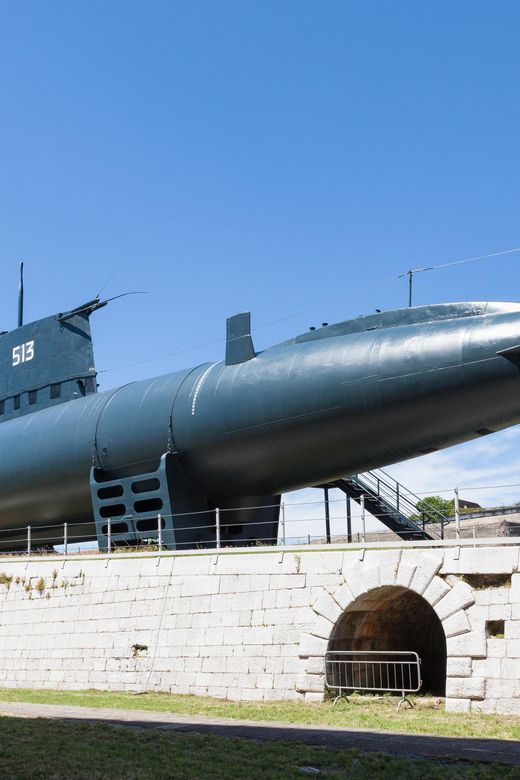
Book it if you want an unusual Venice experience with real historical weight, especially if you are willing to spend time in the Naval History Museum and Ships Pavilion. The combination of a Cold War submarine, the Arsenal setting, and two days of museum access gives the $30 price a solid case.
Skip it if you dislike narrow enclosed spaces, need step-free access, or want a traditional guide speaking throughout the visit. Also think twice if you only have a short window and cannot use the museum admission.
For the best value, choose a time that lets you visit MUNAV before or after the submarine, bring identification, wear a warm layer, and treat the 1.5-hour booking as the start of the visit rather than the whole museum experience.
FAQ
How long does the experience last?
The scheduled experience lasts 1.5 hours. The museum and Ships Pavilion may take additional time, and your museum admission is valid for two days.
Where is the Enrico Dandolo submarine?
The submarine is inside the Venice Arsenal, next to the Ancient Arsenal area. The Naval History Museum is about a five-minute walk from Piazza San Marco.
What does the ticket include?
The ticket includes a small-group visit to the Enrico Dandolo submarine with an operator, an audio guide, admission to the Naval History Museum of Venice, the Ships Pavilion, and the submarine.
Is a guided tour included?
A traditional guided tour is not included. An operator accompanies the small group during the submarine visit, and an audio guide is provided.
Which languages are available?
The host or greeter is available in Italian and English. The audio guide is available in Italian, Spanish, French, German, and English.
Can children enter the submarine?
Children from age six can enter. Children under 14 must be accompanied by an adult who holds a ticket.
Is the experience suitable for wheelchair users?
No. Architectural barriers prevent access for wheelchair users and people with severe motor disabilities.
Is the submarine suitable for people with claustrophobia?
No. The visit is not recommended for people who have difficulty staying in enclosed and narrow spaces.
What should I bring?
Bring a passport or identity card. A warm layer is also a sensible choice because the buildings can be cold.
What should I do if I book the 3 p.m. submarine visit?
Visit the Naval History Museum before the submarine because there may not be enough time to see it afterward. You can also visit the museum the next day.
Recently added around Venice
- Your evening in Venice – Legends&Ghosts&Aperitif★ 4.7 · 79 reviews
- Venice: City Tour & Skip the Line for St. Mark’s Basilica★ 4.1 · 84 reviews
- Walking Tour to Uncover the Hidden Venice★ 4.4 · 34 reviews
- Wine Tasting in Venice★ 4.6 · 42 reviews
- Venice: Walking Tour & Gondola Ride★ 4.4 · 22 reviews
- Venice: Watercolor Painting Class at the Prisons Palace★ 4.7 · 27 reviews
- VIRTUAL MUSEUM: Creature di Gomma – Venice Vintage Toys★ 4.7 · 3 reviews
- Venice Walking Tour from St. Mark’s to Rialto Bridge★ 4.5 · 12 reviews
Museums, compared.
Venice’s Best: Basilica, Doge’s Palace, Gondola & History Gallery
Read our review →
Vivaldi’s Four Seasons Concert & Music Museum Visit
Read our review →
Charming Gondola Ride on the Grand Canal & Gondola Gallery™
Read our review →
Bell Tower & St Mark’s Square History Gallery Ticket
Read our review →
Venice Museum Pass & Doge’s Palace Entrance Ticket
Read our review →
Basilica, Doge’s Palace, History Gallery & Bell Tower Option
Read our review →
Browse the lists this tour appears in