
Reviewed · MUSEUMS
Da Vinci Interactive Museum Venice Scuola di San Rocco
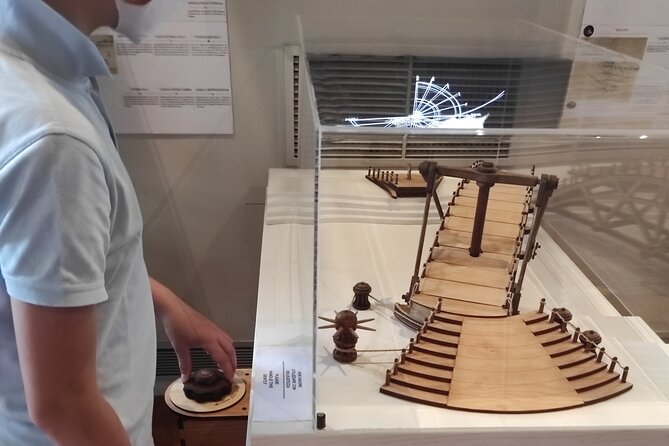
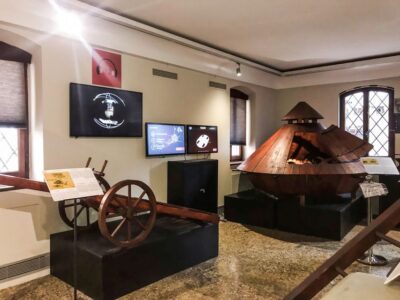
Leonardo da Vinci’s Venetian museum is less a grand gallery than a hands-on workshop. You can turn wheels, test mechanisms, solve puzzles, and see how his sketches for flying machines, military devices, and water systems might work. I like the working replicas and the clear four-part layout built around earth, water, air, and fire.
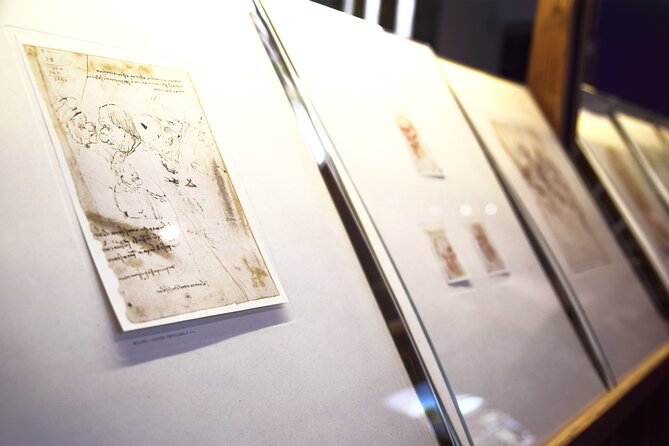
I also like the backlit reproductions of his paintings, which give you a closer look at works such as the Mona Lisa and The Last Supper while placing them beside his studies of anatomy and engineering. The catch is size: this is a compact museum, and adults expecting a large, immersive art exhibition may finish in 20 to 45 minutes.
Key points to know before you go
- Hands-on machines: You can operate many replicas instead of simply looking at them behind glass.
- Four themes: The displays are arranged around earth, water, air, and fire, making Leonardo’s wide-ranging ideas easier to follow.
- Art and science together: Backlit copies of major paintings sit alongside anatomy studies and invention designs.
- Good family stop: Children can turn, pull, test, and solve, while adults get a quick lesson in Leonardo’s range.
- Small museum, modest price: At about $10.21 per person, it works best as a short, focused stop rather than a main half-day attraction.
- Ask for the audio guide: A free audio guide is available on request at the entrance, though it may not be offered automatically.
What kind of museum is this?
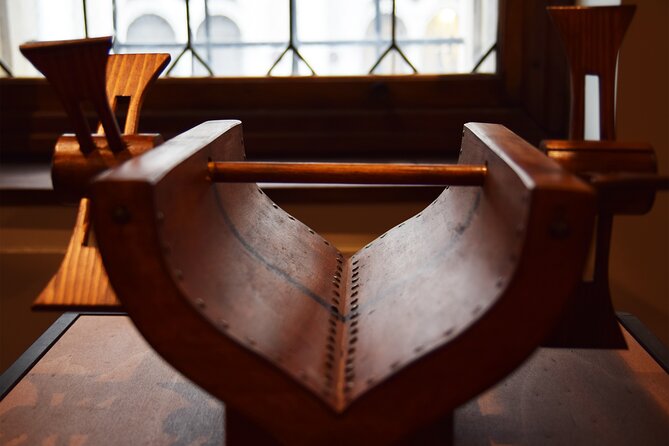
The Leonardo da Vinci Museum near Scuola di San Rocco focuses on ideas brought to life. It is not built around original Leonardo paintings or a large collection of original objects. Instead, you see replicas made from his drawings and proportions, with changes only where construction required them.
That distinction matters. If you picture a major art museum with original masterpieces, this stop may feel slight. If you want to understand how Leonardo thought, the replicas give you something a flat sketch cannot: a chance to handle the moving parts and see the basic principle at work.
The museum is arranged in four sections: earth, water, air, and fire. This gives the visit a simple rhythm. You move from machines connected with the ground and construction to water devices, flying ideas, and inventions linked with fire and force.
I find this arrangement useful because Leonardo’s interests can otherwise seem scattered. He was not only a painter. He studied muscles, rivers, flight, weapons, bridges, tools, and the movement of air and water. The four sections show that wide curiosity without asking you to read a long academic display.
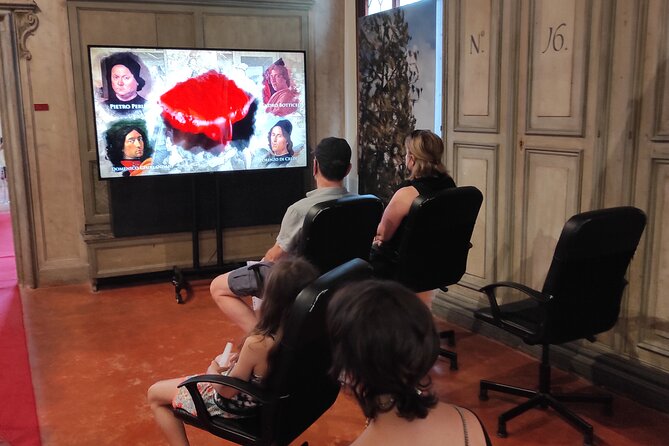
Descriptions are available in Italian, English, French, German, Spanish, and Russian. Multimedia displays add a short timeline of Leonardo’s life and work. The museum also offers a free audio guide if you request it at the entrance, so ask before you begin rather than assuming it will be handed to you with your mobile ticket.
More museums and galleries in Venice:
- Venice: Leonardo Da Vinci Museum Entrance Ticket
★ 4.5 · 3,560 reviews - Venice’s Best: Basilica, Doge’s Palace, Gondola & History Gallery
★ 4.5 · 2,478 reviews - Venice: Vivaldi’s Four Seasons Concert & Music Museum Visit
★ 4.8 · 2,065 reviews
The machines are the main event
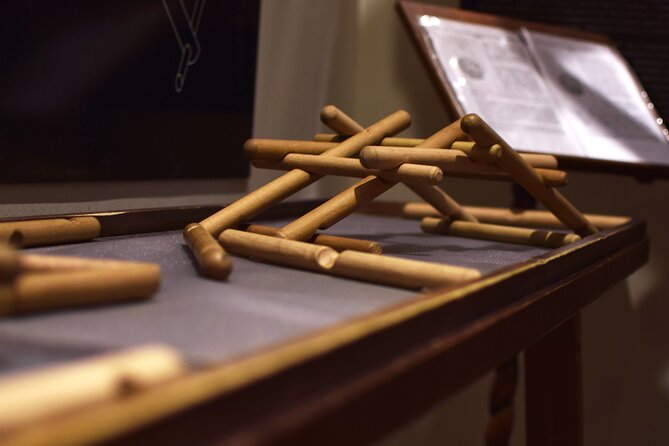
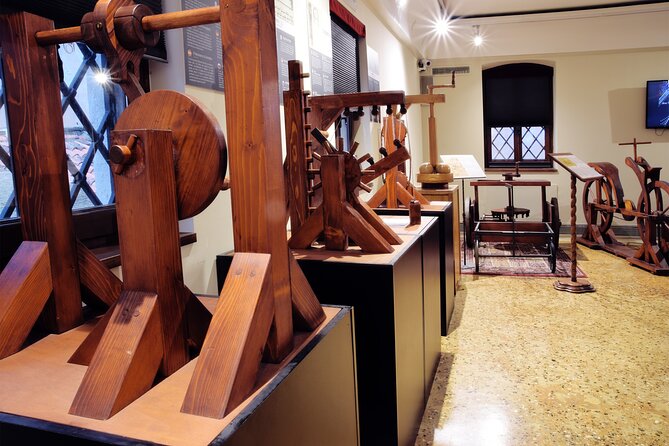
The interactive machines are the strongest reason to come. You are not limited to reading about Leonardo’s ideas. Many of the models can be moved or operated, letting you test gears, levers, pulleys, and other basic principles.
That hands-on quality is especially useful for children. A young visitor may not remember a paragraph about engineering, but turning a mechanism and watching the result can make the idea stick. The museum is family-friendly for this reason, and adults who enjoy puzzles or physical science can have just as much fun.
The experience is not a modern projection show. There are no indications of a large-scale digital production with rooms transformed by light and sound. Think of it as a compact exhibition with physical models, explanatory panels, videos, and interactive stations.
That difference explains the mixed reactions the museum can produce. Some people expect a spectacular, fully immersive show and find the setting underwhelming. Others appreciate being able to touch and operate the inventions, then leave with a clearer idea of how Leonardo’s designs worked.
Take your time with the mechanisms. A quick walk past them will make the museum seem much smaller. If you stop to solve the puzzles and test the models, the visit can occupy about an hour or a little longer. If you only read the main panels and watch the introduction, you may be done in 20 minutes.
Earth, water, air, and fire
The four sections are not just labels. They help you see the range of problems Leonardo tried to solve.
The earth section presents ideas connected with construction, mechanics, and movement across land. You can examine the way Leonardo used simple parts to solve practical problems. The models make his drawings less mysterious because you can see how a design might transfer force or support weight.
The water section turns attention to canals, flow, and movement. Leonardo studied water with the same patience he brought to anatomy and painting. Here, the value comes from seeing a diagram translated into a physical object, even when the original idea never became a finished machine in his lifetime.
The air section is often a favorite with children. Leonardo’s interest in flight is easy to understand through models, sketches, and moving parts. You do not need an engineering background to grasp the basic question: how might a person rise, glide, or control movement through air?
Fire covers another side of his inventive mind, including force, machinery, and devices shaped by heat or power. The museum uses these themes to show that Leonardo’s notebooks were full of attempts, questions, and possibilities, not just polished successes.
One useful lesson runs through the whole visit: Leonardo imagined many things long before the technology existed to build them. The museum does not claim that every design was practical. Instead, it lets you see how far ahead some of his questions reached.
The art section is useful, but keep your expectations in check
The museum includes high-resolution, backlit reproductions of several major paintings. These copies are not original artworks, and that is one of the main limitations of the visit.
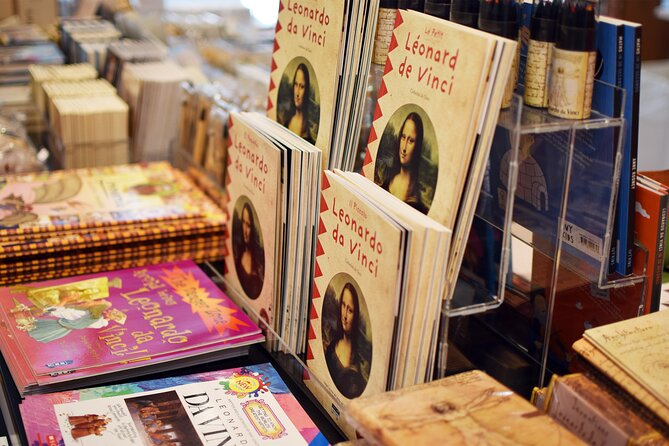
Still, the backlighting helps you study details. The reproductions are paired with explanations in several languages, giving you a closer look at Leonardo’s artistic choices and the ideas behind the images. The Mona Lisa and The Last Supper are part of this presentation, but they are only one piece of a larger display about the man as artist, observer, and inventor.
The anatomy material adds an important link between Leonardo’s science and his art. His drawings of the human body show a desire to understand structure, movement, and proportion. When you see those studies beside the machines, the museum makes a fair case that his art and engineering came from the same habit of close observation.
This lower-level material can feel quieter and more text-heavy than the interactive machine area. Children may move through it quickly. I would spend a little time here before heading upstairs, especially if you want more than a series of moving gadgets.
A short film also introduces Leonardo’s life and work. It is helpful for orientation, but it is brief. Do not book this museum mainly for the film. The physical models and the chance to test them are the real reason to enter.
A different way to spend a morning on the water:
- Venice: Doge’s Palace Reserved Entry Ticket
★ 4.6 · 42,716 reviews - Venice: Grand Canal Gondola Ride with App Commentary
★ 4.1 · 18,908 reviews - Boat Trip: Glimpse of Murano, Torcello & Burano Islands
★ 4.3 · 15,699 reviews - Venice: Grand Canal by Gondola with Live Commentary
★ 4.1 · 13,681 reviews
How long should you allow?
The stated duration is about 45 minutes, which is a sensible first estimate. You can see the major sections within that time, watch the short film, and try several machines without rushing too badly.
Your actual visit will depend on your group. With young children, allow closer to an hour if they want to operate each available model. With adults who read every panel and use the audio guide, an hour to 90 minutes is possible. If you are moving quickly between larger Venice sights, 20 minutes may cover the basics.
The museum is on two floors with steps. That layout is worth knowing if someone in your group has difficulty with stairs. The available information confirms that service animals are allowed and that most people can participate, but it does not provide a detailed accessibility plan for the upper level.
Food, drinks, and chewing gum are not allowed in the exhibit areas. Students and young people must be supervised, and anyone who causes damage or seriously disturbs other visitors can be escorted out. That is ordinary museum policy, but the hands-on displays make it especially important to keep children close.
A good pairing with Scuola di San Rocco
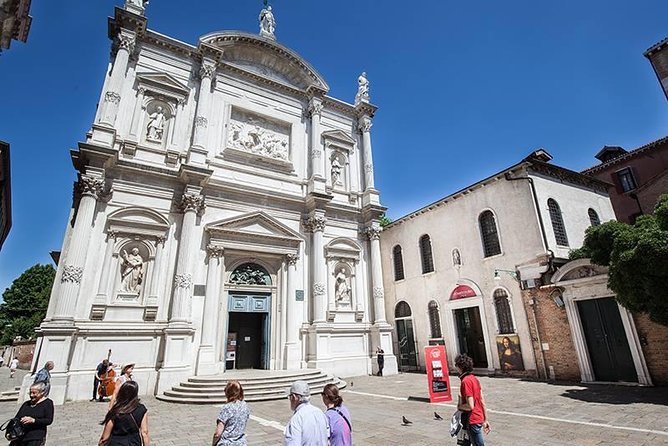
The museum’s location near Scuola di San Rocco gives you an easy way to build a small art-and-history outing. Scuola di San Rocco is a major attraction in its own right, so you should not confuse the two or assume your ticket covers both.
The da Vinci museum works well as a short stop before or after the Scuola. One offers physical models and an introduction to Leonardo’s working mind. The other gives you a powerful Venetian setting filled with original art. Together, they create a more balanced afternoon than the da Vinci museum alone.
Allow extra time to find the correct entrance. Venice has more than one Leonardo-related museum, and the similarity in names can cause confusion. The museum is in Campo San Rocco and is near public transportation, but checking the map carefully before you set out is wise. Do not simply follow the first search result for Leonardo da Vinci Museum in Venice.
Is $10.21 a fair price?
At about $10.21 per person, the admission is reasonable if you treat this as a short, interactive stop. You are paying for access to the working models, the art reproductions, the displays, and the multimedia material. For a family, the chance to handle the machines adds more value than a standard display of printed diagrams.
The value drops if you want original art, a large collection, or a full guided tour. A professional guide is not included, and the museum does not promise a long lecture or a detailed personal presentation. The free audio guide can add context, but you must request it at the entrance.
I would compare the price with your planned use of time. If you have 45 spare minutes near San Rocco, it is an easy purchase. If your Venice schedule is packed with major churches, palaces, and original masterpieces, this compact museum may not deserve a special cross-town trip.
The mobile ticket is convenient, and you can visit during opening hours rather than joining a scheduled tour. The museum is open daily from 10:30 a.m. to 4:30 p.m., with last entry at 4 p.m. Since hours and access rules can change, check the details close to your visit.
Who will enjoy this most?
I would recommend the museum most strongly to families with curious children, adults interested in machines, and anyone who wants a quick introduction to Leonardo beyond the Mona Lisa.
It also suits visitors who enjoy learning by doing. If you like to test a model, solve a puzzle, and then read the explanation, the format should work well. The museum gives you a sense of Leonardo’s method: observe a problem, sketch a solution, test an idea, and revise it.
Art specialists may find the reproduction-based display limited. The copies are useful for study, but they do not replace seeing an original painting. Likewise, visitors seeking a grand, cinematic exhibition should choose with care. The museum is small, practical, and hands-on, not a large theatrical production.
The best approach is to arrive with the right expectations. Come to handle replicas and connect drawings with real movement. Do not come expecting a major art collection or an entire day of entertainment.
Practical details that improve the visit
Book ahead if it helps organize your schedule, but the attraction is not presented as a guided tour with a fixed departure time. You can enter during opening hours using a mobile ticket. The average booking time is about 19 days before the visit, though that does not tell you that advance booking is required.
Ask for the audio guide immediately. It is available free of charge on request, and it can make the text-heavy displays easier to follow. English is offered, while the written descriptions cover English, Italian, French, German, Spanish, and Russian.
Keep your ticket details handy and allow a few extra minutes for navigation. The museum is near public transportation, but Venice’s closely named attractions can make map searches confusing.
If you are visiting Venice for the day from outside the city, check the current access-fee rules. On certain dates, a €5 fee may apply to many day visitors, with exemptions and conditions listed by the city. This is separate from the museum ticket.
The cancellation policy is simple: you can receive a full refund if you cancel at least 24 hours before the experience begins. Changes or cancellations made less than 24 hours before the start time are not accepted for a refund.
Should you book the Da Vinci Museum?
Book it if you want a modestly priced, family-friendly museum where you can operate replicas and see Leonardo’s inventions explained through physical models. It is a smart add-on to Scuola di San Rocco and a useful choice when you have about 45 minutes to an hour.
Skip it if you are looking for original paintings, a large museum, or a dramatic digital show. The art is represented by high-resolution copies, the film is short, and the rooms are compact.
My practical call is this: families and hands-on learners should give it a try, especially at $10.21. Adults with limited time should visit only if the subject genuinely interests them or if they are already nearby. Ask for the audio guide, take time with the machines, and judge the museum as a working introduction to Leonardo’s ideas, not as a replacement for Venice’s major art collections.
FAQ
How long does the museum visit take?
The visit is listed as approximately 45 minutes. You may finish in about 20 minutes if you move quickly, or spend an hour to 90 minutes if you operate the models, read the displays, and use the audio guide.
What are the museum’s opening hours?
The museum is open Monday through Sunday from 10:30 a.m. to 4:30 p.m. The last entrance is at 4 p.m.
Is a professional guide included?
No. A professional guide is not included. A free audio guide is available on request at the entrance.
What languages are available?
The written descriptions are available in Italian, English, French, German, Spanish, and Russian. The experience is offered in English.
Are the paintings original?
No. The museum displays high-resolution, backlit reproductions of Leonardo’s major paintings rather than original artworks.
Is the museum suitable for children?
Yes. The exhibition is designed for adults and children, with interactive machines, experiments, and puzzles. Children and young people must be supervised in the exhibit areas.
Can I bring food or drinks inside?
No. Food, chewing gum, and beverages are prohibited in the exhibit areas.
Can I cancel for a refund?
Yes. You can cancel for a full refund up to 24 hours before the experience start time. Cancellations or changes made less than 24 hours before the start time are not accepted for a refund.
Recently added around Venice
- Your evening in Venice – Legends&Ghosts&Aperitif★ 4.7 · 79 reviews
- Venice: City Tour & Skip the Line for St. Mark’s Basilica★ 4.1 · 84 reviews
- Walking Tour to Uncover the Hidden Venice★ 4.4 · 34 reviews
- Wine Tasting in Venice★ 4.6 · 42 reviews
- Venice: Walking Tour & Gondola Ride★ 4.4 · 22 reviews
- Venice: Watercolor Painting Class at the Prisons Palace★ 4.7 · 27 reviews
- VIRTUAL MUSEUM: Creature di Gomma – Venice Vintage Toys★ 4.7 · 3 reviews
- Venice Walking Tour from St. Mark’s to Rialto Bridge★ 4.5 · 12 reviews
Museums, compared.
Venice’s Best: Basilica, Doge’s Palace, Gondola & History Gallery
Read our review →
Vivaldi’s Four Seasons Concert & Music Museum Visit
Read our review →
Charming Gondola Ride on the Grand Canal & Gondola Gallery™
Read our review →
Bell Tower & St Mark’s Square History Gallery Ticket
Read our review →
Venice Museum Pass & Doge’s Palace Entrance Ticket
Read our review →
Basilica, Doge’s Palace, History Gallery & Bell Tower Option
Read our review →
Browse the lists this tour appears in