
Reviewed · VENETIAN MASK AND CARNIVAL WORKSHOPS
Venice Mask Workshop Class
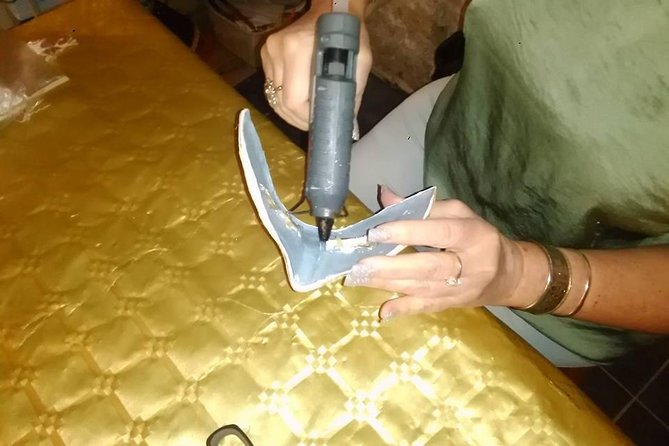
Venice is full of grand sights, but this workshop lets you make something of your own. Inside Sogno Veneziano Atelier, you choose a papier-mâché mask, paint it, and add feathers, crystals, gold leaf, or trim under the guidance of a local artisan. You leave with a souvenir you made yourself, not one pulled from a shop shelf.
I like the calm setting and the warm, personal instruction. Guides such as Sonja, Igor, Giacomo, Jack, and Danieli help children and adults without making anyone feel bad about their artistic skills. I also like the choice of a simple one-hour session or a longer two-hour class with more time for decoration.
The main consideration is the price, about $102.58 per person, especially for a family. The shorter session may also feel rushed if you want elaborate embellishments. Ask what is included in your chosen option before you begin, since the level of decoration can vary with the time and package.
Key points to know before you book
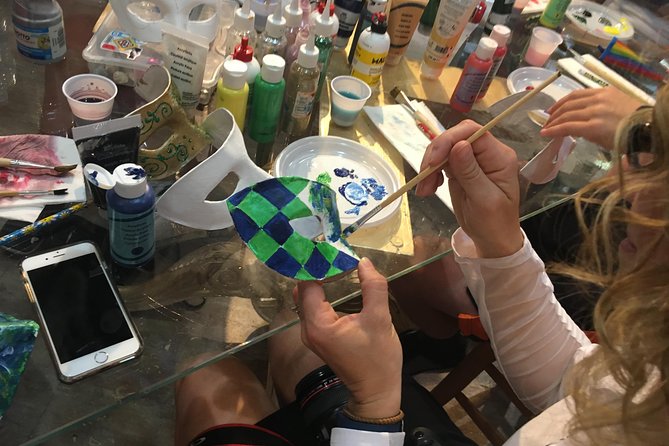
- You make a genuine papier-mâché mask: Choose from many shapes, then paint and decorate it yourself.
- The two-hour option suits detailed designs: One hour is enough for basic painting, but less ideal for feathers, crystals, trims, and gold leaf.
- The workshop is family-friendly: Children as young as five and six have taken part, but children must be accompanied by an adult.
- The atmosphere is small and relaxed: The maximum group size is 10, and some sessions feel almost private.
- You get more than craft time: The guides explain mask traditions, Carnival stories, and how the masks are formed.
- Plan your route carefully: The atelier is on Calle de le Erbe, and there is no hotel pickup or stated restroom at the workshop.
Inside Sogno Veneziano Atelier on Calle de le Erbe
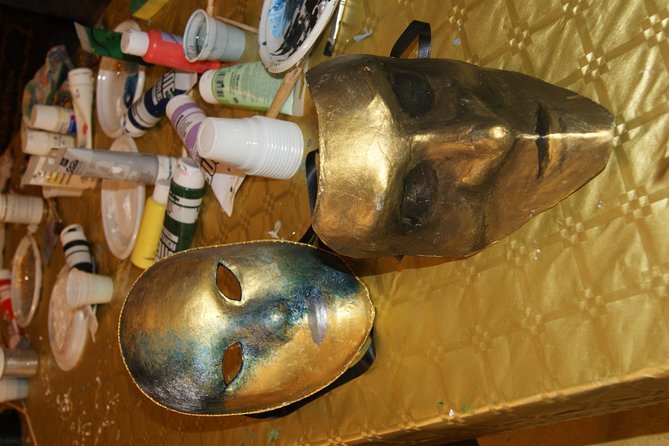
The experience begins at Sogno Veneziano Atelier, Calle de le Erbe, 6423A, 30121 Venezia VE. You make your way there independently, so leave enough time to cross Venice’s bridges and find the address. The activity ends at the same place.
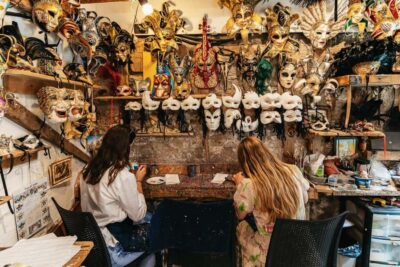
The workshop is not a large production class. The maximum group size is 10, and the space can feel personal, particularly when only one or two bookings are scheduled. That matters in Venice, where a quiet hour indoors can be a welcome change from crowded lanes and busy squares.
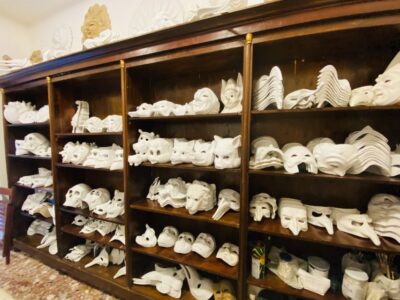
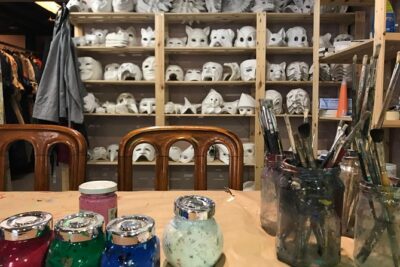
Once you arrive, you choose a mask from a broad range of shapes. Some are simple and open-faced, while others have more theatrical lines. The available choices give you a chance to pick something that suits your taste rather than forcing everyone into the same design.
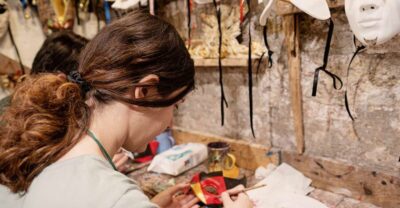
You then move to the painting table. Paints and decorating materials are provided, with feathers, crystals, sequins, trims, and gold leaf available for the finishing work. The exact amount of time and material included depends on the option you book, so check that point before paying if you already have a detailed design in mind.
More mask and Carnival workshops in Venice:
- Venice: Carnival Mask Workshop
★ 4.5 · 1,925 reviews - Venetian Carnival Mask Making Class in Venice, Italy
★ 4.5 · 525 reviews - Venice: Venetian Masks Workshop
★ 4.9 · 411 reviews
Choosing between one hour and two
The one-hour workshop works best if you want to paint a mask and keep the design fairly simple. It is enough time for many children and for adults who mainly want a hands-on souvenir. Several people have finished a painted mask within the hour and enjoyed the clean, focused pace.
The catch is that painting takes most of the session. If you want to add several layers, fabric trim, crystals, feathers, or gold leaf, one hour can pass quickly. You may need to simplify your idea or accept less finishing time.
The two-hour option gives you room to think. You can select a shape, discuss ideas with the instructor, paint carefully, and then add decorative details. Families with children around five to sixteen have found the longer class easier because each person works at a different speed.
Two hours also leaves more space for conversation and mask history. You are not simply racing to finish before the clock runs out. If you enjoy crafts or want the mask to become a display piece at home, I would choose this option.
The longer session does cost more, so it is not automatically the best choice for everyone. A young child with a short attention span may be satisfied after one hour. A keen teenager, adult, or family that wants matching or highly decorated masks will likely appreciate the extra time.
What you actually do at the table
The basic process is simple, which is part of the appeal. First, you select a mask. Then you choose colors and begin painting. The guides can suggest patterns, sketch ideas, or show examples, but you still have freedom to create your own design.
You do not need strong artistic skills. The instructors help with color choices and offer practical suggestions when you get stuck. Jack, for example, has helped participants adapt traditional designs to their own ideas. Other instructors have guided children toward a workable pattern instead of taking over the project.
After the paint, you can add decorative features if your selected class allows enough time. Feathers, jewels, sequins, gold leaf, and fabric trims can change a plain painted mask into something far more ornate. Gold trim is particularly useful for a polished finish, and the staff may help with the more fiddly parts.
This is not a formal art-school lesson. You will not spend the whole session watching a demonstration or learning advanced mask construction. The focus is on choosing, painting, and decorating your own piece with help nearby.
That balance suits families and mixed groups. One person can work carefully on a traditional pattern while another makes something bright and playful. A child can copy a favorite example, and an adult can try a more restrained design.
The Venetian mask stories add useful context
The workshop includes an introduction to the history of Venetian masks and stories connected with Carnival. You may learn how the masks are made in molds using special papier-mâché, as well as how different shapes relate to traditional designs.
The history portion is flexible. If you want more background, ask for it. If your children mainly want to paint, the instructors can keep the explanation accessible and let the craft lead the session. This flexibility is useful for a family with mixed interests.
Guides have also shared personal experiences. One instructor discussed her connection with the Venezuelan Carnival, while others have explained the meaning and shape of different Venetian masks. The language choice makes a difference here: the experience can be given in English, Italian, German, French, or Spanish.
The explanation may not be a long lecture. If you are hoping for a detailed academic study of Venetian Carnival, this is not that. Think of the history as a pleasant layer added to a practical art activity. You learn enough to understand why masks matter, then use that knowledge to shape your own design.
More hands-on workshops in Venice:
- Venice: Pasta and Tiramisu Cooking Class with Wine
★ 4.9 · 1,010 reviews - Pasta and Tiramisu Cooking Class with Wine in Venice
★ 5.0 · 945 reviews - Create Your Glass Artwork: Private Lesson With Local Artisan
★ 5.0 · 556 reviews - Murano Glass Factory Experience: A Workshop in Venice
★ 4.0 · 437 reviews
Why families tend to enjoy this workshop
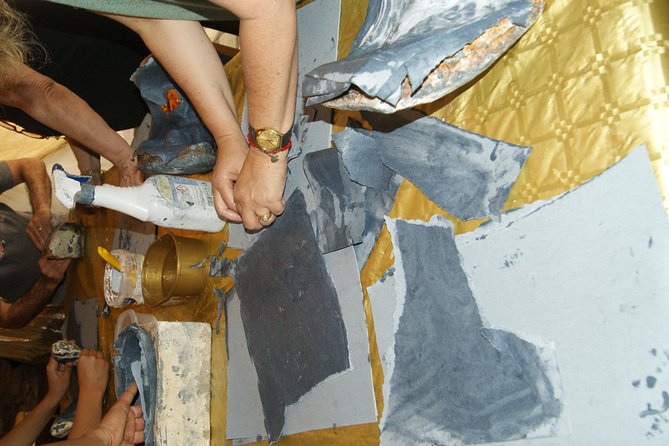
This is one of the stronger Venice activities for families because everyone works on the same task at their own level. Children can choose colors and decorations, teenagers can make something more personal, and adults can join in instead of standing on the sidelines.
The instructors are repeatedly praised for patience with children. They help younger participants find ideas, locate materials, and finish details. Children who are unsure at first often become absorbed once they see the masks, paints, and decorations laid out.
The workshop also gives parents a break from organizing. You do not need to find the materials, set up the table, or clean up afterward. The staff prepares the space and helps keep the activity moving.
That said, children must be accompanied by an adult. The workshop is creative rather than a drop-off program. You should expect to take part, supervise, and enjoy the mask-making alongside them.
For families, the two-hour option is usually the safer choice. Some children finish painting after an hour, but others need time to decide on a mask or recover from a change of plan. The longer class also gives adults a chance to make their own masks rather than spending the whole session helping.
A peaceful pause from Venice sightseeing
Venice sightseeing can be tiring. You walk over bridges, negotiate narrow lanes, and deal with crowded areas near the main sights. The atelier provides a seated activity in a quieter setting, which makes it a practical break in a full day.
I like this part of the experience as much as the craft itself. You can sit down, talk with the instructor, and work with your hands instead of checking a map or watching the clock. Some people use the time as a birthday activity, a date, a family project, or a low-key morning indoors.
The social side is informal. Conversations can range from Carnival to Venice and even food, including local tiramisu preferences. In smaller classes, you may receive a lot of direct attention. In a full group of 10, expect a more shared workshop atmosphere.
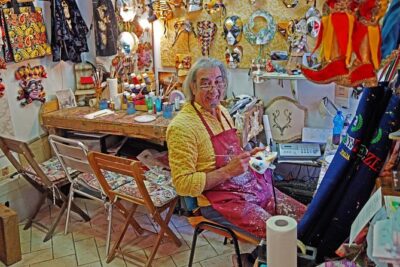
The atelier is described as cozy and unassuming rather than grand. Do not book this expecting a lavish historic palace or a staged theatrical show. Its appeal is the workbench, the materials, and the chance to meet people who enjoy making masks.
Is $102.58 per person good value?
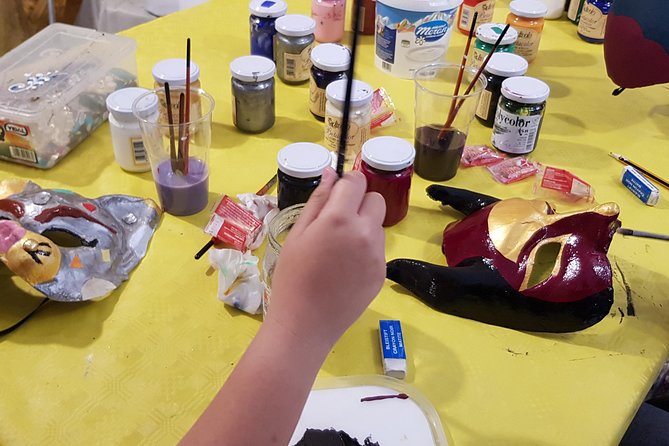
At about $102.58 per person, this is not a cheap craft hour. For a family of four or five, the total adds up quickly. You should compare it with other paid activities in Venice and decide how important a hands-on experience is to your group.
The value improves if you choose the two-hour class, make a detailed mask, and treat the session as both entertainment and a keepsake. You are paying for the mask, materials, instruction, use of the atelier, and the time spent with an artisan. You also avoid buying a generic Carnival mask that may have little connection to your own visit.
The value is weaker if you only want a quick souvenir or have no interest in painting. In that case, a shop purchase will be cheaper and faster. The workshop makes sense when you want the activity itself, not just the finished object.
Ask about included embellishments before starting. One-hour and two-hour options may provide different room for extra decoration, and some materials may depend on the selected package. This is a small detail, but it can prevent disappointment if you arrive hoping to cover the mask in crystals and gold leaf.
Taking the mask home
The finished mask is yours to take home after the class. This gives the experience a lasting payoff, especially for children who want to display their work. It also turns a normal souvenir into a reminder of a specific day in Venice.
The masks can be delicate, particularly if they include feathers, trims, or raised decorations. Pack with care for your journey. One family reported that its masks arrived safely after a flight, but the provided information does not describe a formal shipping service or special travel container.
If you are flying soon after the workshop, think about how you will carry the mask. A flat, protected space in your luggage will be safer than squeezing it beneath heavy clothing. Ask the staff for handling advice before you leave.
The activity ends back at the atelier, with no hotel transfer included. You can then continue sightseeing from the meeting point, but you are responsible for getting to your next stop.
Practical details worth knowing
The experience is offered in English, Italian, German, French, and Spanish. The booking information specifically lists English, but the workshop description gives all five language options, so confirm your preferred language when booking.
A mobile ticket is accepted. Confirmation is provided when you book. The meeting point is near public transportation, though Venice’s walking routes can still take longer than a map suggests.
Most people can participate, and service animals are allowed. Children must have an adult with them. Smart-casual clothing is requested, which is sensible for a hands-on activity involving paint and decorative materials.
One useful warning: there is no toilet at the workshop, so use one before you arrive. This is especially important with younger children.
On certain dates, day visitors staying outside Venice may need to pay a €5 access fee. Check the official Venice access-fee website before your trip to see if your date applies and if you qualify for an exemption.
The activity has a strict non-refundable cancellation policy. You cannot change or cancel for a refund, so make sure your schedule is firm before booking.
Who should book this mask workshop?
I would recommend it most to families, couples, friends, and solo visitors who enjoy making things. It works particularly well for a family day because adults and children can take part together without needing the same artistic skill.
It also suits a repeat visitor who has already seen Venice’s major sights. A first-time visitor can enjoy it too, especially when the weather is poor or you want a break from walking.
You may want to skip it if you dislike crafts, have only a short window in Venice, or mainly want a cheap souvenir. The price is easier to justify when you value the quiet time, personal help, and finished mask as a combined experience.
Should you book it?
Book this workshop if you want a personal Venice memory and like the idea of spending one or two peaceful hours making something with your hands. Choose one hour for a basic painted mask. Choose two hours if you want feathers, crystals, gold leaf, trim, or time to work without pressure.
For families, I would lean toward the longer option. For adults with a clear design and limited time, one hour may do the job. Confirm what decorations are included, use the restroom beforehand, and arrive ready to participate rather than simply watch.
FAQ
Where does the Venice mask workshop take place?
It takes place at Sogno Veneziano Atelier, Calle de le Erbe, 6423A, 30121 Venezia VE, Italy.
How long does the workshop last?
The experience is listed as approximately one day, but the mask sessions described are available in one-hour and two-hour formats. Check the specific option you select when booking.
What do I make during the class?
You choose a real papier-mâché Venetian mask, paint it, and decorate it with available materials such as feathers, crystals, sequins, gold leaf, and trims.
Can I take my mask home?
Yes. You can bring your completed mask home after the workshop.
What languages are available?
The workshop can be conducted in English, Italian, German, French, or Spanish.
Is the activity suitable for children?
Yes. Children can participate, but they must be accompanied by an adult. Most people can take part.
Is hotel pickup included?
No. You must make your own way to the atelier, and the activity ends at the meeting point.
Is there a cancellation refund?
No. The experience is non-refundable and cannot be changed for any reason after booking.
Recently added around Venice
- Your evening in Venice – Legends&Ghosts&Aperitif★ 4.7 · 79 reviews
- Venice: City Tour & Skip the Line for St. Mark’s Basilica★ 4.1 · 84 reviews
- Walking Tour to Uncover the Hidden Venice★ 4.4 · 34 reviews
- Wine Tasting in Venice★ 4.6 · 42 reviews
- Venice: Walking Tour & Gondola Ride★ 4.4 · 22 reviews
- Venice: Watercolor Painting Class at the Prisons Palace★ 4.7 · 27 reviews
- VIRTUAL MUSEUM: Creature di Gomma – Venice Vintage Toys★ 4.7 · 3 reviews
- Venice Walking Tour from St. Mark’s to Rialto Bridge★ 4.5 · 12 reviews
Venetian Mask and Carnival Workshops, compared.
Venetian Carnival Mask Making Class in Venice, Italy
Read our review →
Carnival Mask Decoration Class at Casanova Prisons
Read our review →
Secrets of Venice Carnival and Life of Casanova Tour
Read our review →
Mask Workshop – Paint Your Own Venetian Mask in Venice, Italy
Read our review →Browse the lists this tour appears in